🌉 What Was Already There
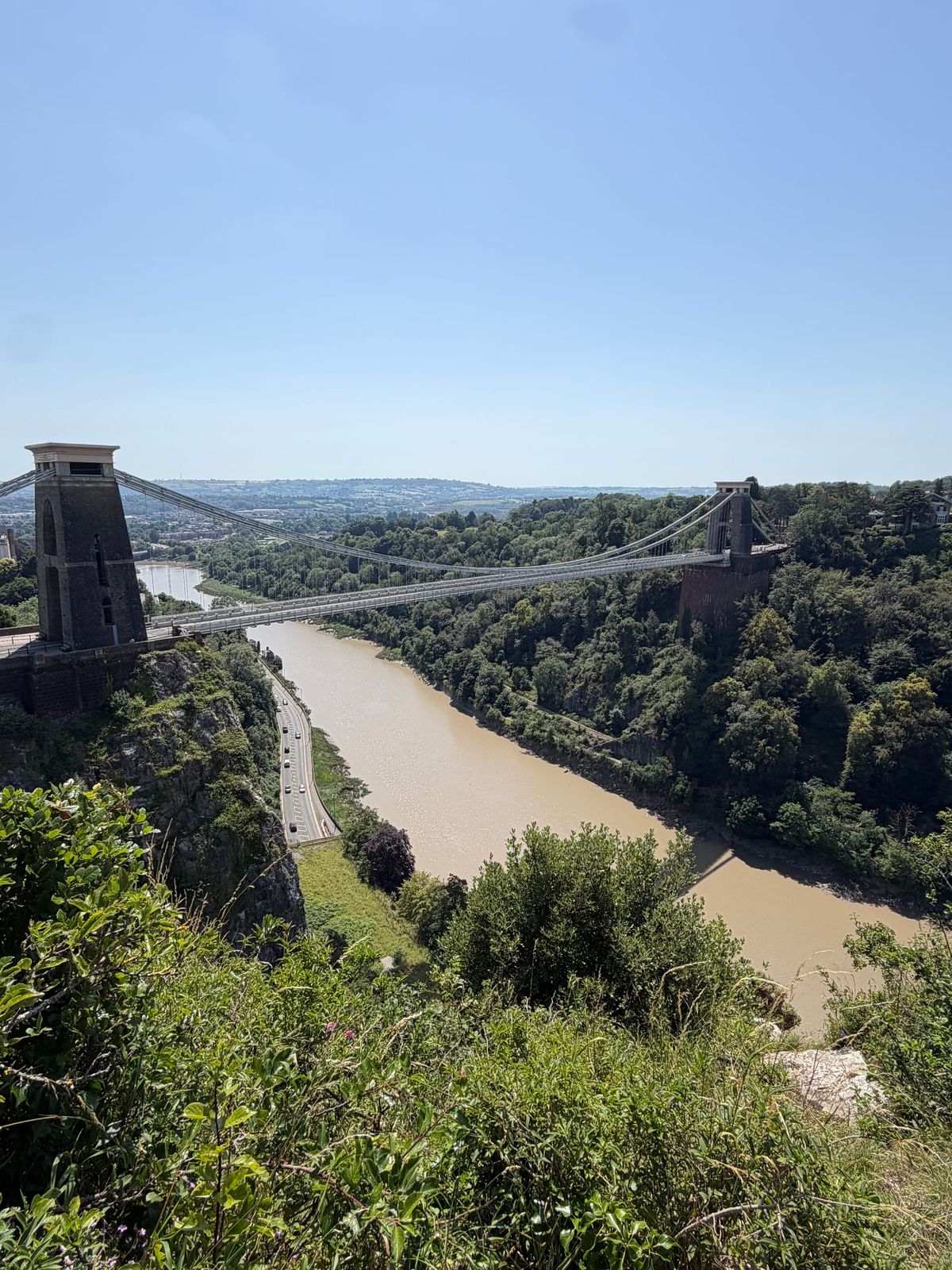
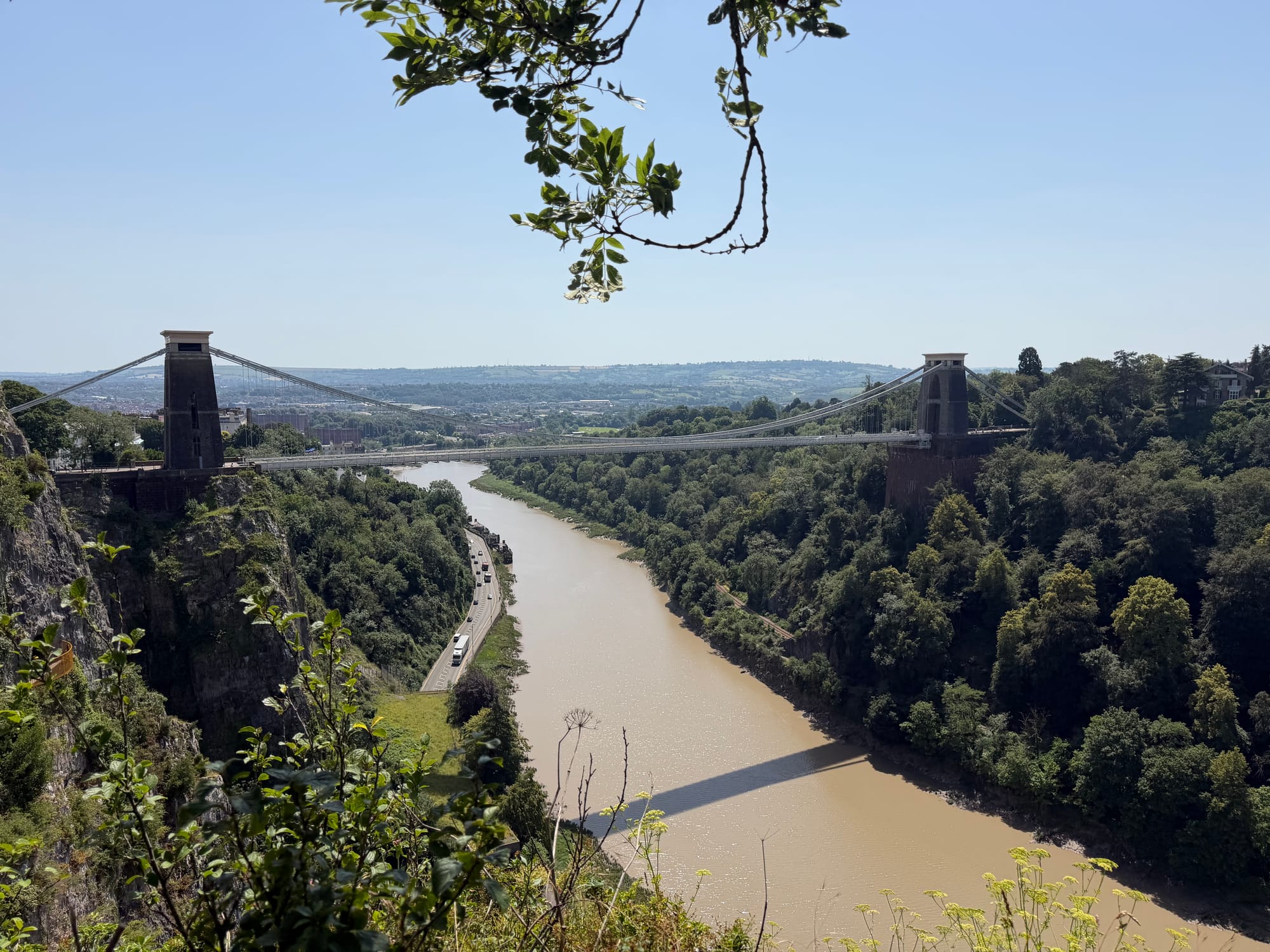
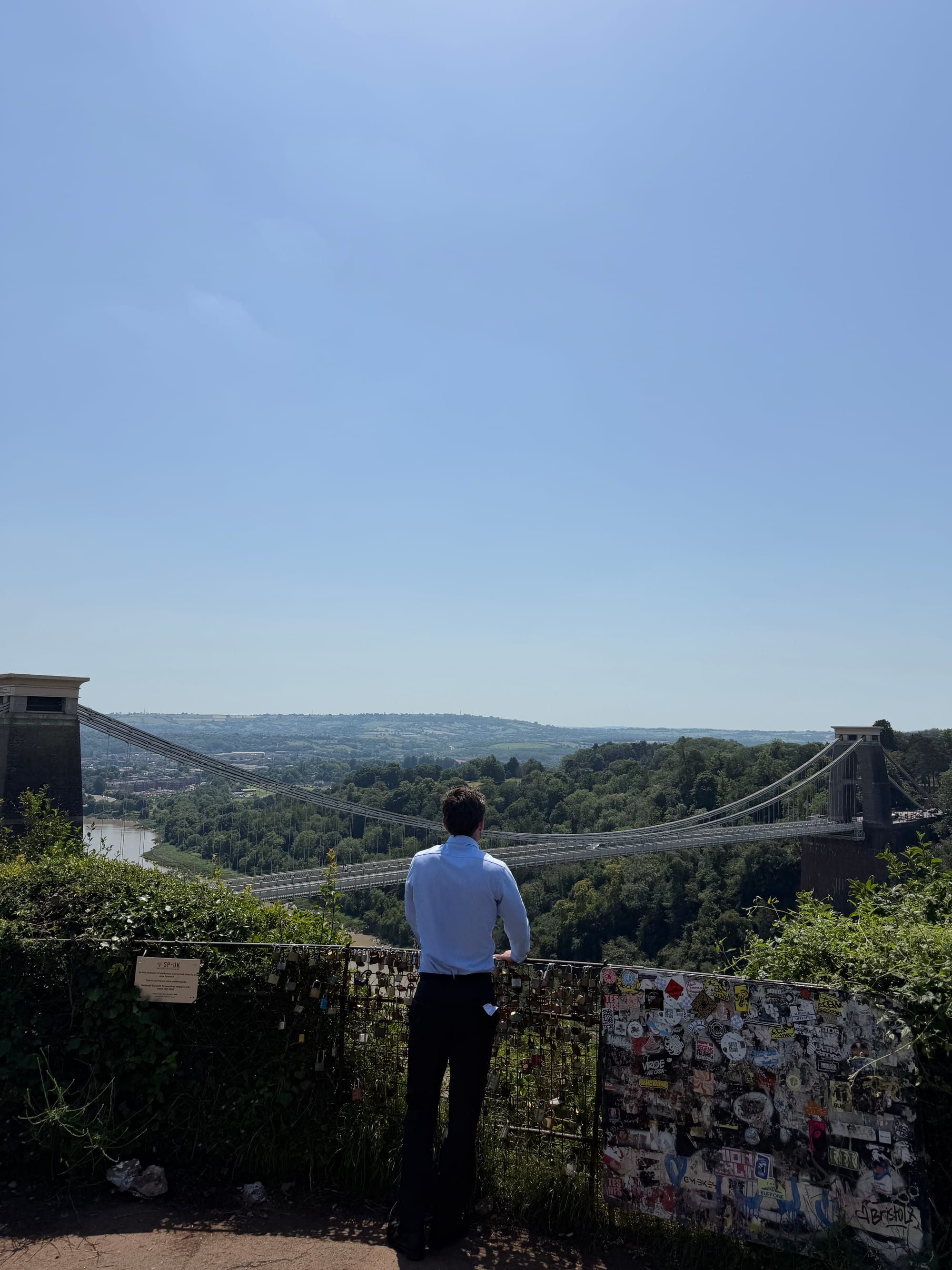
I cannot now remember precisely when I first saw the bridge.
This is an odd admission. I have a photograph of it. I remember the heat of the afternoon and the brown water of the Avon below. I remember thinking that the gorge was greener than I had expected. Yet there must have been a moment, a fraction of a second, in which the bridge entered my consciousness before I thought anything about it.
Before beautiful. Before Brunel. Before I should take a photograph.
I simply saw it.
Walking through Bristol later that afternoon, I began to wonder about that almost inaccessible moment. What exists between an experience and our first thought about the experience?
Perhaps the question sounds unnecessarily philosophical. We see things all the time. We hear sounds, feel heat, become tired, experience pain. Most of this happens without ceremony. Consciousness requires remarkably little encouragement from us. Apart from deep sleep, fainting or anaesthesia, we are immersed in it throughout our lives and even, in a stranger form, in our dreams.
Nothing is more familiar to us than consciousness.
Perhaps that is why we so rarely notice it.
We can tell someone to concentrate. We can ask them to pay attention, to pull themselves together or to think more carefully. But it would be a strange thing simply to say to someone: Be conscious!
To understand the command, they would already have to be conscious.
This suggests that consciousness and attention are not the same thing. Attention is something I can, with varying degrees of success, direct. Consciousness appears to be there before I begin directing anything at all.
I thought about this again when looking through my photographs of Bristol.
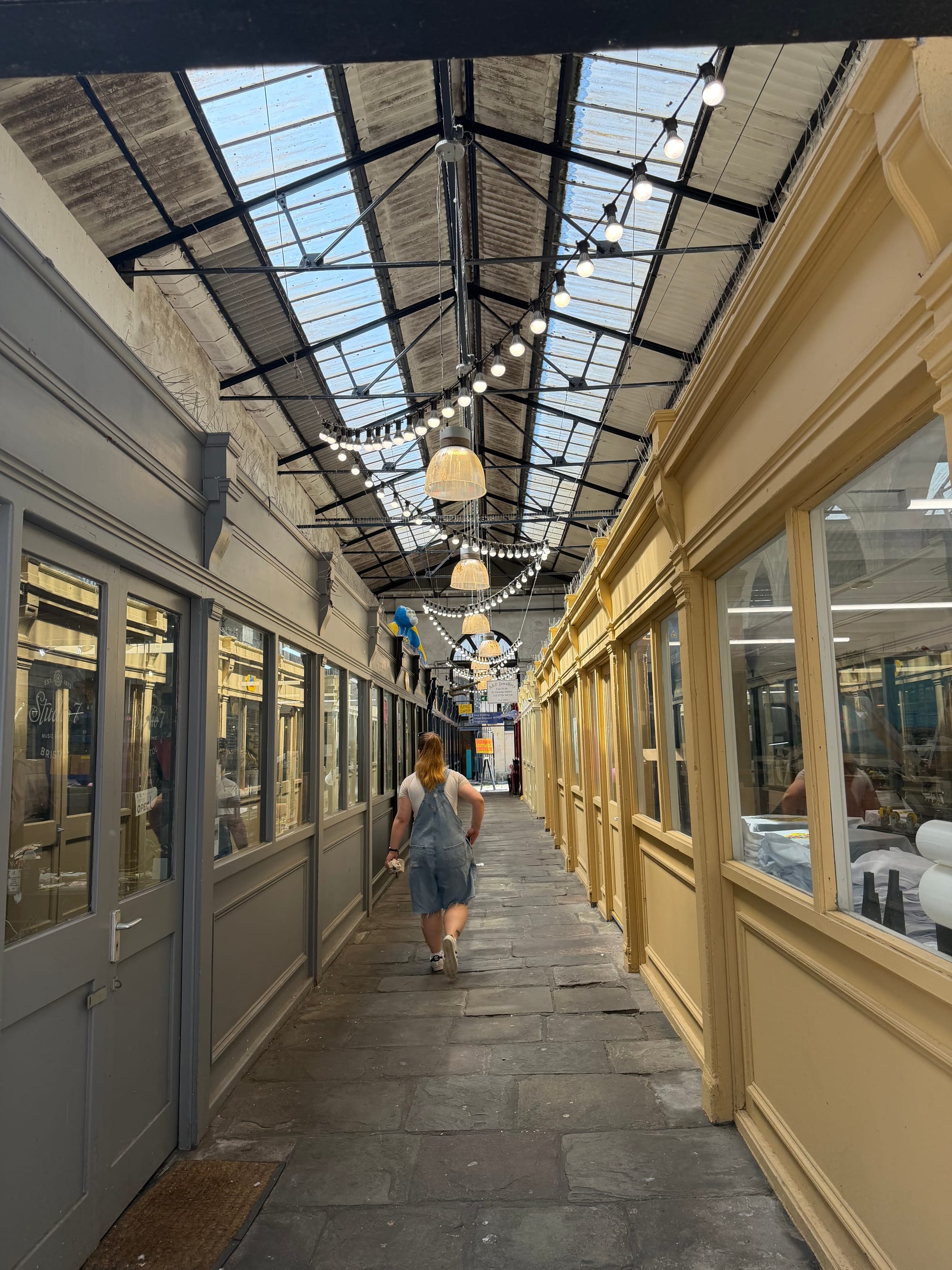
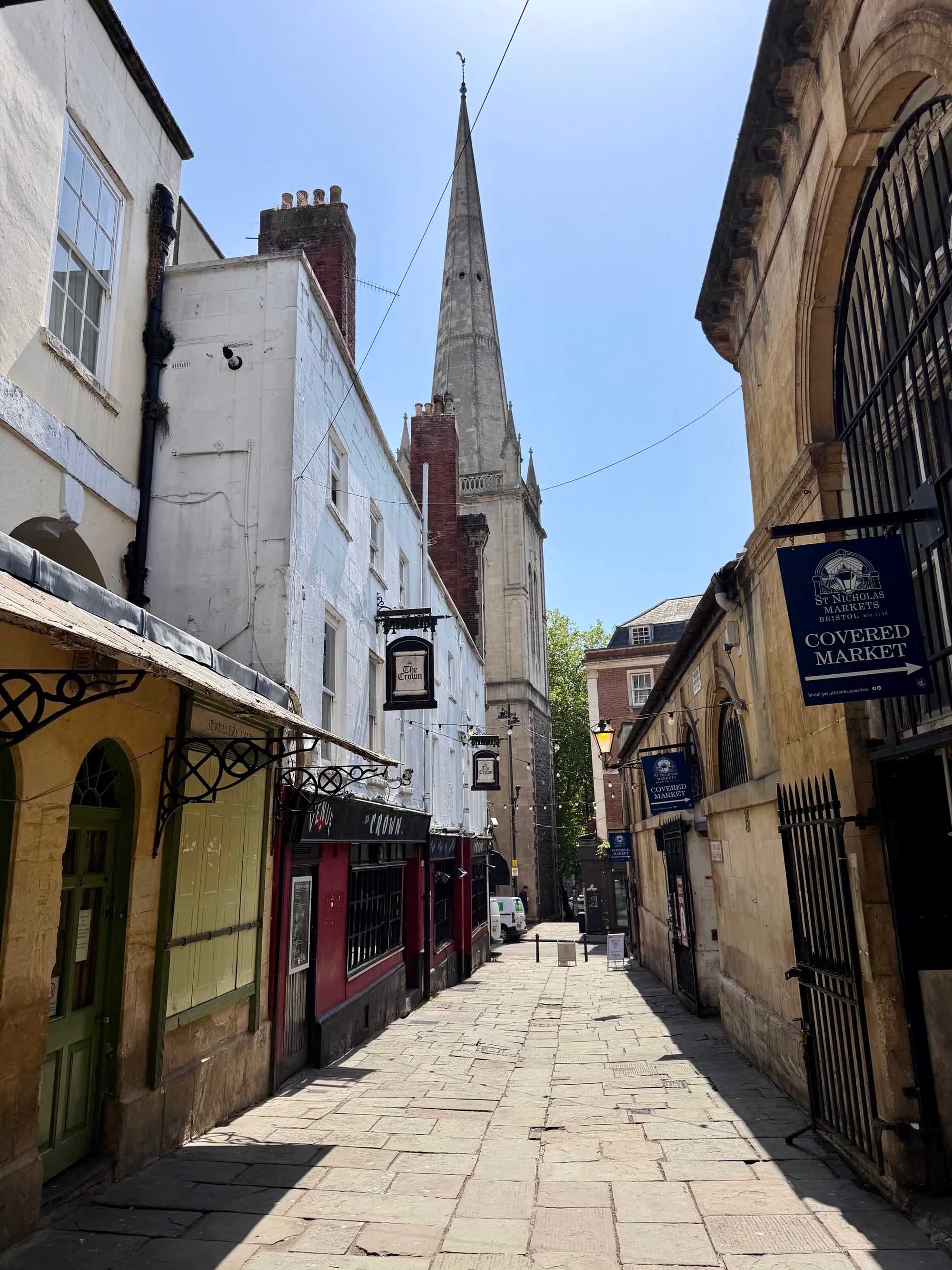
In one, taken inside a market, a woman is walking ahead of me. The shopfronts on either side are painted grey and yellow. The stone floor is uneven. Above, strings of bulbs hang beneath a glass roof.
Looking at the photograph now, I notice the bulbs almost immediately.
I do not remember noticing them at the time.
Were they present to me?
The question is more difficult than it sounds. I certainly did not think about them. I did not stop and say to myself: There are bulbs hanging above me. I did not photograph them deliberately. Yet it seems equally strange to say that they were entirely absent from my experience.
Perhaps I was conscious of more than I attended to.
Anyone who has walked through a busy city knows this phenomenon. I may be looking for a particular street while remaining aware of traffic, voices, the heat of the sun and someone walking too closely behind me. The moment my attention shifts, one of these things moves to the centre of my experience.
But where was it before?
It seems to have been already there
👁️ Before we begin naming things
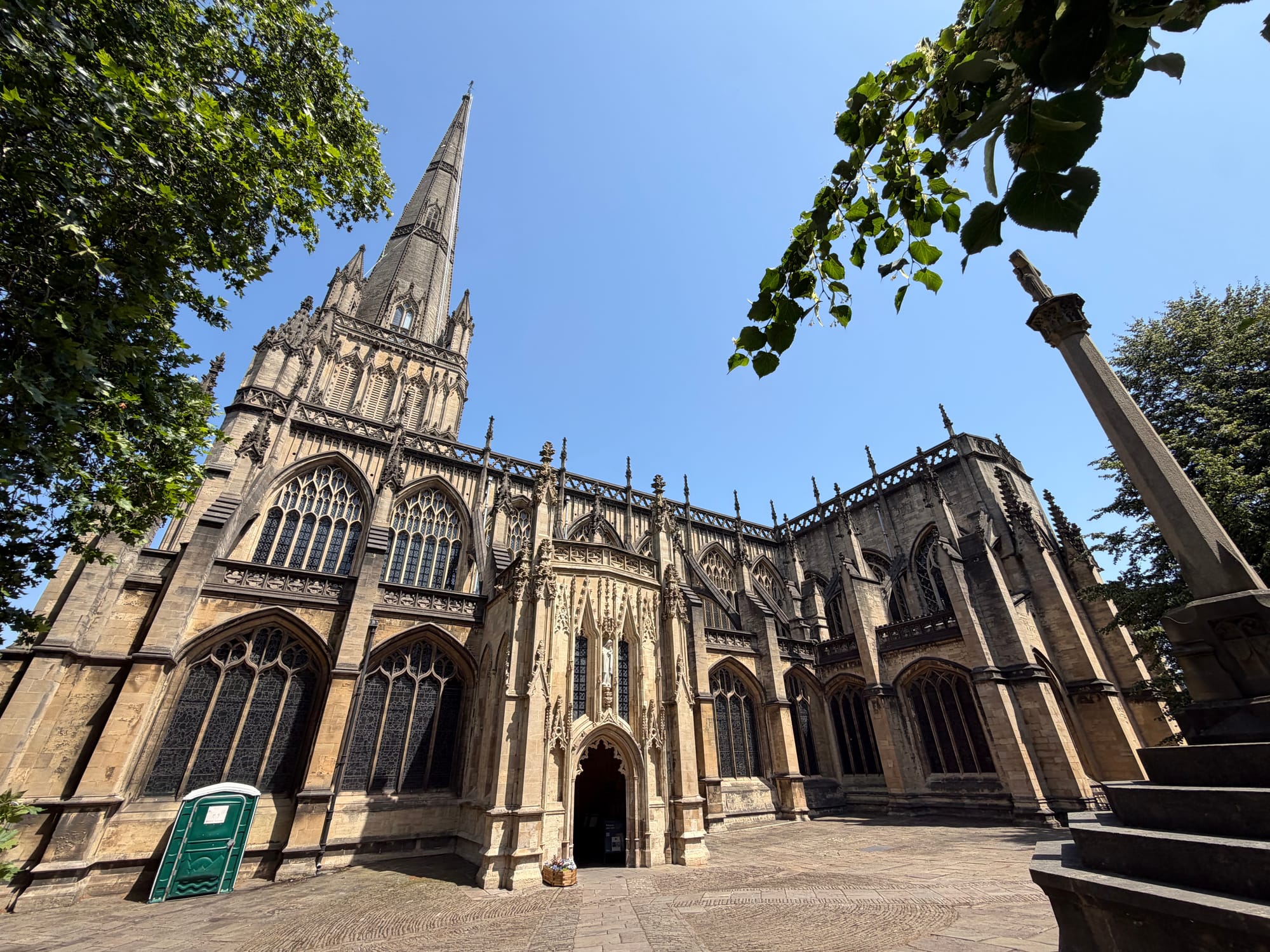
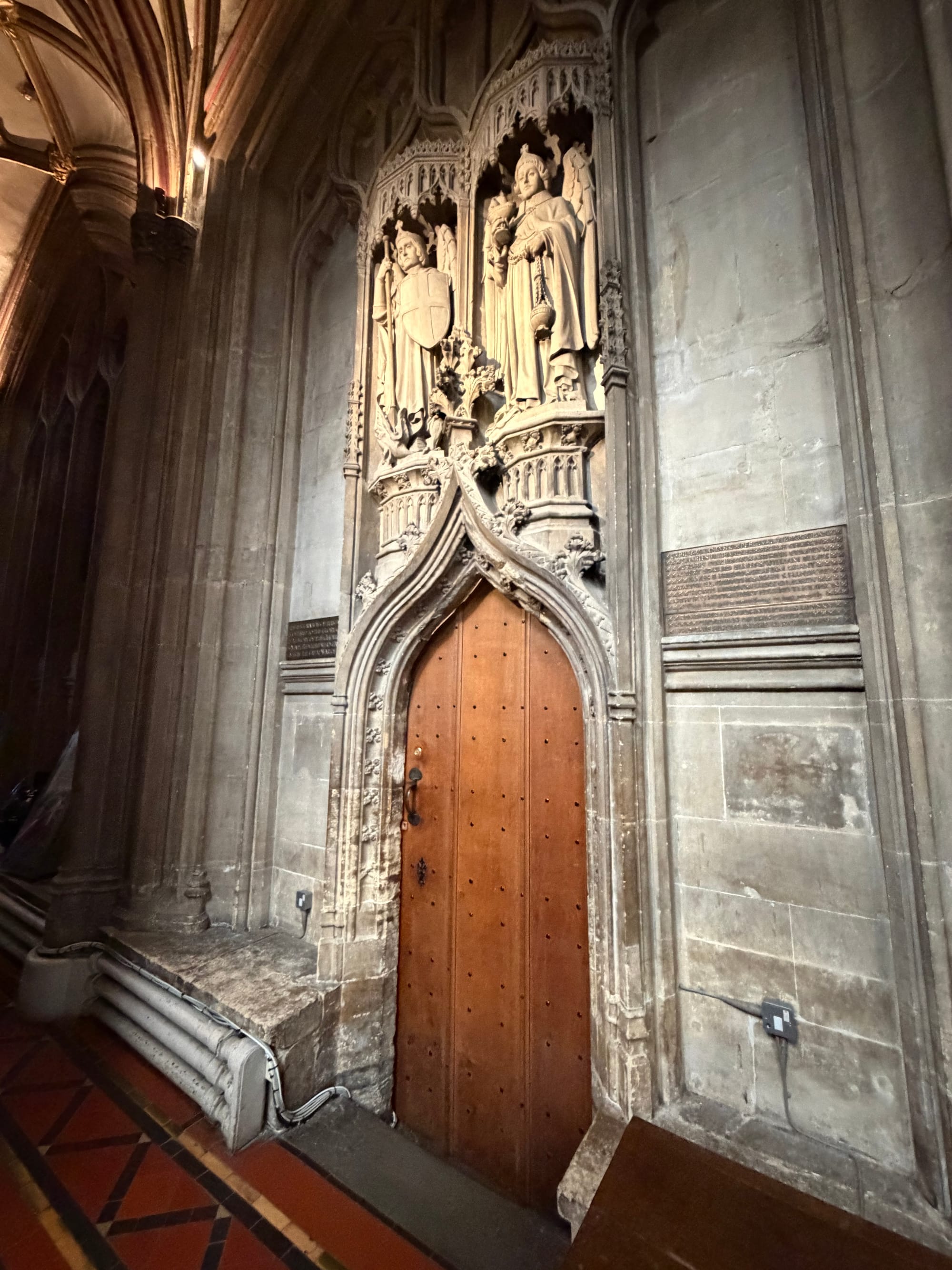
The same afternoon, I entered a church.
Churches still alter my attention.
Perhaps after so many years they always will. I know their choreography too well: the instinctive glance towards the sanctuary, the reading of the building from east to west, the almost unconscious identification of chancel, choir and nave. I no longer enter a church innocently. Before I have decided to examine the architecture, years of habit have already begun their work.
Yet on this occasion, before any of that, there was simply the sudden verticality of the place.
I looked up.
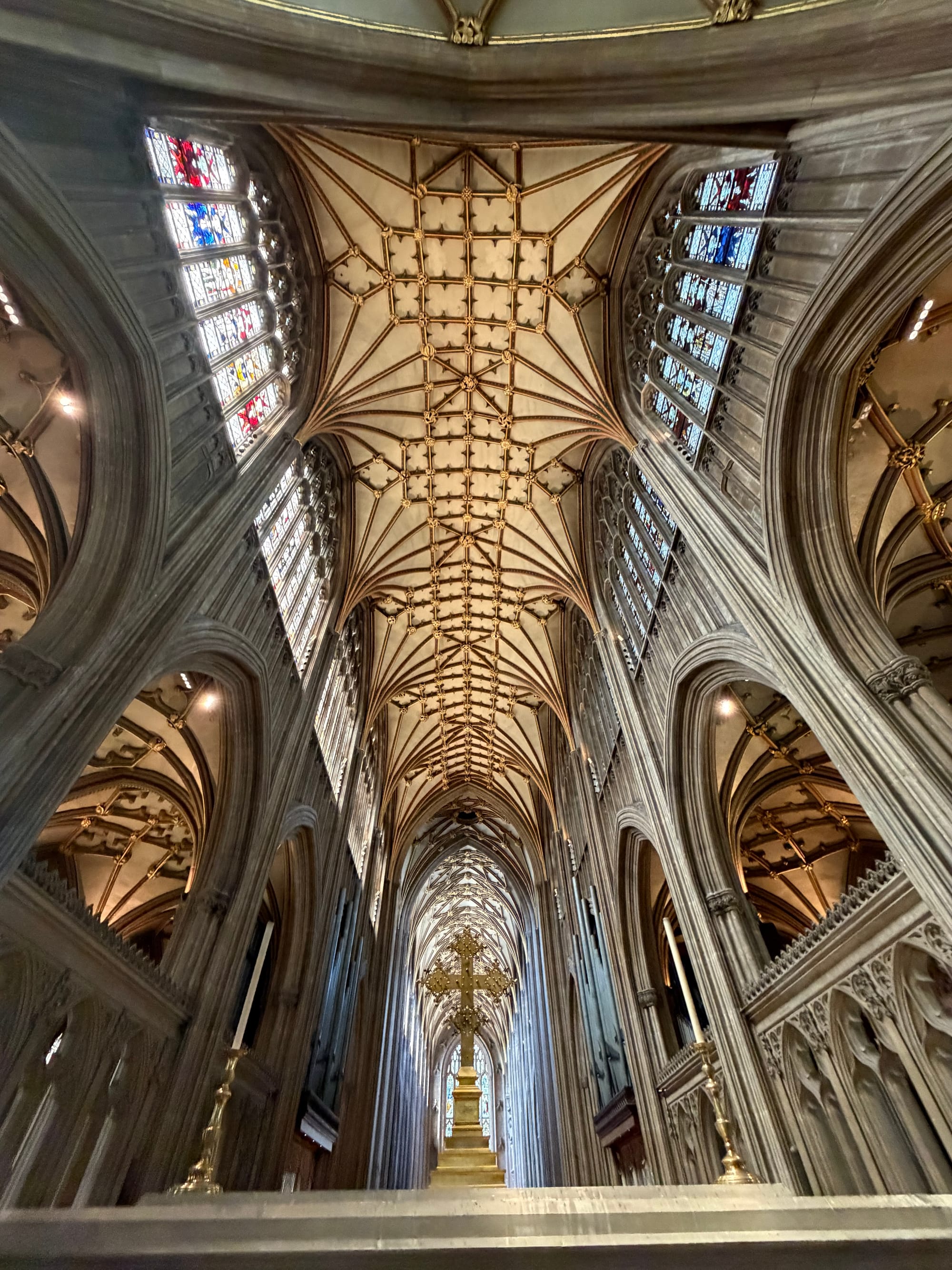
Only afterwards did I begin naming what I saw.
Vault. Rib. Arch. Clerestory.
The words arrived after the experience.
This distinction between an experience and our knowledge of an experience seems to me important. I may hear a chord and identify it wrongly. I may see a colour and give it the wrong name. My judgement can be mistaken without the experience itself somehow becoming false.
I saw what I saw.
This is one of the peculiarities of consciousness. Thoughts and judgements are subject to correction. They may be true or false, intelligent or foolish, carefully reasoned or absurd. But it makes little sense to describe the experience of pain as false pain merely because I misunderstand its cause.
The explanation may be wrong.
The hurting is still the hurting.
I have become increasingly suspicious of the assumption that familiarity necessarily brings knowledge.
We often assume that because a life is ours, we must understand it. Yet there are periods in which we act, desire, fear and hope long before we can give an intelligible account of any of it. We experience ourselves with extraordinary intimacy and nevertheless remain capable of misunderstanding ourselves almost completely.
The experience is ours.
The explanation arrives late.
Perhaps consciousness is like this at its most basic level. It does not wait to be understood before it occurs.
🪞 Who is watching the watcher?
Since Descartes, we have often imagined self-awareness through the language of looking.
We reflect. We introspect. We turn our gaze inward.
But these are metaphors, and rather dangerous ones.
Try to look inward.
Where exactly are you looking?
There is no internal room in which our experiences are displayed. There is no small spectator sitting behind our eyes watching thoughts and sensations pass before it. Yet we slip easily into speaking as though there were.
The German philosopher Johann Gottlieb Fichte saw the problem.
Suppose I became conscious of seeing the Avon Gorge only because a second mental act turned back and inspected the first. The first act sees the gorge. The second act observes the seeing and makes me conscious of it.
But is the second act itself conscious?
If not, an unconscious act has somehow created consciousness. If it must itself be made conscious, we need a third act to observe the second.
And then a fourth.
And a fifth.
We have built an infinite staircase and still have not reached consciousness.
The problem is that every spectator requires another spectator watching it.
Fichte’s solution was radical but, once seen, strangely difficult to avoid. Consciousness cannot originally become familiar with itself through reflection. It must already possess some form of self-presence before reflection begins.
The early Romantic Novalis expressed the idea in a sentence I find difficult to forget:
What reflection finds seems already to have been there.
Perhaps this is why the moment before thought is so difficult to recover.
The instant I try to examine it, I have already moved beyond it.
I can remember seeing the bridge. I can think about seeing the bridge. I can write an essay about seeing the bridge.
But I cannot return to that first instant of seeing without bringing with me everything that came afterwards.
The name.
The photograph.
The memory.
The thought.
Reflection always arrives late.
🩹 Pain without a spectator
Pain makes the problem clearer.
I can be wrong about why something hurts. I may think a pain comes from a muscle when it comes from a nerve. I may imagine something trivial and discover something serious, or fear something serious and discover that it was trivial.
But can I be wrong that pain hurts while I am feeling it?
A physical process associated with pain may occur without entering consciousness. Anaesthesia demonstrates that easily enough.
But pain itself cannot occur without hurting.
There is no hidden pain standing behind the experience, waiting to be discovered. In pain, the appearance and the experience seem inseparable.
The hurting is not information delivered to consciousness about pain.
The hurting is the pain.
This is what philosophers rather inelegantly call pre-reflective self-awareness. A conscious experience is already, in some primitive sense, present to itself before we begin thinking about it.
Knowledge stands apart from what it knows.
Consciousness does not seem to stand apart from itself.
Yet this raises a more unsettling question.
If consciousness is already present before reflection, where exactly is the I?
👤 The person closest to me
We instinctively describe conscious life in the first person.
I see.
I hear.
I feel.
But I saw the bridge before I thought, I am seeing the bridge.
I heard the city before I thought, I am hearing the city.
I entered the church and experienced the sudden change of space, light and temperature before I began to construct a sentence about any of it.
The experience did not seem to wait for a grammatical subject before it occurred.
I find this more personally unsettling than I once would have done.
There have been moments in my life when I believed that intense self-examination must necessarily lead to self-knowledge. If I thought hard enough about my motives, my choices or my desires, I assumed that I would eventually reach something clear and stable beneath them.
I am less convinced of that now.
We can be extraordinarily close to ourselves and still fail to understand ourselves.
Indeed, perhaps closeness is part of the problem.
I can stand back from the photograph of the Avon Gorge. I can enlarge it, crop it and notice things I missed. I can compare it with another photograph. The image is an object before me.
I cannot do this with myself.
Every attempt I make to understand my consciousness is already an event within that consciousness. The investigator has entered the experiment. I cannot step outside my own mind, turn around and look back at it.
This is why I have begun to wonder whether introspection is sometimes less like looking into a mirror and more like trying to see one’s own eyes without one.
The thing I am searching for is doing the searching.
⛪ Augustine in Bristol
Perhaps inevitably, sitting in a church, my thoughts went to Augustine.
I have spent what is probably an unreasonable portion of my adult life reading Augustine on the mind. Yet I had never quite connected his strange insistence that the mind can search for itself only because it is already somehow present to itself with the much simpler experience of an afternoon walk.
Augustine’s inward turn is famous. Do not go outward; return into yourself.
It is tempting to imagine him directing us towards an interior world: close the door, shut out the noise and inspect the soul.
But Augustine’s mind is much stranger than that.
The mind is present to itself and yet remains a question to itself.
This is the paradox that fascinates me.
How can I search for myself if I am entirely unknown to myself?
If I were wholly absent from myself, I would not know what I was looking for. Yet if I already understood myself perfectly, there would be no reason to search.
The very possibility of self-enquiry seems to require a peculiar middle position.
I am already here.
But I do not yet know what I am.
Augustine understood this with extraordinary psychological depth. In the Confessions, he can ask: What, then, am I, my God? What is my nature?
The person asking the question is not absent.
He is simply not transparent to himself.
The mind possesses itself before it comprehends itself.
And perhaps this is why Augustine remains so compelling to me. His inward turn never produces the neat, self-contained ego that we sometimes imagine modern introspection will uncover. He goes inward and finds greater mystery.
For Augustine, of course, the movement does not end with the self. God is interior intimo meo et superior summo meo: more inward than my innermost self and higher than my highest.
The inward journey ultimately breaks beyond the person undertaking it.
But even if we leave the theology aside, the philosophical problem remains.
What is closest to us may be precisely what is most difficult to know.
🌿 What was already there
At the end of my afternoon in Bristol, I had photographs.
The gorge.
The bridge.
The church.
A market I walked through almost without noticing.
Looking at them now, I find details that I cannot remember seeing. Perhaps some were genuinely absent from my conscious experience. Perhaps others occupied its margins without ever becoming objects of attention.
I cannot now reconstruct the precise boundaries.
And that, increasingly, seems to me to be the point.
Consciousness is not obscure because it is remote from us.
It is obscure because it is too close.
Before attention, before judgement and perhaps even before the I announces itself, experience is already occurring.
Only afterwards do we begin naming things.
Bridge.
River.
Church.
Self.
We walk back through the afternoon and try to understand what happened.
And what reflection finds seems already to have been there.