The Melancholy of Ruins
🚗 The Freedom of Being in Transit
One of the more agreeable features of my profession is that it requires a considerable amount of travelling. The English courts are scattered across the country, often in towns which might otherwise remain little more than names upon a map. I have come to enjoy this itinerant existence: the early departures, the unfamiliar roads, and the curious experience of participating, however briefly, in the affairs of places to which I have no particular attachment. There is a certain freedom in being perpetually in transit, belonging for a few hours to somewhere without ever quite becoming part of it.
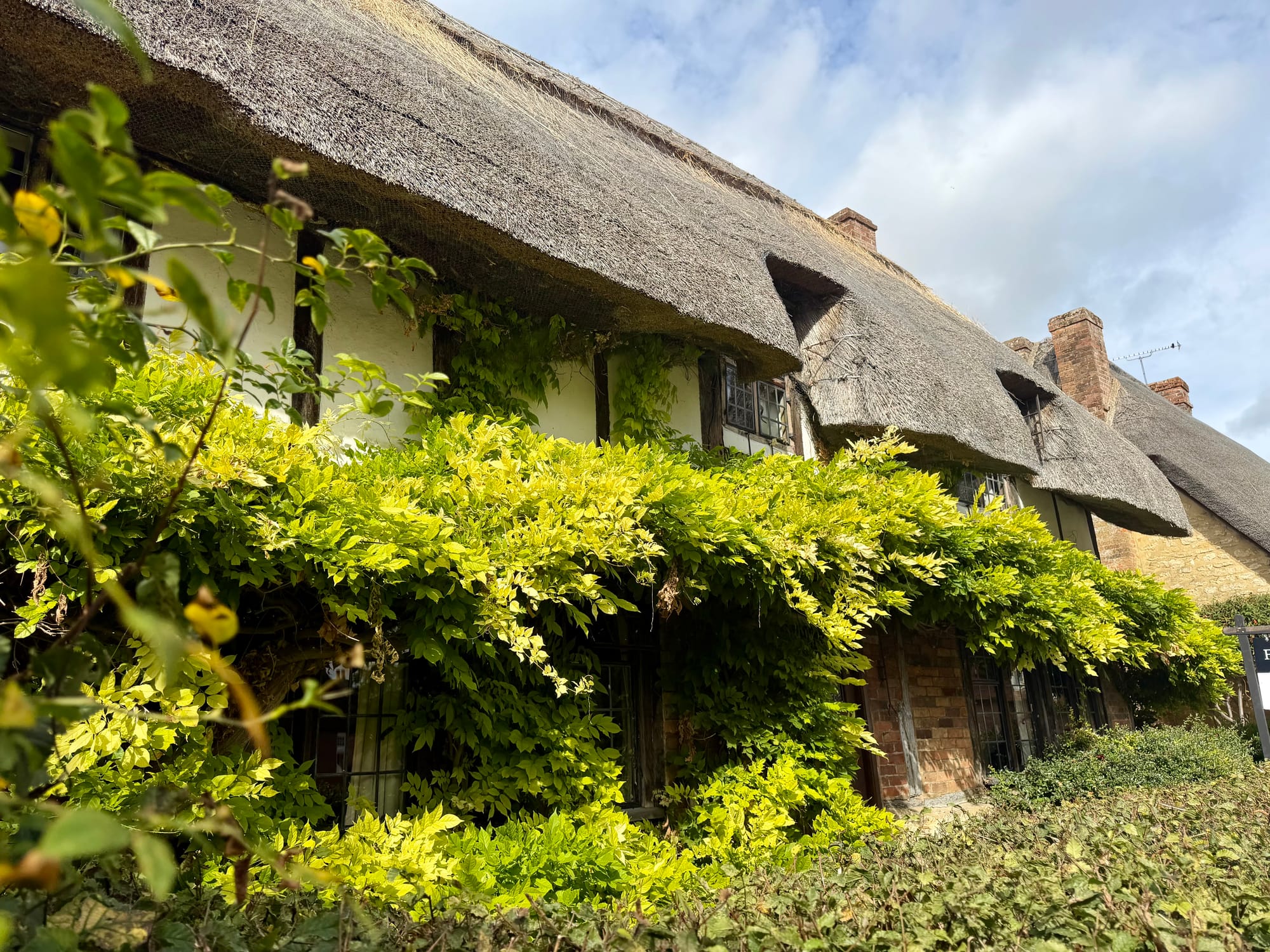
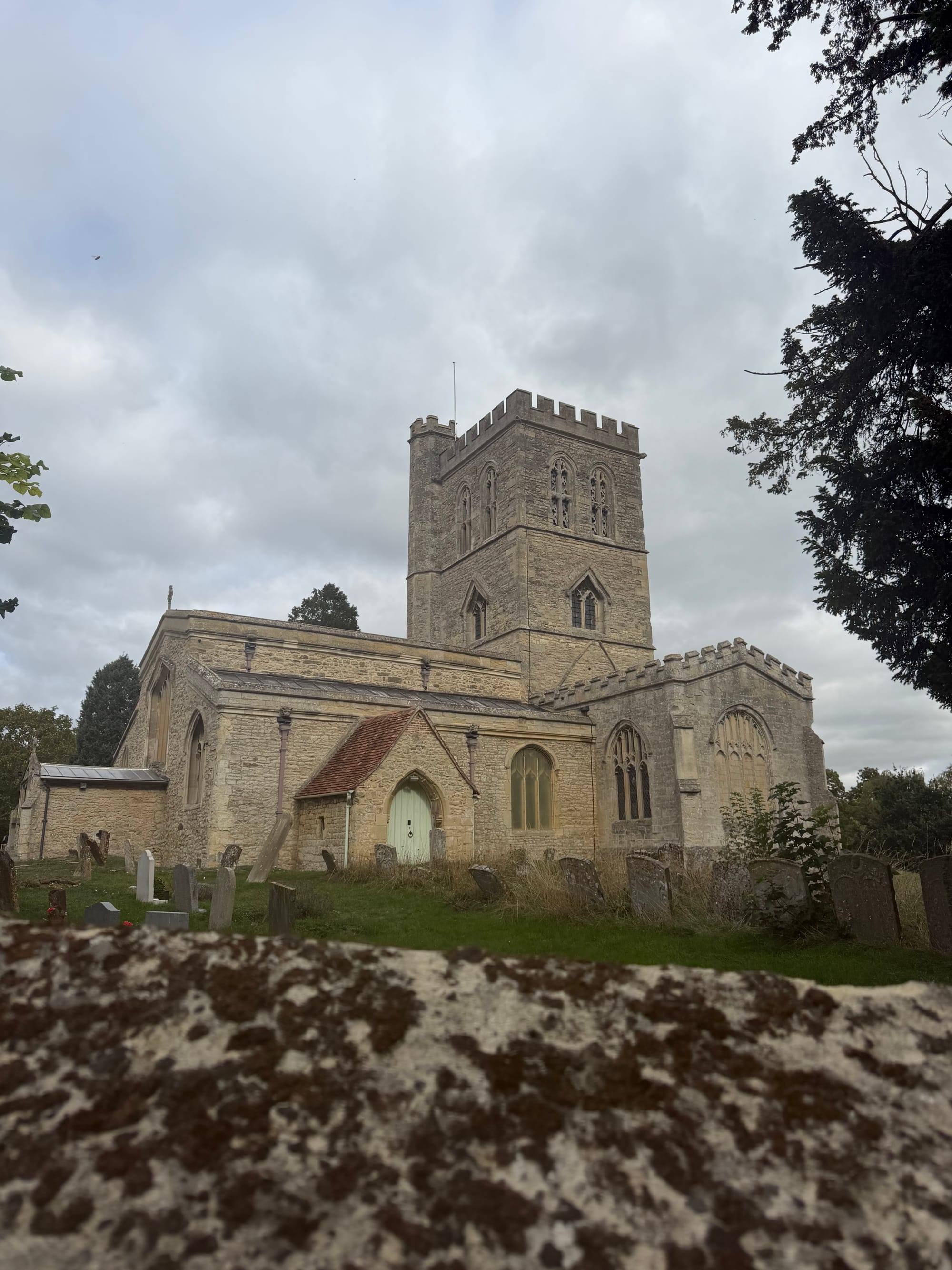
Last week, work took me to Aylesbury. Once my professional obligations were discharged, I decided to spend the remainder of the day wandering through the surrounding countryside. I passed through Long Crendon, with its picturesque medieval houses, and continued to Dorchester Abbey, before eventually making my way to Donnington Castle.
🏰 The Castle on the Hill
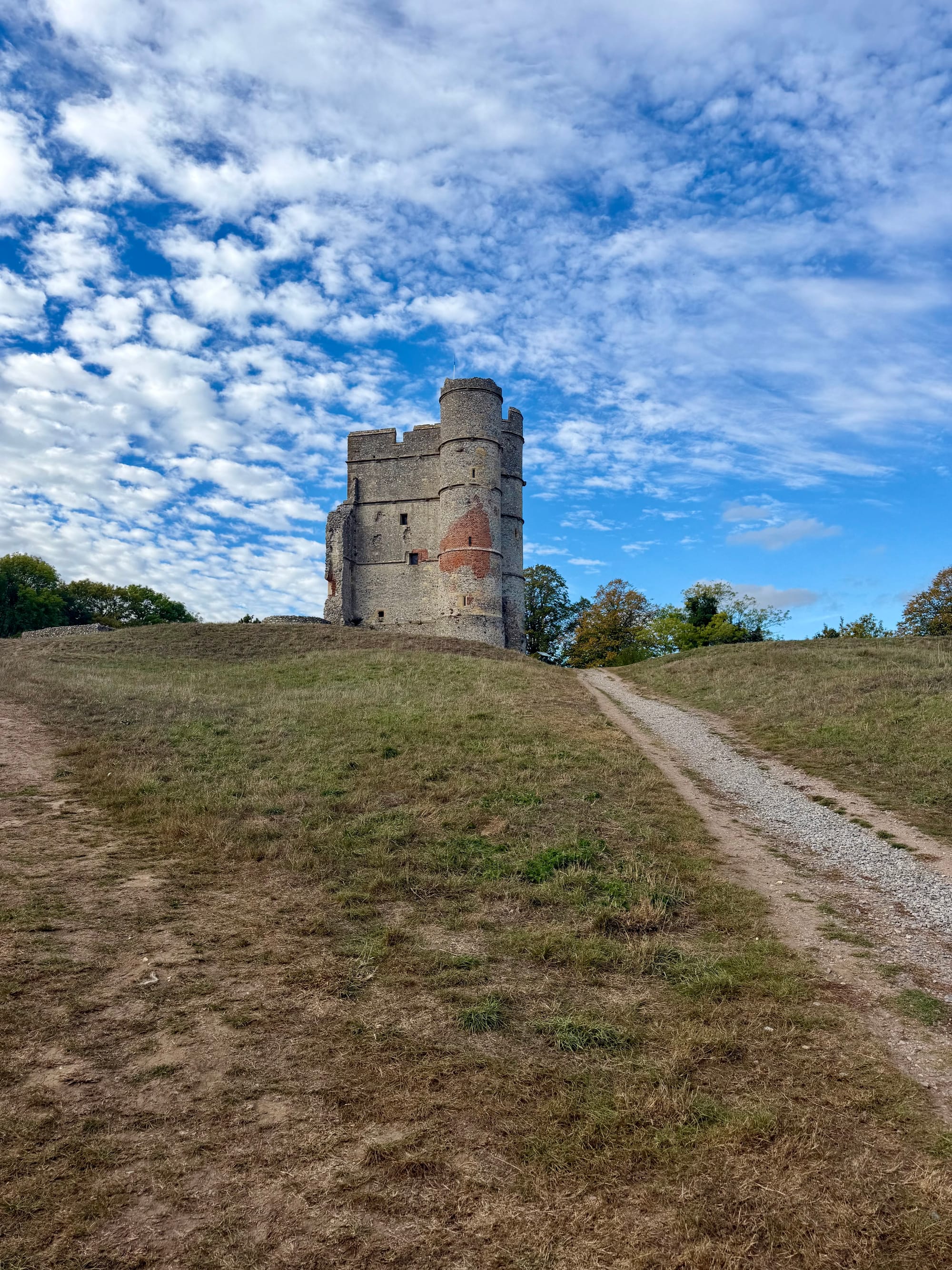
It was the castle which remained with me.
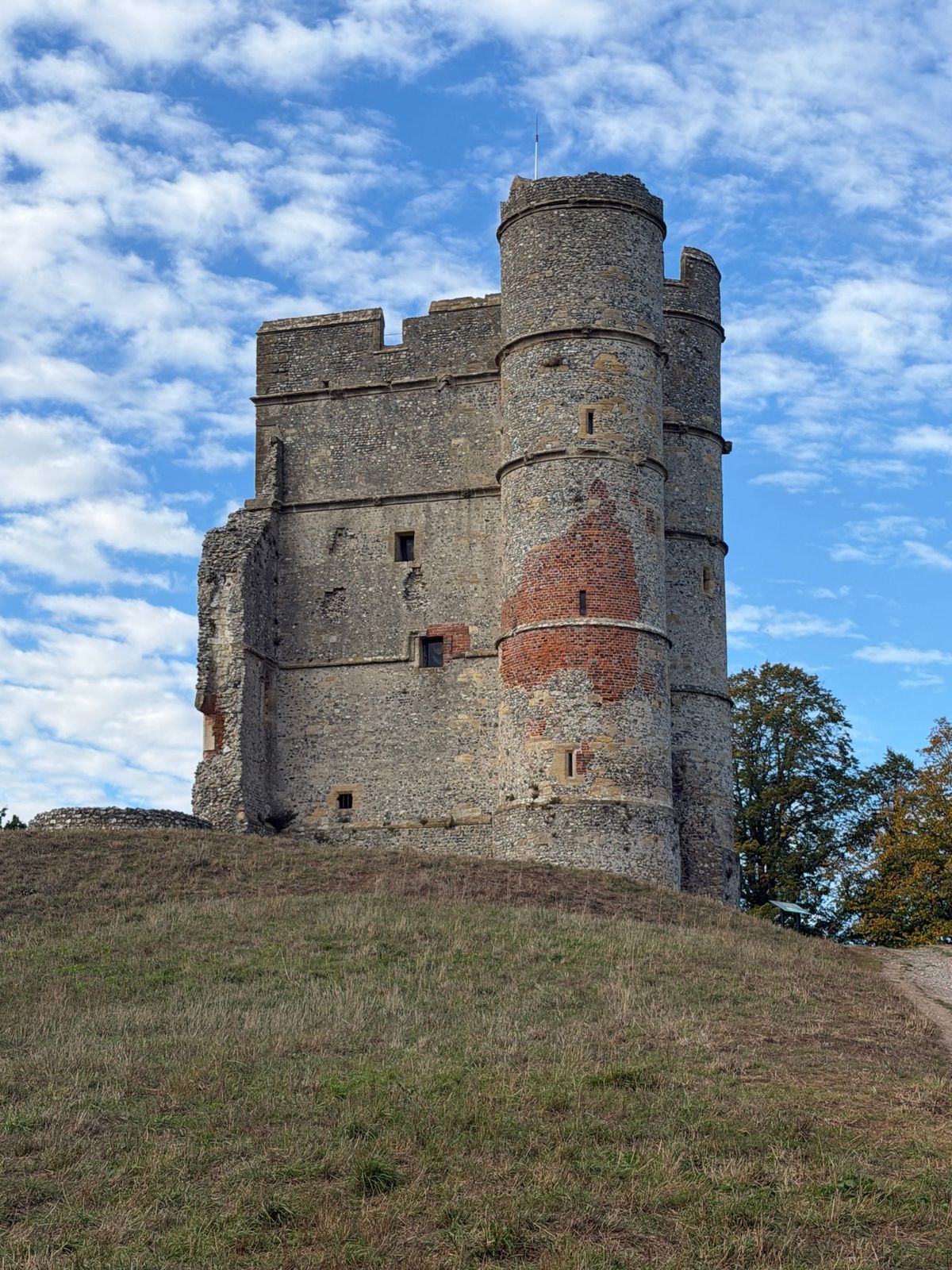
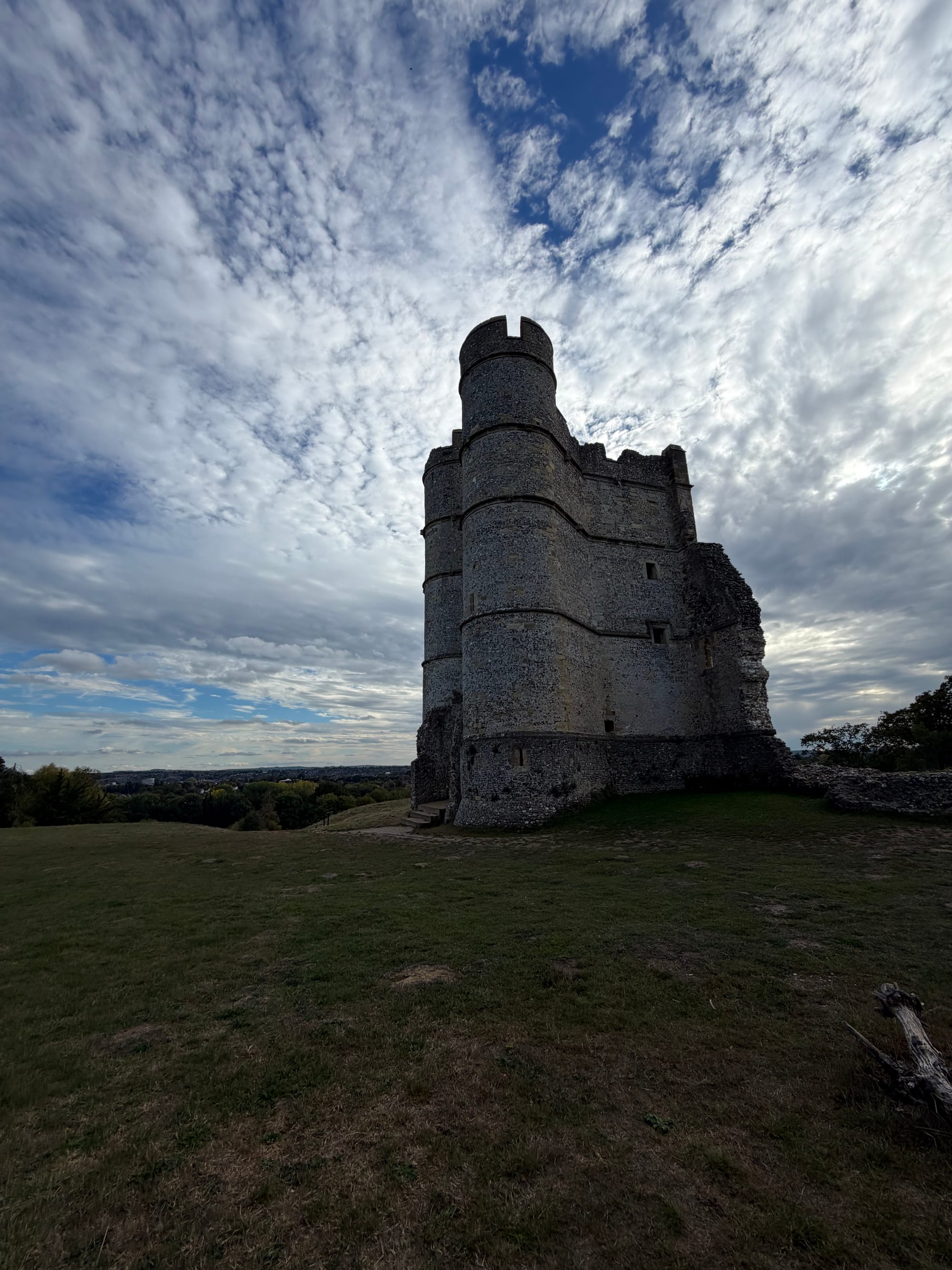
Standing upon its hill beneath a restless October sky, the surviving gatehouse appeared almost painfully solitary. Once a formidable assertion of wealth, authority and military power, it had been reduced to a fragment of itself: the will made visible in stone, its desire for possession, security and permanence now exposed as vulnerable to the very time against which it had sought to fortify itself.
The surrounding countryside seemed entirely indifferent to its fate.
There is something particularly affecting about the ruins of a castle. The remains of a monastery may retain a vestige of sanctity, suggesting that the spiritual aspirations of its builders somehow survived the destruction of their work. A castle offers no such consolation. Its purpose was decidedly terrestrial. It was constructed to secure possessions, defend privilege, intimidate enemies and preserve the authority of those who inhabited it. Its architecture was an expression of the profoundly human desire to impose permanence upon an uncertain world.
And yet there it stood, defeated not merely by history, but by the very passage of time against which its builders had sought to fortify themselves.
🌀 The Will and the Ruin
I found myself thinking of Arthur Schopenhauer.
Schopenhauer is commonly remembered as the great philosopher of pessimism, a thinker for whom human existence is characterised by suffering, disappointment and the ceaseless frustration of desire. Yet there is something more penetrating in his philosophy than the familiar observation that life is frequently unhappy. His pessimism arises from a more fundamental conviction: that the very structure of human existence condemns us to perpetual striving.
He calls this underlying force the will. By the will he does not mean conscious choice or deliberate intention, but a blind, restless impulse that precedes reflection. We do not first calmly decide what to want and then pursue it. Rather, we find ourselves already wanting: hungry, ambitious, anxious, desirous of recognition, fearful of loss. Conscious thought often arrives afterwards, supplying reasons for movements whose deeper source lies beneath reason.
The will is therefore not simply one desire among others. It is the condition that produces desire itself.
We desire what we lack, pursue what we desire, and, having obtained it, discover that satisfaction is remarkably short-lived. The object of our ambition changes, but the condition of wanting remains. Even success provides no lasting emancipation, for the cessation of one desire merely makes room for another. When we are no longer tormented by striving, we become vulnerable to boredom. Human existence, Schopenhauer famously observed, oscillates between suffering and boredom.
It is difficult to imagine a more fitting monument to this condition than a ruined castle.
Consider the extraordinary expenditure of human effort represented by its construction: the labour of innumerable hands, the accumulation of wealth, the calculation of political advantage, the anxieties of defence and the ambitions of ownership. How seriously its inhabitants must have regarded the concerns which governed their lives. How urgently they must have pursued their interests, defended their reputations and feared their enemies.
The castle was not merely a building. It was the will made visible: desire translated into stone, the impulse towards possession and security given walls, towers and battlements. Its builders attempted to convert the instability of existence into something solid. They sought to make their power appear as permanent as the masonry itself.
And what remains?
A gatehouse, a few broken walls, and the occasional visitor contemplating the melancholy beauty of their disappearance.
🎭 The Theatre of Society
Schopenhauer was especially contemptuous of the tendency to locate happiness in external circumstances. Wealth, rank, reputation, possessions and the favourable opinions of others are, by their nature, precarious foundations upon which to construct a life. They exist beyond our control and remain perpetually vulnerable to the accidents of fortune. The person who places the centre of his existence in such things effectively entrusts his happiness to a world which has made no undertaking to preserve it.
The castle seemed to embody this folly in stone.
Its builders sought security in architecture, permanence in property and significance in social position. Yet the very monument intended to preserve their standing now testifies to its disappearance. It is almost as though history has preserved the evidence of their ambitions for the peculiar pleasure of demonstrating their futility.
But perhaps it would be too easy to direct such observations towards the dead.
We are scarcely different.
Our own fortifications are simply less conspicuous. We construct careers, accumulate possessions, cultivate reputations and perform our appointed parts within the elaborate theatre of society. We invest extraordinary emotional energy in circumstances which, viewed from a sufficient distance, possess no greater claim to permanence than the quarrels of medieval landowners.
The will has not disappeared; it has merely changed its costume.
Schopenhauer was particularly perceptive about this theatrical quality of human existence. The Latin persona, he reminds us, originally denoted the mask worn by an actor. Society, in his estimation, is a kind of perpetual comedy in which individuals conceal themselves beneath the conventions and expectations of their respective roles.
Perhaps there is something especially amusing about this observation to someone who spends his working life wearing a wig and gown.
Yet the costume is only the most visible manifestation of a more general condition. We all participate in performances whose rules we seldom examine. We acquire titles, assume responsibilities, defend our standing and allow ourselves to become absorbed in the maintenance of identities which are, in the end, remarkably fragile.
There is something faintly ridiculous in our solemnity.
🏛️ The Abbey and the Desire to Transcend
The ruined castle exposes this absurdity without uttering a word. It shows what the will looks like after its immediate purposes have vanished. Once the walls no longer defend, impress or contain, they become available to another kind of attention. The same stones that formerly served ambition can now reveal ambition’s dependence upon time, circumstance and recognition.
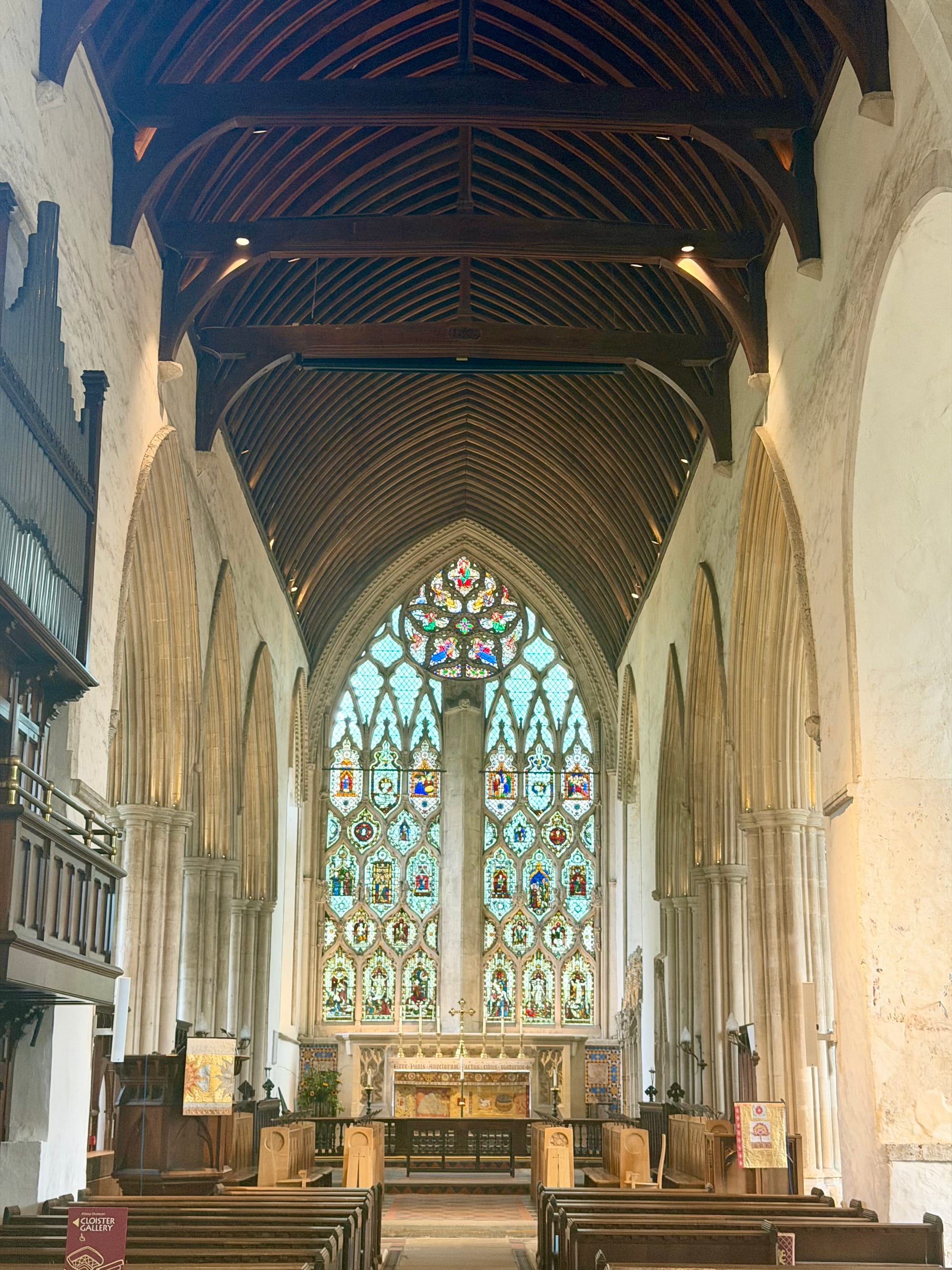
This change in the castle’s meaning became clearer to me when I thought of Dorchester Abbey.
Earlier that afternoon, within its ancient walls, I had encountered a rather different expression of humanity’s struggle against transience. Successive generations had sought to give material form to aspirations directed beyond the limits of earthly existence. Its stained glass, carved stone and accumulated centuries of devotion seemed to suggest an altogether different response to mortality.
Where the castle had sought to defend the temporal, the abbey had sought to transcend it.
Yet both represented, in their different ways, the human refusal to accept the apparent insufficiency of the present. Both were attempts to make desire durable: the castle through possession and defence, the abbey through worship and transcendence. The difference lies not in the absence of the will, but in the direction given to it.
🐇 The Rabbit and the Change of Aspect
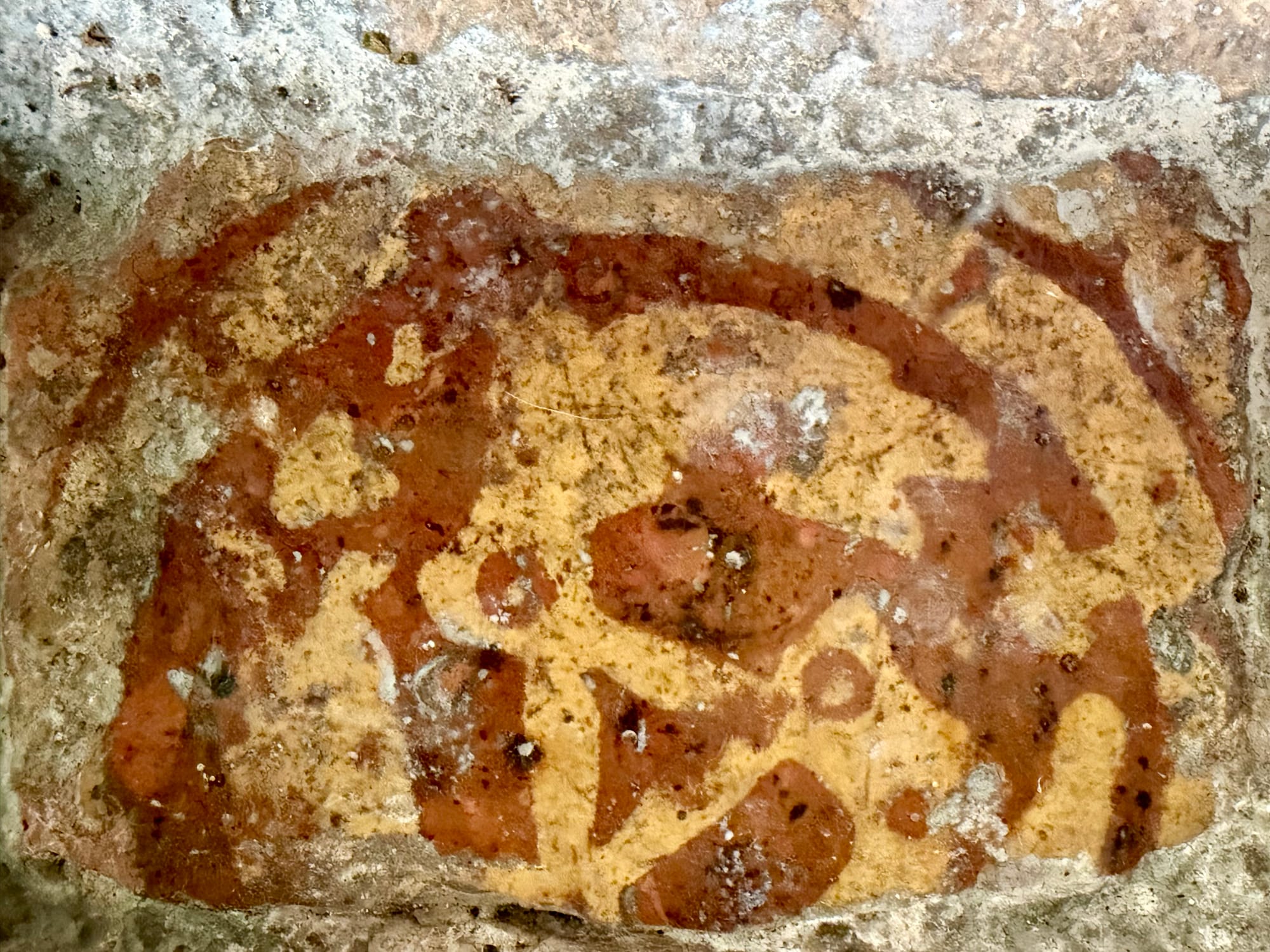
Among the surviving fragments of medieval decoration, I noticed a curious image of rabbits painted upon the ancient masonry. There was something oddly affecting about these small creatures, their forms still visible after so many centuries, their original significance no longer immediately apparent.
They reminded me of Wittgenstein’s celebrated duck-rabbit.
In the Philosophical Investigations, Wittgenstein considers the curious phenomenon by which an ambiguous figure may be perceived first as a duck and then as a rabbit. Nothing in the drawing itself changes. The transformation occurs in our apprehension of it. We suddenly see the same thing under a different aspect.
There is something rather profound in this apparently trivial observation.
We are accustomed to thinking that our perceptions offer us an uncomplicated account of the world. Yet so much of what we see is inseparable from the concepts, expectations and associations through which we encounter it. An object may remain materially unchanged while acquiring an entirely different significance in our experience.
Schopenhauer’s distinction between the will and representation gives this change of aspect an additional force. The world we encounter is never simply the world in itself; it is the world as it appears within the forms of our perception and in relation to our interests. When the will governs our attention, we see things according to their uses, threats and possibilities. A wall is something to defend, cross, own or repair. A building is a possession, a status symbol or an instrument.
But when the will briefly falls silent, the same object can appear otherwise.
Perhaps ruins are especially susceptible to this transformation of aspect.
To their builders, the walls of Donnington Castle represented security, prestige and the perpetuation of an established order. To us, those same stones have become emblems of impermanence. What was intended as an assertion of strength now appears as evidence of weakness; what was conceived as a monument to endurance has become an illustration of inevitable decay.
The material remains, but the aspect under which we perceive it has changed.
This change is not merely intellectual. It alters the emotional character of the object. The castle is no longer encountered as its builders encountered it, as a means towards possession, defence or authority. Nor is it encountered simply as a historical artefact. It becomes a visible tension between what the will intended and what time has permitted: an assertion of permanence that now derives its meaning from failure.
Indeed, I wonder whether melancholy itself might sometimes be understood as a form of aspect-perception: that sudden transformation by which something beautiful appears simultaneously as a reminder of everything that has vanished.
A ruined castle is picturesque until one remembers that it was not built to be picturesque.
It becomes melancholy when one begins to comprehend the distance between its original intentions and its present condition.
🎨 The Beauty of Uselessness
There is, however, a curious paradox in all this.
For while the castle’s ruin represents the failure of human ambition, it is precisely that failure which makes it beautiful.
The complete castle would have been an instrument of power, its architecture subordinated to practical considerations of defence, habitation and prestige. The ruined castle has been liberated from these purposes. No longer required to protect its inhabitants or demonstrate their importance, it exists for the spectator as an object of contemplation.
Its uselessness has become the condition of its beauty.
Here, perhaps, Schopenhauer offers his most unexpected consolation.
For all his insistence upon the suffering inherent in existence, he recognised in aesthetic experience the possibility of a temporary liberation from the tyranny of the will. In moments of genuine contemplation, we cease to encounter the world merely as an arrangement of objects to be desired, possessed, feared or employed. We become, momentarily, disinterested spectators.
This does not mean that the will is destroyed. It means that, for a brief interval, it is no longer directing our attention. We are not asking what the castle can do for us, whether it can advance our interests, or how its existence might satisfy some further desire. We are released from the practical question of what the object is for.
The incessant demands of our individual existence fall silent.
We no longer ask what something might offer us, how it might advance our interests, or whether it might threaten our security. We simply contemplate it.
In such contemplation, the object is no longer reduced to its relation to us. The castle is not merely a failed defence, a picturesque ruin or a prompt for historical reflection. It becomes, however briefly, something encountered without appropriation. We see its forms, textures and proportions without immediately converting them into instruments of the will.
This is why aesthetic contemplation can feel like a form of solitude even when other people are present. It withdraws us from the ordinary network of wanting. We are still in the world, but no longer pressing ourselves upon it. The self becomes less insistent because the will, which ordinarily makes everything matter in relation to our private interests, has temporarily relaxed its grip.
🌲 The Consolations of Solitude
From this point, the attraction of ruins leads naturally to the attraction of solitude.
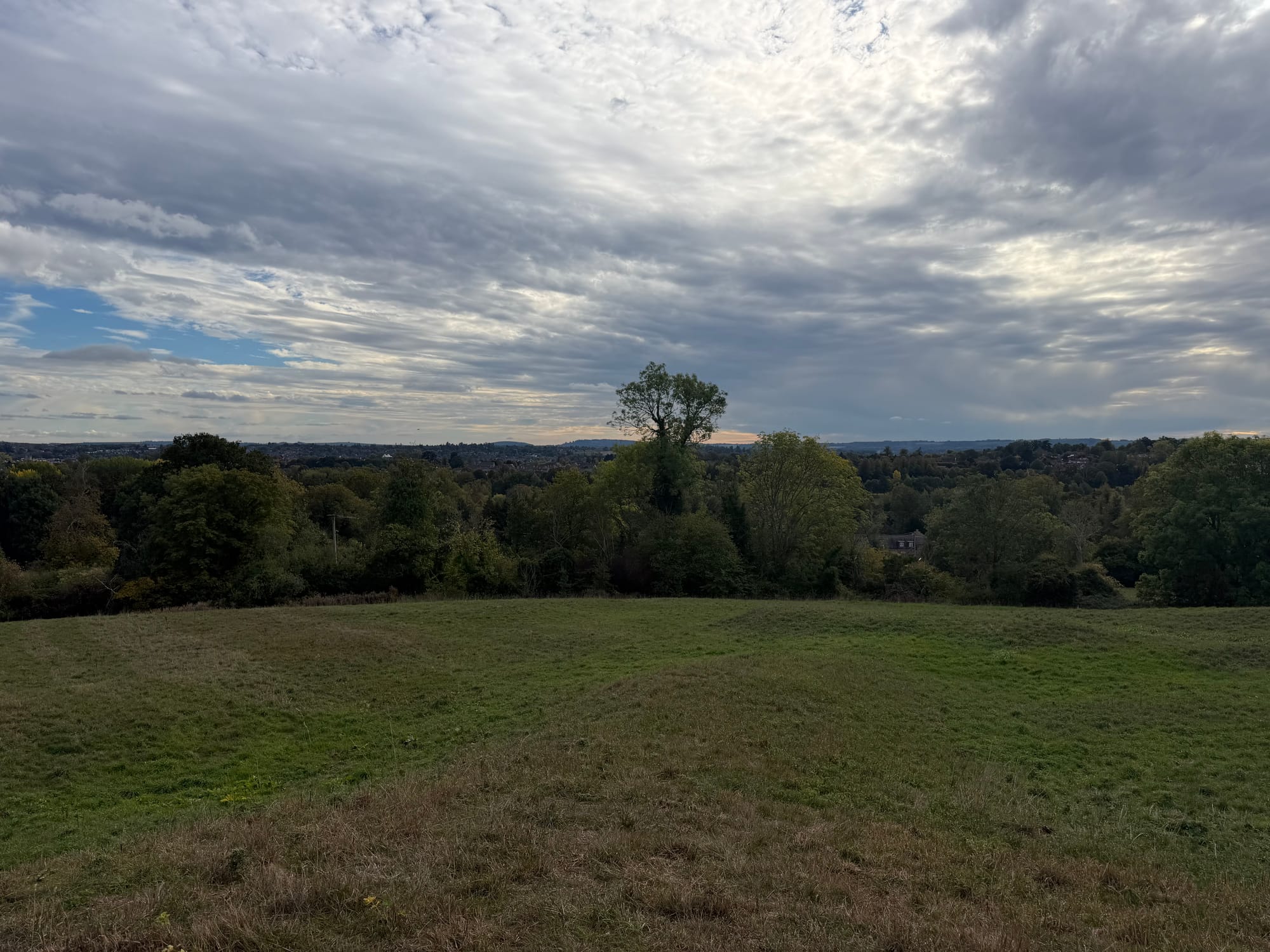
Perhaps this is why I find myself increasingly drawn to deserted churches, ancient ruins and lonely stretches of countryside. Their attraction lies not merely in their historical interest or architectural beauty, but in the peculiar freedom afforded by their indifference.
They demand nothing of us.
There are no reputations to defend, no expectations to satisfy, no social obligations to negotiate. The elaborate comedy of human society is briefly suspended. One stands before the remains of another age and experiences the rare pleasure of not being required to participate in anything.
The ruin’s indifference is important. A functioning building still makes claims upon us. It directs movement, imposes duties and announces a purpose. A ruin has lost the authority of its original function. It no longer insists that we enter, obey, defend or admire. Its brokenness creates a space in which the will can cease treating the world as a field of demands.
Schopenhauer, who possessed an extraordinarily low opinion of society, advised cultivating the ability to preserve something of one’s solitude even in company. He compared society to a fire: approached at the proper distance, it may provide warmth; approached too closely, it burns.
There is wisdom in the metaphor, particularly in an age which seems increasingly determined to abolish the possibility of solitude altogether.
We have become accustomed to the perpetual exhibition of ourselves. Our opinions must be announced, our accomplishments displayed, our experiences documented and our identities continually reaffirmed through the recognition of others. Even leisure has acquired something of the character of performance.
Perhaps we have never been more publicly visible, nor more dependent upon the judgement of strangers.
Yet solitude offers something which the approval of others cannot: the possibility of encountering the world without the continual mediation of one’s social existence.
It is not necessarily a cheerful experience.
Indeed, solitude may expose us to precisely those uncomfortable reflections from which society provides such convenient distraction. Removed from the consolations of activity and conversation, we become conscious of the peculiar restlessness of our own minds. We discover how difficult it is simply to exist without wanting something else.
This is the point at which solitude and aesthetic contemplation meet. To be alone is not automatically to be free from the will. One may carry ambition, resentment and anxiety into the most deserted landscape. The mind can reproduce society within itself, continuing to seek approval from absent spectators and to rehearse arguments before imaginary judges.
Solitude becomes consoling only when it permits a different relation to experience: not the elimination of desire, which would be impossible, but a temporary loosening of its authority.
Perhaps this explains why solitude is so frequently sought and so rarely endured.
🪞 The Vanity of Understanding
Schopenhauer understood that the capacity to be alone depends upon possessing a sufficiently rich interior life. Those who require the continual stimulation of external circumstances remain vulnerable to their disappearance. The mind which has cultivated its own resources may find satisfactions which are less dependent upon the accidents of fortune.
Yet even this offers no final escape from the human predicament. Intellectual activity, no less than worldly ambition, may become another expression of the will. We pursue knowledge, distinction and understanding with the same restless urgency that others devote to wealth or position.
There is no obvious reason to suppose that philosophers are exempt from vanity merely because they have acquired the vocabulary with which to describe it.
Indeed, the desire to understand the futility of ambition may itself become a particularly sophisticated form of ambition.
The thought amused me as I stood looking at the castle.
I had spent the morning attending to the serious business of other people’s lives, participating in an institution whose authority depends, among other things, upon the conviction that human actions and their consequences matter profoundly. A few hours later, I found myself contemplating a monument which seemed to suggest that even our most consequential endeavours are destined eventually to disappear.
There is no necessary contradiction between these perspectives. Human affairs may matter intensely within the brief horizons of our lives while remaining insignificant against the immensity of historical time.
But there is something unsettling in the ease with which one may pass between them.
The concerns which occupy us so completely in the morning can seem strangely diminished by the afternoon.
⚖️ A Restored Sense of Proportion
And perhaps this is the peculiar service which ruins perform.
They do not teach us that ambition is wicked, or that worldly concerns are necessarily contemptible. Still less do they offer the sentimental reassurance that something beautiful invariably emerges from destruction.
They merely restore a sense of proportion.
More precisely, they reveal the difference between the world as organised by the will and the world as encountered in contemplation. Under the will, everything is measured by its relation to survival, possession, status or desire. Under contemplation, the same things may appear without that pressure of use. The ruin does not cease to be a failed fortress; it becomes, in addition, a form, a history and a silence.
The great advantage of contemplating the ambitions of the dead is that we are no longer obliged to take them as seriously as they once took themselves.
We can see, with a clarity unavailable to their participants, the extraordinary disproportion between the energy expended and the permanence achieved.
The difficulty, of course, is applying the same perspective to ourselves.
🌆 The Afterlife of Ruins
As I prepared to leave Donnington, the late afternoon light fell upon its weathered stone. The clouds moved slowly above the surviving towers, and the surrounding landscape stretched away towards the horizon. There was nothing especially dramatic about the scene. No revelation, no sudden reconciliation with the conditions of existence.
Only the quiet melancholy of a place which had outlived the purposes for which it was created.
I thought again of its builders, and of the innumerable concerns which must once have occupied their minds: the rivalries, ambitions, disappointments, affections and resentments of lives now almost entirely inaccessible to us.
It seemed extraordinary that so much earnest human striving should have produced so little that endured.
Yet the ruin’s endurance was not entirely nothing. What survived was not the permanence its builders had intended, but another kind of persistence: the capacity of their former instrument of power to become an object of contemplation. Their will had failed in its original aim, but its failure had made possible a different experience, one in which the stone no longer served ambition and could instead disclose the fragility of ambition.
That is the strange afterlife of ruins. They do not preserve the past unchanged. They preserve it under a new aspect.
🌑 The Will Returns
Yet tomorrow would bring other journeys, other obligations and the familiar urgency of matters requiring attention. There would be further ambitions to pursue, reputations to maintain and innumerable small anxieties to which I would undoubtedly attach an importance quite disproportionate to their eventual significance.
Knowing something of their futility would make remarkably little difference.
The will does not surrender because it has been understood. It continues to want, to fear and to pursue. A moment of contemplation may interrupt its authority, but it cannot abolish the conditions of ordinary life. We return from the ruin to the courtroom, from solitude to society, from the view of things to the business of wanting them.
That, perhaps, is the cruellest insight of Schopenhauer’s philosophy.
The tragedy is not that our ambitions must eventually come to nothing, but that we cannot cease believing in them while they last.
✨ The World Under Another Aspect
And yet the ruin offers one modest consolation. It shows that the failure of the will is not only an ending. Once the purposes that governed an object have fallen away, another way of seeing may become possible. The castle’s brokenness does not redeem ambition, but it releases the stones from ambition’s command. For a brief moment, standing before them, we may experience the world without asking what it can give us.
Then the aspect changes again.
The castle becomes a building, a ruin, a monument, a landscape, a memory. None of these perceptions finally replaces the others. They coexist, each revealing something the previous one concealed. The melancholy lies in knowing that every aspect is partial; the consolation lies in discovering that the world can still appear otherwise.
And so I left Donnington beneath the darkening sky, carrying with me no solution to the problem of desire, only the memory of a place in which desire had briefly become quiet.
The walls remained behind, indifferent to my reflections.
Perhaps that was their final lesson: not that we can escape the will, but that, from time to time, we can see what the world looks like when we are no longer asking it to confirm us.