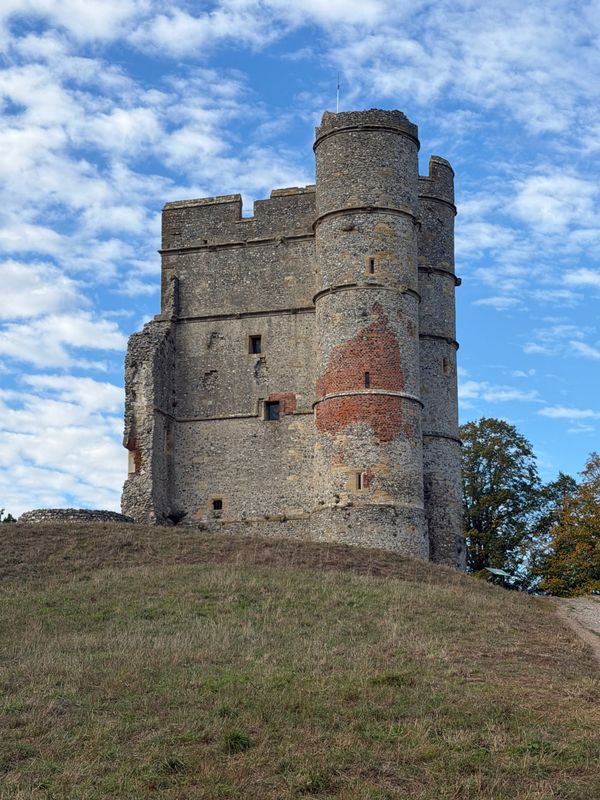
🏝️ The Architecture of Escape
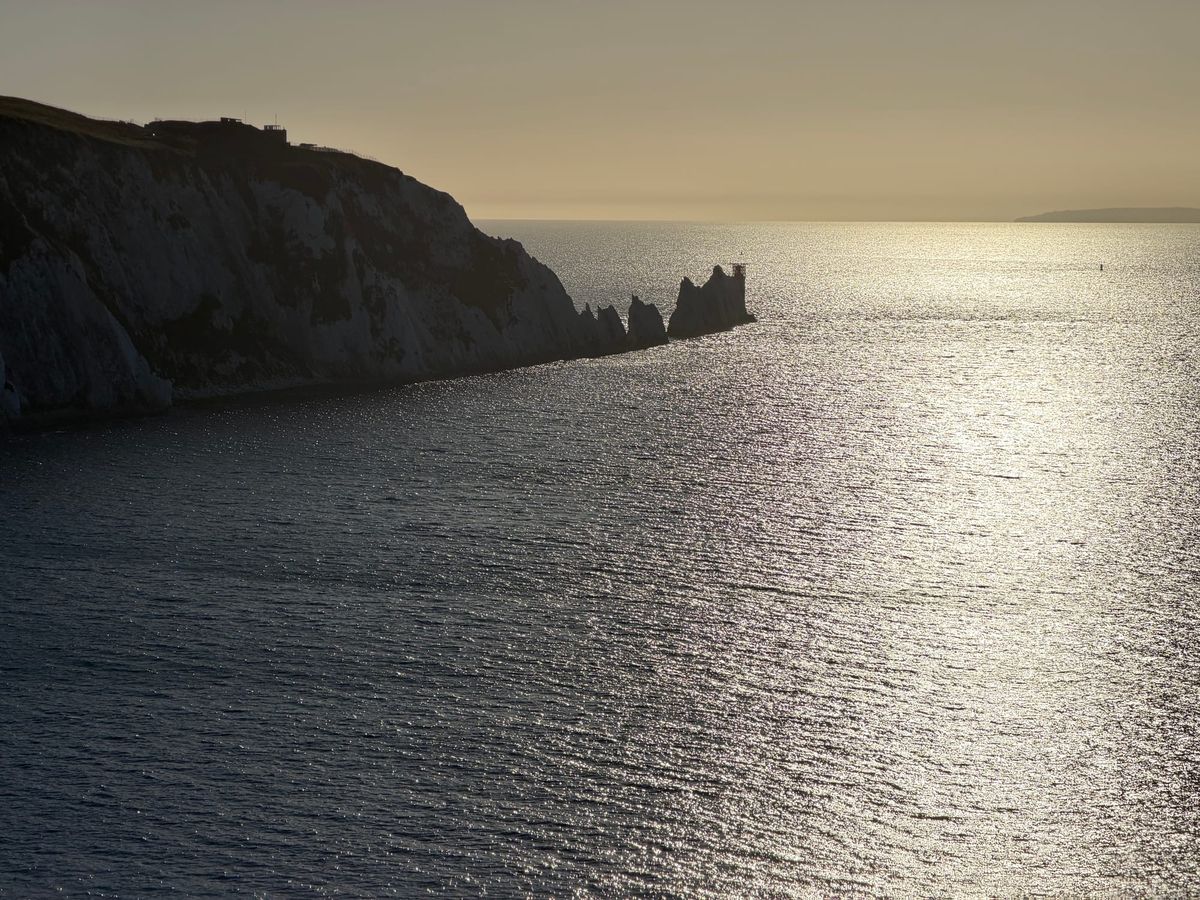
Three experiments in freedom on the Isle of Wight
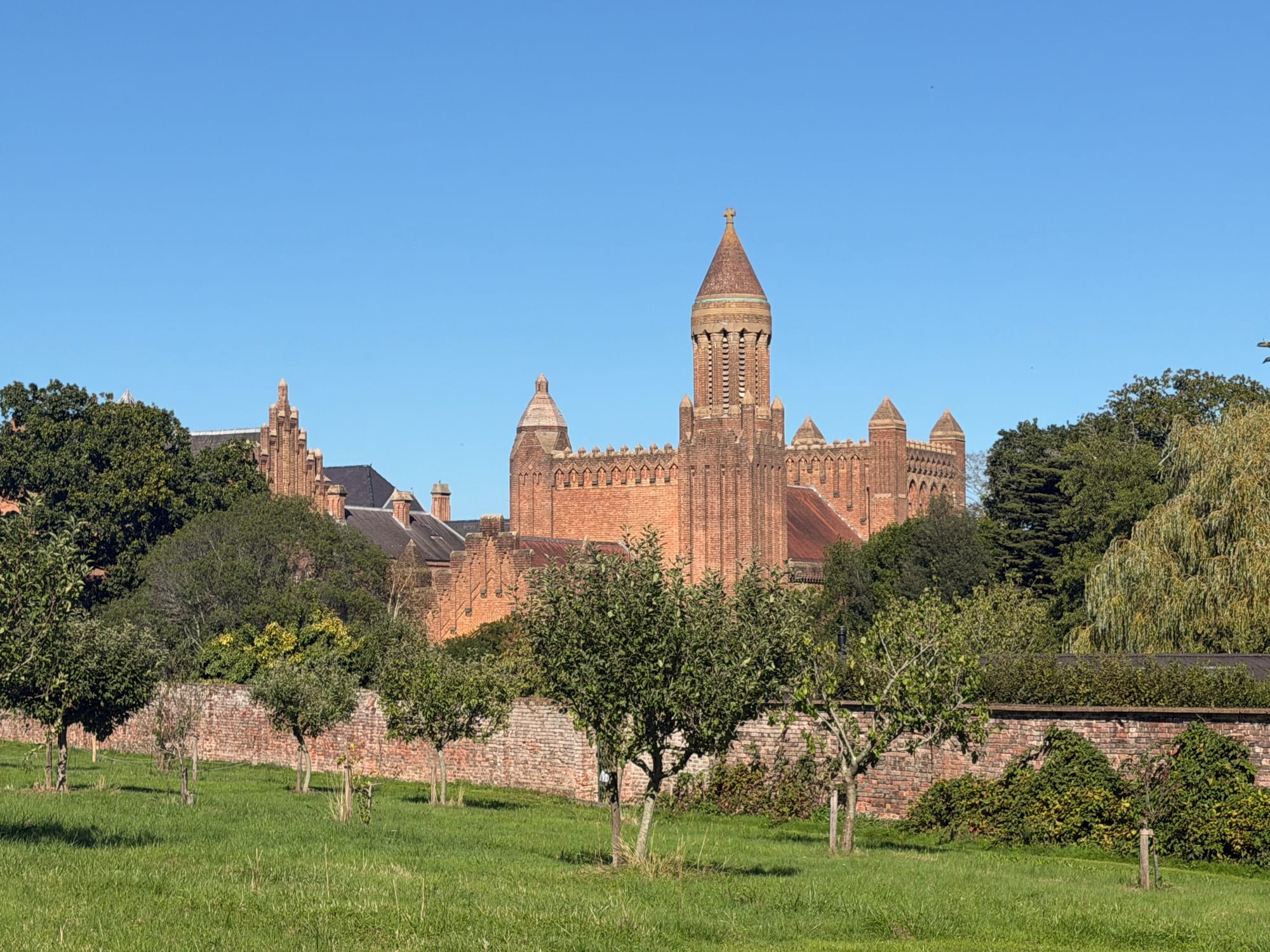
An island is an obvious place on which to dream of escape. Water supplies a boundary that appears natural rather than defensive; the mainland remains visible, but its claims seem temporarily suspended. On the Isle of Wight, within a few miles of one another, stand three eloquent experiments in freedom. Quarr Abbey was built for Benedictine monks driven into exile from France. Osborne House was created by Victoria and Albert as a private refuge from court. Carisbrooke Castle, built to repel unwanted arrivals, became the prison from which a defeated king could not depart. One community submitted itself to a rule. One royal family sought release from a role. One sovereign discovered that the architecture of protection could become the architecture of captivity.
That paradox was central to Erich Fromm’s Escape from Freedom, published in 1941 as Europe confronted the political consequences of its longing for submission. Fromm rejected the comforting assumption that human beings invariably desire greater liberty. Freedom releases us from inherited authorities, but it also removes the structures that once told us who we were. The emancipated individual may therefore experience independence not as exhilaration but as exposure: freedom from restraint without freedom towards any intelligible form of life.
The question posed by these three places is consequently more difficult than whether enclosure makes us free. It is whether a chosen structure can deepen human agency, whether privilege can purchase genuine privacy, and whether the removal of outward liberty may reveal an interior captivity that was present all along.
⛪ A freedom shaped by a rule
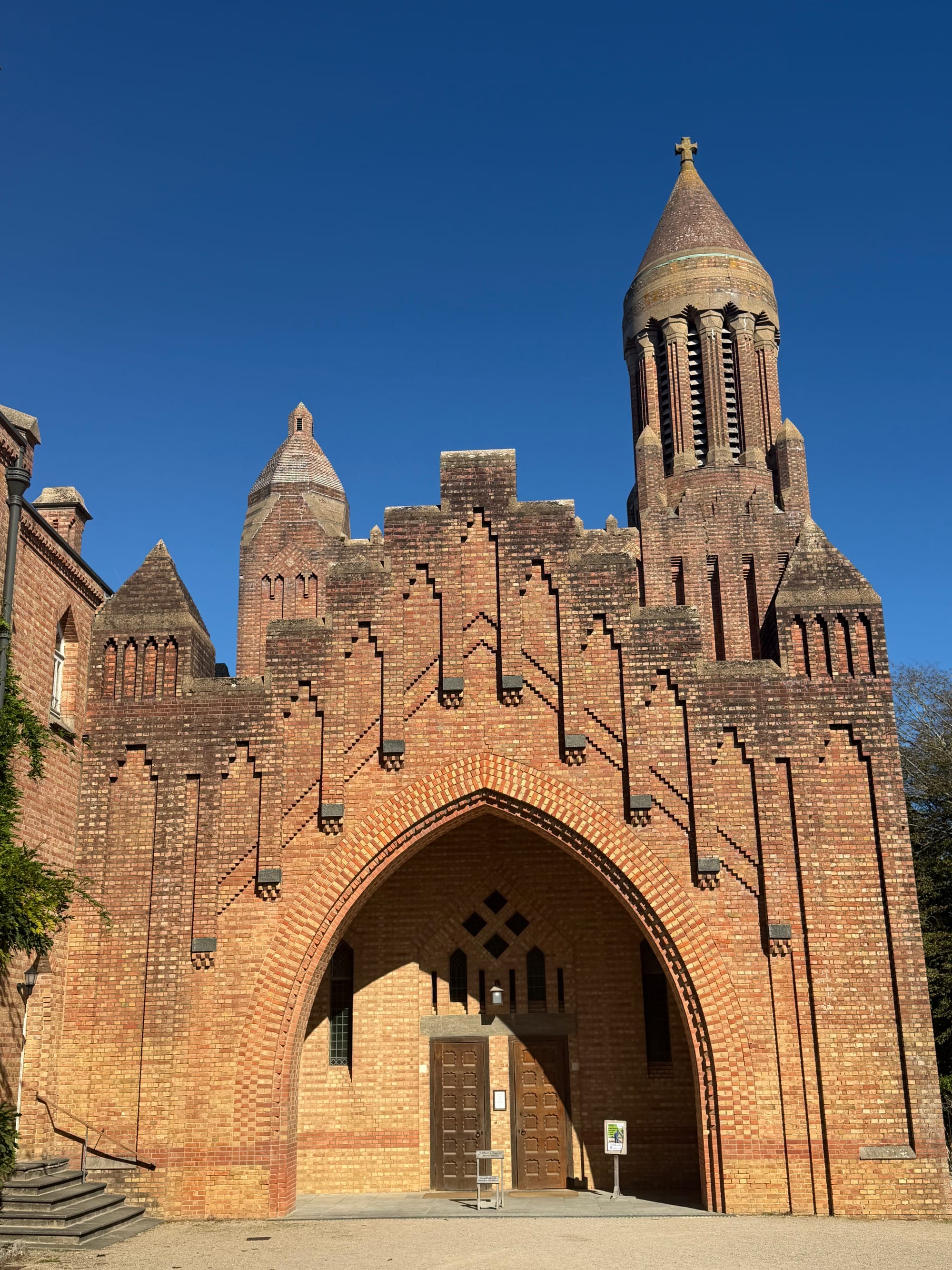
Quarr does not resemble an English medieval abbey sentimentally restored. Its striped brickwork, triangular arches and severe vertical masses announce something stranger. The modern monastery was constructed for the French Benedictine community of Solesmes, exiled from France at the beginning of the twentieth century. Its architect, Dom Paul Bellot, was himself a monk. Working largely in inexpensive Belgian brick, he produced a building in which necessity became style: structural economy disciplined into beauty.
The abbey therefore begins in a double displacement. French monks crossed the Channel because the state had made their common life precarious; having been forced from one enclosure, they built another. Yet exile did not lead them to celebrate unrestricted individuality. It led them back to the sixth-century Rule of Saint Benedict, with its ordering of prayer, work, reading, silence and obedience.
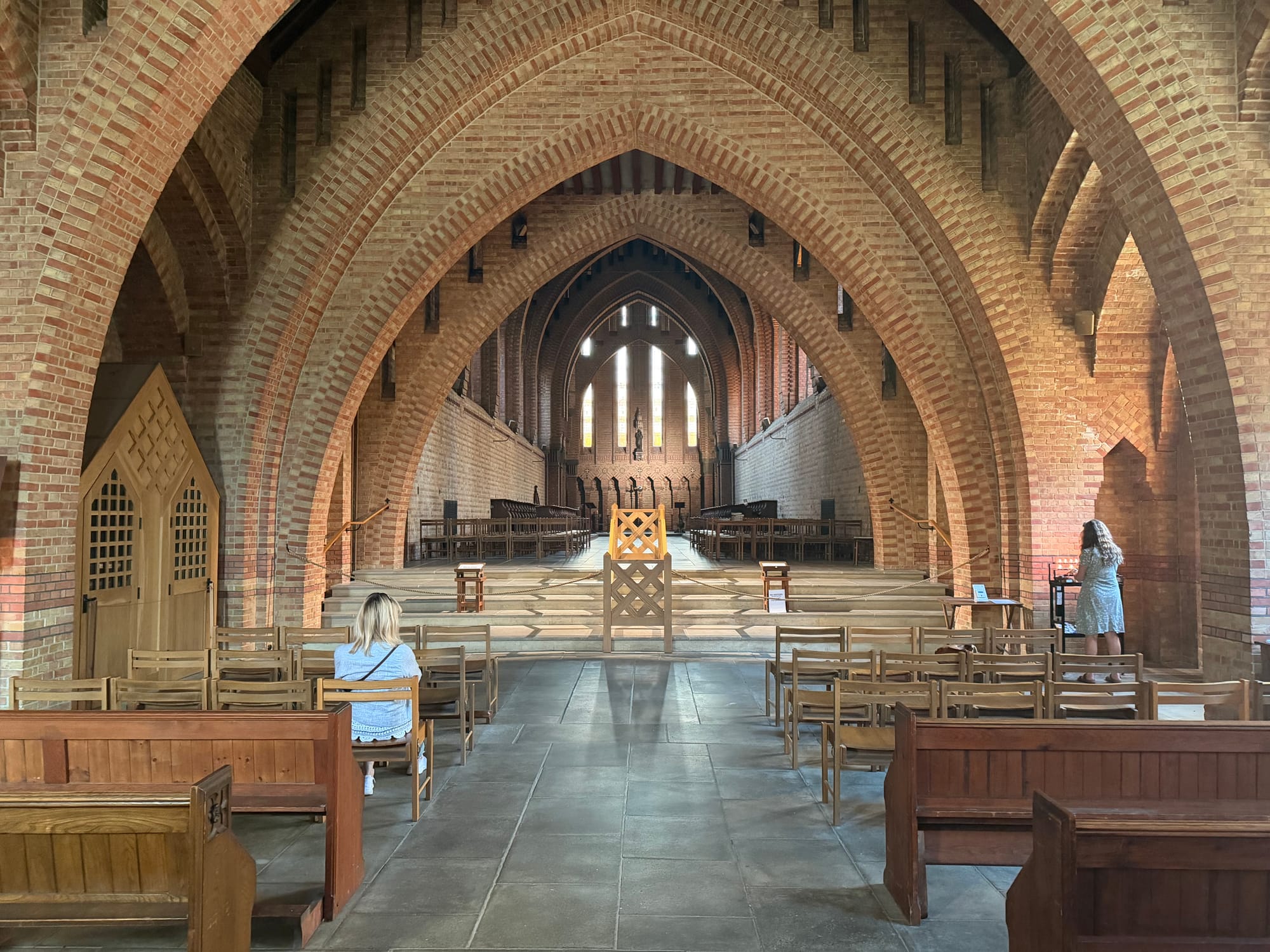
To modern eyes, obedience appears the natural enemy of freedom. Benedict calls it the first degree of humility and imagines the monk answering a command without delay.Fromm, meanwhile, identifies submission to an overwhelming power as one of the characteristic mechanisms by which anxious individuals escape their independence.It would be easy, therefore, to interpret the monastery as a beautiful apparatus for surrendering the self.
But that account is inadequate. There is a moral difference between obedience that destroys agency and a discipline deliberately accepted in order to give agency a form. A musical scale limits the notes available at a given moment, yet makes music possible. Grammar excludes innumerable arrangements of words, yet permits speech. The Benedictine day does something comparable with time. Its bells do not merely forbid alternatives; they rescue attention from the exhaustion of perpetually choosing what comes next.
Having once lived within religious obedience, I cannot regard that exchange as either simple captivity or simple liberation. There is relief in no longer having to invent the architecture of every day. There is also danger. A rule may educate desire, but it may equally conceal from a person that his desires have withered. When the bell stops, freedom can first be experienced not as possibility but as silence.
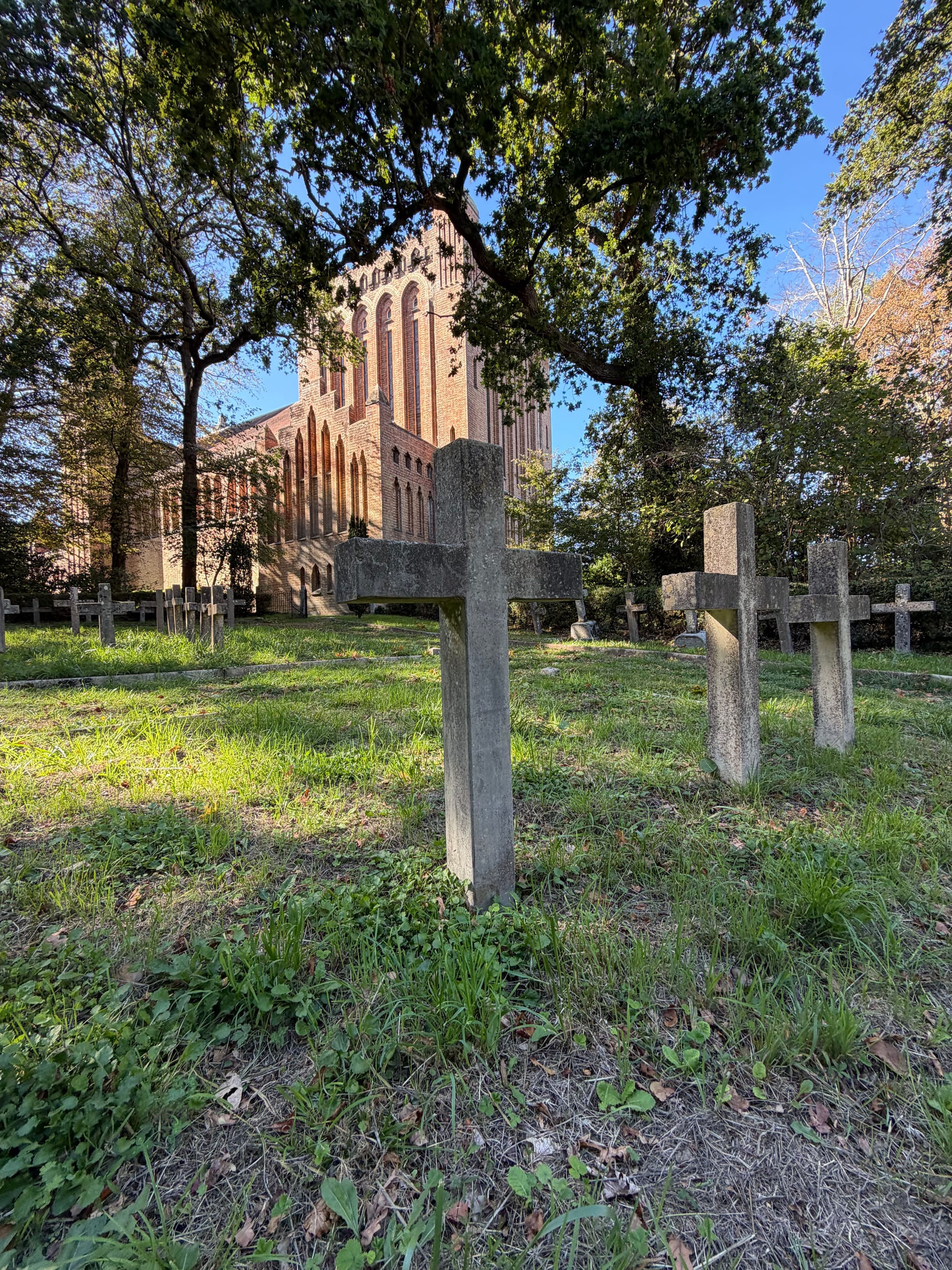
The cemetery completes the argument. Monastic enclosure is not designed to preserve the self indefinitely, but to school it in relinquishment. The crosses in the foreground reduce many distinct lives to a shared sign, while Bellot’s abbey rises behind them as the form that contained those lives. Fromm would ask whether individuality has been realised or absorbed. Benedict would answer that the self is not abolished by being directed towards a good beyond itself.
Neither answer is wholly comfortable. That is precisely why Quarr matters.
🏛️ A place of one’s own
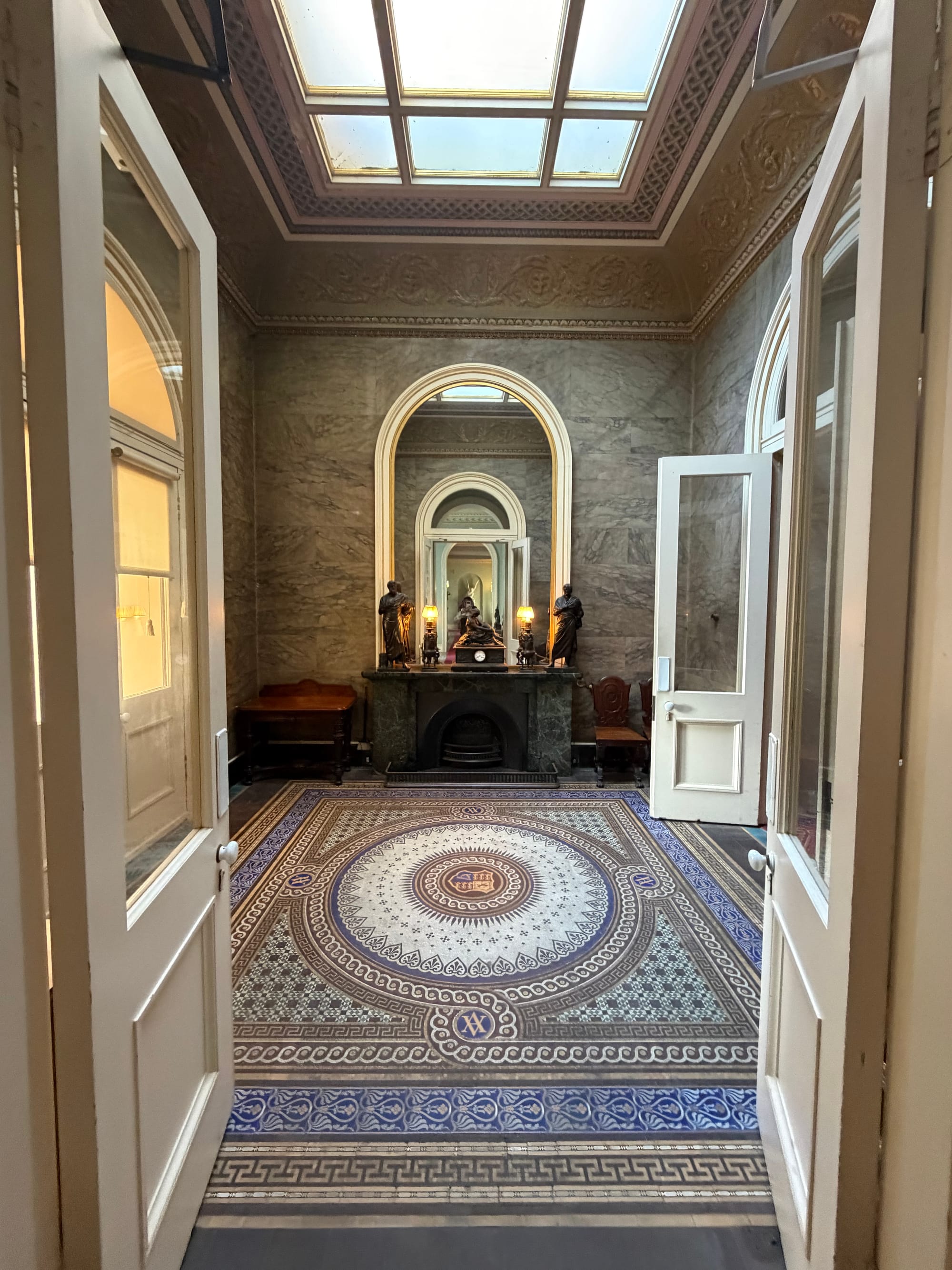
Osborne stages a different negotiation with freedom. Victoria and Albert bought the estate in 1845 and collaborated with Thomas Cubitt in replacing the existing house with an Italianate residence. It was conceived not principally as another theatre of monarchy, but as a private family home.Victoria wanted, in her own phrase, “a place of one’s own — quiet and retired.”
The desire is striking because it belongs to the most publicly determined woman in Britain. A sovereign possesses extraordinary power but remarkably little anonymity. Her body, marriage, children, movements and grief become constitutional facts. Osborne promised not abdication, but an interval in which the Queen might become wife, mother and widow.
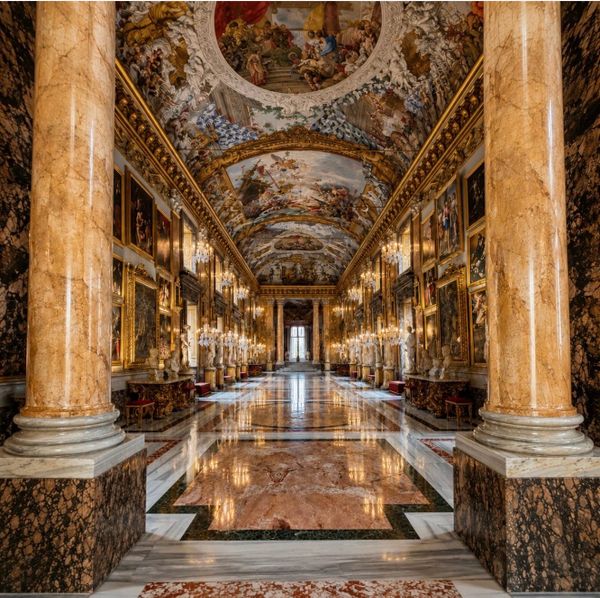
Yet the mirrored corridor suggests the difficulty. A passage designed to lead elsewhere repeatedly returns the visitor’s image. One cannot escape a role merely by changing rooms. At Osborne, privacy itself had to be built on a royal scale, serviced by a household and protected by rank. Even seclusion became ceremonial.
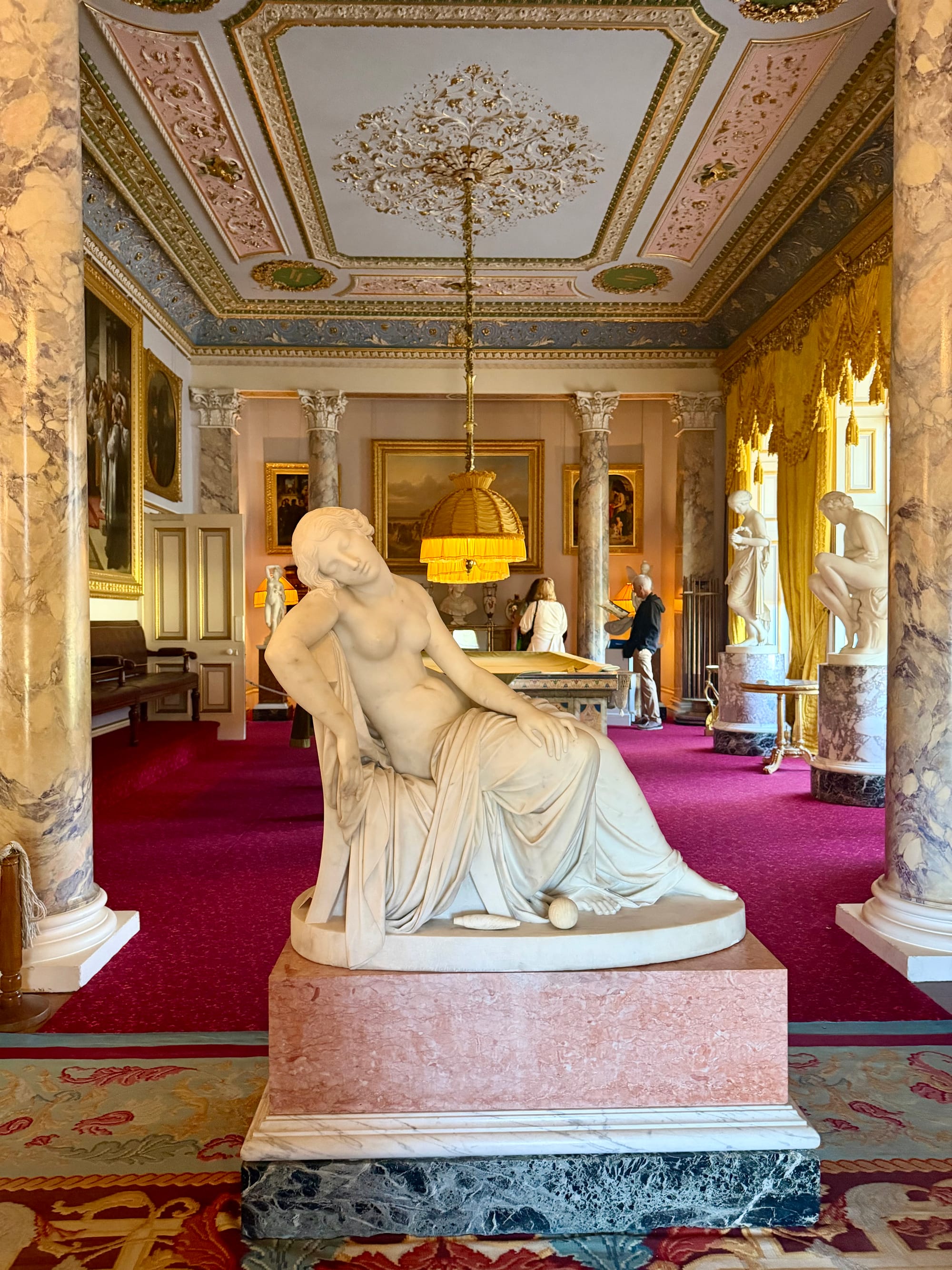
The interiors are crowded with images, gifts and objects. They preserve affection, dynasty and taste, but accumulation also becomes a defence against time. After Albert’s death in 1861, Osborne was increasingly inseparable from Victoria’s widowhood. The house that had offered escape from public monarchy became a reliquary of private loss. Memory furnished every room so completely that the past acquired almost architectural weight.
This is another form of Fromm’s problem. We escape freedom not only by submitting to authority, but by fixing ourselves within identities that relieve us from becoming otherwise. Mourner, monarch, priest, barrister, spouse: each may express something true and still become a refuge from the frightening incompleteness of the person beneath it.
🦚 When empire enters the retreat
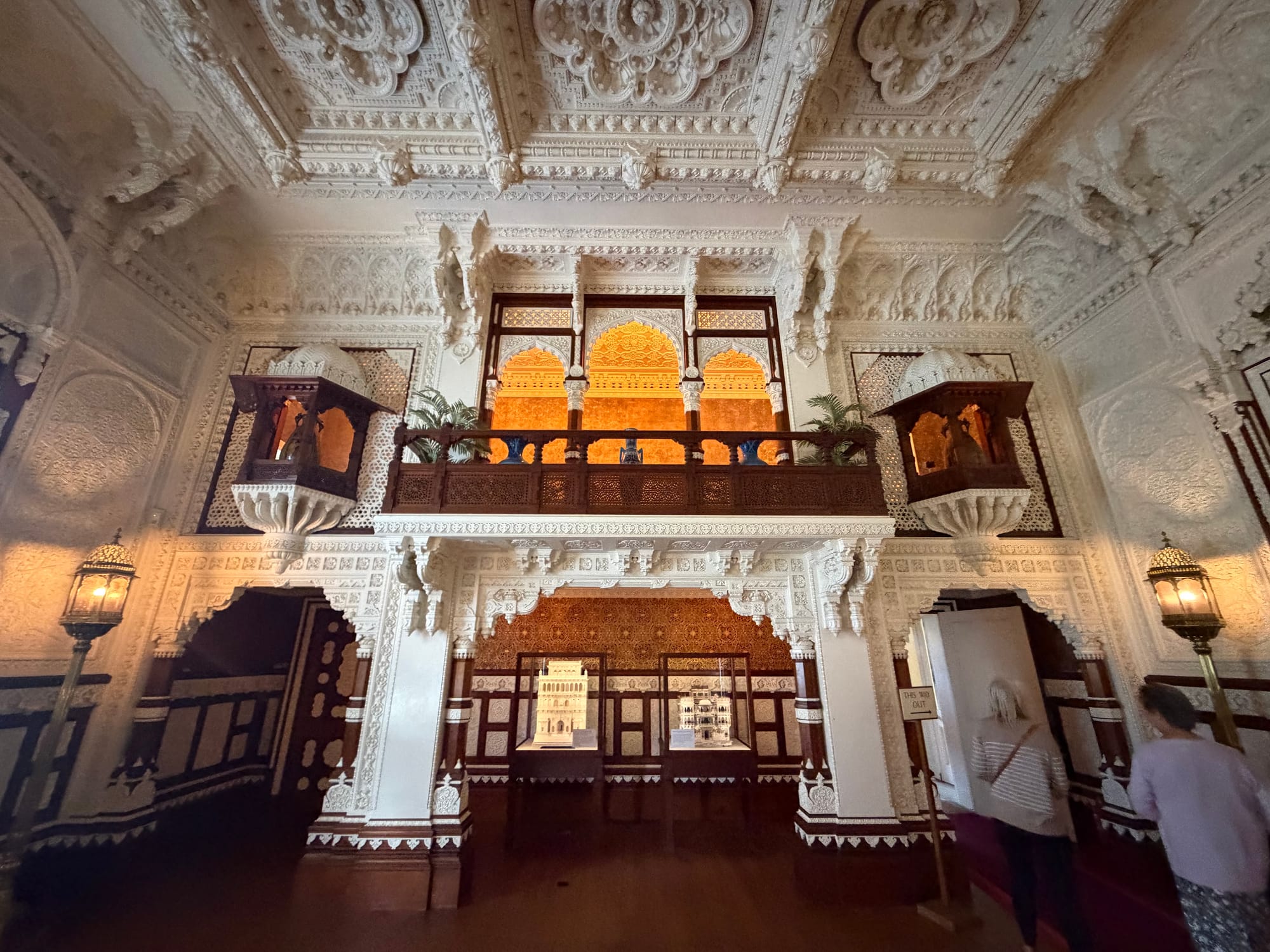
The fiction of withdrawal finally collapses in the Durbar Room. Added in the 1890s, it was designed by Lockwood Kipling, with its elaborate plasterwork executed by Bhai Ram Singh. Its Indian forms reflected Victoria’s position as Empress of India.The room is breathtaking, but intellectually unstable. India enters Osborne as ornament, gift and imperial idea, mediated through British monarchy and displayed in a house intended as an escape from public life.
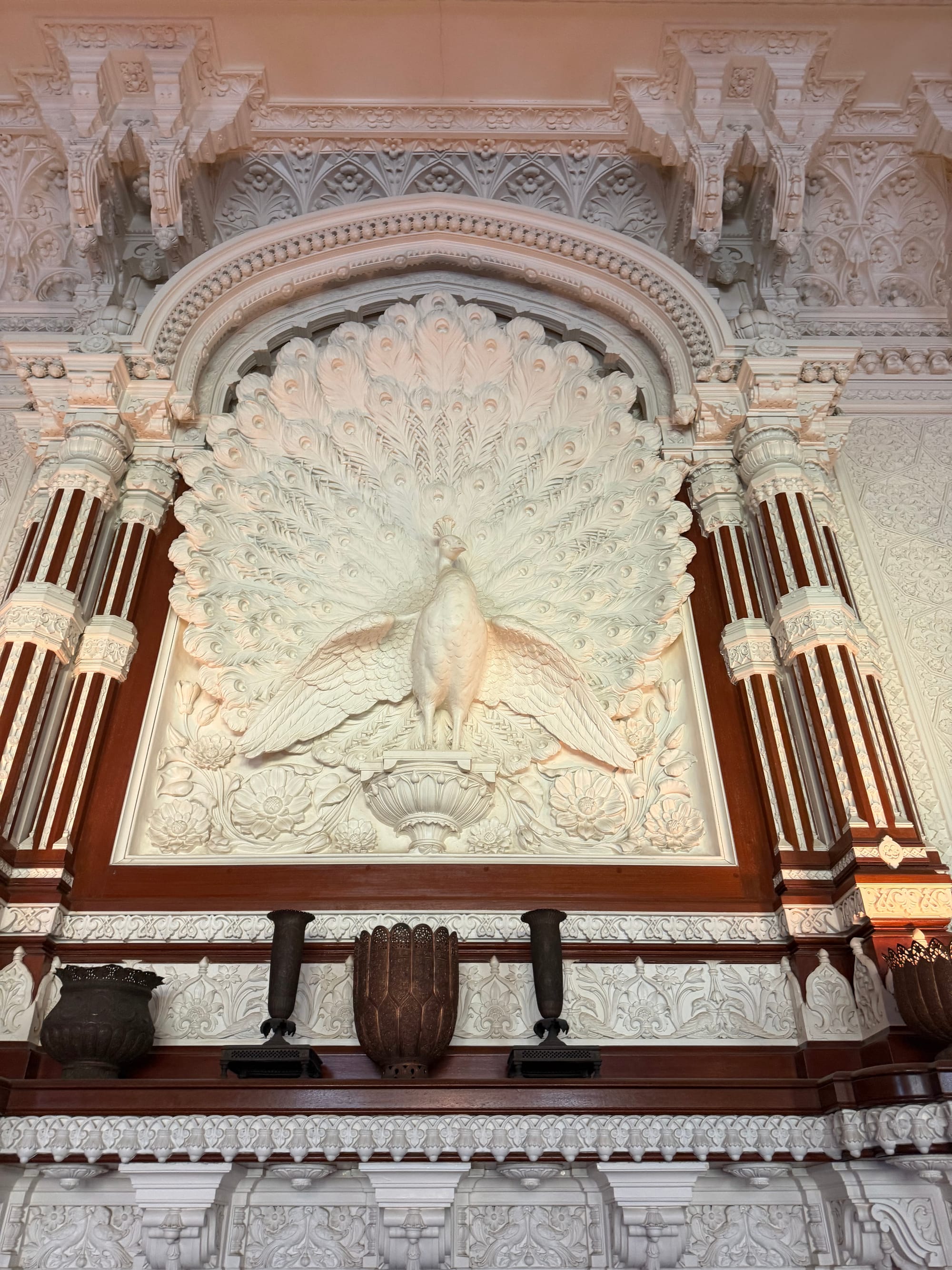
The peacock crystallises the contradiction. Its feathers are rendered in pale plaster, exuberance translated into order and colour disciplined into imperial white. The workmanship is Indian; the setting converts that workmanship into a representation of Britain’s possession of India. Beauty does not cancel power. It makes power easier to inhabit.
Fromm’s analysis is helpful here because he distrusted freedom understood merely as mastery. The person who seeks security through domination remains dependent upon the object dominated. Empire promised Britain freedom of action across the world, yet required an elaborate culture of classification, ceremony and display to reassure the imperial centre of its own identity. The ruler and the ruled were not equally unfree, but neither was untouched by the relationship.
Osborne could not remain simply “quiet and retired” because Victoria could not cease to be sovereign at its threshold. The world she governed returned in the form of rooms.
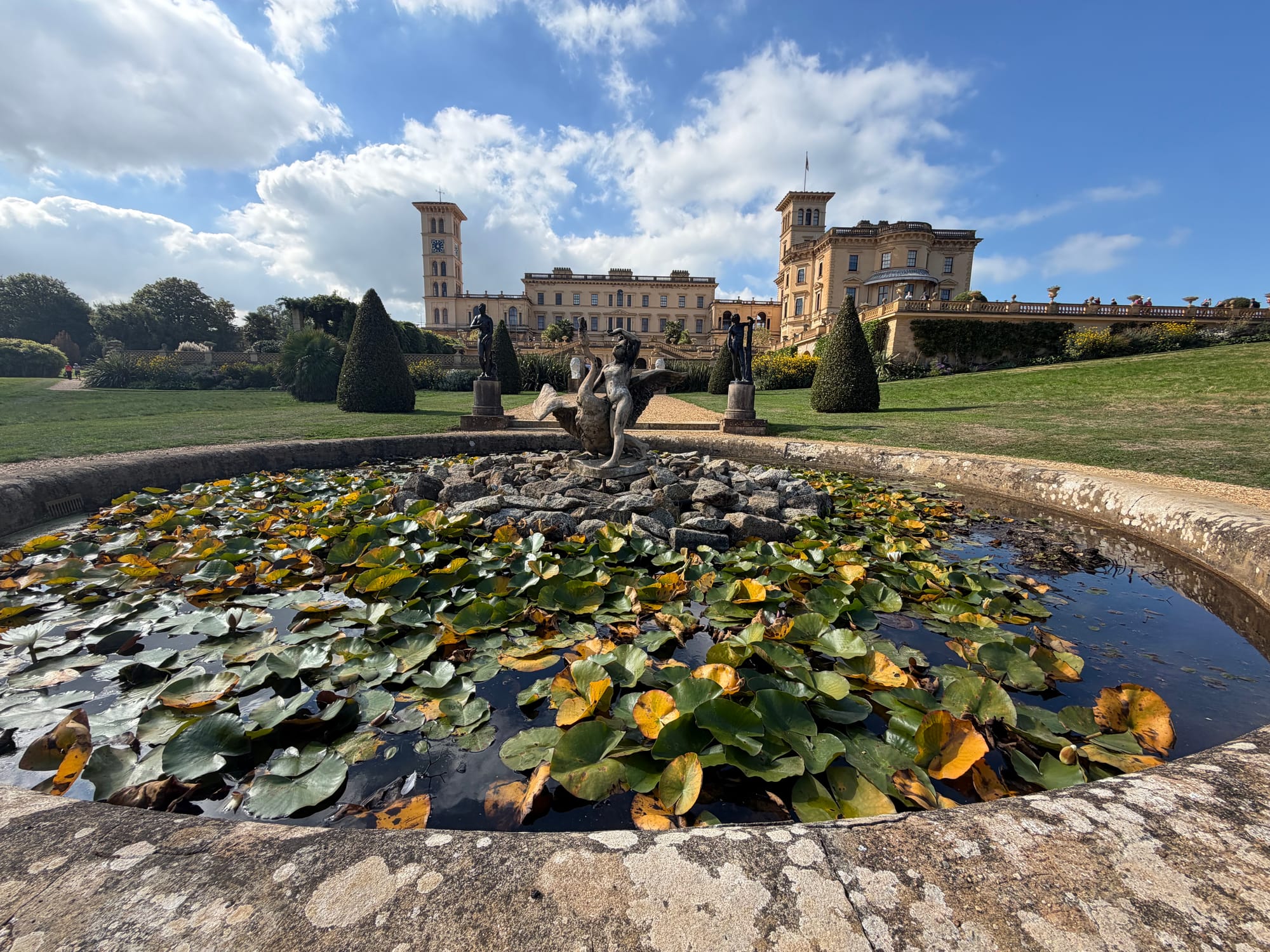
Even the final view across Osborne’s water is almost too harmonious. Palace, garden, sculpture and reflection settle into a single composed image. Yet the lilies obscure the depths and the still surface doubles a building already devoted to doubling: public and private, sovereign and widow, domestic retreat and imperial centre.
🏰 The prisoner who could not cease to be king
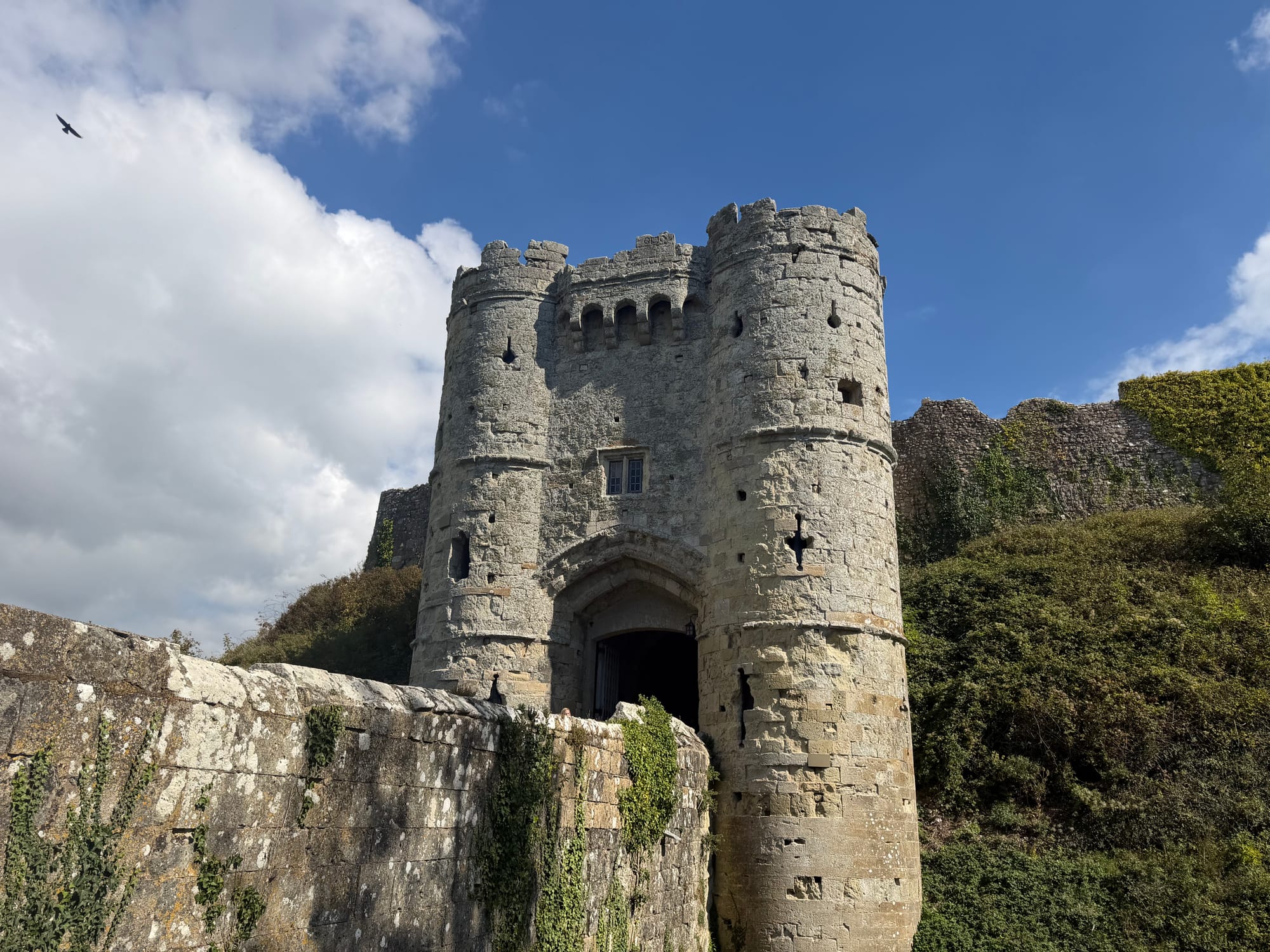
At Quarr, enclosure was chosen. At Osborne, it was designed. At Carisbrooke, it was imposed. Here the language of escape ceases to be figurative. Charles I was held principally at the castle for just over a year from 13 November 1647, conducting negotiations with the English and Scottish parliaments while making several unsuccessful attempts to recover his liberty.
The most famous failure has the merciless economy of a fable. On 20 March 1648, Charles attempted to pass through the barred window of his bedchamber and became stuck. Royal escape was defeated not by an army or a constitutional treatise, but by the dimensions of an aperture. The body that had carried sacral monarchy through ceremony, portraiture and war proved unable to pass between two pieces of iron.
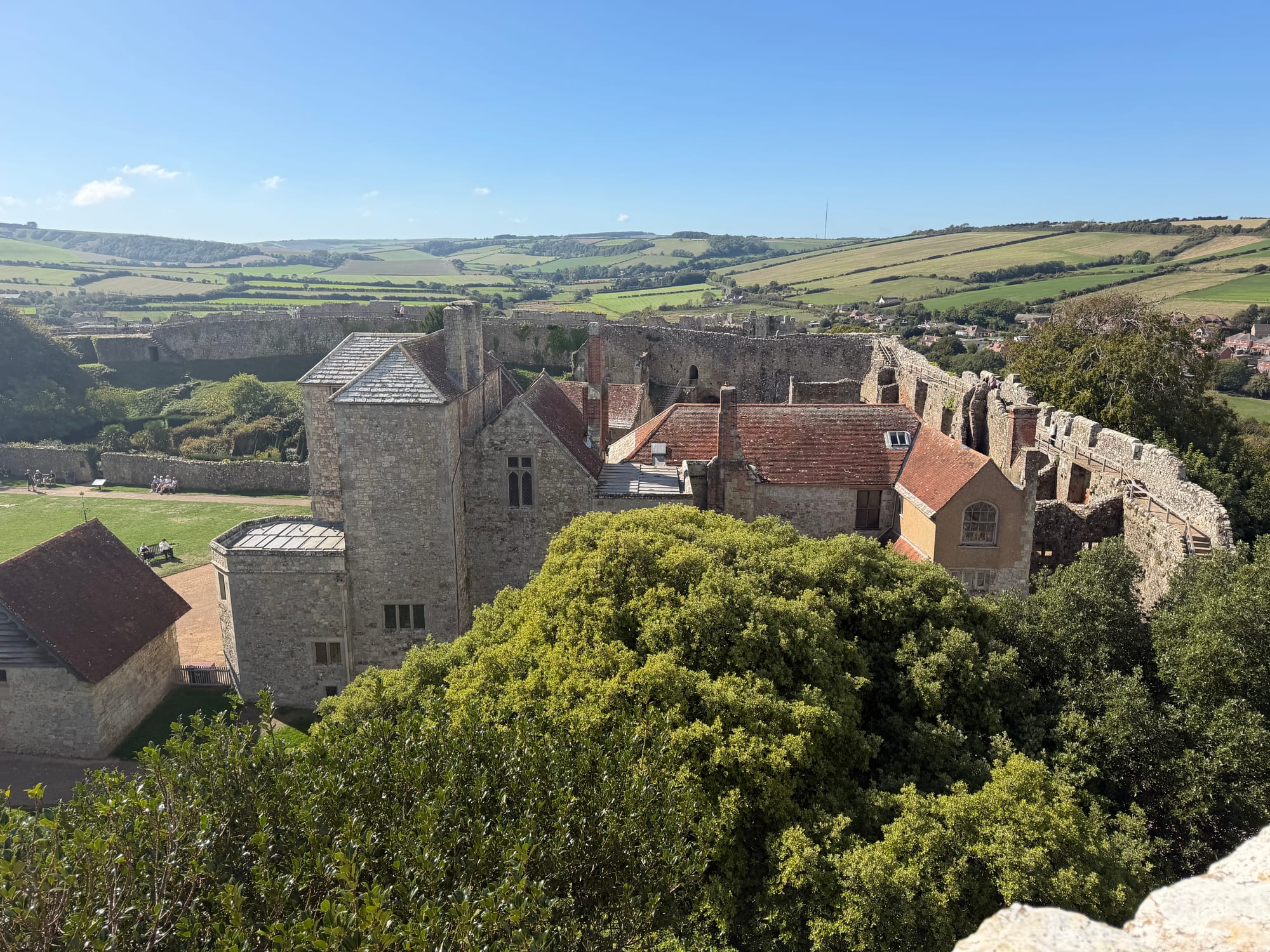
Yet Carisbrooke complicates any easy identification of freedom with the absence of walls, because its most famous prisoner arrived already confined within an idea of himself. It would be crude to diagnose Charles across the centuries, but Fromm’s account of the authoritarian character offers an illuminating political psychology. For Fromm, authoritarianism contains two movements that appear opposed but are mutually sustaining: the desire to dominate those below and the desire to submit to a person, institution or idea imagined as overwhelmingly powerful.
Charles’s political theology possessed precisely this vertical structure. He demanded obedience as sovereign because he understood his sovereignty as itself an obedience to a trust received from God. At his later trial he challenged the court’s authority and refused to plead; Parliament’s own account records that the exchanges repeatedly returned to its claimed right to judge him. Charles did not regard kingship as an office from which political defeat could release him. To answer the court would, in his understanding, betray an authority that was not his to surrender.
The paradox is severe. Charles had been deprived of a kingdom but not released from kingship. He could no longer command, yet he could not become a private man. Carisbrooke confined his body; divine monarchy had already enclosed the self.
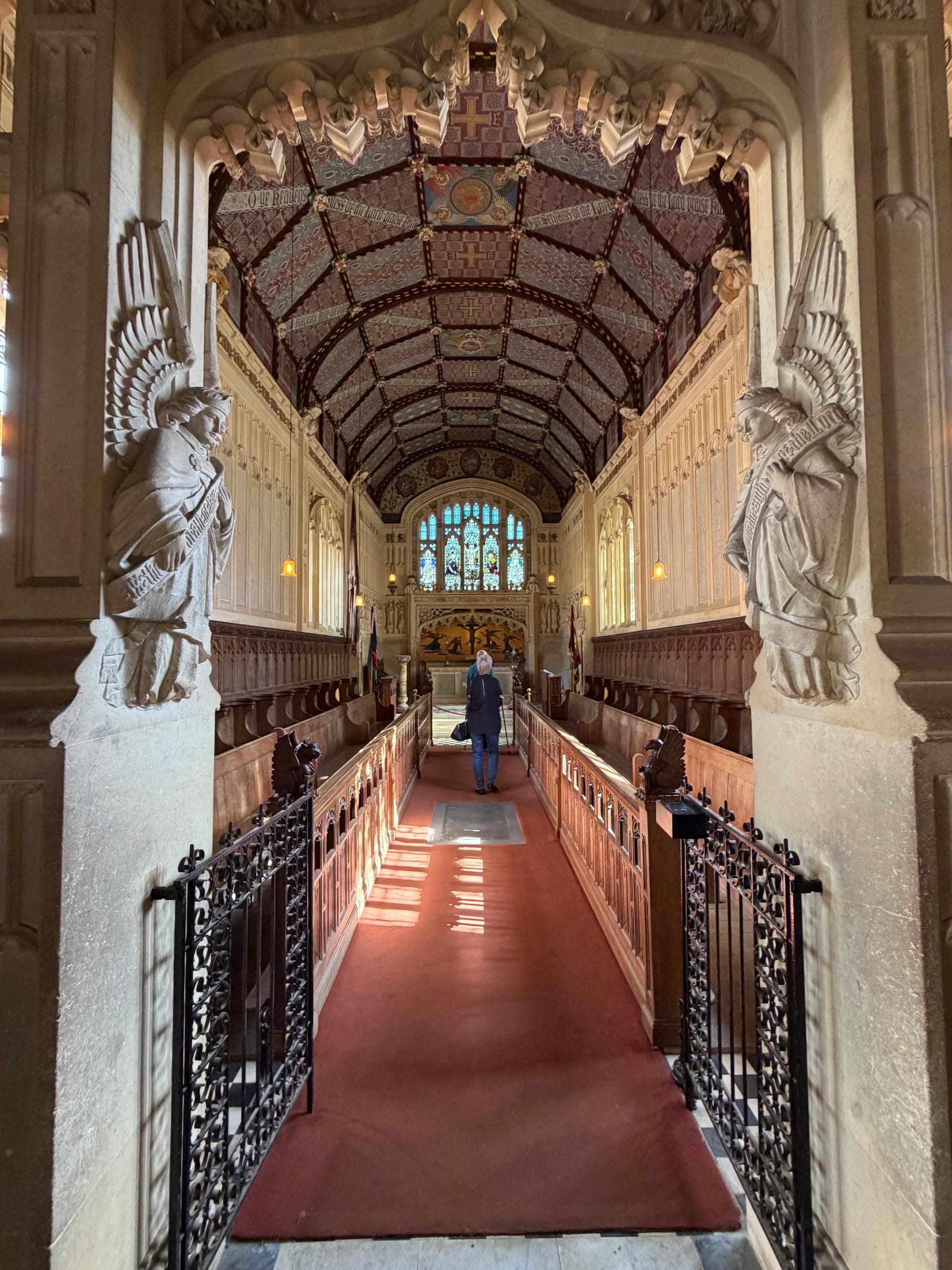
Captivity also spread beyond the person who had claimed authority. Carisbrooke was subsequently used to hold Charles’s young son Henry and his daughter Elizabeth, who died there in 1650 at the age of fourteen. Political identity had become hereditary punishment. The children inherited not the effective power of the Crown, but its consequences.
The castle later converted confinement into commemoration. The Chapel of St Nicholas was rebuilt in 1904 to memorialise Charles and later became the war memorial of the Isle of Wight. A place in which royal authority had been forcibly contradicted was transformed into a sanctuary of memory.
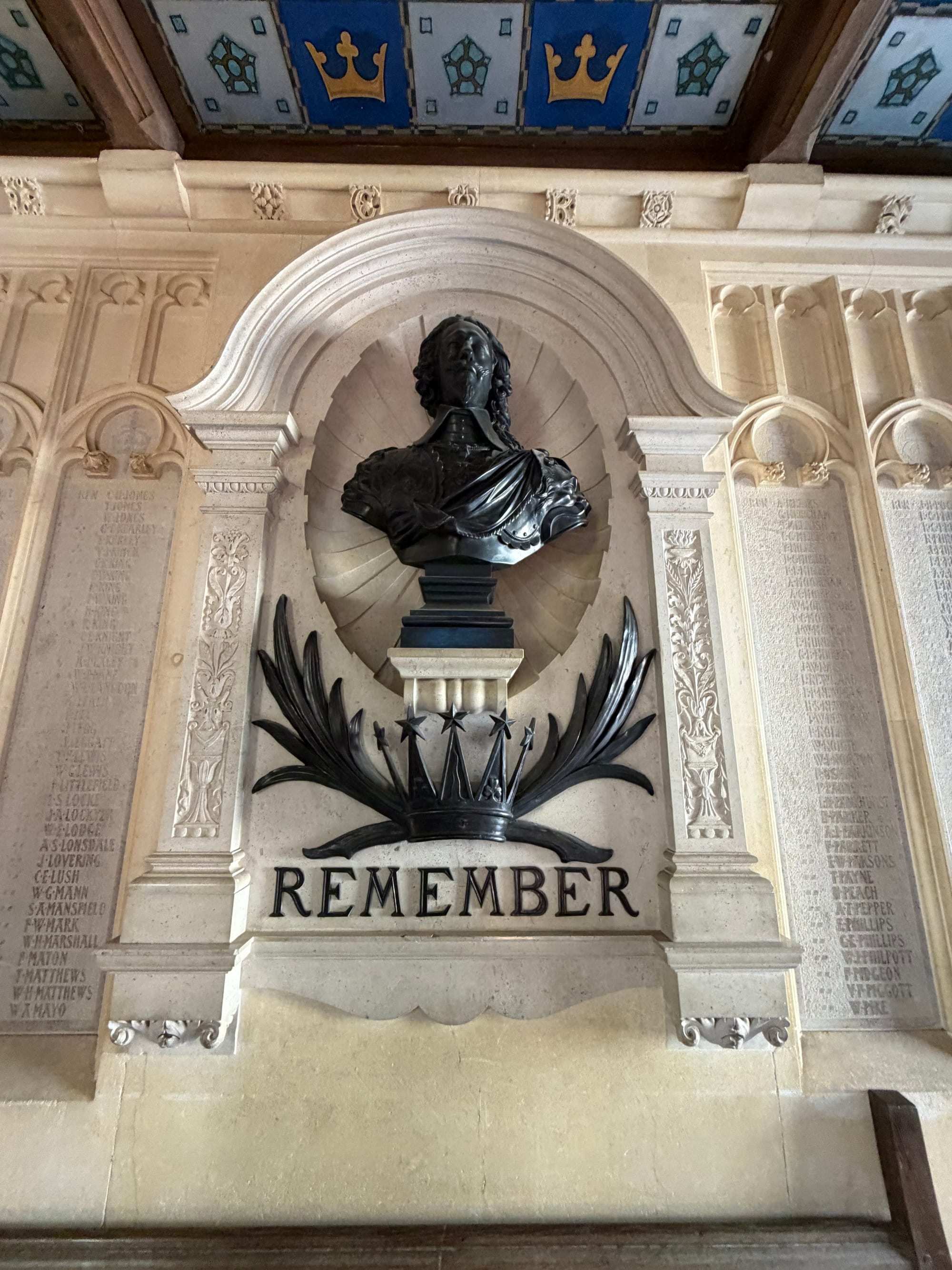
Beneath the bust of Charles appears a single imperative: REMEMBER. The word refuses to specify whether we should remember a martyr, a defeated absolutist, a prisoner or the casualties produced when incompatible accounts of authority can no longer coexist. Perhaps its ambiguity is its honesty. Carisbrooke first contained Charles’s body and then assisted in preserving his preferred interpretation of it. The king who could not escape the castle eventually became part of its meaning.
🗝️ Freedom from, freedom to
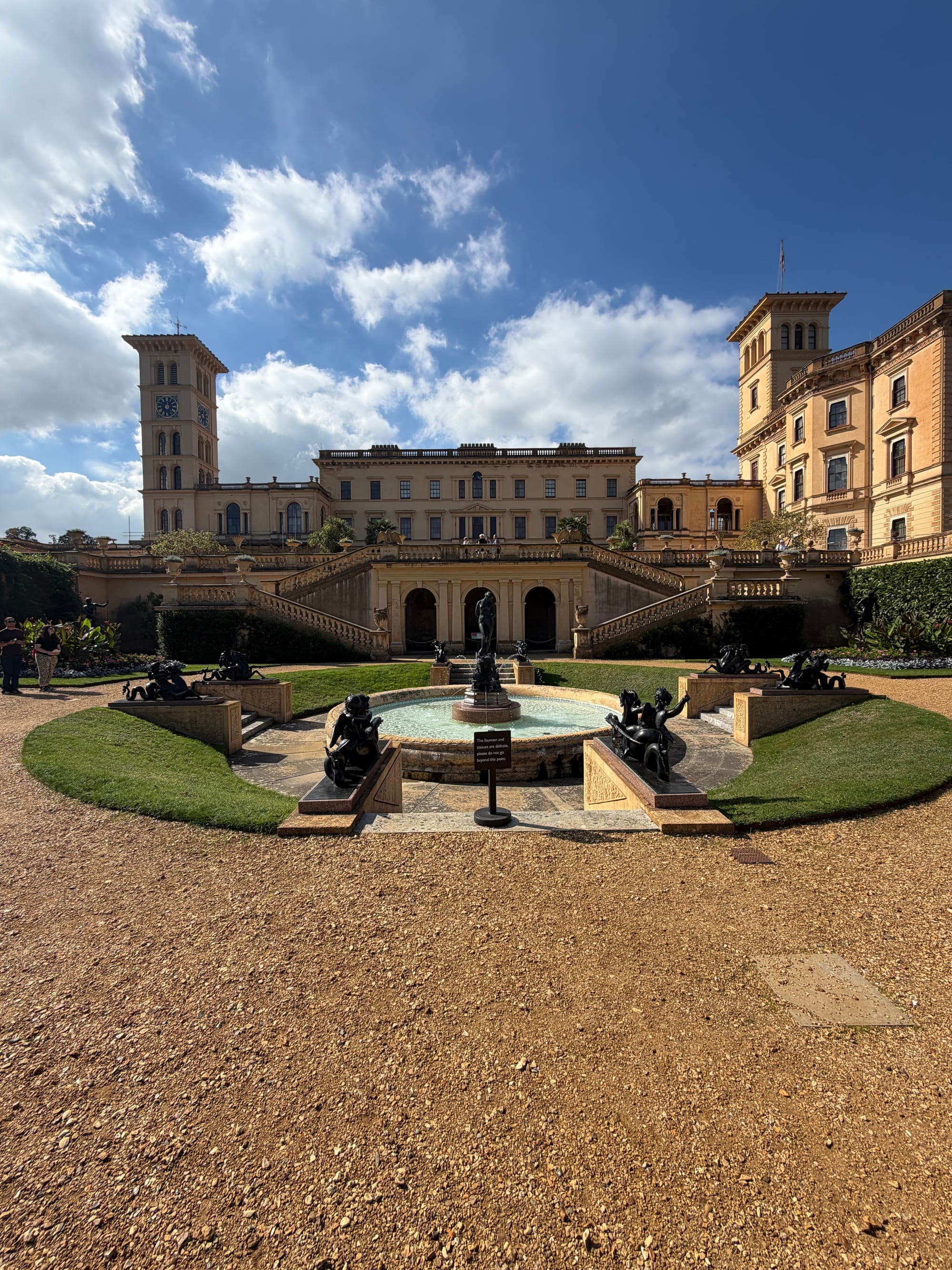
Quarr, Osborne and Carisbrooke are not points on a simple scale from freedom to captivity. The monastery withdraws from ordinary life in order to submit the day to a transcendent purpose. The palace withdraws from court in order to recover domestic life. The castle imposes the boundary its prisoner seeks to overcome. Chosen rule, privileged retreat and coercive confinement are morally different realities. Fromm does not license us to make imprisonment merely metaphorical. External liberty matters.
His decisive distinction, however, remains that between freedom from and freedom to. The first breaks external bonds. The second uses liberty to realise a self through spontaneous thought, love and creative work. Without the second, emancipation leaves a vacuum into which conformity, domination or submission can enter.
Quarr’s challenge is that profound freedom may sometimes look like obedience. Osborne’s is that immense privilege may coexist with a genuine longing for release. Carisbrooke’s is that a person deprived of liberty may remain bound by an authority he carries within himself. Neither surrender nor escape can be judged solely by its outward form. We must ask what kind of person the enclosure produces. Does it intensify attention, love and creative activity? Or does it relieve the inhabitant of the obligation to confront himself?
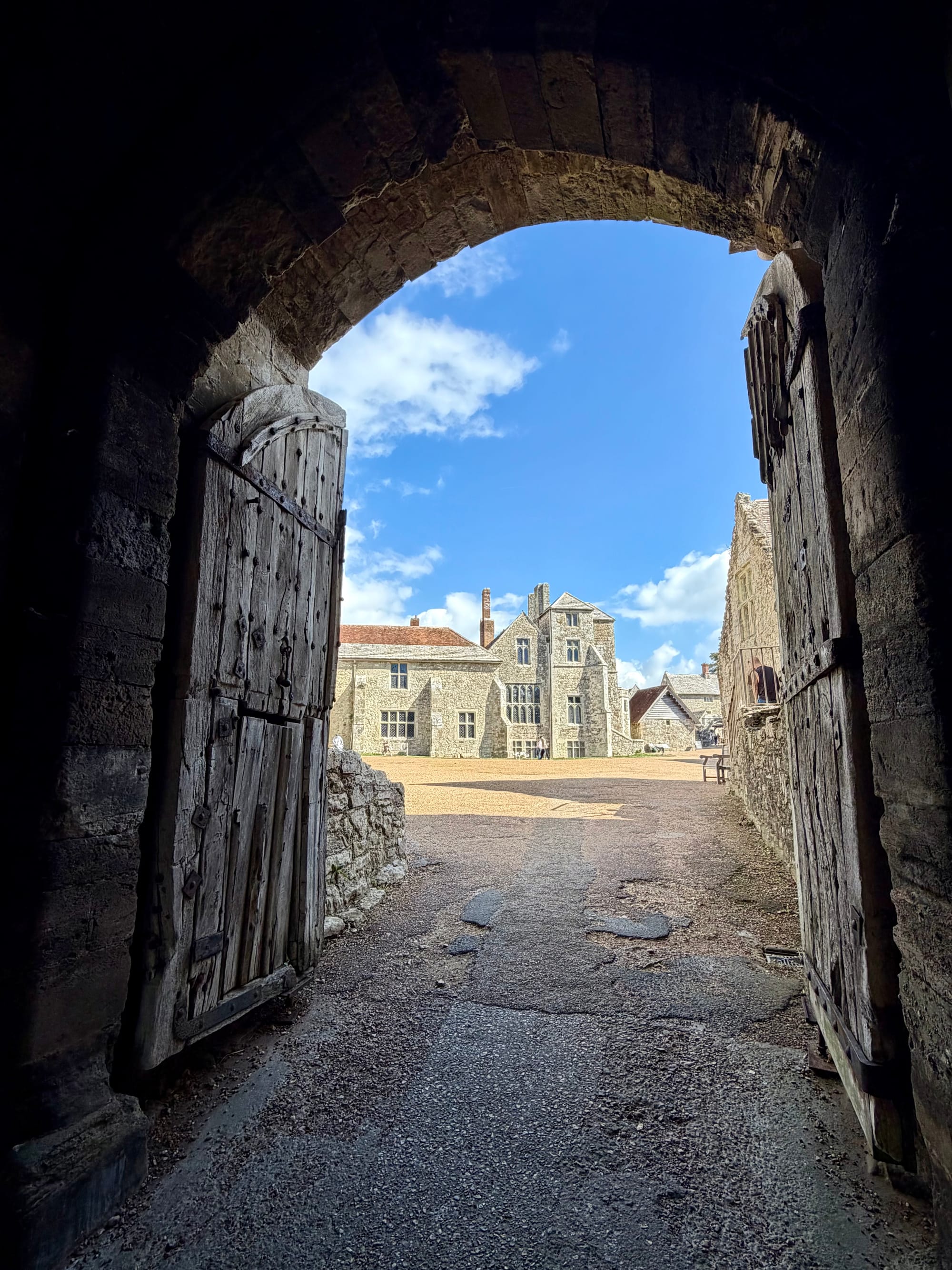
Perhaps this is why islands attract fantasies of reinvention. The crossing seems to divide one life from another. But no water is wide enough to separate us from the selves we carry across it. Quarr’s monks brought exile into their enclosure. Victoria brought monarchy, bereavement and empire into hers. Charles brought kingship into captivity. A person may leave the mainland, the institution, the vocation or the relationship; departure supplies freedom from what was. It cannot decide what that freedom is for.
Fromm’s answer was neither submission nor limitless choice, but a life in which freedom becomes active: thought genuinely one’s own, work experienced as creation, and love that neither possesses nor dissolves its object. The task is not to live without walls. It is to know whether the walls we choose are forming a life or merely protecting us from one.