Gold and Shadow: Rome after Japan
🌅 The Colour of Beginnings
I have made these photographs of Rome slightly too golden.
Not extravagantly so. The marble has not become amber and the skies remain approximately the skies I saw. But I have warmed them. Travertine catches a little more afternoon light than perhaps it did; interiors glow where they might merely have been dim; ochres and browns have acquired something of that peculiar Roman evening when stone seems, for a few minutes, capable of retaining the sun.
I knew what I was doing.
What interested me afterwards was why I had done it.
I lived in Rome between nineteen and twenty-seven, which may explain why, when I remember those years now, they possess the luminosity of beginnings. It was there that I learned Latin and Greek properly, discovered philosophy, began travelling seriously and acquired most of the interests which have subsequently ordered my life. Almost everything seemed to begin there.
There was something improbable about it all. I had come from a world rather distant from libraries of patristic texts, Roman palazzi and arguments conducted over espressi. I need not romanticise that distance to recognise what Rome did to the scale of my imagination. It enlarged the possible.
Perhaps that is why memory has coloured it gold.
But memory, like photography, is an art of exposure. To illuminate one thing is necessarily to allow another to recede.
There were shadows too: uncertainty about the future, constraint, and the more difficult uncertainty of wanting to believe things which did not always submit to belief. At the time those doubts could be uncomfortable. Memory has subsequently made them gentler.
It is good at that.
We remember the library and forget the anxiety carried into it. We remember the piazza and not necessarily the question that accompanied us across it. We remember the dinner rather more vividly than whatever prevented us sleeping afterwards.
The past acquires composition.
And when we return to it, we do not simply retrieve what was there. We look again.
The observer has changed.
So, inevitably, has the view.
🏛️ The Gold of Palazzo Colonna
Nowhere did this seem more obvious to me than at Palazzo Colonna.
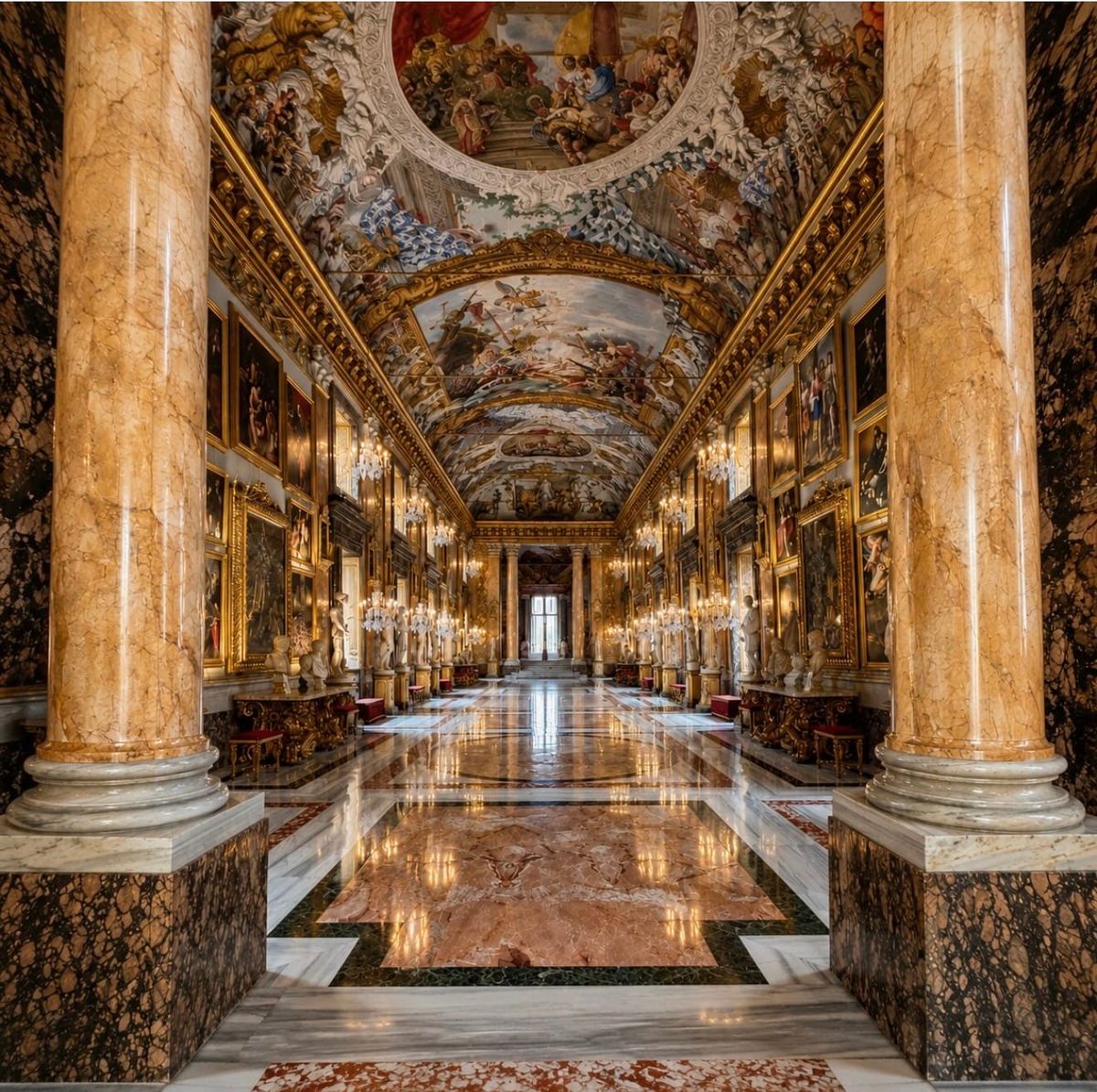
The Galleria Colonna is almost an argument for magnificence. Columns frame a long perspectival vista; frescoes dissolve the ceilings; paintings climb the walls; chandeliers multiply themselves in polished marble. Everything appears to have been assembled in order to make restraint seem faintly unreasonable.
It is precisely the Rome my photographs remember.
Gold catching gold. Marble reflecting light. A succession of rooms drawing the eye forward until architecture itself begins to resemble theatre.
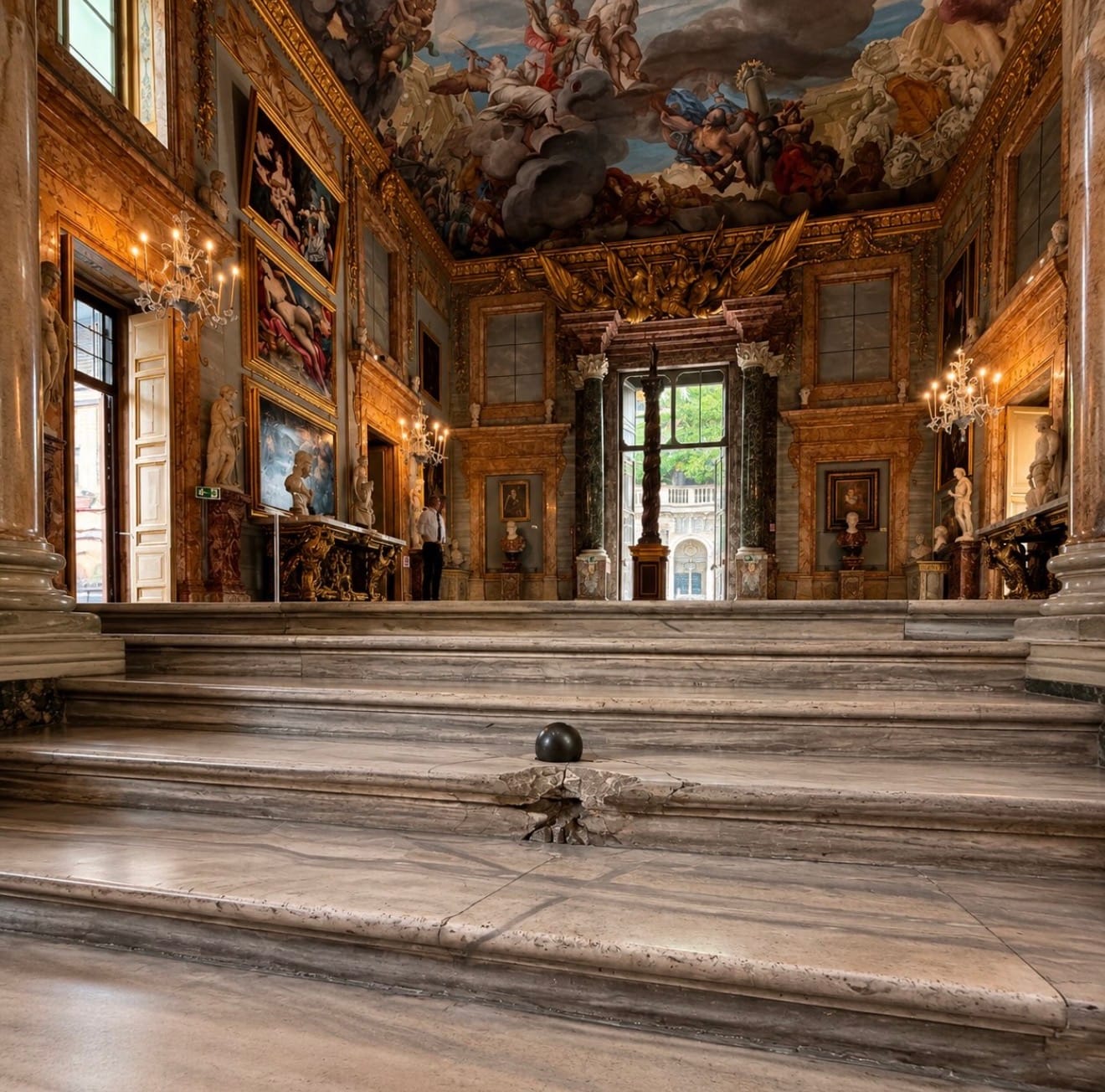
And then, on the short flight of steps leading towards the Great Hall, there is a cannonball.
It has been left where it landed in 1849, fired from the Janiculum by French forces during the Roman Republic.
I liked it immediately.
Not because every damaged stone needs to become a metaphor. There is something rather tiresome about travelling through old buildings determined to turn masonry into autobiography. But the cannonball is difficult to ignore because the palace makes no attempt to reconcile it with the splendour surrounding it.
The marble is wounded.
The room remains magnificent.
Neither cancels the other.
There is something in that which nostalgia often struggles to accommodate. We tend either to gild the past or, having grown suspicious of gilding, to strip it back until every beautiful memory is exposed as somehow fraudulent.
But perhaps the opposition is unnecessary.
The gold can remain.
So can the cannonball.
I began to wonder whether memory might be permitted the same generosity.
👁️ The Problem of the Observer
We sometimes imagine returning to a place as an act of retrieval.
The city has been waiting somewhere in our absence. We go back. We look. We recover.
But there is no neutral return.
I had not brought the nineteen-year-old back to Rome. I had brought all the years since: other languages, other cities, different convictions, professions I could not then have imagined, and, perhaps most significantly for the way I was now looking, Japan.
The place had not simply changed.
The observer had.
There is an irresistible metaphor here in the language of the observer effect, although I mean it philosophically rather than as an illicit excursion into quantum mechanics. Looking is never quite passive. The person who sees determines what becomes salient, what remains peripheral, what appears beautiful, what now seems strange.
The Rome available to me this time therefore could not be exactly the Rome I had left.
Japan was now somewhere behind my eyes.
And that altered the light.
🌀 Two Staircases at Palazzo Barberini
At Palazzo Barberini, the problem becomes architectural.
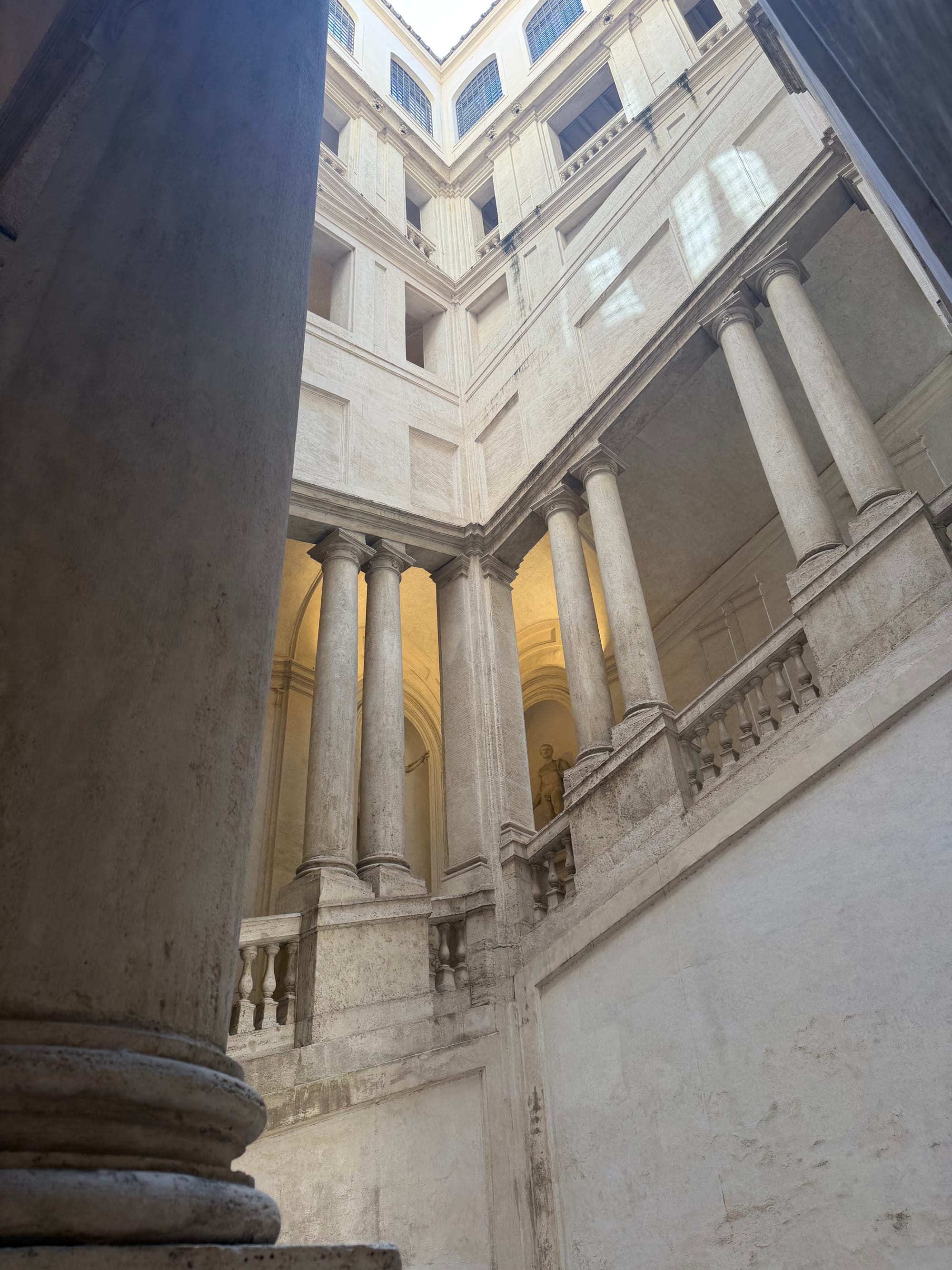
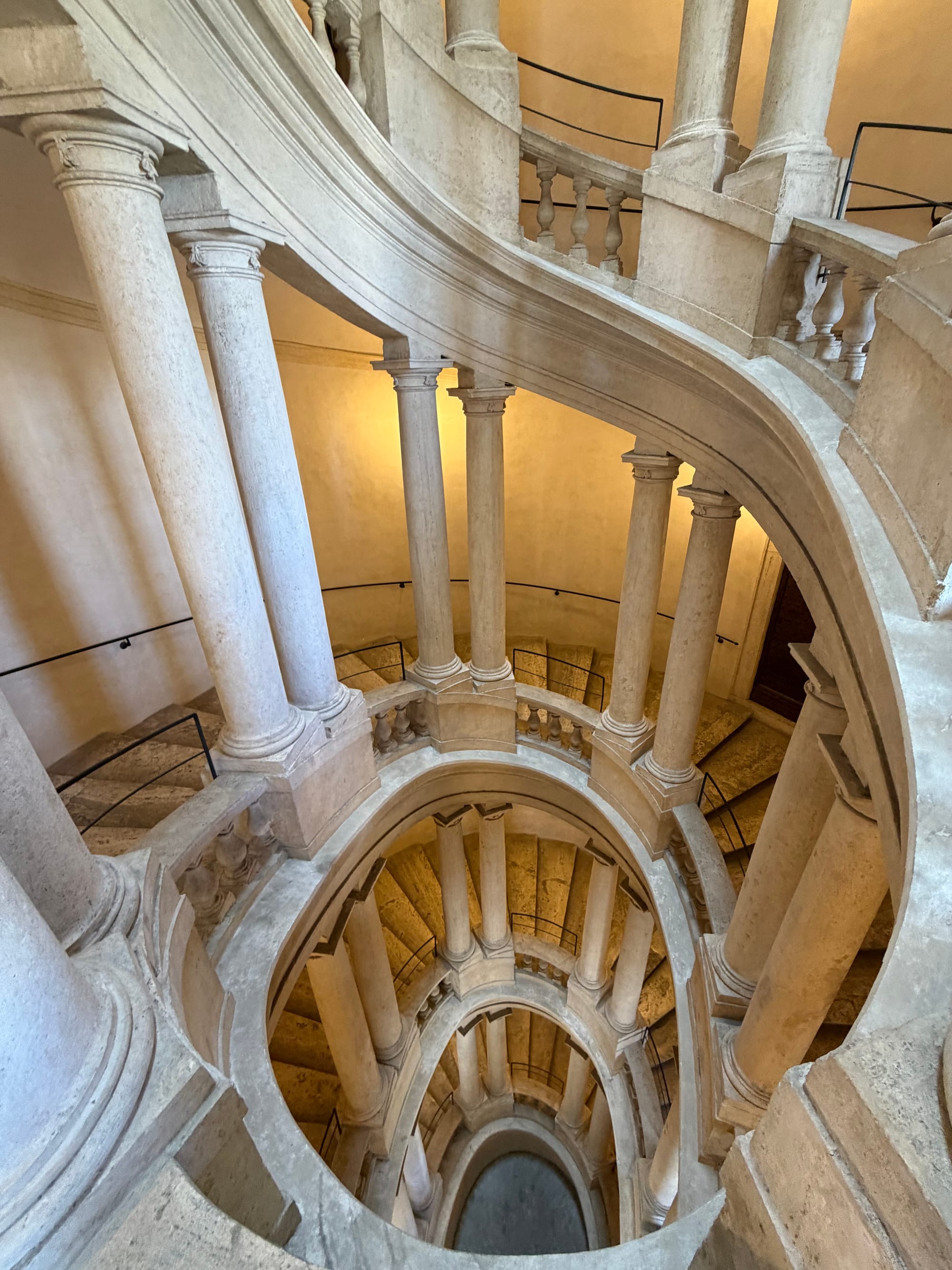
The palace contains two extraordinary staircases. On one side rises Bernini’s square staircase; on the other, an oval helicoidal staircase probably designed by Borromini. The official history of the palace places the two almost provocatively beside one another: two great Baroque minds solving the same practical problem in radically different ways.
Two ways of ascending.
Two ways of arranging a body in space.
Two ways, perhaps, of imagining where the eye ought to go.
Bernini understands arrival.
There is a confidence to his architecture, a sense that space may be composed around revelation. The spectator is led, positioned, rewarded. Something opens. Something appears. The world gathers itself around a privileged point of vision.
It is difficult not to love.
Particularly, perhaps, when one is young.
There is something reassuring about a world in which the lines converge, the vista terminates where it ought, and the staircase leads somewhere.
Borromini is less accommodating.
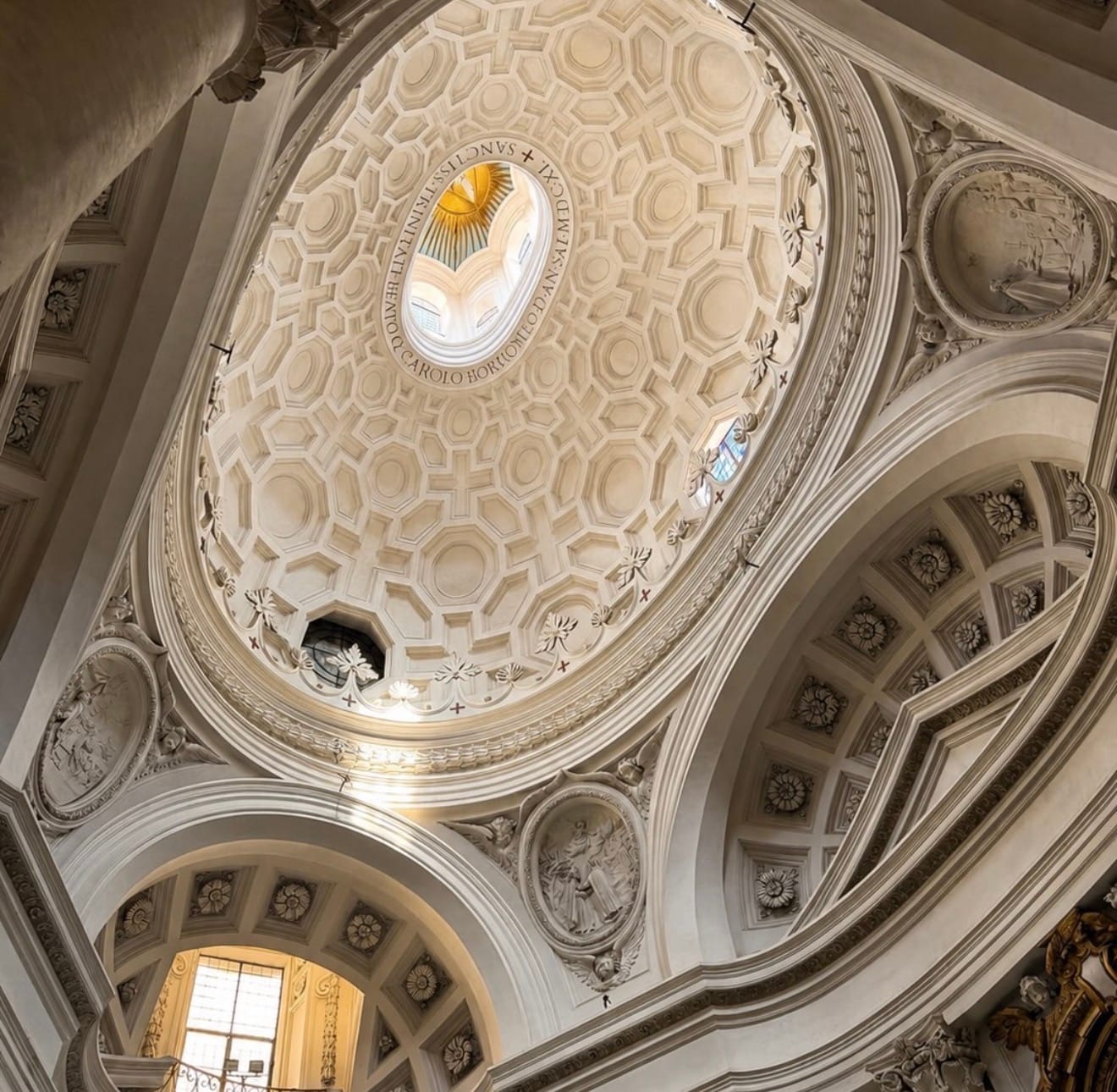
At San Carlo alle Quattro Fontane, his geometry seems almost alive. Walls advance and retreat. Ovals fold into curves. The white interior possesses remarkably little of the chromatic extravagance we associate with Baroque Rome, yet nothing is static. Light moves across surfaces already in motion.
Borromini does not give us confusion.
He gives uncertainty form.
And perhaps that is why I found myself more drawn to him on this return.
I have become less convinced that coherence is the same thing as truth.
🌤️ A Ceiling That Pretends to Open
Yet Palazzo Barberini also contains one of the greatest acts of visual confidence in Rome.
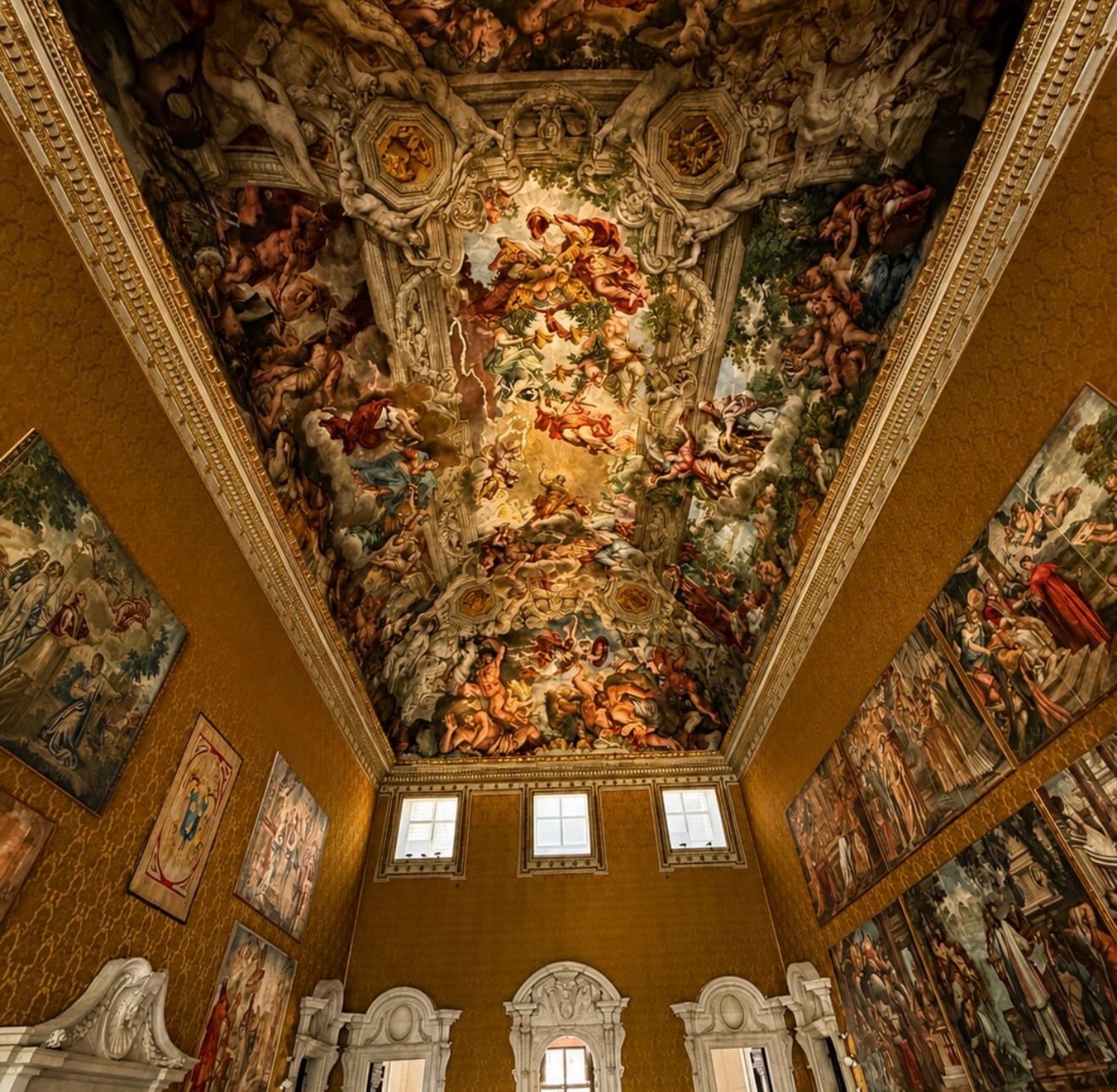
In the central salon, Pietro da Cortona’s vast Triumph of Divine Providence overwhelms the ceiling. Painted architecture gives way to clouds and bodies; allegorical figures tumble through an illusionistic space in which the physical limits of the room seem momentarily inadequate to contain the Barberini imagination. The fresco was created in the 1630s to celebrate the spiritual and temporal authority of the Barberini papacy.
We know, of course, that the ceiling has not opened.
That knowledge does almost nothing to diminish the effect.
Perhaps it improves it.
Baroque illusion requires a peculiar compact between object and observer. We know that we are being deceived and agree to participate anyway. Painted plaster becomes sky without ceasing to be painted plaster.
And suddenly this seemed very close to memory.
To say that a memory is constructed does not mean that it is false.
I know that eight years in Rome have been compressed in my mind into books, churches, train journeys, languages, arguments, friendships and particular kinds of evening light. Entire months have disappeared while isolated afternoons retain impossible clarity.
The proportions are absurd.
And yet the remembered city feels real.
Perhaps memory resembles Baroque illusion more closely than documentary photography. Its truth does not depend upon pretending that no artifice has occurred.
The mistake is not seeing heaven where there is plaster.
It is forgetting that we have participated in painting it.
🌓 Japan and the Art of Shadow
Japan later complicated my habits of looking.
Going there between one life and another was one of those decisions that appears much bolder in retrospect than it did while being made. I went because I could, and because there was something irresistible about placing myself for a while somewhere culturally far from the European world which had formed me.
What surprised me was not simply difference.
It was the discovery that things I had taken to be natural were often merely habitual.
This is one reason Jun’ichirō Tanizaki’s In Praise of Shadows now seems such an apt companion to these Roman photographs.
Tanizaki’s subject is not darkness as deprivation but darkness as a condition of beauty. Lacquer, gold, timber and skin behave differently when they are not subjected to relentless illumination. Things acquire depth because some part of them is permitted to remain unrevealed.
The obvious danger is to turn this into an enormous civilisational opposition: luminous, individualistic Europe against shadowed, collective Japan.
That would be far too neat.
Europe knows darkness intimately. Caravaggio certainly did. Gothic churches knew it. The Baroque depends upon it.
The distinction that began to interest me was subtler.
Western artists have often employed darkness in order to reveal.
A Caravaggio figure is seized from blackness by light. The face emerges. The body becomes particular. Darkness intensifies individuality because it allows something to step forward from it.
The shadow serves the figure.
What I began to notice in Japan was the possibility that the relationship might occasionally be reversed.
The figure might be allowed to belong to the shadow.
🧍 The Figure and the Ground
One of my photographs from Rome now seems important precisely because it contradicts my own argument.
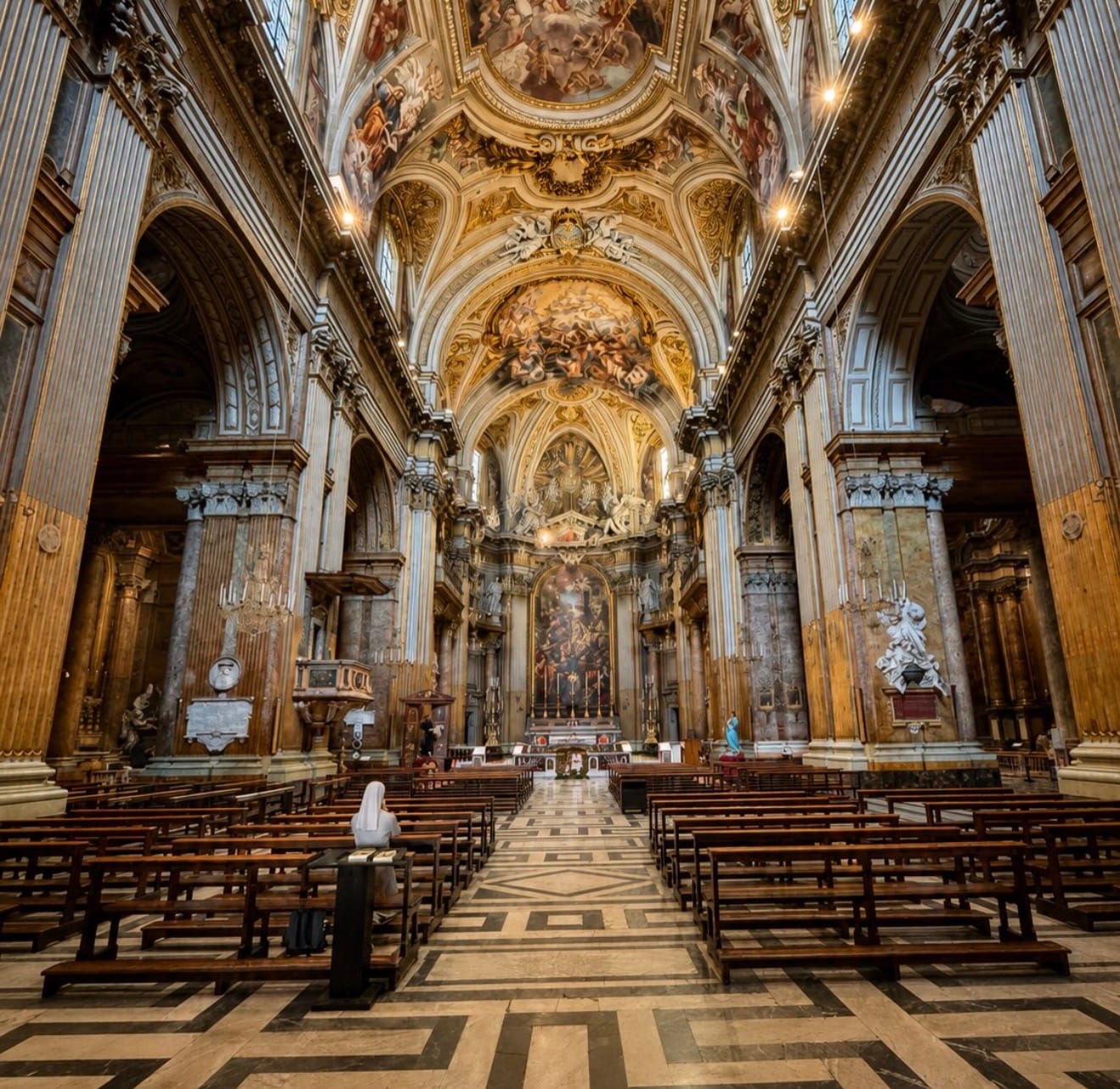
A single religious figure sits in an enormous church of Dodici Apostoli.
She is unmistakably present, but she does not control the image. Architecture rises above her. The patterned floor continues around her. Light falls elsewhere. The eye can find her and lose her again.
She belongs to the room.
That photograph makes it impossible to maintain any easy claim that Rome celebrates the individual while Japan dissolves it.
Rome contains both possibilities.
Perhaps that is the more interesting conclusion.
Japan did not teach me something that Rome lacked.
Japan taught me to notice something in Rome that I had not previously known how to see.
When I first arrived there at nineteen, Rome gave me contours. Latin and Greek gave shape to one part of my mind, philosophy another. Travel altered the geographical dimensions of the world. Art and architecture provided a visual vocabulary. Books opened onto other books, places onto other places.
A self assembled itself there.
And there is something deeply seductive about imagining formation as an emergence: the figure gradually becoming distinct from its background.
But we are also what surrounds us.
Japan made me more interested in that thought.
There are forms of presence which do not depend upon domination. A garden may possess order without a single monumental centre. An interior may derive its beauty partly from what cannot quite be seen. A human figure may remain fully present without becoming the organising principle of everything around it.
Rome taught me to recognise the figure.
Japan made me pay attention to the ground.
🪜 The Seduction of the Staircase
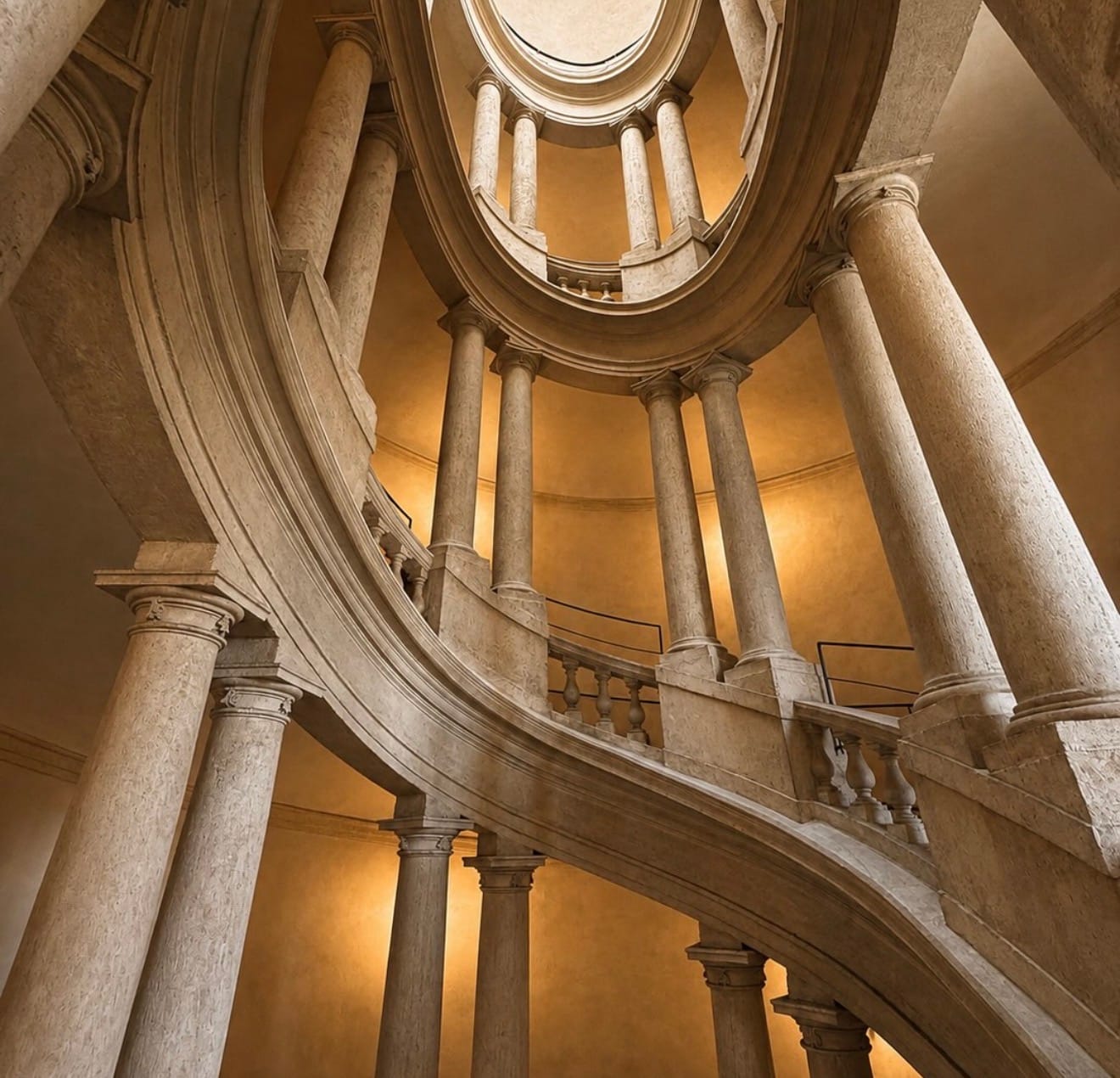
The photograph that most tempts me into bad philosophy is Borromini’s staircase at Palazzo Barberini.
It spirals upward towards an oval opening of white light.
One hardly needs to try.
Darkness below. Light above. The arduous curve of ascent. Progress, escape, enlightenment, conversion, arrival.
The metaphor writes itself.
And that is precisely why I distrust it.
A staircase has a destination.
A life ordinarily does not.
Looking backwards, however, we are extraordinarily good at making one.
Retrospection is a persuasive determinist.
Once we know what happened, earlier events begin to resemble causes. Rome becomes the beginning of interests and decisions that, at nineteen, had not yet been conceived. An accidental encounter becomes formative. An uncertainty becomes foreshadowing. A road not taken disappears so completely that the one we did take begins to look inevitable.
But the person living those years did not possess the ending.
I could not have known which interests would survive, which convictions would alter, where I would eventually live, or which apparently permanent structures would turn out to be provisional.
Memory knows too much.
It reads the first chapter having already finished the book.
That may be its most elegant distortion.
We make the staircase lead where we eventually arrived.
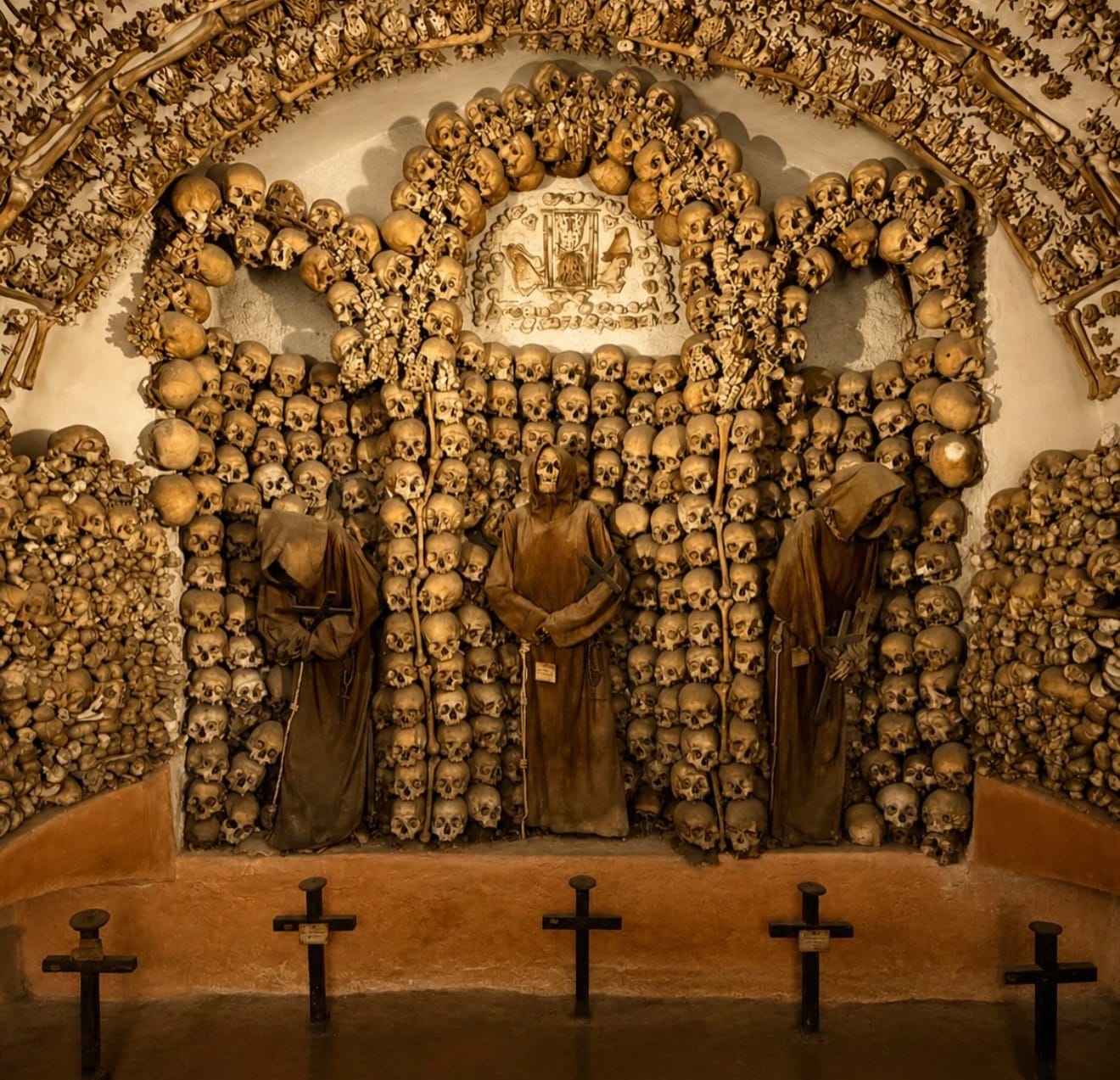
💀 Gold and Bone
And then, after Palazzo Colonna and Palazzo Barberini, after marble and illusion and painted heavens, there were the Capuchins.
Here Rome does something violent to the distinction between figure and ground.
Skulls become pattern. Vertebrae become ornament. Individual bodies are absorbed into larger arrangements. The material from which an individual once announced his presence in the world becomes architecture.
After a day spent among Roman art’s astonishing capacity to distinguish the individual, there is something unnerving about it.
The figure has become the background.
But once again Rome defeats the easy East-West distinction.
This is not Kyoto.
It is Rome.
The same culture that produced statues of popes and princes, that carved individual ecstasy into marble and projected dynastic identity across façades, also produced this meditation on anonymity, mortality and dissolution.
Rome knew shadow perfectly well.
I simply remembered its light more readily.
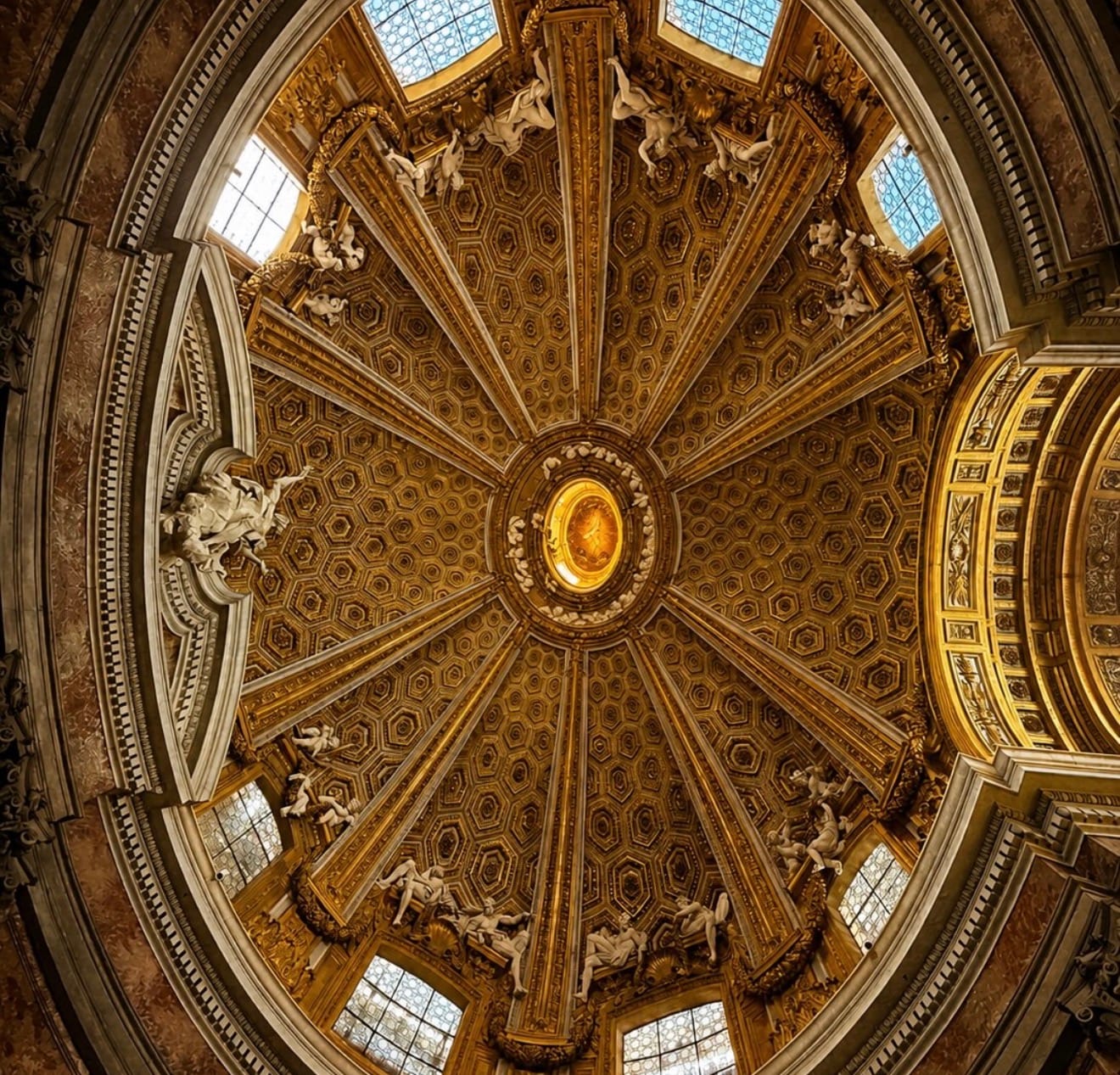
⏳ The Colour of Memory
My Roman years still feel golden to me.
I have decided not to apologise for that.
Those years gave me languages, books, places, questions and appetites which have survived almost everything that subsequently changed. Much of what still excites me can be traced, by some circuitous route, to something encountered there.
There would be something equally artificial about darkening the memory merely to demonstrate that I now understand complexity.
Gold need not be a lie.
But neither is it neutral.
Tanizaki, after all, was engaged in his own act of aesthetic memory when he praised an older Japanese world of dim interiors against the increasing brightness of modernity. His shadows were selected too.
He darkened Japan.
I have gilded Rome.
Both gestures tell us something about the place remembered, but perhaps even more about the person doing the remembering.
And this is why photography interests me.
A photograph pretends, rather seductively, to be evidence. Yet before the shutter is pressed, interpretation has already begun. We choose where to stand. We decide what belongs inside the frame. We wait for someone to walk away. We expose for one surface rather than another.
Later, I warmed the image.
Memory performs much the same operation without asking permission.
Rome becomes more golden.
Uncertainty becomes interesting rather than frightening.
Contingency acquires the shape of destiny.
The past arranges itself around the person we eventually became.
Returning to Rome did not undo that process. I am not sure it could.
But it made me conscious of it.
The Galleria Colonna remains magnificent despite the cannonball lodged in its stairs.
Pietro da Cortona’s ceiling still opens onto heaven even while I know perfectly well that it does not.
Borromini’s staircase still rises towards the light, although I no longer trust the implication that every ascent possesses a predetermined destination.
The solitary figure remains small within the church.
And beneath the city, the bones remain in shadow.
Perhaps this is what Japan ultimately altered for me. Not my affection for Rome, nor my conviction that those years mattered, but the observer himself.
I returned with another way of seeing.
And through it, I discovered that the Rome I had remembered as gold had always contained the shadows I thought I had learned elsewhere.
Clarity, perhaps, is not the elimination of darkness.
It is the ability to let illuminated and obscured things occupy the same field without forcing one to defeat the other.
So I have left the photographs golden.
They resemble the Rome I remember.
I simply no longer mistake the gold for the whole picture.