🌧️ What the Stones Ask
🌧️ A House That Has Learned to Weather
There are some places that seem to resist history. Their stones are scrubbed clean, their roofs carefully repaired, their gardens restored to the geometry intended by the original architect. They reassure us that beauty can be preserved if only enough money, labour, and affection are devoted to it. We leave such places admiring the past, but rarely questioning the present.
Witley Court is not one of them.
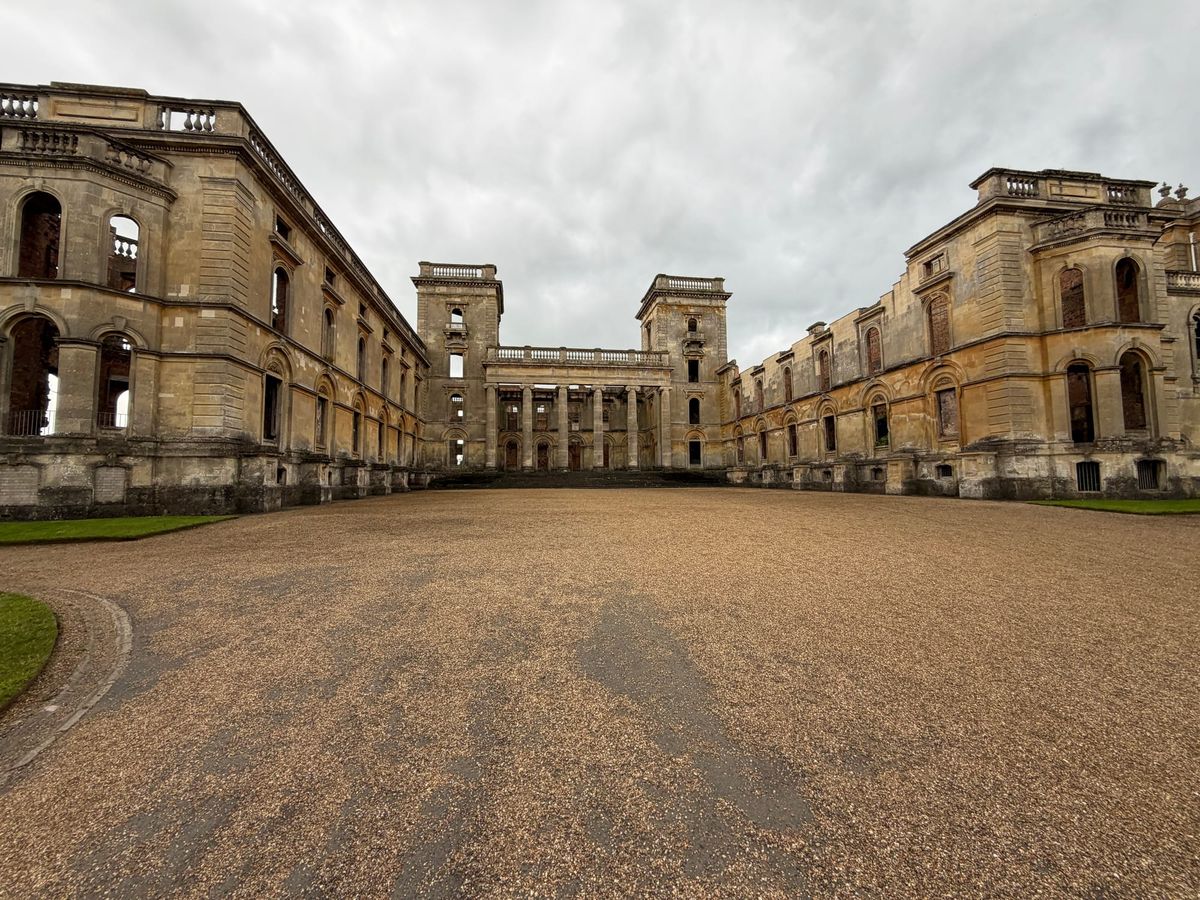
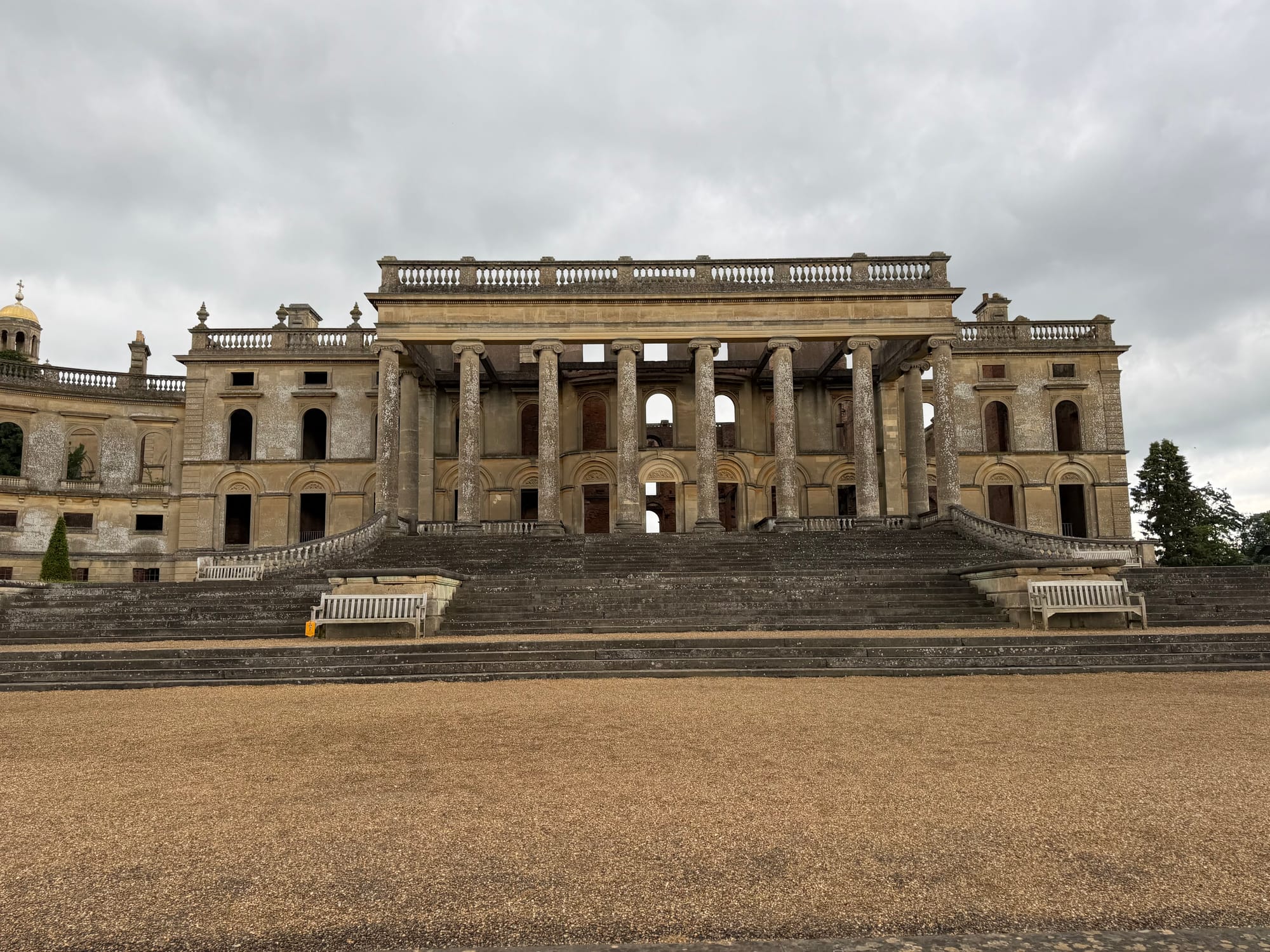
The first impression is undoubtedly one of grandeur. Long before the details reveal themselves, the great portico dominates the horizon with an almost Roman confidence.
The Corinthian columns rise above the surrounding trees with such authority that one instinctively expects to find an intact palace behind them. Even now, stripped of roof, windows, fireplaces, and furniture, the façade retains an extraordinary dignity. It does not ask for pity. It asks to be looked at carefully.
As I walked towards it, the weather seemed almost unwilling to choose between sunlight and rain. Great banks of grey cloud drifted slowly across the Worcestershire sky before breaking unexpectedly to allow shafts of afternoon light to strike the sandstone.
For a few moments the columns glowed with the warm colour they must once have possessed in abundance. Then the light disappeared again, and the building withdrew into shadow, as though history itself were breathing.
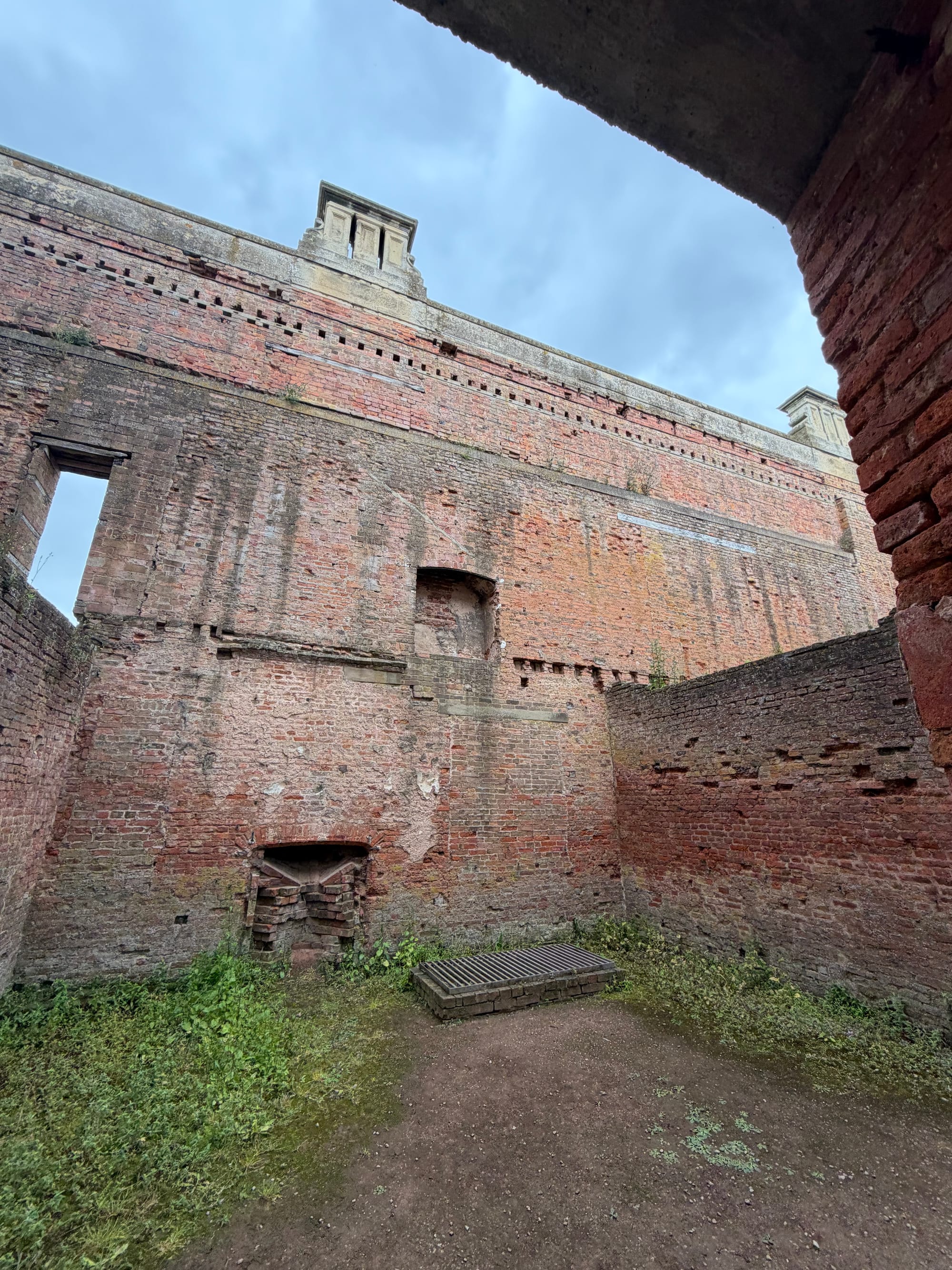
Passing beneath the portico, I became aware of a curious reversal. Buildings are normally places that shelter us from the world. Here, the world had entered the building instead. Wind moved freely through corridors where servants had once hurried between rooms.
Rain fell silently onto stone floors that had once reflected candlelight. Swallows crossed windows which no longer contained glass, while weeds emerged confidently between paving stones that had been laid with mathematical precision more than two centuries earlier. The distinction between architecture and landscape had begun to dissolve. Nature had not conquered the house. It had simply been invited inside.
Perhaps that is why the silence felt so unusual.
Ruins are often described as silent because nobody lives within them. Yet the silence of Witley Court seemed to possess an altogether different quality. It was not empty. Rather, it was attentive. Every footstep lingered beneath the surviving vaults before disappearing into spaces that no longer possessed obvious boundaries.
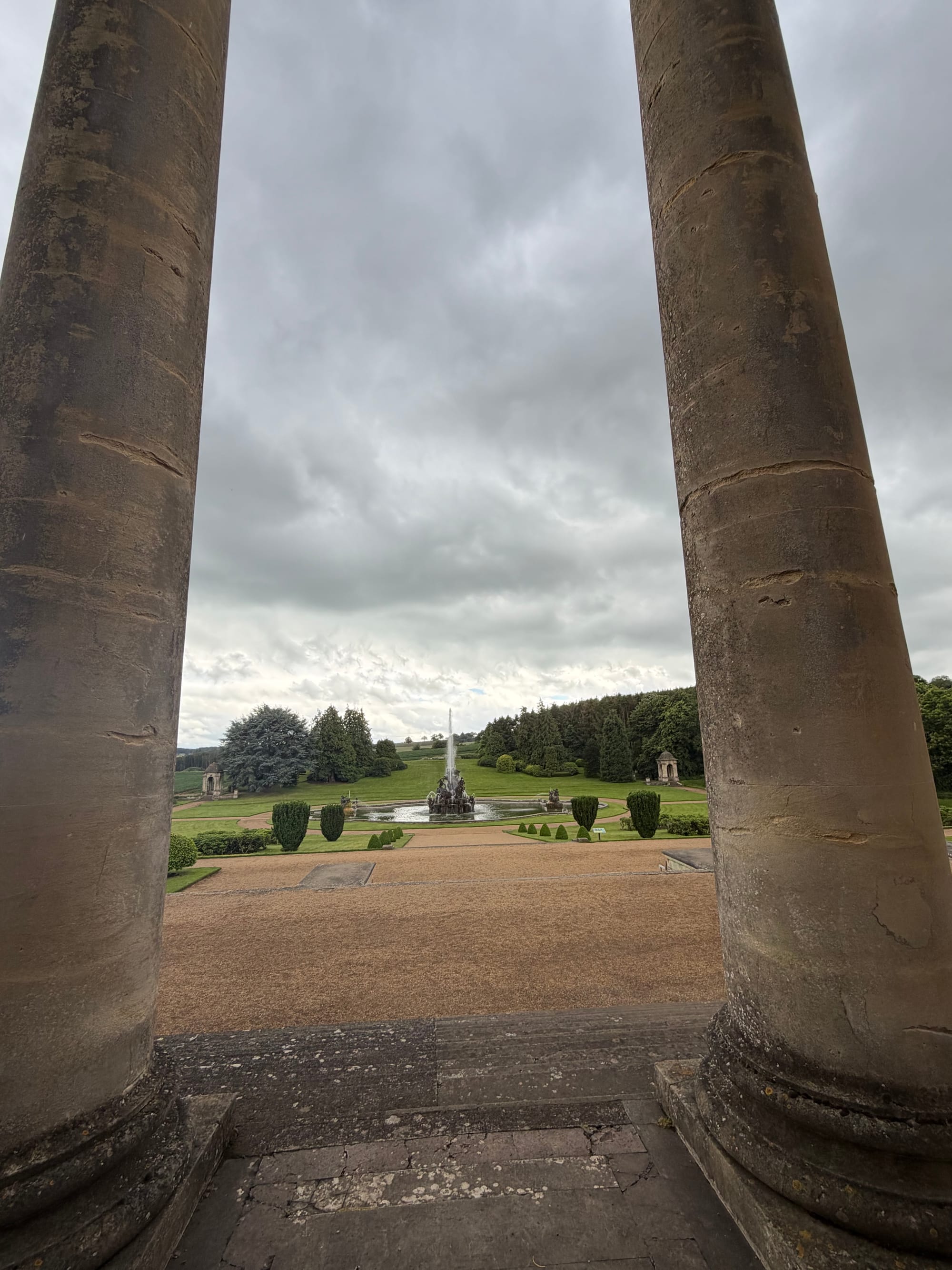
The house had ceased to contain human voices, but it had become astonishingly receptive to other sounds: the movement of leaves beyond broken windows, the soft percussion of rain against exposed brick, the distant splash of the Perseus fountain continuing its ancient performance in the gardens below.
Standing there, I found myself resisting the temptation to reconstruct the past.
Heritage sites often encourage precisely that instinct. Information boards present artists’ impressions of vanished interiors. Guides invite visitors to imagine banquets, political conversations, glittering receptions, and extravagant displays of wealth.
There is value in such acts of historical imagination, but they also risk obscuring something equally important.
Witley Court no longer exists merely as the remains of a great house. It has acquired a second life, one never intended by its builders. The centuries have become architects in their own right.
Rain has altered the building as surely as any mason.
Frost has reshaped it with equal patience.
Moss has softened edges that were once cut with astonishing precision.
Time, working without haste and without fatigue, has become the final designer.
I began to wonder whether ruins possess their own form of beauty, distinct from the beauty that first brought them into existence.
A newly completed building celebrates human intention. Every line has been chosen. Every ornament has been deliberately placed. Nothing is accidental.
Ruins belong to an altogether different aesthetic. Their beauty lies not in control but in relinquishment. They reveal what happens when architecture ceases to impose itself upon the landscape and instead enters into conversation with it.
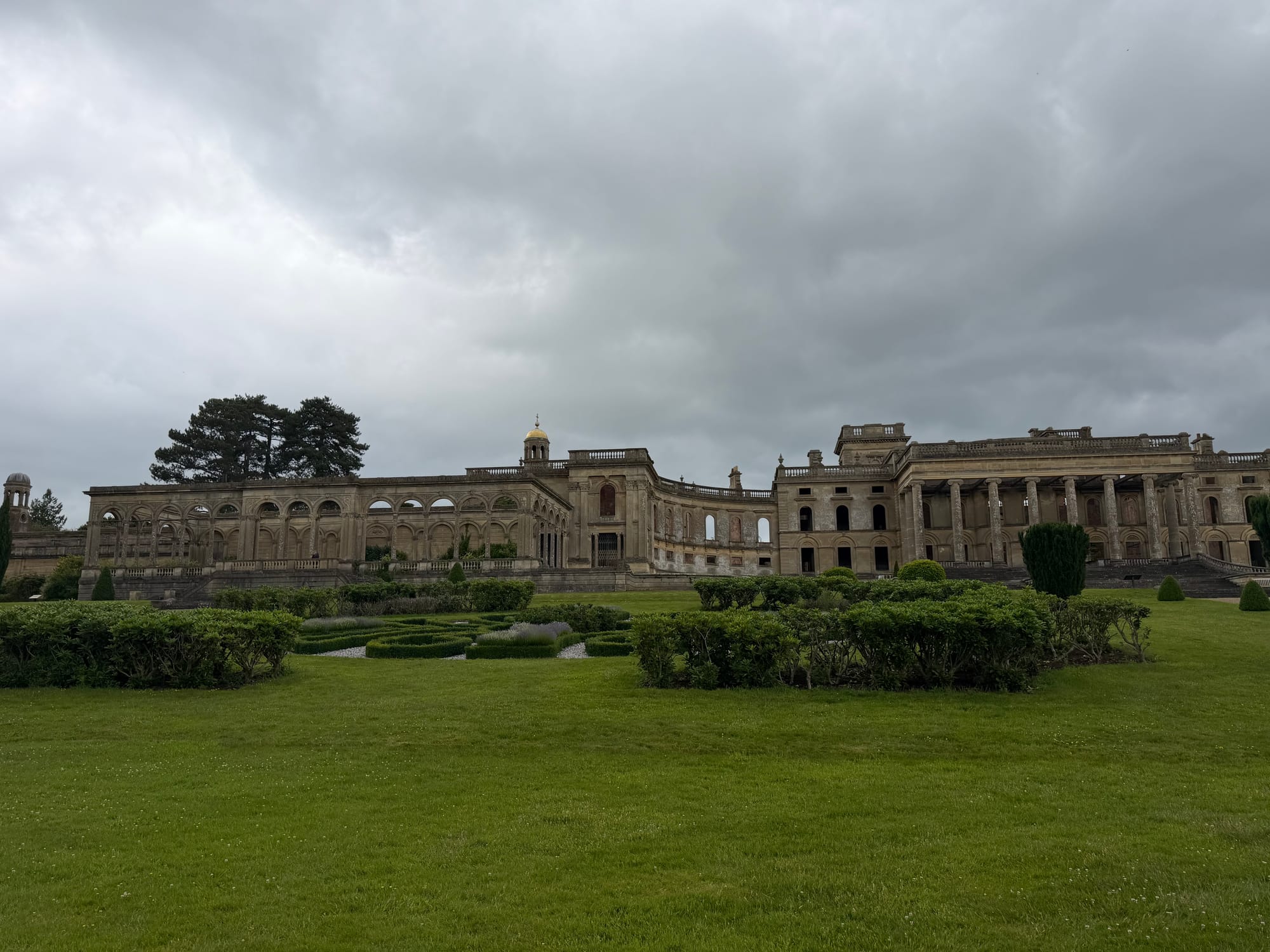
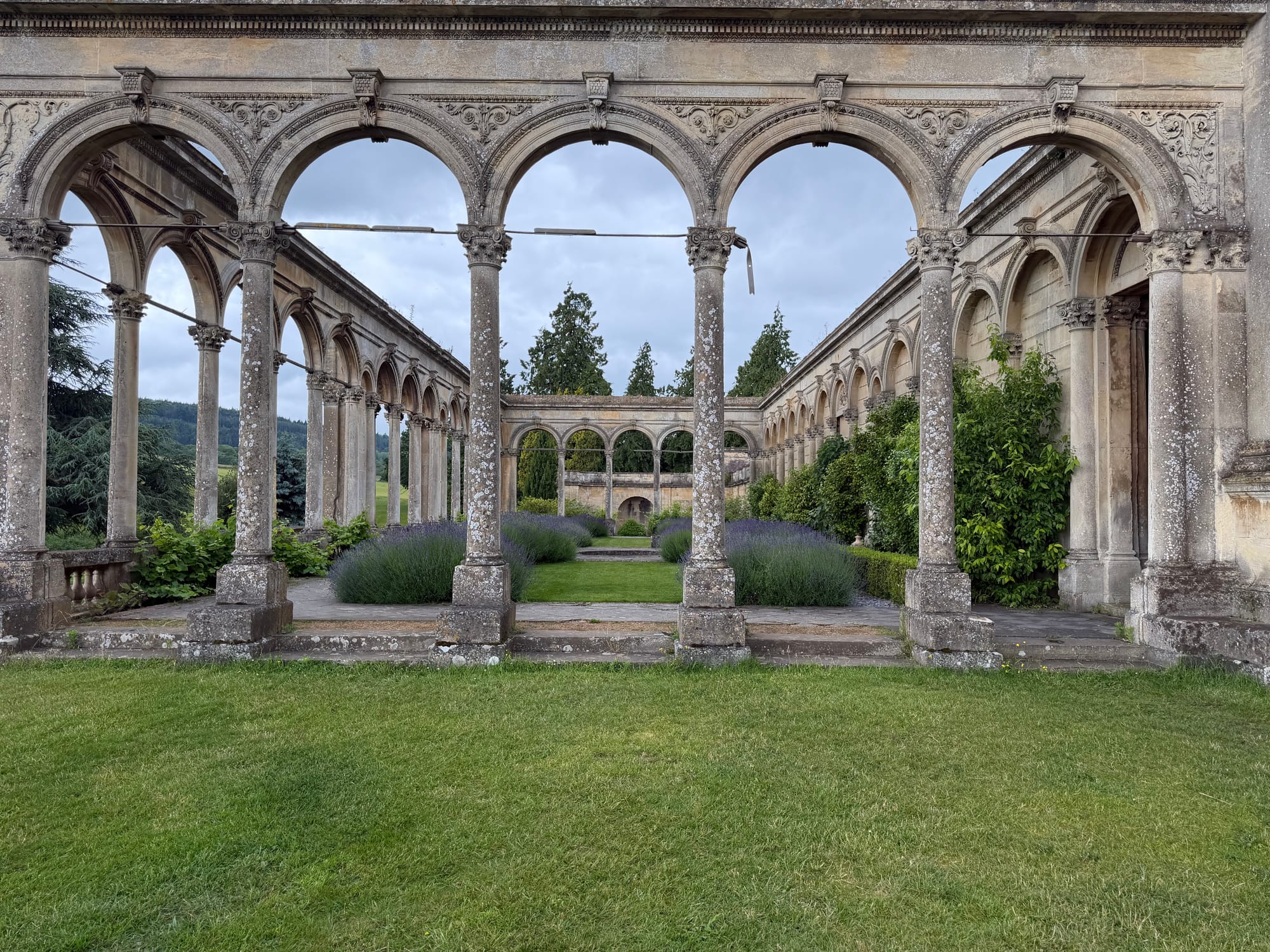
The great façade of Witley Court still governs the eye with remarkable confidence. The rhythm of its windows remains unmistakable despite their emptiness. The columns continue to divide the space with classical precision, even though they now support little more than cloud and weather. Form persists long after function has departed.
Looking at those columns, I found myself thinking less about the family who had built the house than about the extraordinary stubbornness of form itself.
Why does symmetry continue to move us even when the building it once ordered has disappeared?
Why do proportions retain their authority when the life they were designed to contain has long since vanished?
Why should an empty shell still possess dignity?
It was at that moment that Plotinus quietly entered the landscape.
Not because I had arrived intending to think about Neoplatonism. Quite the opposite.
The thought seemed to arise naturally from the building itself. Standing beneath those columns, watching sunlight briefly illuminate stone before surrendering once more to cloud, it became difficult not to imagine that form possessed a reality deeper than the material from which it was fashioned.
For Plotinus, all existence flows outward from the One, not as a craftsman constructs an object, but as light radiates from the sun or warmth from a fire.
Reality is an act of overflowing.
From perfect unity proceeds Intellect; from Intellect proceeds Soul; from Soul emerges the visible world.
Creation is therefore not a fall from perfection so much as its gradual unfolding.
Yet with each stage, multiplicity increases. Unity becomes more fragile. Form remains present, but it must contend ever more closely with the instability of matter.
Looking across Witley Court, that ancient philosophy no longer felt remote.
The house stood before me as though poised between two worlds.
Its proportions still belonged to the realm of form.
Its substance had begun to yield to time.
Nothing dramatic had happened.
There had been no invading army.
No earthquake.
No sudden catastrophe.
Instead there had simply been winters.
Thousands upon thousands of mornings on which frost entered the smallest crack in the stone before expanding almost imperceptibly.
Summers in which rainwater seeped beneath lead flashing.
Autumns during which leaves gathered unnoticed in blocked gutters.
Springs in which roots extended a fraction further beneath the foundations.
Decay, I realised, possesses extraordinary patience.
Human beings celebrate beginnings. We commemorate the laying of foundation stones, the completion of towers, the opening of cathedrals. We remember moments because moments flatter our sense of agency.
Time has no interest in moments.
It works through accumulation.
One drop of water accomplishes almost nothing.
A million drops alter landscapes.
A single winter changes very little.
Two centuries quietly persuade a palace to become a ruin.
Standing within Witley Court, I found myself wondering whether the same might also be true of civilisations, institutions, and even lives. We often imagine collapse as an event.
Yet perhaps decline is more often a conversation: a long negotiation between intention and circumstance, conviction and compromise, form and matter.
The house did not seem tragic.
Nor did it seem defeated.
If anything, it seemed astonishingly serene.
It had stopped resisting the work of time.
And in doing so, it had become beautiful in an entirely different way.
🚪 Thresholds
There was one feature of Witley Court to which I found myself returning again and again.
The doorways.
At first they appear entirely ordinary. Every great house possesses corridors, connecting rooms, and carefully planned sightlines.
Yet once the walls have lost their ceilings and the windows have surrendered their glass, those same architectural decisions begin to reveal themselves in an altogether different way.
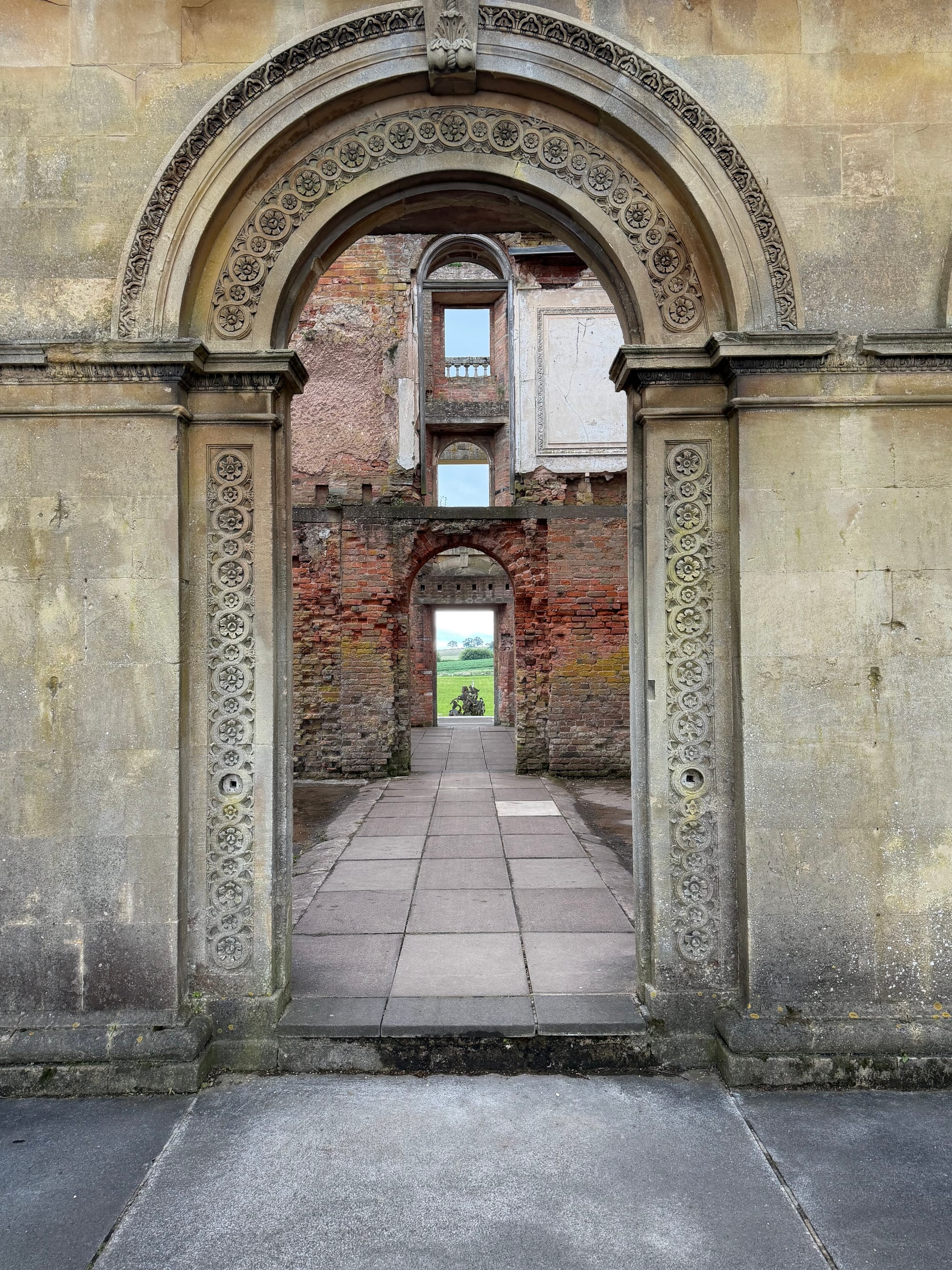
One doorway frames another, which frames another still, until the eye is drawn almost involuntarily through the building and out into the landscape beyond. Stone gives way to brick. Brick gives way to sky. Sky gives way to distant woodland.
Standing motionless, I realised that I was no longer looking at rooms.
I was looking at thresholds.
Architecture ordinarily encourages us to think in terms of destinations. We enter a hall in order to arrive at a drawing room. We climb a staircase in order to reach a bedroom. Every movement assumes that fulfilment lies somewhere ahead.
Ruins quietly undermine that confidence.
Here there was nowhere left to arrive.
Each doorway opened only onto another doorway, another absence, another fragment of a world that no longer existed. The house had ceased to promise completion. Instead it had become a meditation upon movement itself.
I wondered whether this is not also one of the gentlest deceptions of youth.
We imagine life as a succession of arrivals. School prepares us for university. University prepares us for work. Work prepares us for success. Success, we imagine, will eventually grant us rest. We postpone contentment because we assume permanence lies just beyond the next threshold.
Yet every doorway merely reveals another.
Every certainty eventually becomes provisional.
Every achievement quietly introduces fresh uncertainties that could not previously have been imagined.
Perhaps wisdom consists not in finally arriving, but in recognising that life was never designed as a destination in the first place.
Looking through those empty frames, I found myself thinking of another image in Plotinus.
He describes the soul as possessing a profound homesickness, an obscure awareness that the visible world cannot entirely satisfy because it is not our final horizon. We spend our lives searching for permanence among things that are themselves passing away. The result is not failure but restlessness.
Witley Court seemed to embody that restlessness in stone.
Every doorway invited movement.
None offered possession.
Perhaps that is why I found them so beautiful.
Not because they represented loss, but because they exposed an illusion that intact buildings often conceal. We do not inhabit permanence. We inhabit passages.
⛲ The Fountain That Refuses Gravity
If the house spoke quietly of decline, the fountain answered with remarkable confidence.
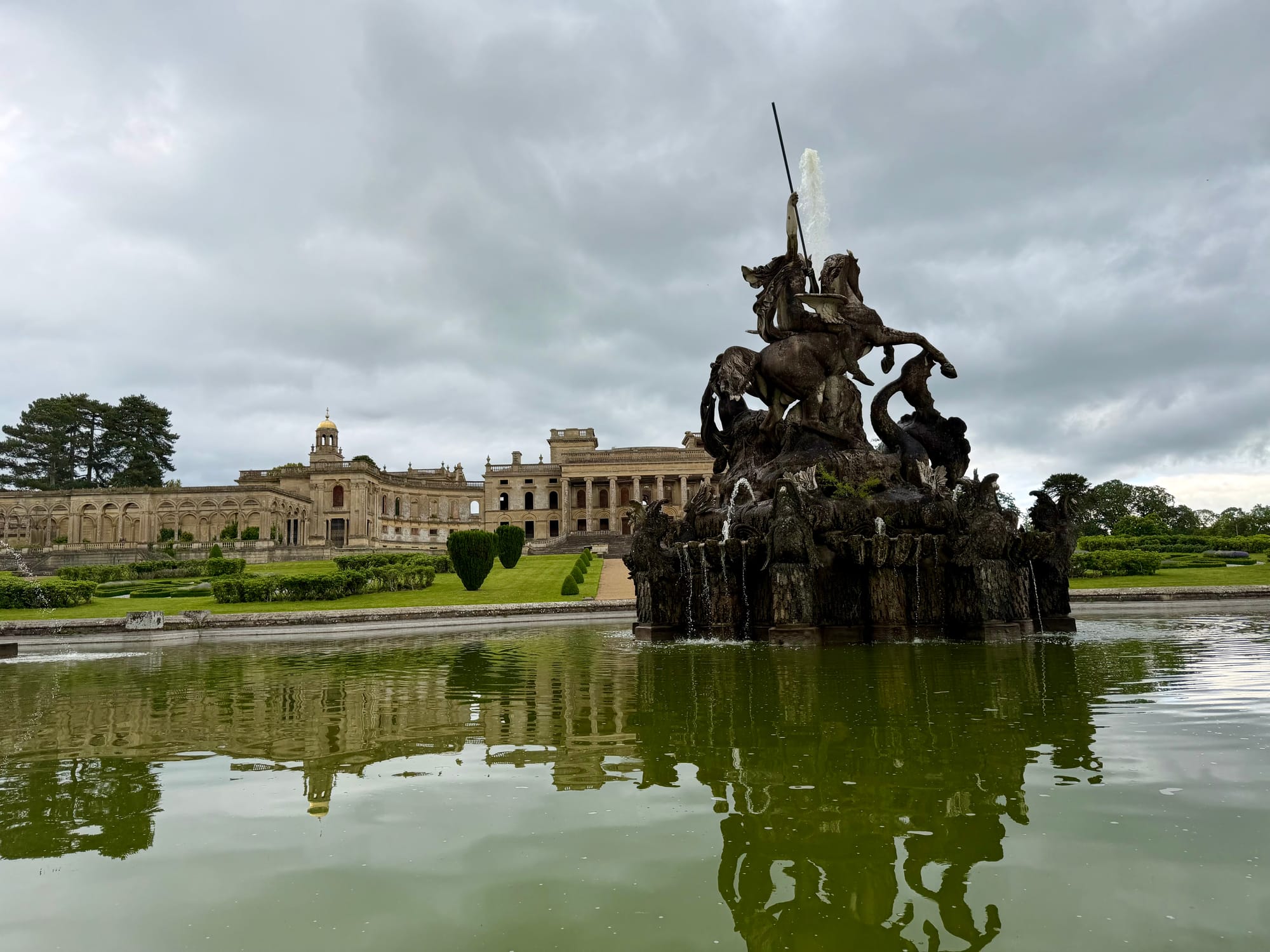
The great Perseus Fountain occupies the gardens with an almost theatrical exuberance.
Bronze figures twist and strain beneath towering jets of water that continue to rise exactly as they have for generations. Behind them stands the shattered façade of the house, its empty windows observing the spectacle with the strange detachment of old age.
The contrast is almost impossible to ignore.
Stone slowly descends towards earth.
Water continually rises.
For several minutes I simply watched the movement.
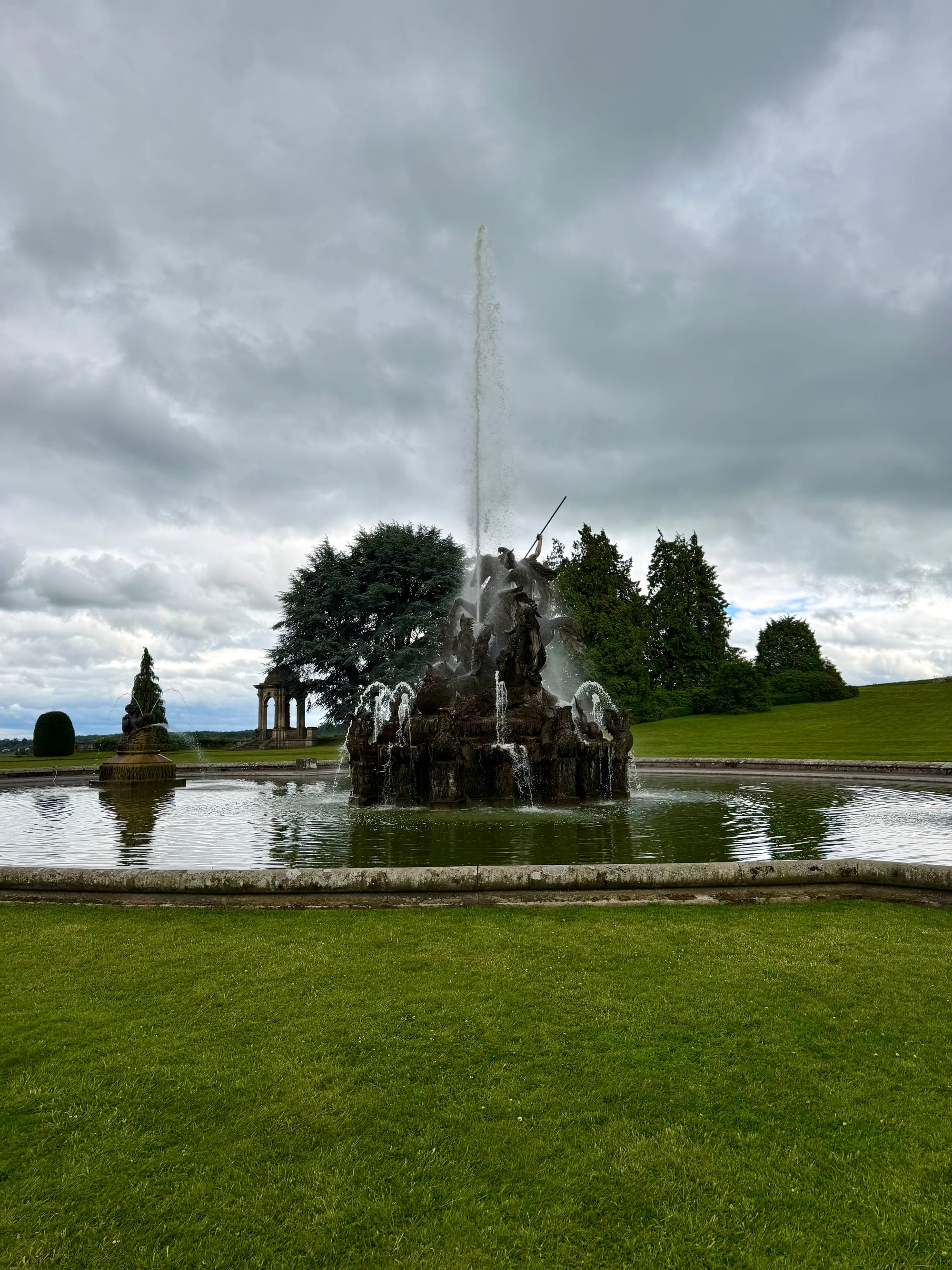
The great jet climbed effortlessly into the afternoon air before breaking into countless droplets that glittered briefly in the sunlight and then surrendered themselves once more to gravity.
A few moments later the entire movement began again, identical yet never quite the same.
Watching it, I found myself thinking that perhaps human civilisation has always resembled a fountain more than a monument.
We often speak as though permanence were the highest achievement.
We celebrate buildings that survive centuries, institutions that endure generations, reputations that outlive their owners. Yet almost everything genuinely beautiful possesses a different rhythm.
Music exists only while it is disappearing.
Conversation exists only while it is passing.
Prayer exists only while it is being spoken.
Love itself survives not because it stands still but because it renews itself each day through countless ordinary acts that no historian will ever record.
Perhaps the fountain understands something that the palace never could.
Its beauty does not depend upon resisting gravity.
It depends upon accepting it.
Every ascent already contains the promise of descent.
Yet the certainty of falling never persuades the water to remain in the basin.
Again and again it rises.
Again and again it falls.
Again and again it rises.
There is something profoundly hopeful in that rhythm.
Plotinus believed that every created thing bears within itself a longing for its source.
Whether one accepts his metaphysics or not, it is difficult to deny the intuition.
Human beings are creatures who reach beyond themselves.
We paint ceilings we shall never finish.
We write books that future generations may ignore.
We plant avenues of trees beneath whose shade we know we shall never sit.
We devote decades to professions that will one day continue without us.
Every worthwhile human endeavour contains something wonderfully irrational. It persists despite complete awareness of mortality.
Standing beside the fountain, I began to wonder whether civilisation itself is simply the accumulated expression of that refusal to remain still.
The house behind me testified that every human achievement eventually yields to weather.
The fountain before me suggested that this has never been sufficient reason to cease building.
Perhaps that is the deepest difference between despair and hope.
Despair asks whether our work will last forever.
Hope asks whether it is worth doing even if it does not.
As I turned to leave the gardens, the sound of the water gradually receded behind me until it became indistinguishable from the wind moving through the surrounding trees.
Yet long after the fountain itself had disappeared from sight, its rhythm remained curiously present in my thoughts.
Rise.
Return.
Rise again.
It struck me that this movement lies at the heart of almost everything we call beautiful.
🌿 The Patience of Ruin
Leaving the gardens, I wandered once more through the empty rooms.
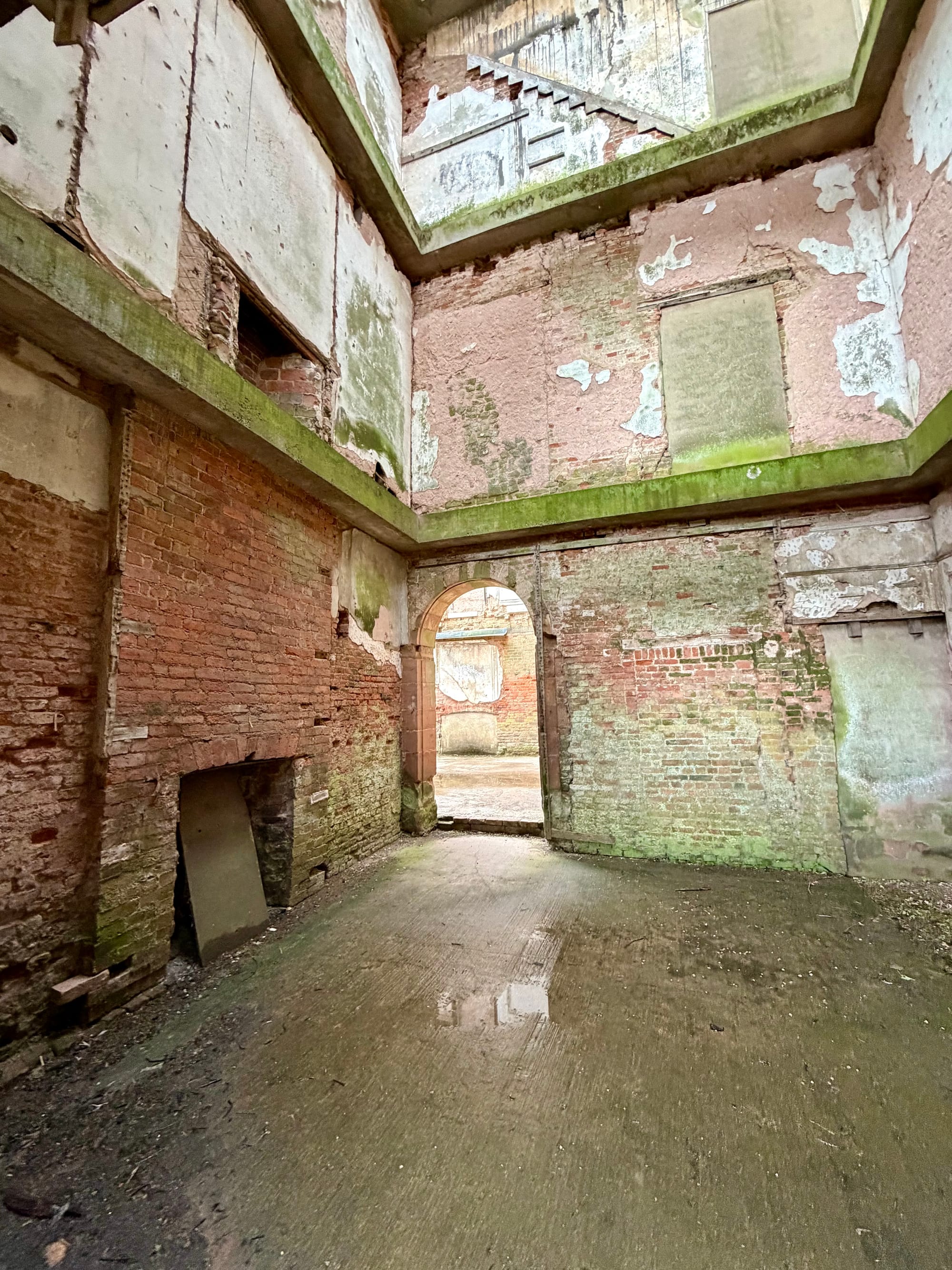
Without the drama of the fountain, the building revealed another, quieter beauty. Rainwater had left dark vertical stains where it had travelled patiently down exposed walls. Moss gathered where moisture lingered longest, softening sharp corners with unexpected tenderness. Here and there fragments of plaster still clung to brickwork, not unlike old paint surviving on weathered icons.
Perhaps this is why ruins move us so deeply.
They reveal time made visible.
Every stain upon the wall, every widening crack, every leaning column records not an event but a duration. The building has become a chronicle written not with words but with weather.
Ruskin once wrote that the greatest glory of a building is found not in its stones nor in its gold, but in its age. Standing within Witley Court, I began to understand what he meant. These walls had acquired something no architect could ever design.
They had acquired memory.
⛪ Stones That Continue to Pray
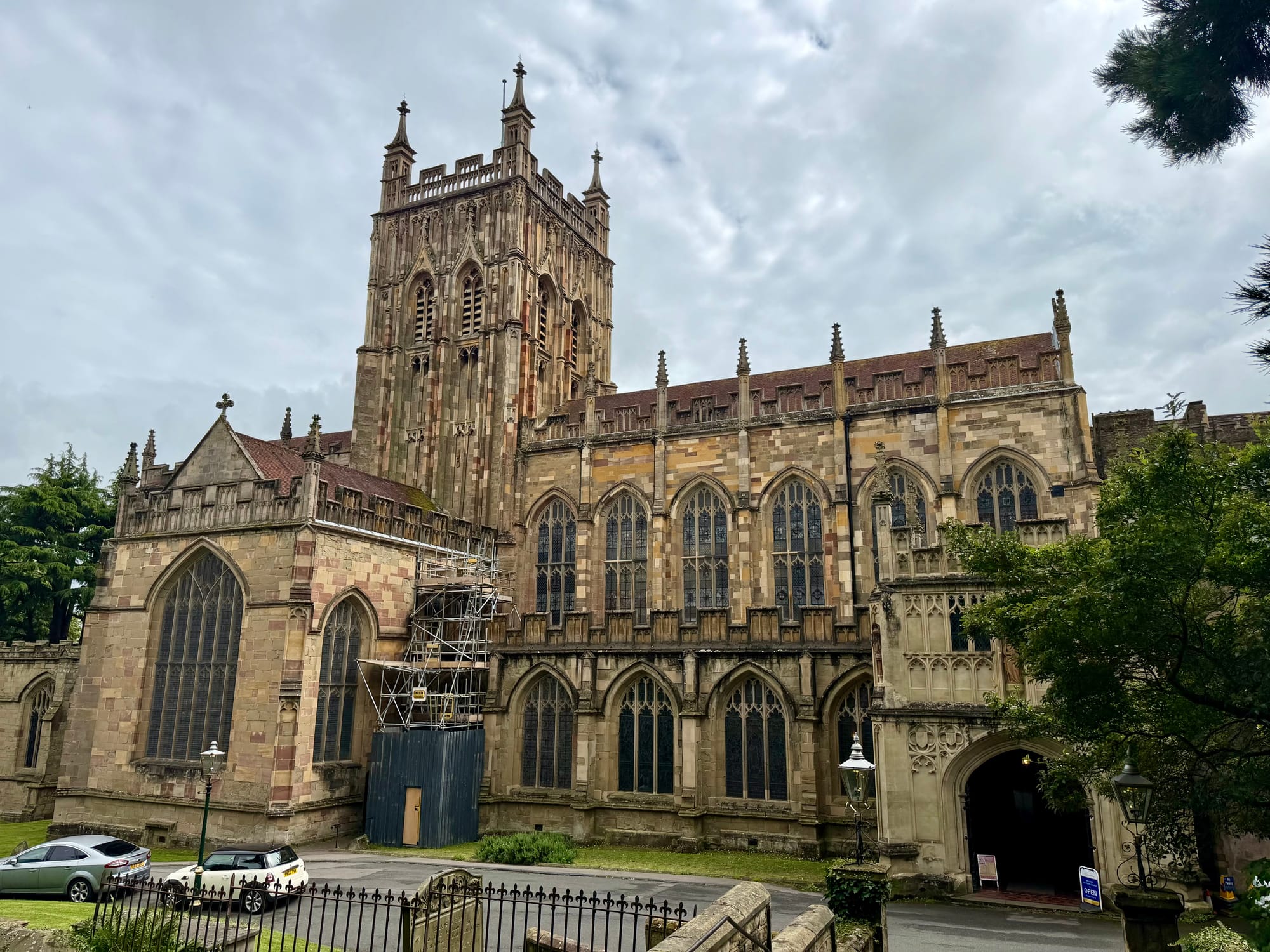
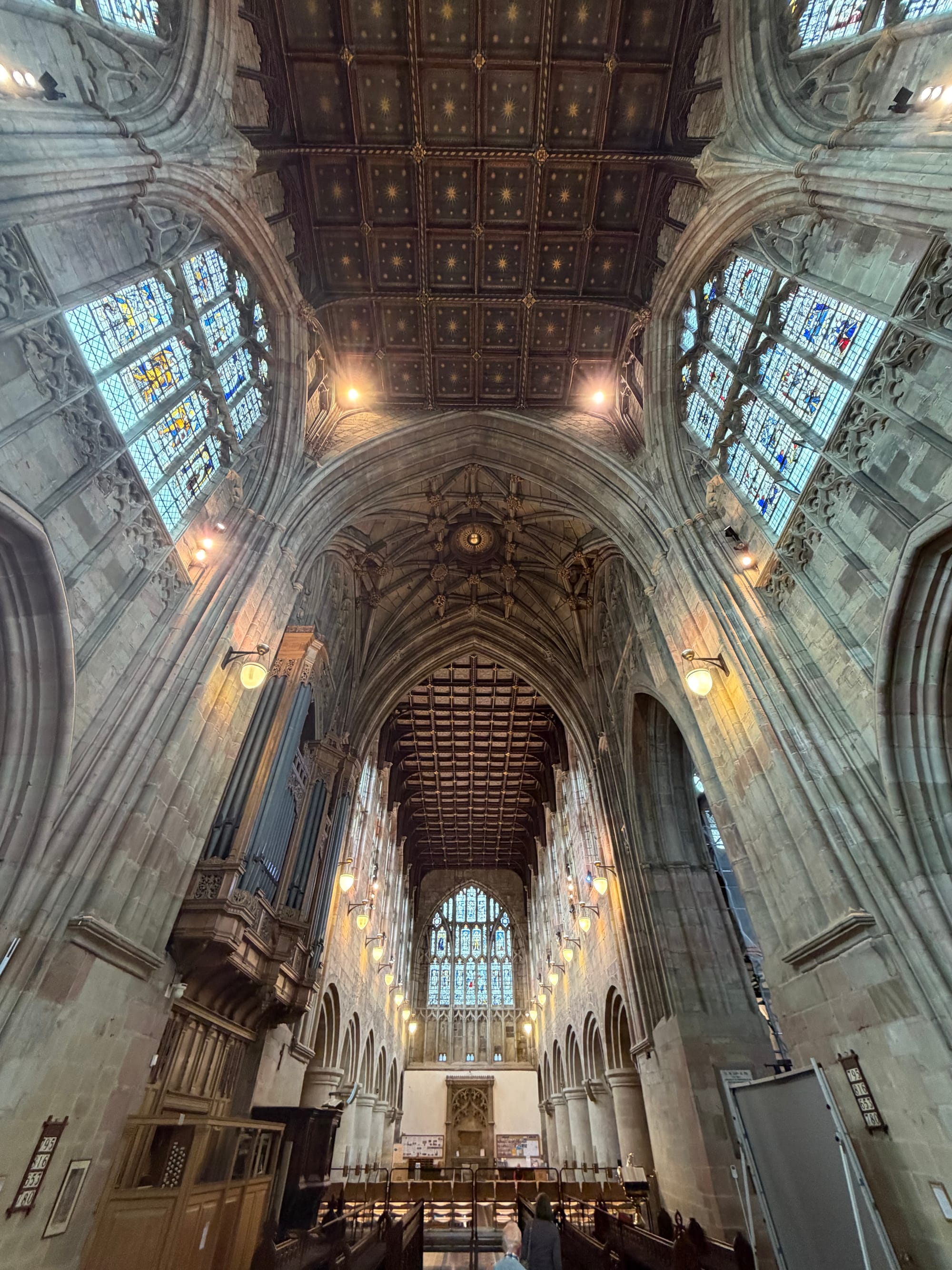
A short drive away lies Great Malvern Priory.
At first glance the connection between the two sites appears obvious. Both belong to the past. Both bear the marks of centuries. Both have survived political upheaval, changing fashions, and the quiet erosion of time.
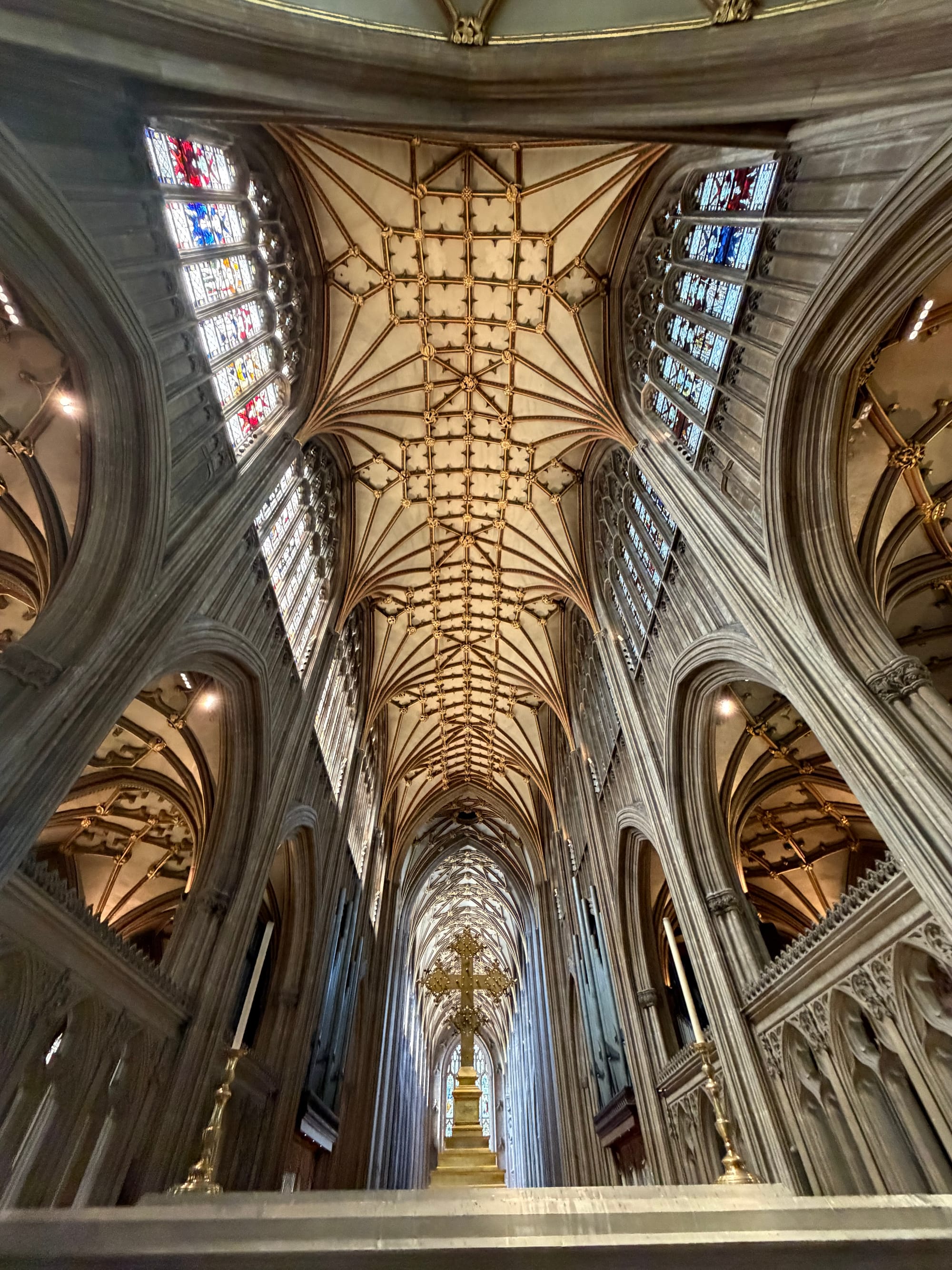
Yet as I stood beneath the soaring vaults of the priory, I realised that the relationship between them ran much deeper.
Witley Court is beautiful because it reveals what time takes away.
Malvern is beautiful because it reveals what time cannot.
The great Benedictine abbey that once stood here did not survive the Reformation intact. Monastic life came to an end. Buildings were dismantled. Shrines disappeared. The world that had produced the monastery passed into history.
Yet prayer did not disappear.
The building changed.
Its purpose remained.
Looking around the church, I found myself thinking not only of Plotinus, but of Augustine.
Few Christian writers admired the Platonists more deeply than Augustine. It was through them, he tells us in the Confessions, that he first learned to conceive of a reality beyond the material world. They taught him to lift his eyes upwards, beyond change and multiplicity, towards the eternal.
Yet they also left him standing there.
They could reveal the homeland.
They could not show him the road.
That insight echoed unexpectedly beneath the vaulted ceiling of Malvern.
Plotinus teaches us to ascend.
Christianity begins with God descending.
The difference is subtle, but decisive.
The Christian story does not begin by asking humanity to escape history. It begins by insisting that eternity has entered history. God does not abandon matter because it is fragile. He inhabits it.
That is why ruined churches possess a significance that ruined palaces never quite attain.
A palace exists for splendour.
A church exists for presence.
Its architecture serves something that cannot finally be measured by architecture.
The Benedictine abbey did not survive.
Yet the prayers continued.
Stone that had once sheltered monks came to shelter parishioners.
History was not erased.
It was carried.
🌅 Foundations
As I left Great Malvern, I looked back one final time towards the tower rising above the surrounding rooftops.
It occurred to me that both places had been speaking about the same mystery all along.
Neither denied loss.
Neither attempted to disguise the work of time.
Both accepted that every human work, no matter how magnificent, eventually enters history.
Yet they differed profoundly in what followed.
At Witley Court, I had watched form slowly loosen its hold upon matter. The great house seemed to embody Plotinus’ intuition that everything visible stands at the furthest reaches of being, always vulnerable to fragmentation, always moving quietly towards dissolution.
At Malvern, I encountered another possibility.
Not the reversal of ruin.
Not the impossible restoration of what had once been.
But the strange capacity of history to carry meaning forward even after forms have changed beyond recognition.
As I drove away through the Worcestershire countryside, I realised that perhaps we ask the wrong question of ruins.
We ask what has been lost.
The stones ask what remains.
Every life contains its abandoned rooms.
Every vocation leaves behind unopened doors.
Every love, every friendship, every ambition is marked eventually by absence.
For a long time, I imagined that fulfilment meant constructing a life so carefully that nothing essential could ever be taken from it.
Places like Witley Court quietly expose that illusion.
Everything visible is vulnerable.
Everything built will one day weather.
Everything we possess eventually passes into other hands.
Yet Malvern whispers another truth alongside it.
Foundations survive buildings.
Meaning survives forms.
Love survives the particular shapes through which it has once been expressed.
Perhaps redemption is not the restoration of what has been lost.
Perhaps redemption is discovering that what mattered most was never identical with the structures that first carried it.
Standing between a ruined palace and an ancient priory, I found myself thinking that every human life is built twice.
The first time by our own ambitions.
The second by time.
The first seeks permanence.
The second seeks truth.
And if we are fortunate, the second proves more beautiful than the first.