The Shore Where Things Return
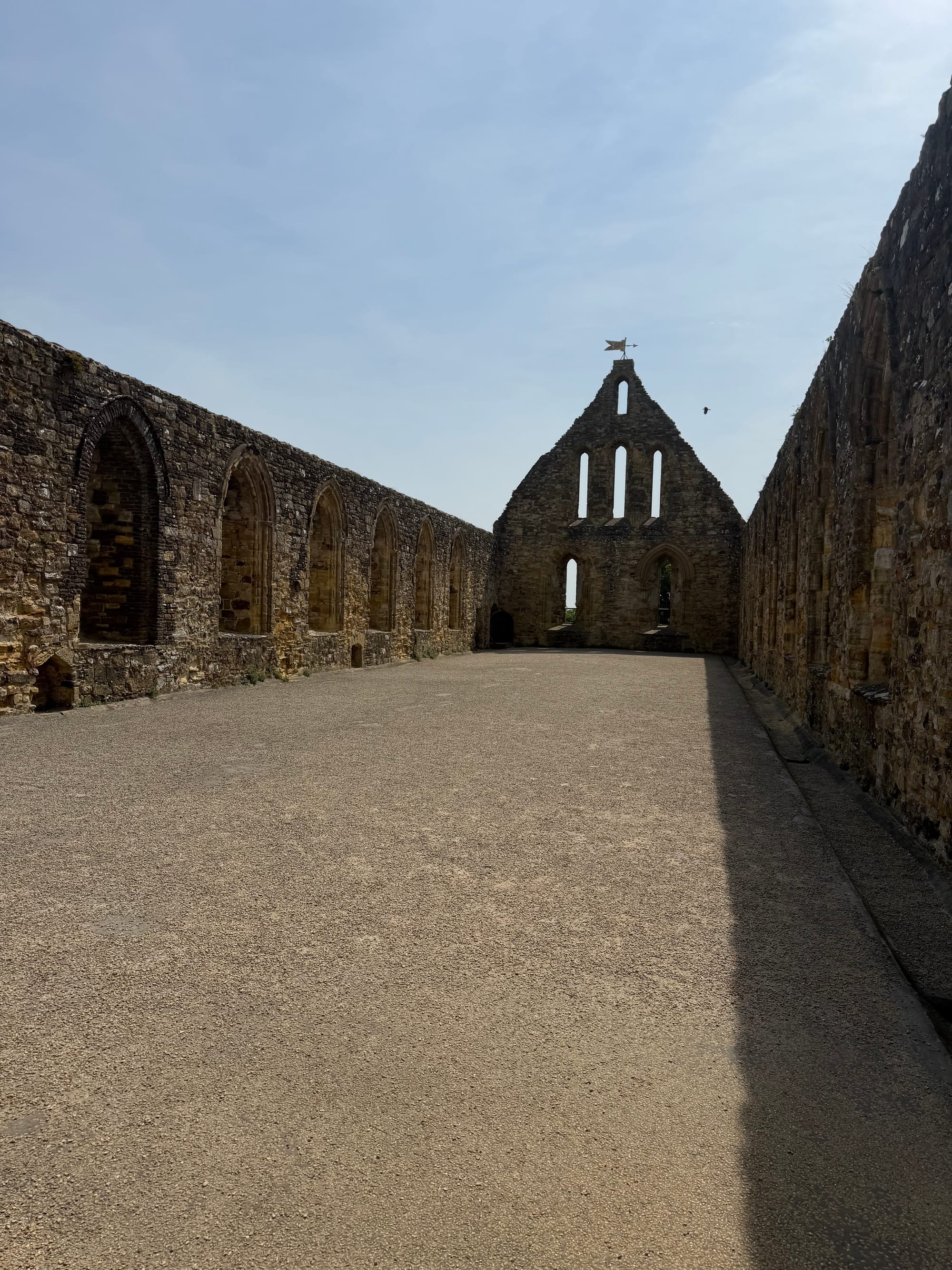
⚔️ Battle Abbey and the Difficulty of Finding the Dead
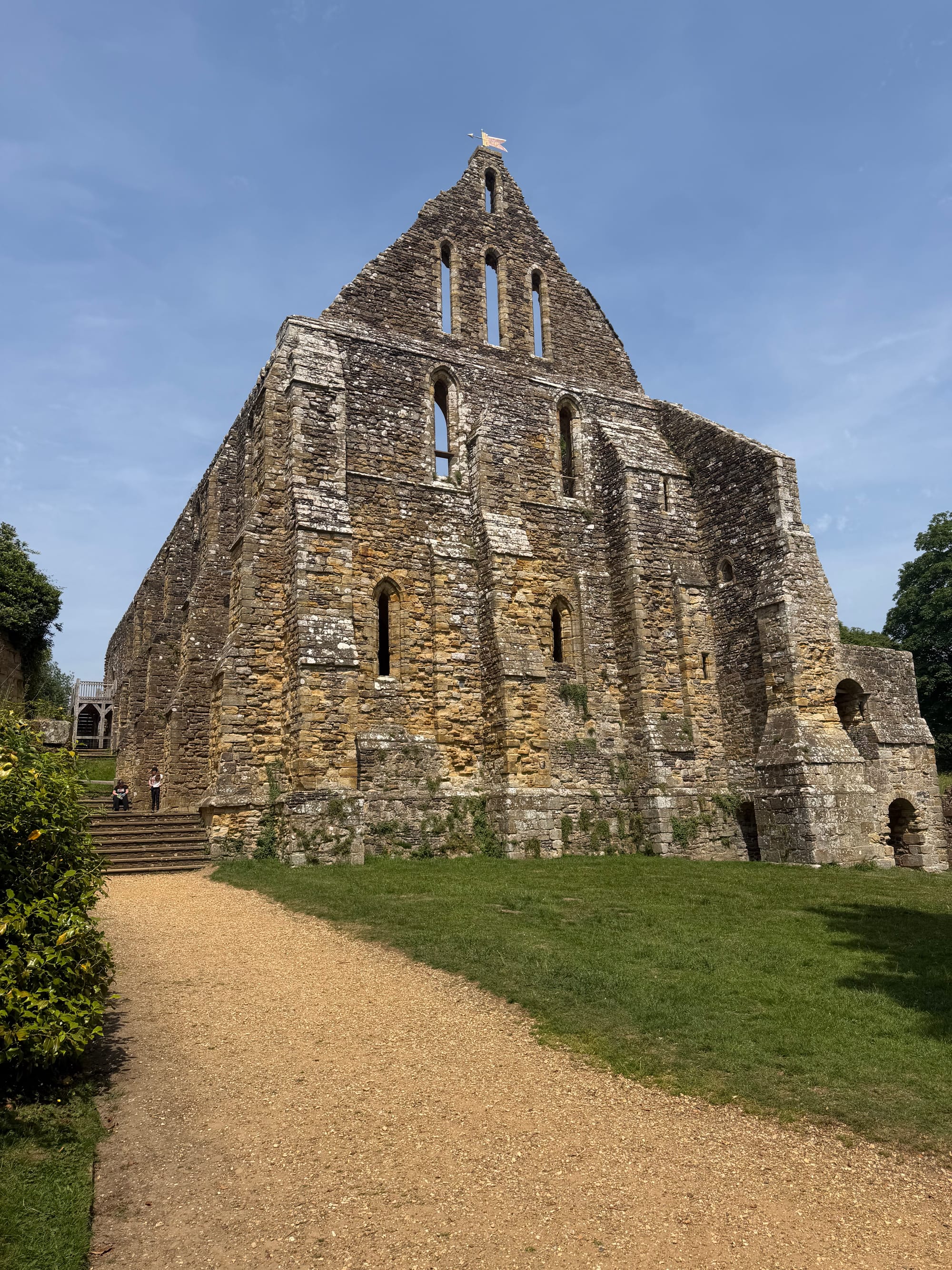
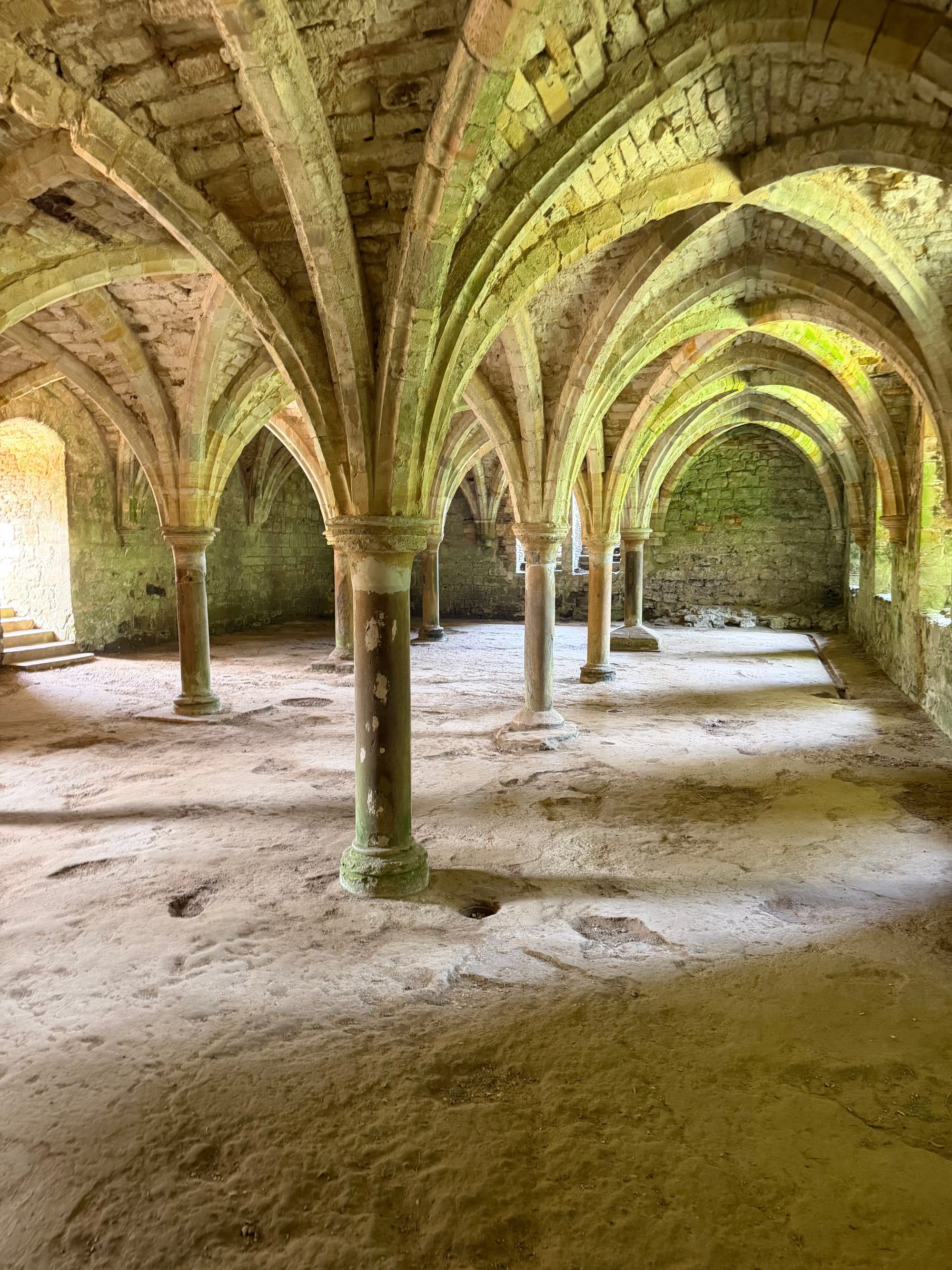
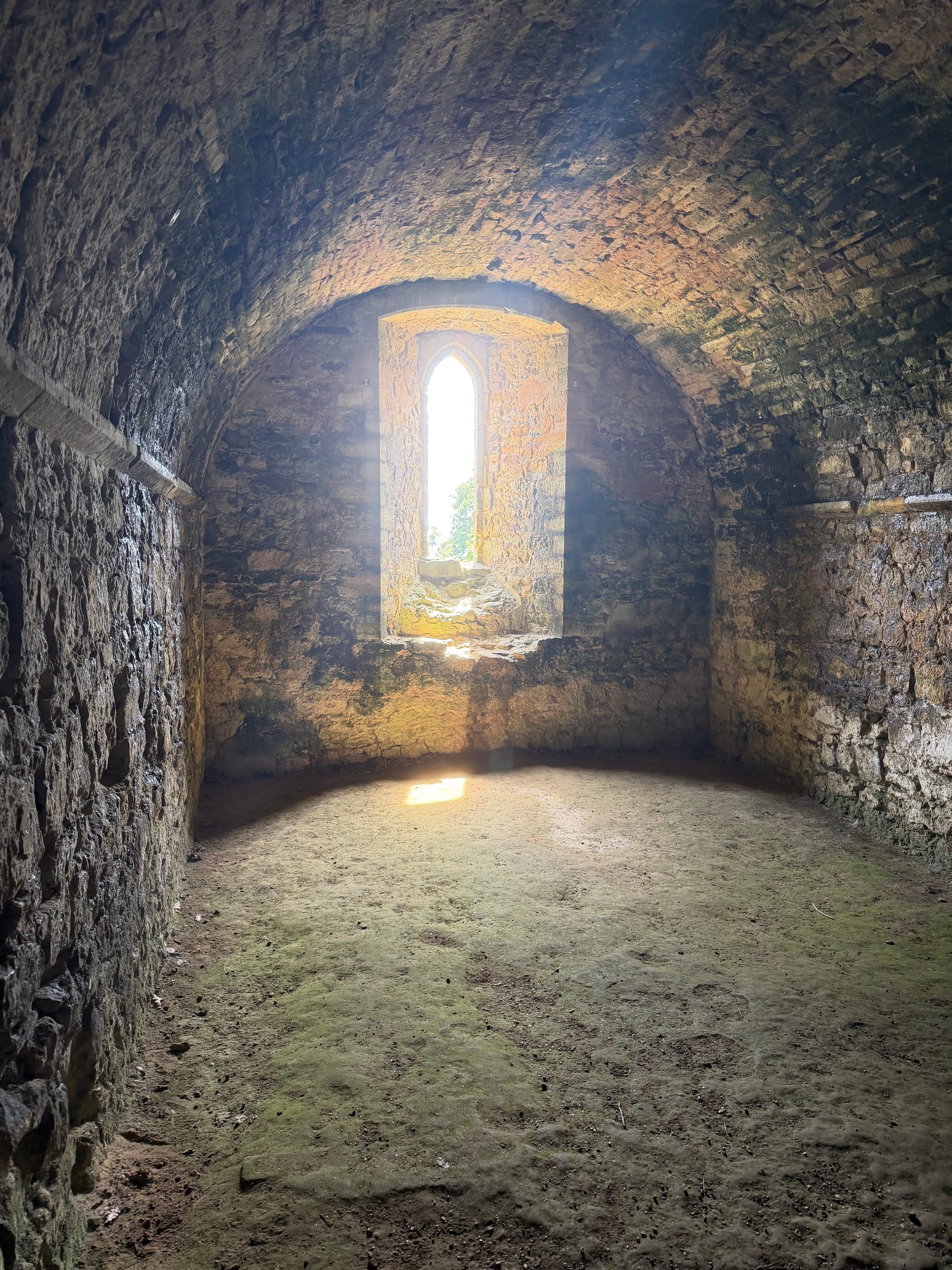
The day began at Battle Abbey, though I left not entirely certain where the battle itself had actually happened.
That stayed with me more than the history. The strange inability to locate violence precisely. Somewhere beneath the soft Sussex slopes men hacked each other apart and changed the course of England forever, yet the land itself seems reluctant to confess exactly where. There are signs, paths, ruins, tourists wandering with coffees, patches of grass moving in the wind, but no clean revelation. No sacred centre where history suddenly becomes visible.
Perhaps that is always the problem with the past. We want wounds to remain clearly marked. But time does not preserve things honestly. It softens edges. It grows grass over terror.
And then there were the roses.
Wild roses, not the thick cultivated sort that seem almost vulgar in their perfection. These were smaller, lighter, half-hidden among the greenery, their scent so faint you almost doubted it was there at all. Yet every so often the breeze carried it towards us.
I remember thinking how strange it was that something so delicate could exist in a place associated so completely with conquest. History usually survives through stone and dates and monuments. But standing there, it was the roses I trusted more.
Not because they redeemed anything. They didn’t. That would be sentimental. But because they reminded me how indifferent beauty is to human narratives. Men kill each other. Kingdoms rise and fall. And somewhere nearby a flower still opens quietly in the sun.
🏰 Bodiam and Beautiful Defences
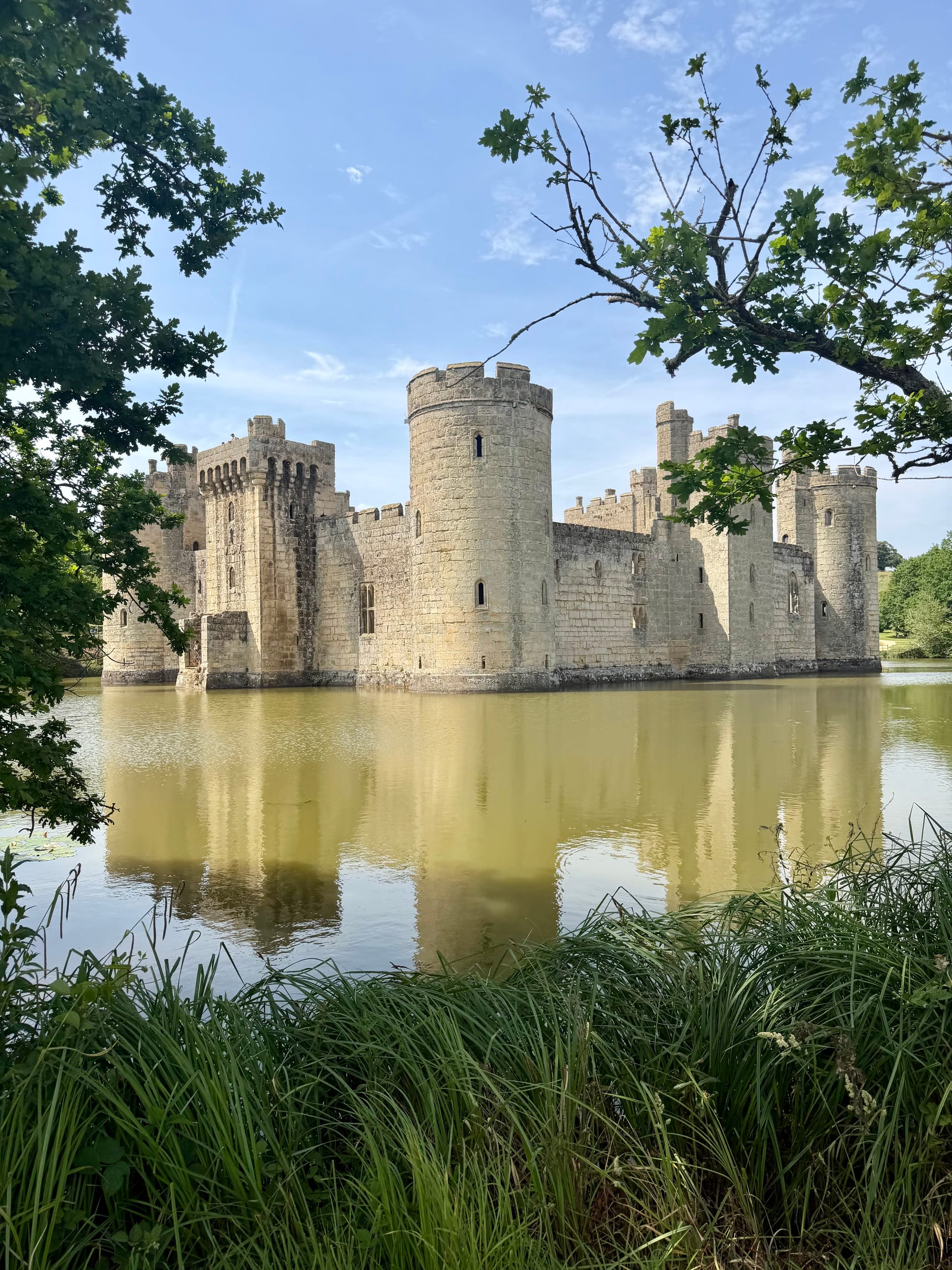
Bodiam overwhelmed me a little.
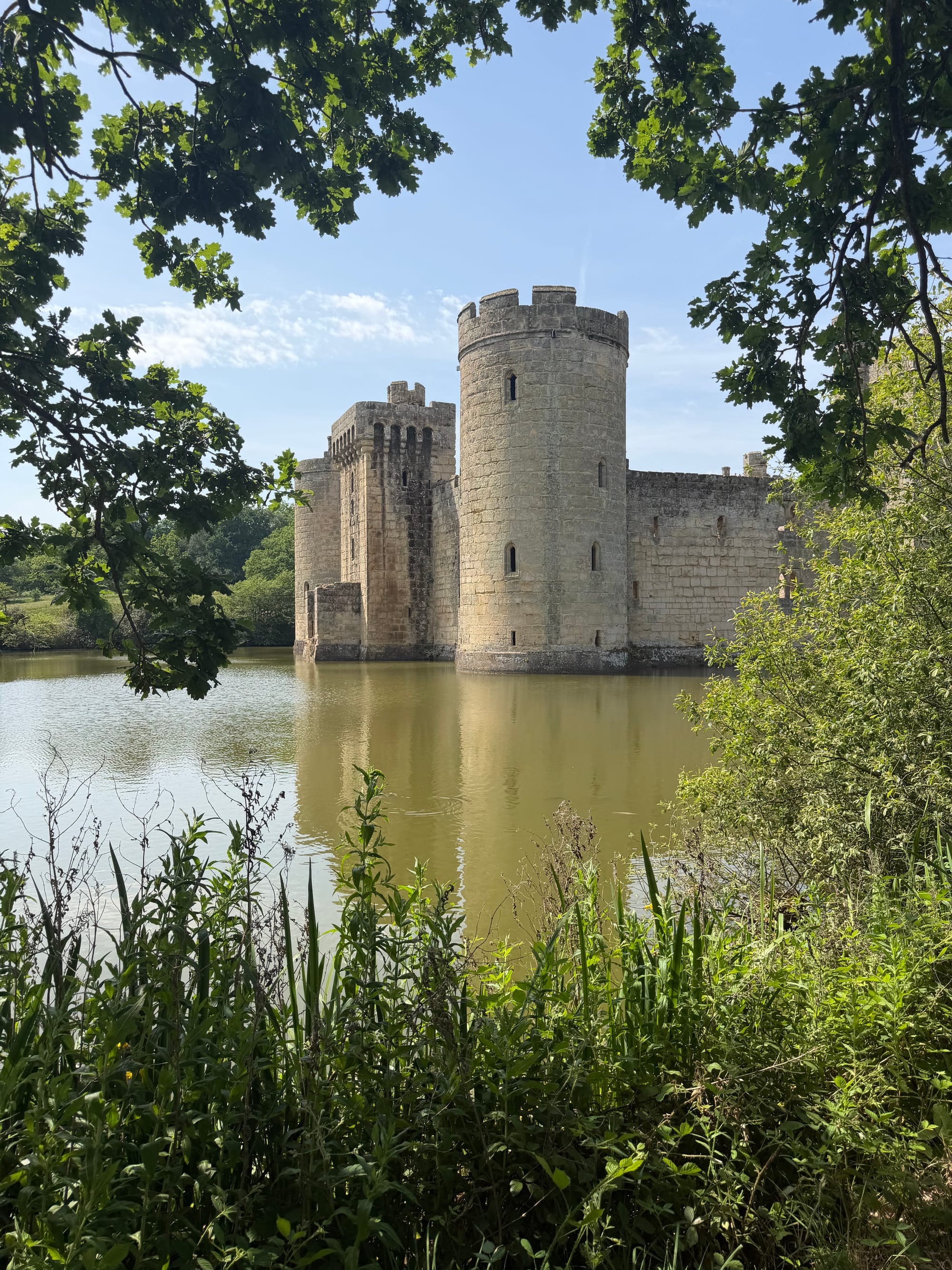
I had expected something heavier, more brutal perhaps, but instead it was beautiful in almost an embarrassing way. Everything reflected perfectly in the water. The symmetry too complete. The towers too graceful. It looked less like a military structure than an aristocrat’s fantasy of danger.
And that made it stranger.
The castle felt ornamental first and defensive second. As though the point was not simply protection, but the performance of protection. It made me think how often human beings aestheticise the very things that isolate them.
Some people turn distance into elegance.
Some turn emotional unavailability into mystery.
Some turn work into identity because achievement is easier to control than intimacy.
A castle is just fear arranged attractively enough that other people admire it.
That was the thought I couldn’t shake walking around the moat.
“One does not become enlightened by imagining figures of light, but by making the darkness conscious.”
Jung’s line felt less philosophical there than painfully ordinary. Most of us know exactly where our walls are. We just prefer calling them standards, ambition, discipline, independence. Anything except fear.
And perhaps that is why Bodiam disturbed me beneath all its beauty. The place seemed too self-aware, too composed. Like someone who has practised appearing effortless for so long they no longer remember what they were trying to hide.
🍬 Rye and the Problem with Pretty Places
Then came Rye.
If I’m honest, most of it felt slightly saccharine. Too aware of its own charm. Too eager to become an idea of England. There were moments where it felt less like a town and more like a memory curated for tourists before they had even lived it.
But then there was Mermaid Street.
And somehow that one street almost justified the whole place.
The steep cobbles, the crooked houses, the dark windows and leaning beams: suddenly the sweetness became convincing. Not because it stopped being picturesque, but because it became excessive enough to feel real again. Almost absurd in its beauty.
I think that is true of many things. Sometimes perfection becomes believable only once it tips slightly into absurdity.
Still, Rye left me uneasy. Beautiful places often do. There is always the danger that preservation becomes performance. That charm becomes a kind of embalming fluid. The past survives, but only in carefully managed forms.
Perhaps that is why I found myself resisting it slightly. I have spent too much of my own life trying to turn difficult transitions into coherent narratives. Priesthood into vocation. Leaving into growth. Reinvention into destiny. There are ways of speaking about your life so elegantly that eventually even you stop noticing what hurt.
Rye reminded me of that.
🌊 Dungeness and the Sound Beneath Your Feet
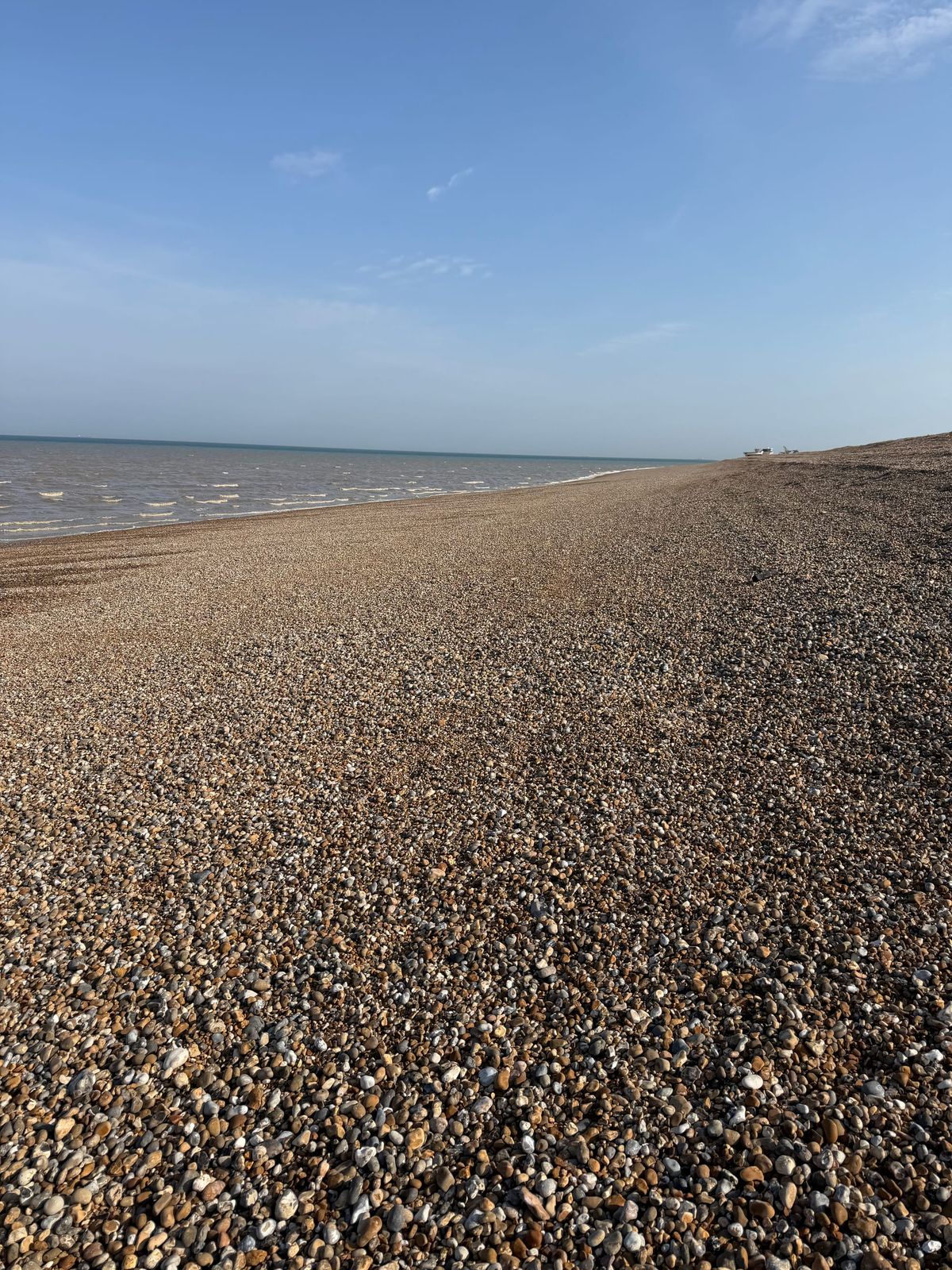
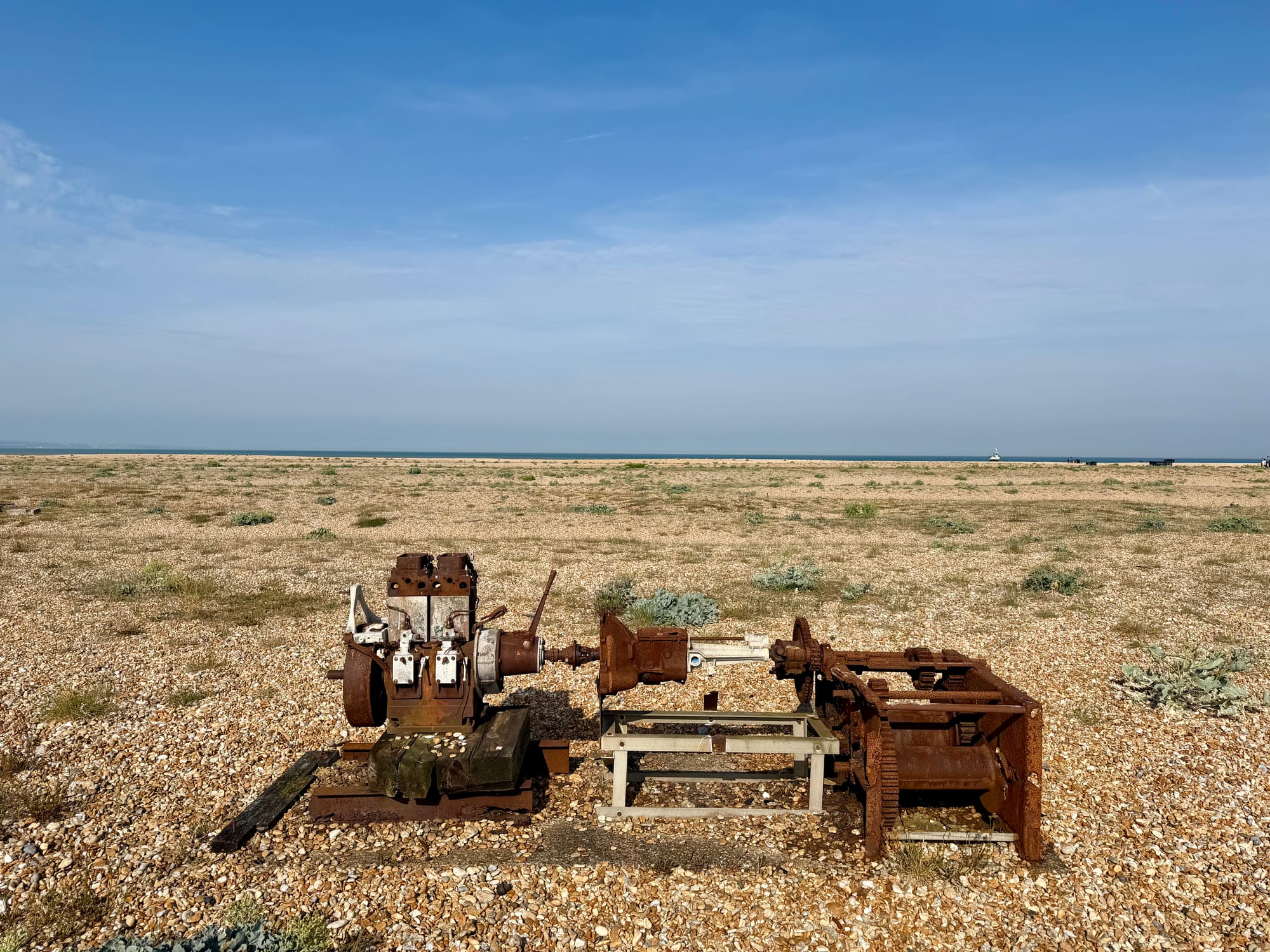
By the time we reached Dungeness, the world had almost emptied itself of decoration.
The first thing I noticed was not sight, but sound.
Every step across the shale produced that strange clashing noise beneath the shoes, not soft like sand, but brittle and dissonant, as though the beach itself resisted being walked on. It made movement feel slightly intrusive. Nothing yielded beneath you. The whole place answered back.
And then there was the smell, or almost the smell.
Not the thick salty air one imagines at the seaside. Just the faintest trace of brine moving through the heat. Almost the smell of desolation itself. Barely there. The bleakness remained despite the sun. In some ways the brightness made it worse. Under grey skies the place would have been conventionally melancholy. Under blue sky it became unnervingly exposed.
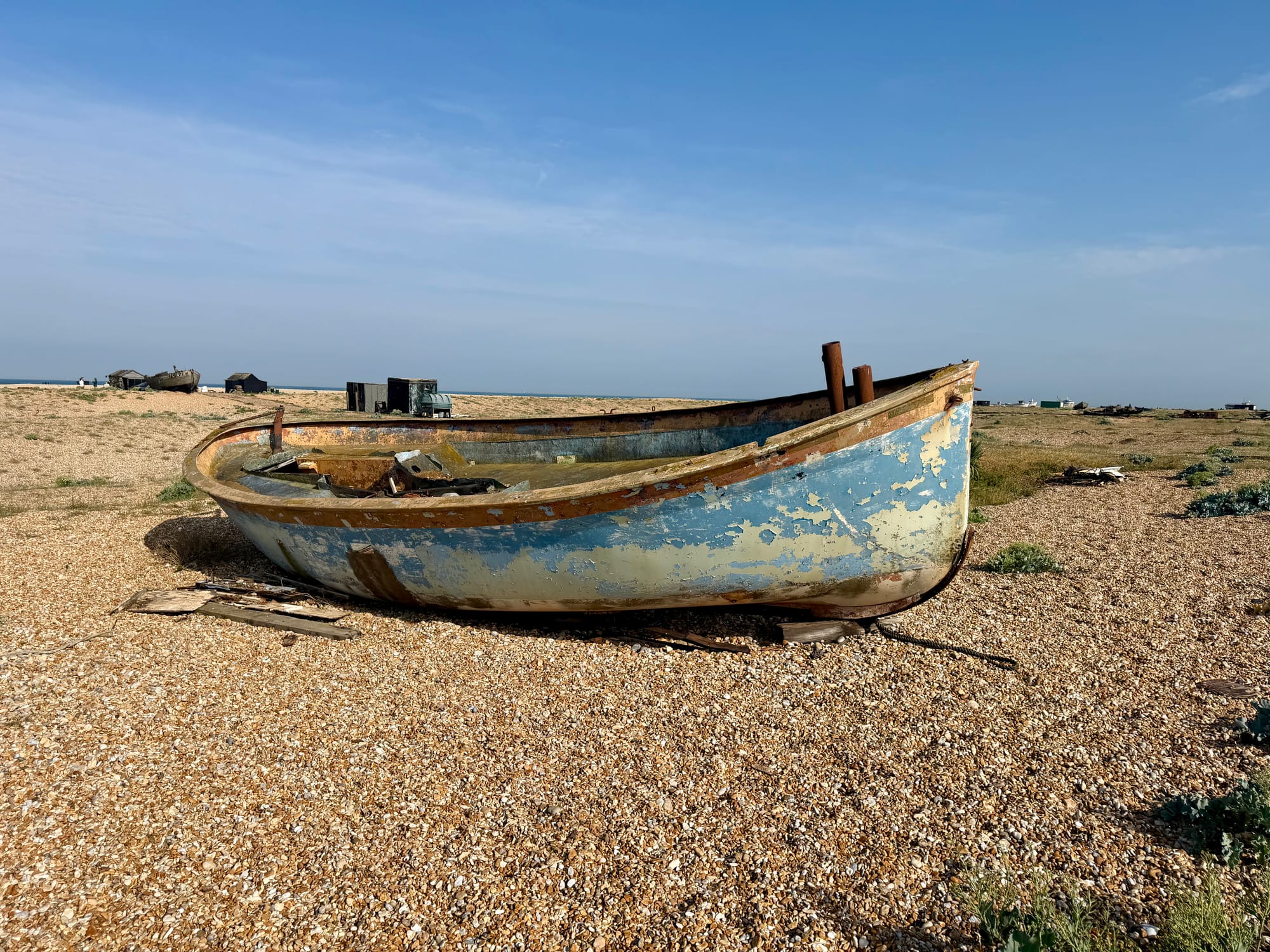
The boats lay scattered across the shore like exhausted animals.
Paint peeling.
Wood darkened.
No drama to them at all.
Just the slow honesty of things no longer pretending to be useful.
And standing there I thought of Jung again:
“Until you make the unconscious conscious, it will direct your life and you will call it fate.”
The line can sound theatrical until somewhere like Dungeness strips it back down to size. The unconscious is not always some gothic darkness lurking beneath the surface. Sometimes it is simply the parts of yourself you have left unattended for too long. Old fears. Old ambitions. Old griefs still lying around in daylight while you keep insisting you have moved on.
For years I have had the instinct to make every fracture meaningful before allowing it simply to hurt. To intellectualise first and feel afterwards. To turn loss into narrative quickly enough that it cannot catch up with me properly.
Dungeness did not really permit that.
The place resisted metaphor slightly. That was what made it powerful. It simply sat there in the sunlight: shingle, rust, salt, silence, old boats collapsing slowly into themselves.
Nothing hidden.
Nothing resolved.
🕯️ The Things That Remain
Driving back through Sussex, I realised the day had not really offered conclusions so much as exposures.
Battle Abbey could not fully reveal where violence had happened.
Bodiam turned fear into beauty.
Rye turned memory into performance.
Dungeness stripped everything back until only weather and structure remained.
And somewhere beneath all of it lingered Jung’s most difficult sentence:
“The privilege of a lifetime is to become who you truly are.”
Not invent.
Not curate.
Not endlessly explain.
Become.
Which may be a rougher process than we like to admit. Less enlightenment than erosion. Less transformation than the gradual removal of what was false.
Perhaps that is why Dungeness stayed with me most strongly. Those old boats were no longer capable of movement, yet somehow they felt more honest than anything else I had seen all day. Their usefulness had gone. Their structure remained.
And maybe there are parts of ourselves that only become visible once they stop trying so hard to function.