The Poverty of the Nose: On Smelling Corsica
🌿 Before I Saw Corsica, I Smelt It
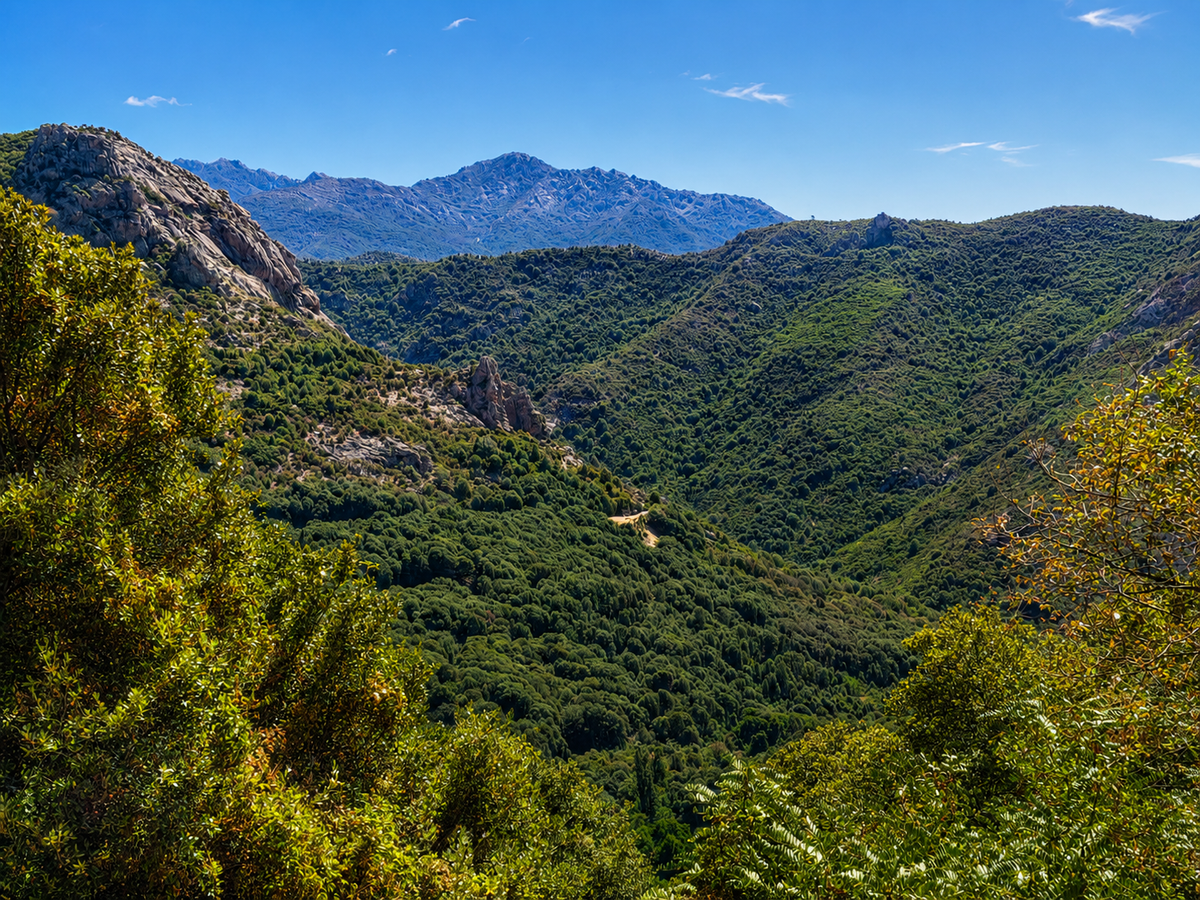
Some landscapes announce themselves visually: the severe horizontality of the desert, the improbable green of an English valley after rain, the white villages of Andalusia beneath an intense blue. Corsica has plenty of this beauty. Its mountains rise abruptly, granite shouldering through vegetation; villages cling to difficult slopes; rivers cut into rock, and inland the sea soon disappears.
Yet what I remember most clearly is not what I saw.
It is what I smelt.
Almost as soon as we moved inland from Ajaccio, something resinous, herbal, dry and sweet entered the car. None of those words quite described it. I assumed it came from a particular plant: rosemary, thyme, perhaps immortelle, but the smell persisted as the vegetation changed. Sometimes it was sharper, sometimes warmer, occasionally almost medicinal. At moments it seemed to contain the smell of dust itself.
This was the maquis, the dense Mediterranean scrub of myrtle, lentisk, juniper, rockrose, herbs and aromatic shrubs covering so much of Corsica.
I could smell Corsica perfectly well.
I simply could not say what it smelt like.
👃 The Sense for Which We Have No Words
This is a familiar difficulty.
For colour, I possess an elaborate vocabulary: vermilion, ochre, scarlet, russet, turquoise, cerulean. Even when the precise word escapes me, I can place a colour within a conceptual neighbourhood. Sound offers something similar: shrill, sonorous, muffled, resonant, discordant. Texture may be coarse, smooth, viscous, brittle or silken. Taste has bitter, sweet, sour, salty and umami before we add the language of cooks and wine merchants.
Then someone passes you a sprig of crushed myrtle and asks what it smells like.
“Herbal,” you say.
“Fresh.”
“Woody.”
“Sort of… Mediterranean.”
The educated adult becomes uncertain.
Our vocabulary for smell relies heavily on borrowed words. We say something smells like lemon, smoke, leather, roses, petrol or an old church. We identify the source rather than describe the olfactory quality itself. Even sweet and pungenthave wandered into the nose from elsewhere.
Aristotle noticed this difficulty more than two thousand years ago. In De Anima, he observes that odour is harder to define than colour or sound, and that human beings seem less capable of discriminating smells than many animals. Our language, he notes, is often metaphorical: we call smells sweet, bitter or pungent because taste supplies distinctions smell lacks.
The problem is ancient.
But Aristotle may have diagnosed the wrong patient.
🗣️ Is Smell Ineffable, or Is English Inadequate?
Western thought has often assumed that the inadequacy belongs to the nose itself. Kant regarded smell as the most dispensable sense, partly because smells impose themselves upon us and vanish so quickly. Unlike sight or hearing, smell seems difficult to hold at a distance. It enters the body with every breath.
That difference may help explain its low philosophical status. Sight appears to give us a world of stable objects arranged before us. Hearing, though less detached, can still be organised into forms that we name and repeat. Smell is more dependent on proximity, atmosphere and the condition of the body. It is difficult to isolate from its surroundings, and difficult to inspect without also being affected by it.
Sight permits the useful fiction that observer and observed remain separate: I stand here; the mountain is over there. Smell complicates that distinction. To smell the maquis is to take something of the landscape into oneself. Molecules released by heated plants cross the boundary of the body. The Corsican hillside is, however infinitesimally, inside you.
This may be one reason smell is so closely associated with both intimacy and contamination. It can suggest home, food, skin and memory, but also decay, pollution and disease. It does not simply present an object to consciousness; it indicates that the surrounding world is entering us. Its apparent lack of distance may be precisely what makes it philosophically awkward.
Nietzsche resisted this disdain. In Twilight of the Idols, he praises the nose as an extraordinarily delicate instrument of observation, urging philosophers to treat it with “reverence and gratitude”. The point is not merely that smell is more important than Kant allowed. It is that the hierarchy of the senses may reflect a prejudice in favour of forms of knowledge that appear detached, stable and easily communicated.
Modern linguistic research complicates the story further. Speakers of Jahai, a language of hunter-gatherers in the Malay Peninsula, possess abstract words for classes of smell. In experiments, they name odours rapidly and consistently, while speakers of European languages tend to search for an object: lemon, flowers, petrol, something burnt.
Perhaps smells are not intrinsically beyond language.
Perhaps we have neglected to give them names.
The poverty may belong not to experience, but to the vocabulary through which a culture has chosen to organise it. Language does not merely label perceptions after the fact. It can also train attention. If a language provides stable terms for distinctions among smells, its speakers may become more practised at noticing and remembering those distinctions. What seems like an inherent limitation of the sense may partly be the result of a cultural decision about which differences are worth preserving.
This does not mean that language creates perception from nothing. The nose still responds to chemical compounds, and some smells will remain difficult to separate. But perception is not only reception. It is also discrimination, comparison and memory. Words can make certain differences easier to retain.
🏔️ A Landscape That Enters the Body
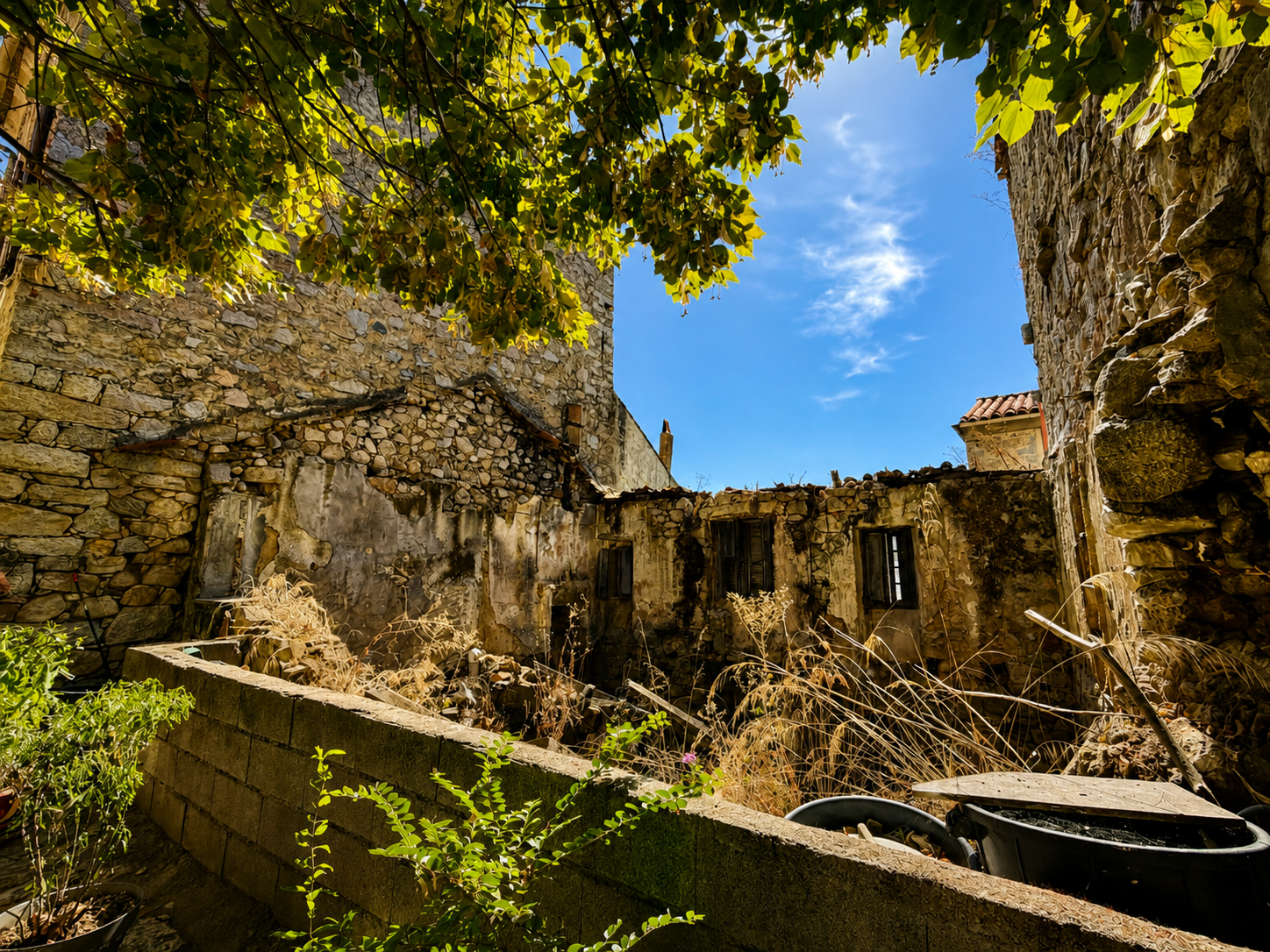
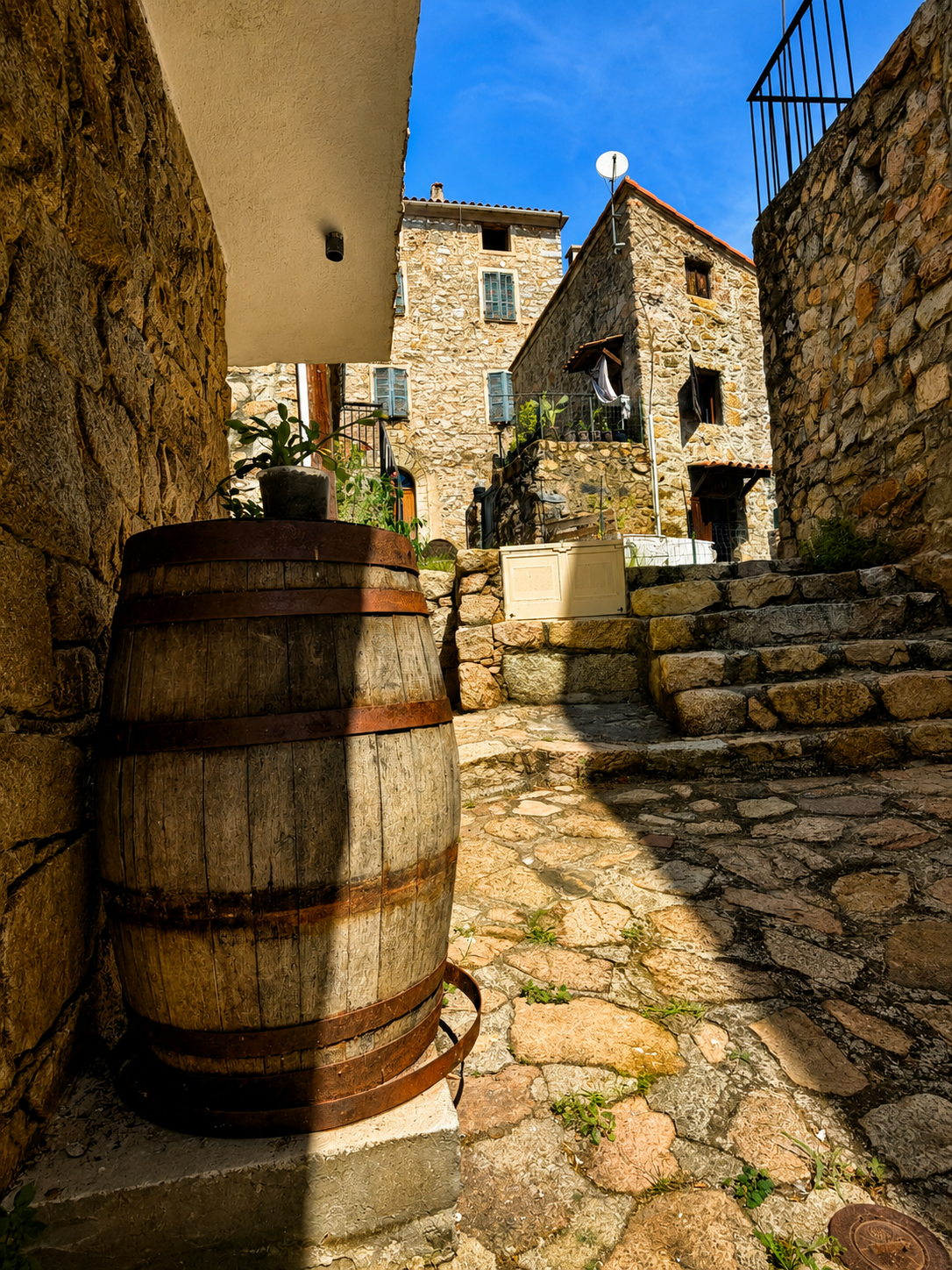

I thought about this while passing through the Corsican interior: villages of heavy stone houses and cool, narrow lanes, then mountains where habitation thinned and the maquis resumed its presence.
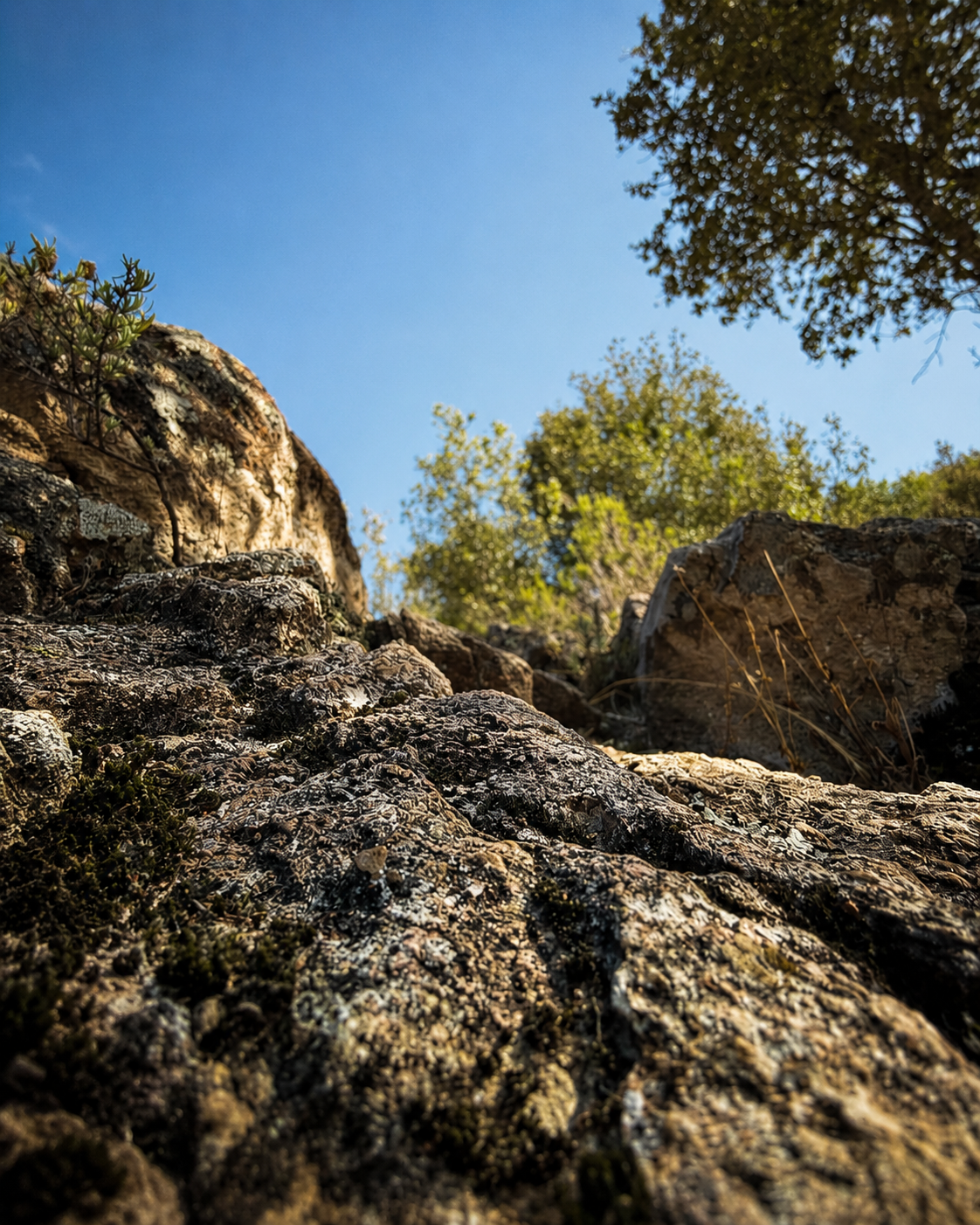
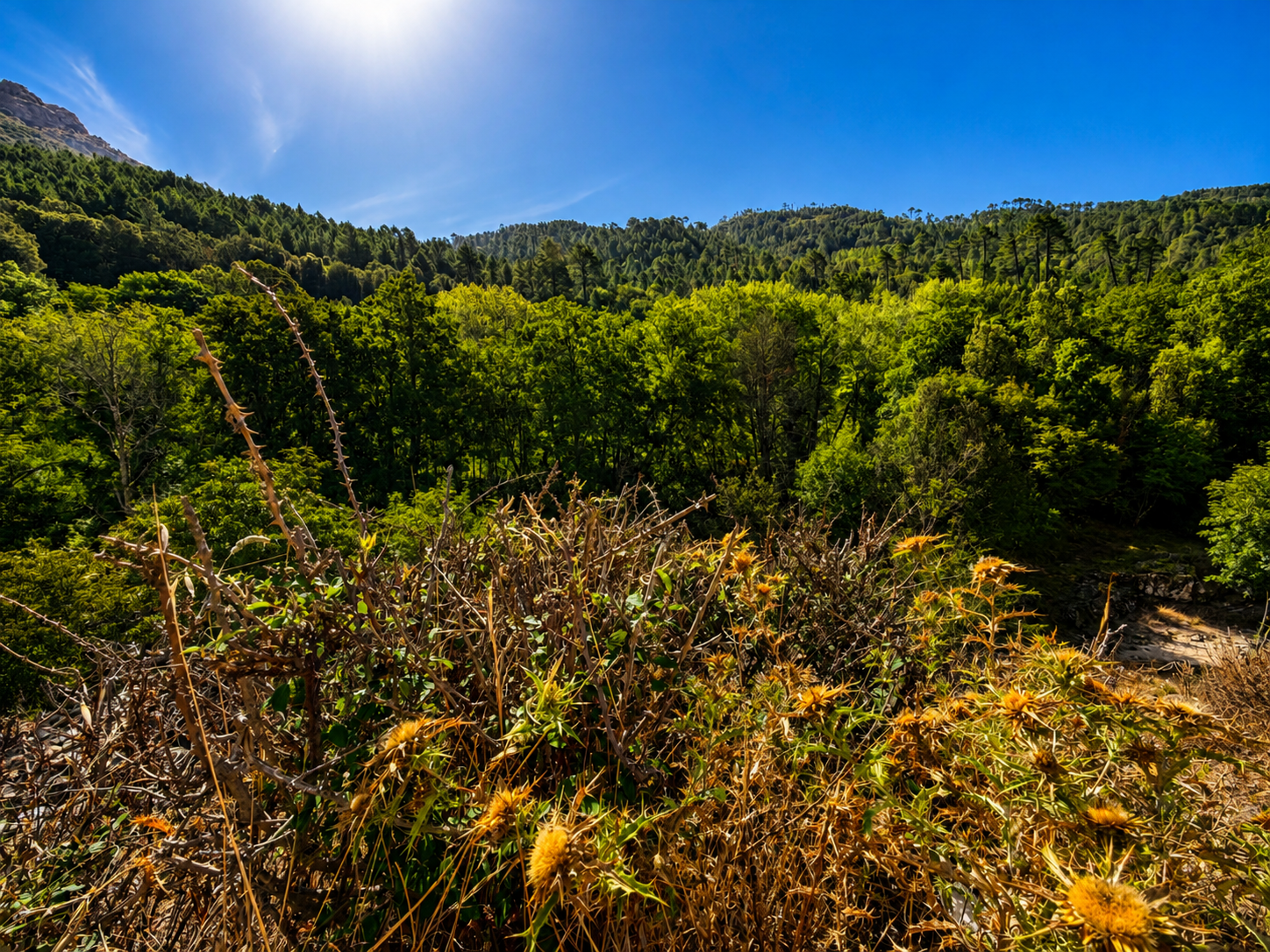
The interior has an austerity photographs struggle to convey. Corsica lacks Tuscany’s cultivated softness. The mountains are too abrupt, the rock too near the surface. Vegetation seems less planted than locked in negotiation with the land. Trees twist; shrubs occupy fissures; thorny plants grow from almost nothing.
In the heat, everything gives off its smell.
Rosemary crushed beneath a shoe, resin warmed on bark, dust, stone, leaves, stagnant water and the faint decomposition of vegetation all surrender something to the air. Heat makes the world volatile. It loosens substances from surfaces and carries them across distances, so that the landscape is encountered not only as a collection of visible forms but as an atmosphere.
The eye encounters objects with boundaries. A tree ends where the sky begins; a mountain has a ridge; a house has walls.
Smell is less orderly.
Myrtle passes into rockrose, rockrose into hot earth, earth into woodsmoke, and one village into another. No clear point marks the end of one odour and the beginning of the next. Perhaps this helps explain why smell resists naming. Nouns prefer bounded things; smell exists in mixtures, gradients and dispersals.
There is also a temporal quality to it. A smell is not simply located in a place; it records what has happened there. The scent of warmed resin depends on the sun. The smell of dust depends on dryness and movement. Woodsmoke suggests a fire, while the smell of crushed herbs records contact. Smell therefore gives us a landscape in process rather than a landscape at rest.
The maquis is not just a group of plants that can be listed. It is the result of heat, wind, soil, season and human absence or intervention. Its smell is a kind of summary, though one that cannot easily be translated into a sentence.
🧠 Memory Without Description
What we cannot describe, we can nevertheless remember.
A smell encountered after decades can restore a room with remarkable completeness; not only the room, but something of the person one was inside it. Furniture returns, light returns, people long absent seem momentarily near. The recollection arrives before we have summoned it.
Smell differs from other forms of memory in its lack of ceremony. I can decide to remember a face or reconstruct a conversation. A smell appears without being requested, often attached to a memory I had not intended to revisit.
That is why its resistance to language feels so strange. The nose remembers what the tongue cannot report.
One explanation may be that smell is closely connected to the parts of the brain involved in emotion and memory, but the philosophical significance is broader than the neurological mechanism. A smell can preserve an experience without preserving its explanation. It may return the atmosphere of a time before we can identify the time itself.
We often assume that what can be articulated has been understood, but experience does not always work that way. Some things are known before we can say how we know them: places that become part of us without passing through description, people whose importance we recognise before we can explain it. Language approaches these things patiently and imperfectly, but often arrives late.
This does not make language unimportant. Naming can refine attention and allow experience to be shared. But it is not the only form of understanding. Sometimes a perception remains meaningful precisely because it has not yet been reduced to a clear proposition.
🌬️ What the Maquis Keeps
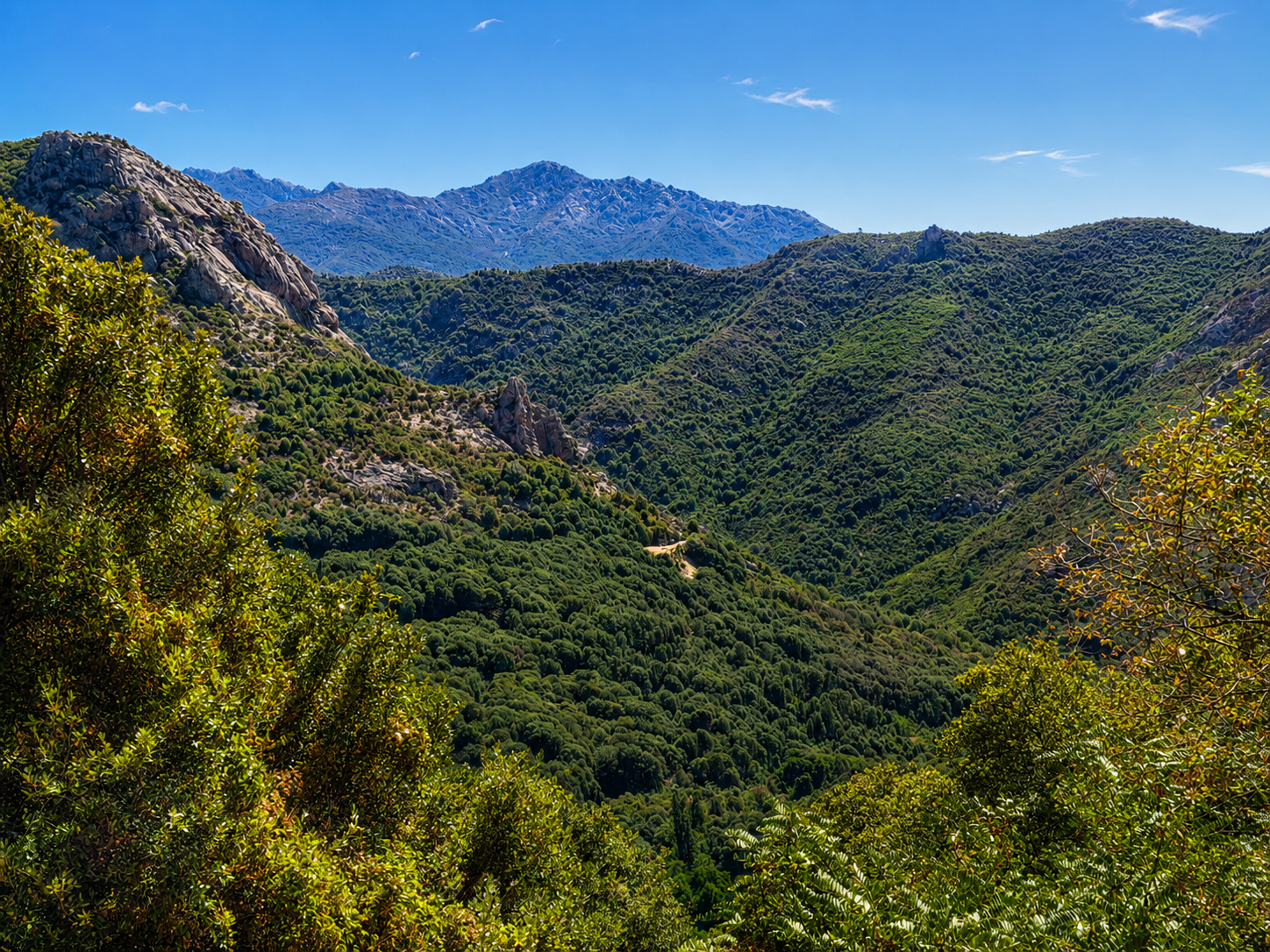
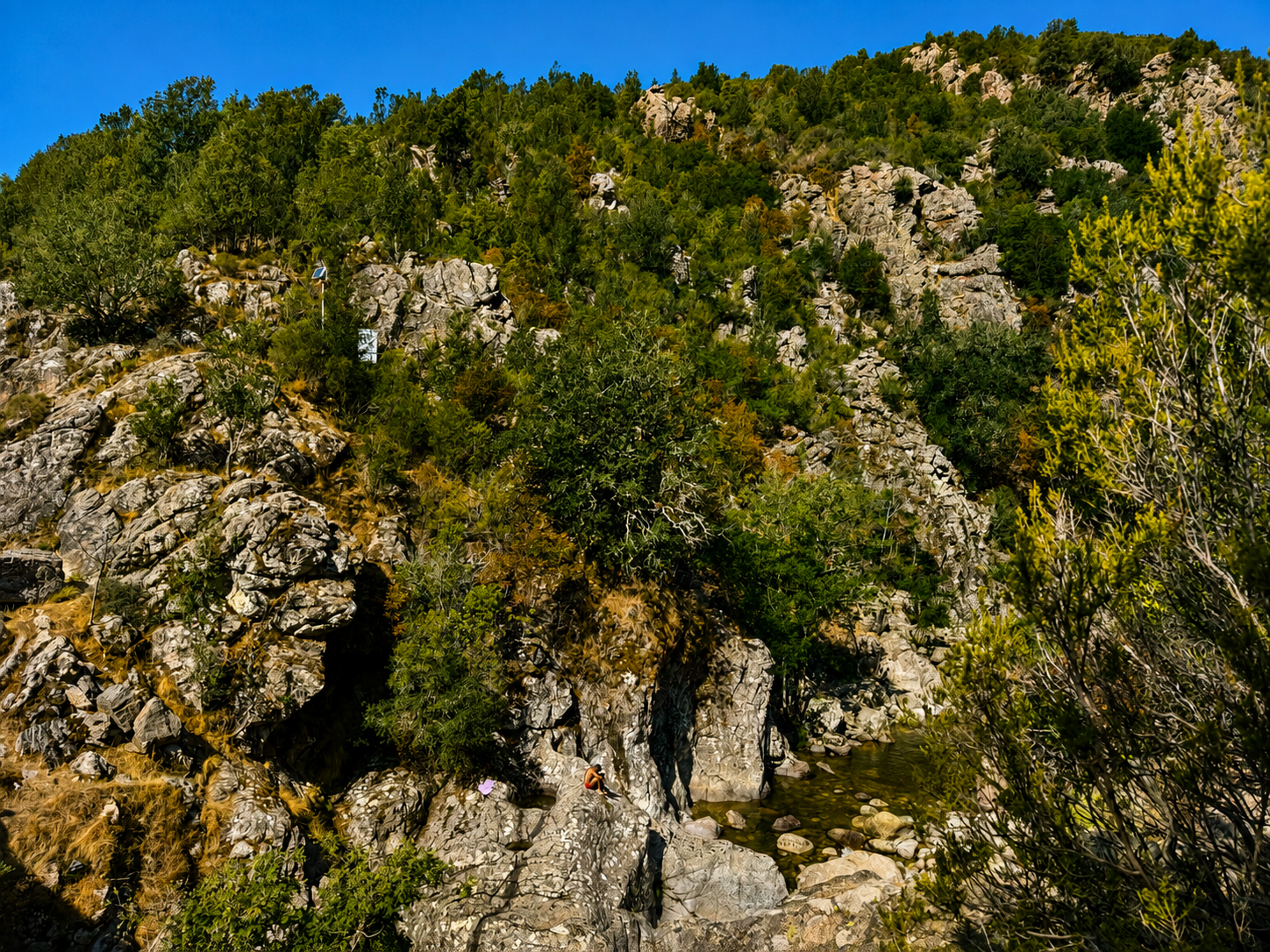
By late afternoon I had accumulated photographs: mountains, water between granite cliffs, abandoned houses, the hard blue of the sky, villages whose stone seemed to have grown from the rock beneath them.
Years from now, the photographs will remind me where I went. But Corsica may return differently.
Perhaps, on some hot day, a plant will be crushed beneath somebody’s foot and the air will briefly carry that mixture of resin, herbs, dust and heat. I may not know which plant it is. I may still lack the adjective. Yet before I have consciously remembered anything, there will be granite mountains, dark water and stone houses above narrow lanes. For a second, I shall be back in the Corsican interior.
There is something reassuring in the thought that experience exceeds our ability to catalogue it. We name and photograph things partly because naming gives the impression of possession. It allows us to place an experience within a system and to return to it deliberately. Yet the maquis resists complete possession. It enters without asking and remains without being properly named.
Perhaps the poverty of our language for smell is not entirely a deficiency. It may indicate not that the experience is empty, but that our categories are incomplete. We should be cautious about treating what cannot be easily described as less real or less intelligible. Some experiences are understood through recurrence, association and bodily memory rather than through precise definition.
Corsica, for me, entered through the nose.
And I still do not quite know what it smelt like.