The Ache of Home: Canterbury and Oikophilia
🏛️ Canterbury and the Ache of Home
The last time I came to Canterbury, I was with the Vatican cricket team.
There is something faintly comic about that memory now, though also strangely moving: priests and seminarians in cricket whites, Roman collars folded into luggage, the Vatican arriving in England not with incense and diplomacy, but with bats, pads, and the slow choreography of an English summer game. Rome came to Canterbury not as Augustine once came with a mission, but in play.
At the time, I did not think much about it. I was still inside that Roman world then. Rome felt permanent. Priesthood felt permanent. Identity itself felt more coherent than it does now.
Returning years later, Canterbury felt different. Not because the city had changed greatly, but because I had.
Roger Scruton called oikophilia the love of home. At its best, the idea is not political rhetoric, nor nostalgia in its sentimental form, but something quieter: the affection by which we learn to care for what has been entrusted to us. A garden. A graveyard. A skyline. A church kept open, or even closed, but still cherished.
Canterbury makes that love visible.
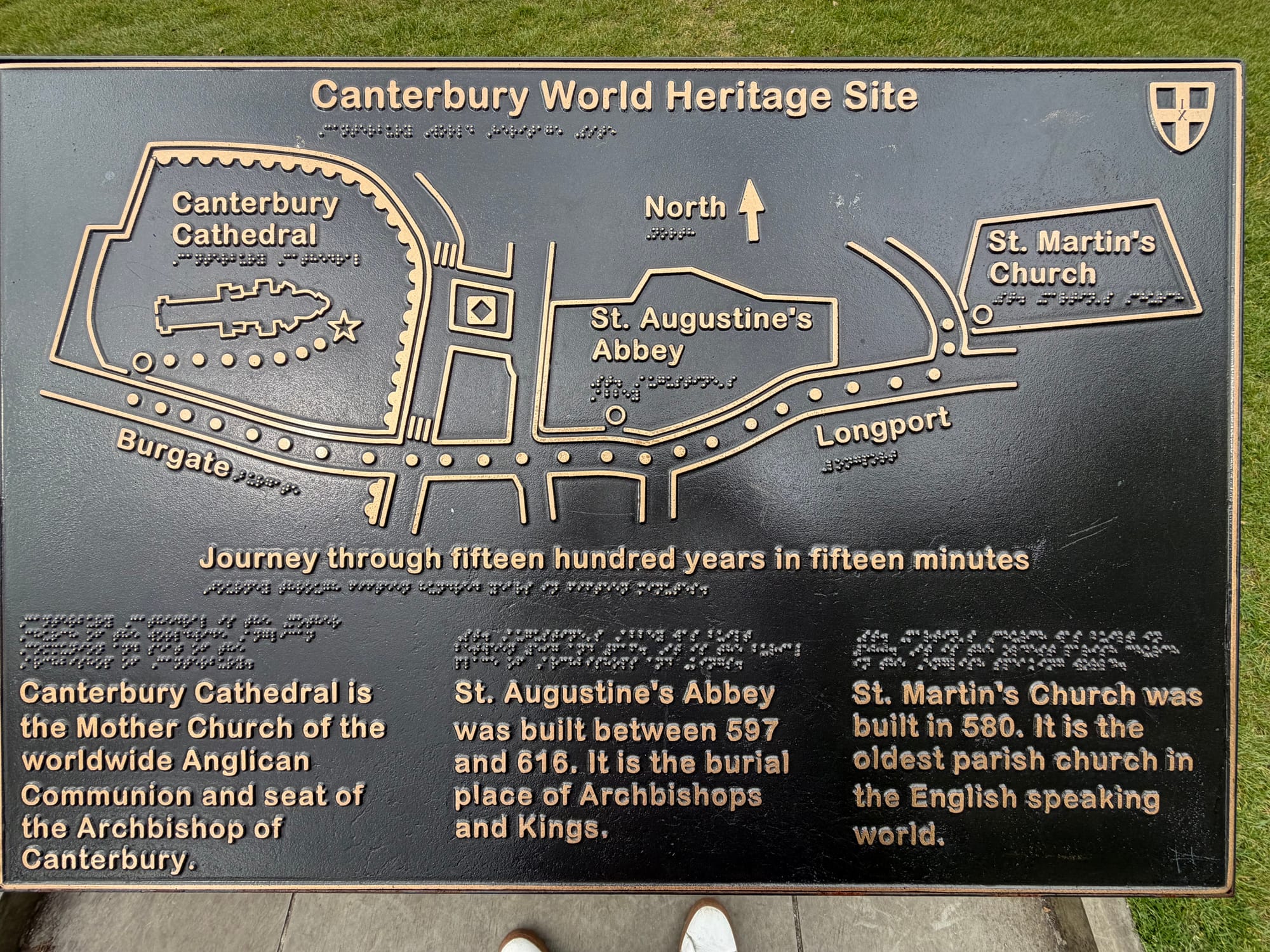
Its three UNESCO sites, St Martin’s Church, St Augustine’s Abbey, and Canterbury Cathedral, are not merely monuments. They feel like three layers of belonging: the small beginning, the wounded inheritance, and the great stone centre around which a city learned to gather itself.
🌳 St Martin’s Church: Seen Through Trees
St Martin’s was closed when I arrived.
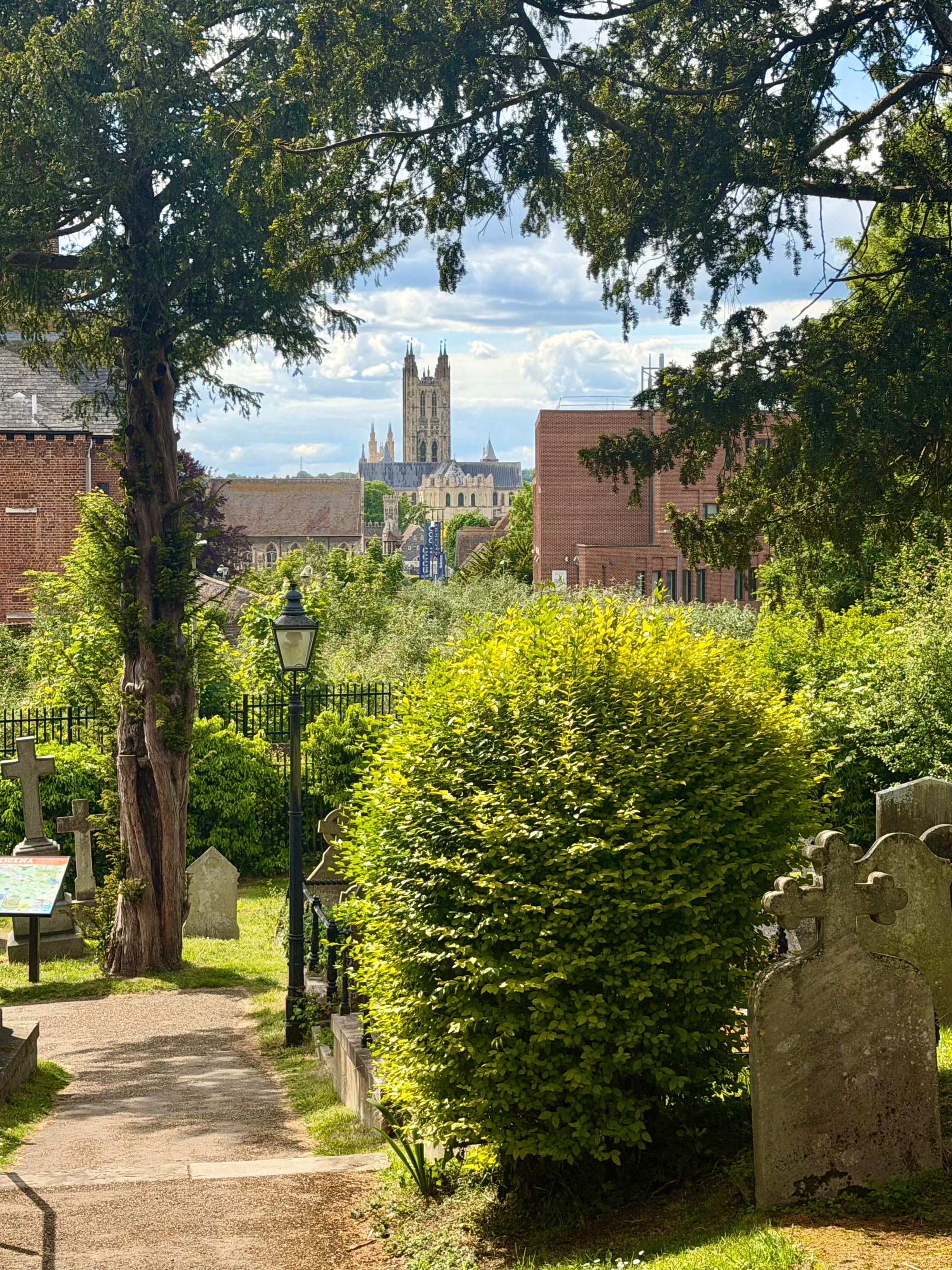
At first, that felt like disappointment. The oldest church in continuous use in the English-speaking world stood just beyond reach. Yet the closure changed the encounter. I could not enter the building, so I had to receive it indirectly: through gravestones, branches, filtered light, and the distant tower of Canterbury Cathedral framed by trees.
That photograph now feels more truthful than an interior shot might have been.
We do not love places by possessing them. We love them through glimpses, returns, frustrations, and partial revelations. From St Martin’s, the cathedral did not look triumphant. It looked inherited.
Before Gothic splendour, there was this smaller place of prayer. Before institution, fidelity. Before national identity, local holiness patiently kept alive.
England often preserves Christianity differently from the Mediterranean world I once inhabited. In Rome, faith tends toward splendour: marble, procession, gesture, theatre. Here it survives more quietly, in churchyards, rain-darkened stone, hedgerows, and names weathering slowly into grass.
Not weaker. Merely quieter.
🌿 St Augustine’s Abbey: The Ruins of Continuity
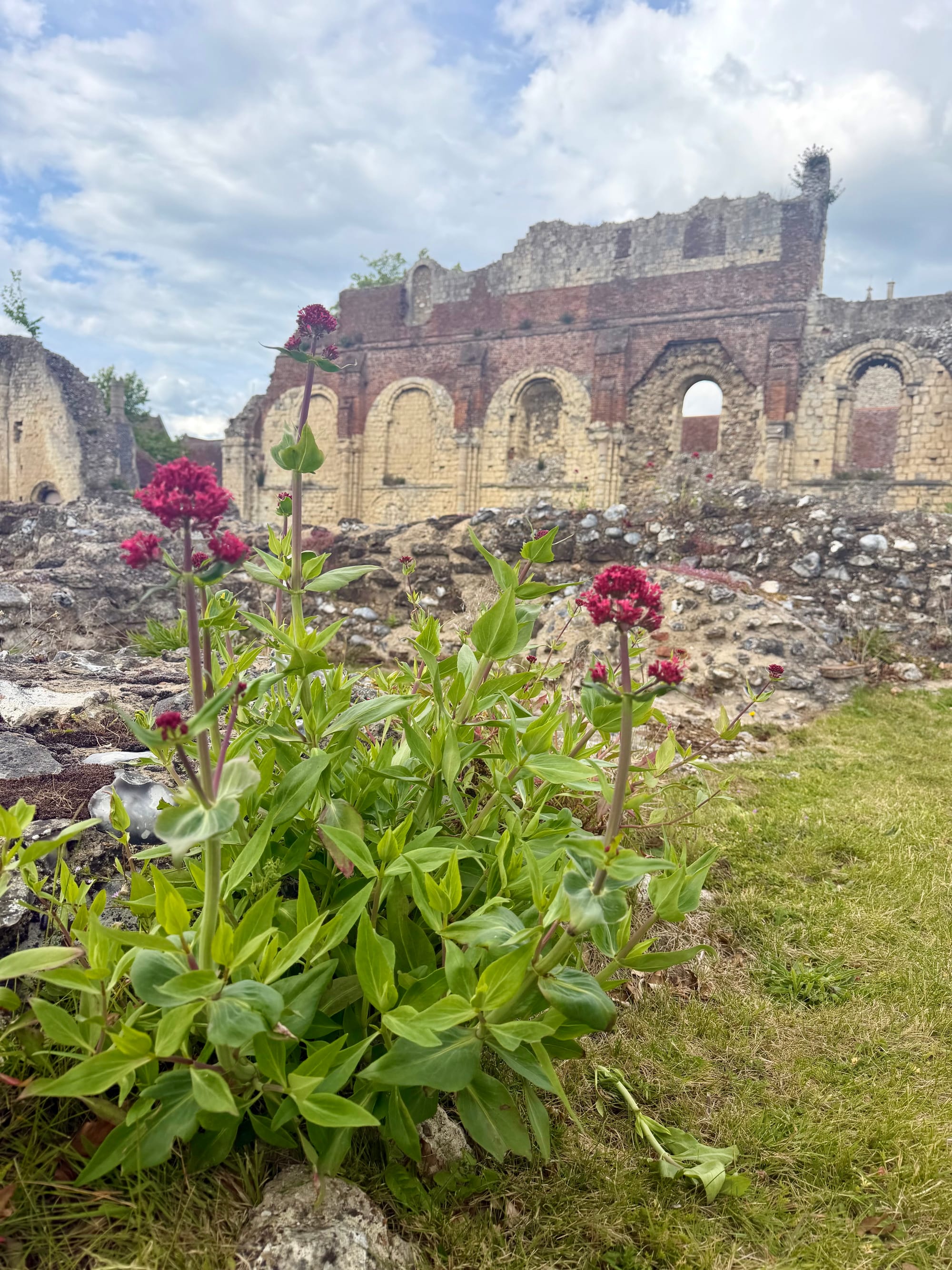
If St Martin’s feels intimate, St Augustine’s Abbey feels wounded.
Grass enters the stonework. Flowers rise beside fractured walls. The ruins possess that peculiarly English beauty in which destruction is not hidden, but softened by time, weather, and care.
Augustine came from Rome, yet what took root here was not Rome reproduced. It was Christianity becoming English: universal faith housed in local stone, local memory, local habit. This is where Scruton’s idea becomes most persuasive. Civilisation cannot live by abstraction alone. It needs forms capable of carrying love.
And forms are fragile.
Standing among the ruins, I thought again of the Vatican cricket team. Rome has reached Canterbury more than once: first with Augustine and the Gregorian mission, later, absurdly and tenderly, with priests in cricket whites applauding politely beneath English clouds.
Perhaps that is why the place moved me. The ruins stirred not only historical memory, but personal memory: the Roman years, the priestly years, the certainty that one could belong wholly to a single world.
The word nostalgia is harsher than modern usage suggests. It comes from the Greek nostos, return home, and algos, pain. Not merely longing, but the ache produced by return itself.
The Odyssey understood this. Homecoming is not restoration. Odysseus reaches Ithaca changed by exile, time, and knowledge. Home survives, but the self that once belonged there cannot simply be recovered.
Perhaps all meaningful homecomings contain this sadness.
We return carrying absences with us.
🌸 Westgate Gardens: The Civic Form of Love
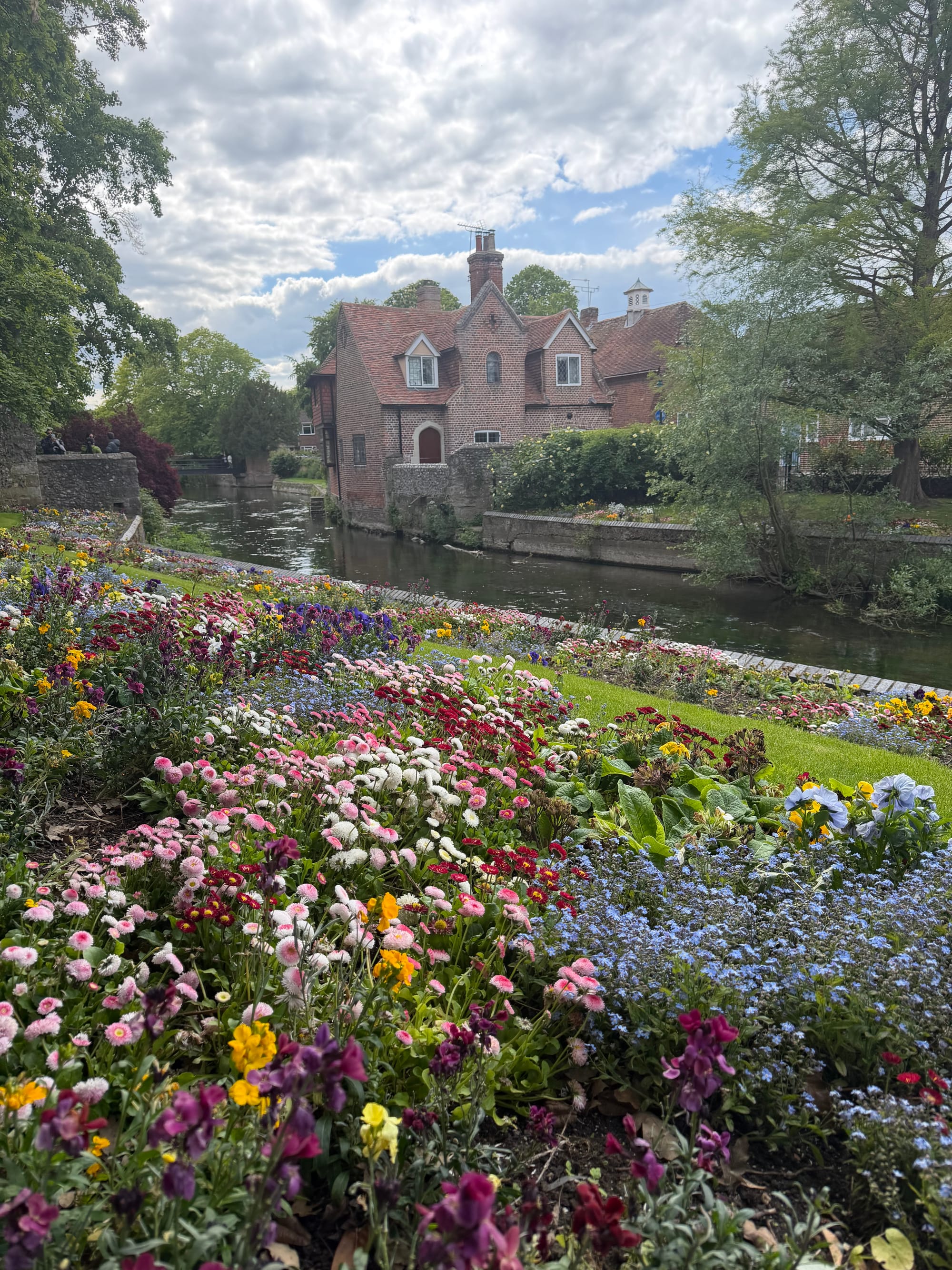
After ruins and churchyards, Westgate Gardens felt almost domestic.
Flowers beside the river. Paths kept clear. Trees disciplined without being deadened. Nothing monumental, and yet the place had a quiet dignity that affected me nearly as much as the cathedral.
Scruton’s love of home is most convincing when it appears like this: not as rhetoric, but as maintenance.
A bench repaired. A riverbank tended. A public garden planted so that ordinary people may walk somewhere beautiful without needing to deserve it. These are small civic acts of love. They say that beauty should not belong only to monuments. It should accompany daily life.
My photograph of Westgate Gardens seemed to hold that tenderness. Canterbury was not merely preserving its past. It was tending its present.
The care of small things is itself a moral act.
⛪ Canterbury Cathedral: The Weight of Inheritance
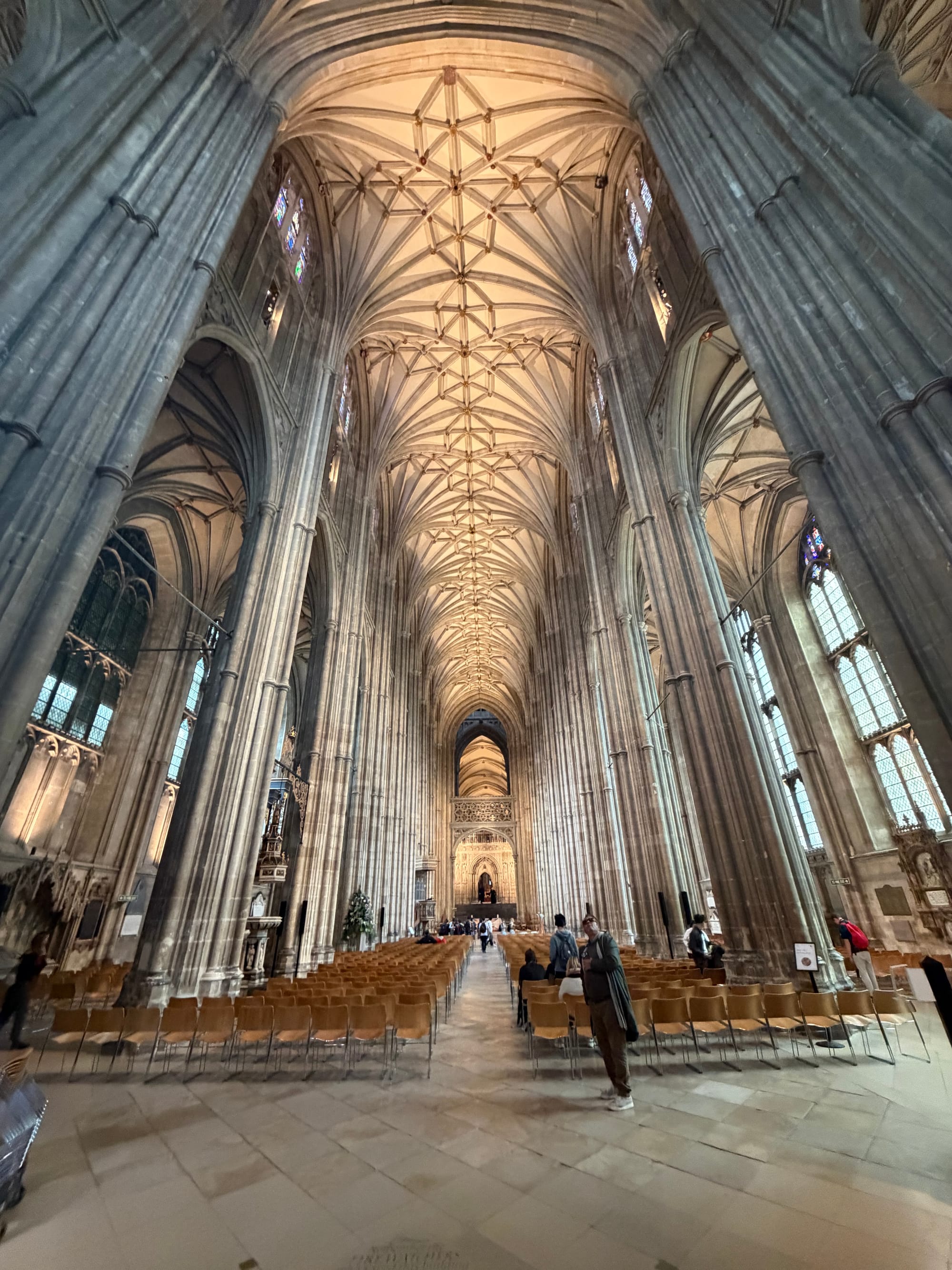
The cathedral does not merely dominate Canterbury. It orientates it.
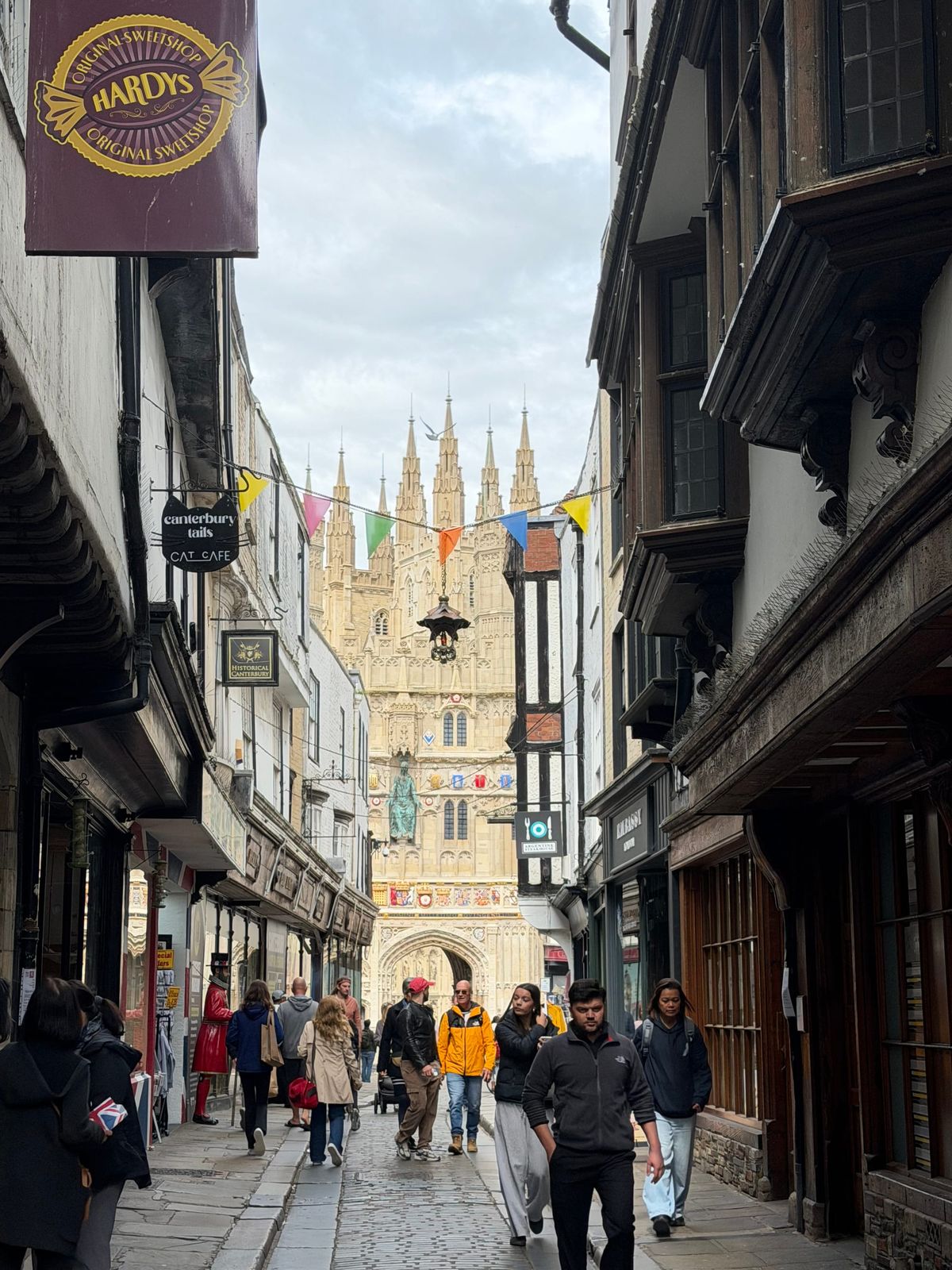
You glimpse it between rooftops, through trees, beyond graveyards, above narrow streets. It is threaded into the city rather than imposed upon it. The sacred appears gradually, not as spectacle, but as presence.
Great sacred architecture gives a place more than a landmark. It gives it a centre of gravity.
And yet love of home is never entirely innocent. It can become gratitude, stewardship, continuity. But it can also harden into exclusion. Nostalgia can become resentment. Inheritance can become fear.
Canterbury resists that danger because its identity was never sealed against the outside. Its Christianity arrived from elsewhere. England became itself partly through reception. Rome and Kent, Latin Christianity and Anglo-Saxon soil, the universal and the local: Canterbury was made by encounter.
You can receive Rome because Canterbury is already itself.
🏏 Return
That thought stayed with me as I left.
Years ago, I arrived in Canterbury still belonging to Rome. Returning now, after priesthood, after departures I once thought impossible, I felt the ache of home differently.
Perhaps oikophilia matters most to those who have not belonged simply. It is easy to praise home when one has never had to leave. It becomes harder, and more necessary, when one has lived across countries, institutions, and versions of the self.
Canterbury does not resolve that uncertainty. It does something truer.
It suggests that home is not always the place untouched by loss. Sometimes it is the place capable of holding loss without surrendering continuity.
And perhaps that is why the city still feels alive.
Not because it escaped history, but because generation after generation loved it enough to remain responsible for it.