Salisbury and the Measure of Distance
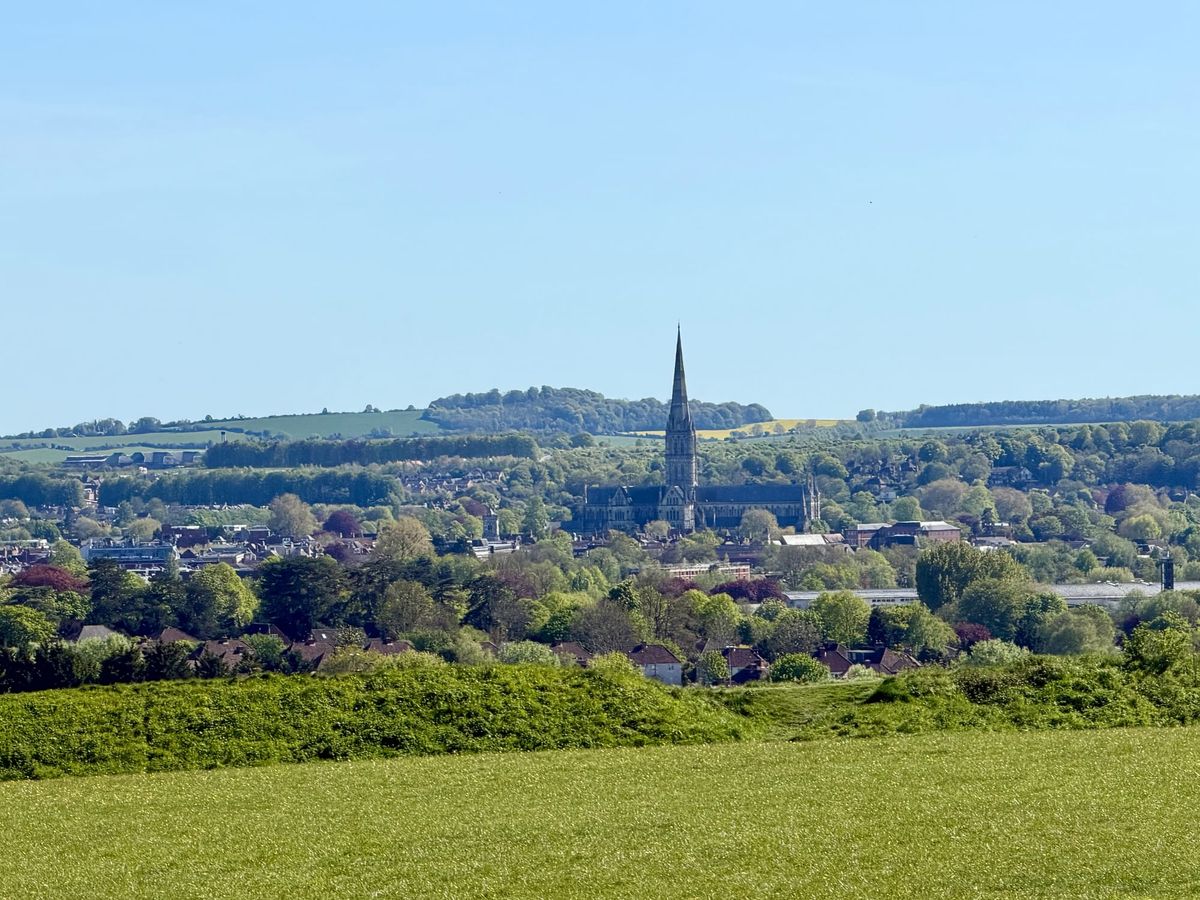
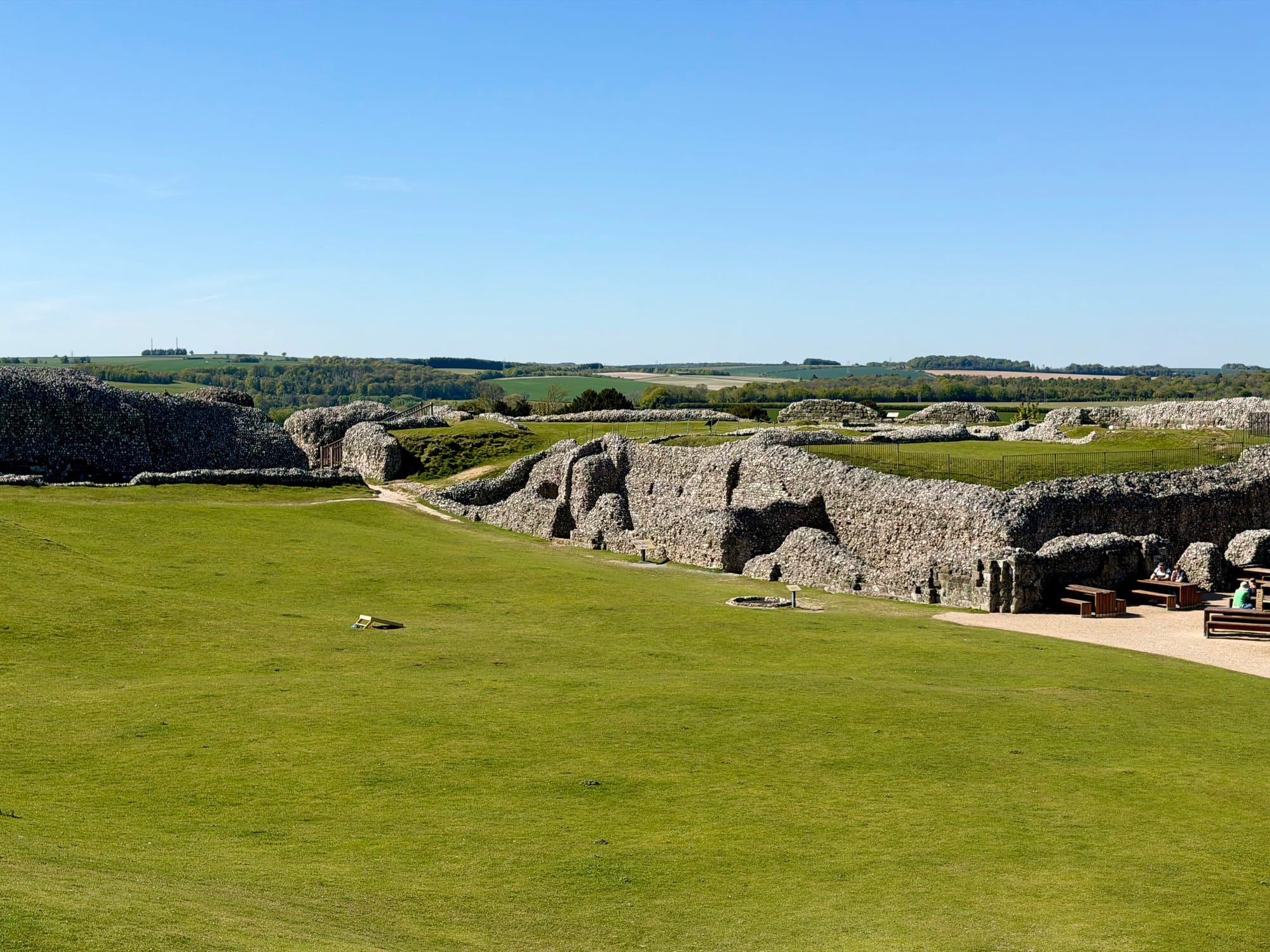
🌿 The Hill Before the City — Old Sarum
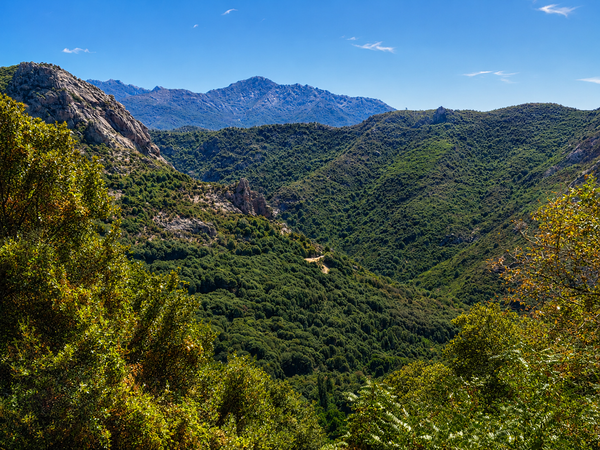
At Old Sarum, the ground still holds the shape of a centre. The earth rises and curves, enclosing what was once organised, inhabited, defended. But nothing now occupies it. The form remains. The necessity has gone.
There is no violence in the transition. No sense of interruption. What has happened is quieter. The centre has not been destroyed. It has been left behind so completely that it no longer asks to be remembered as necessary.
“Would it not be better to give death the place in actuality and in our thoughts which properly belongs to it…?” — Sigmund Freud
Even this feels insufficient. To give death its place is not to contain it. It does not settle into thought in the way other things do. It alters the structure within which anything can appear stable at all.
What remains here is not a warning, and not quite a trace. It is a form that no longer gathers anything around it. The idea of a centre persists longer than the centre itself.
I thought I had found it once. A slight rise in the ground, more pronounced than the others, where the curve seemed to close more tightly. For a moment, everything appeared to align around it. But standing there, nothing followed. No axis formed, no orientation held. It was only another point in the same circling.
The paths continue whether or not there is anything left to reach.
From that movement, the eye lifts almost involuntarily.
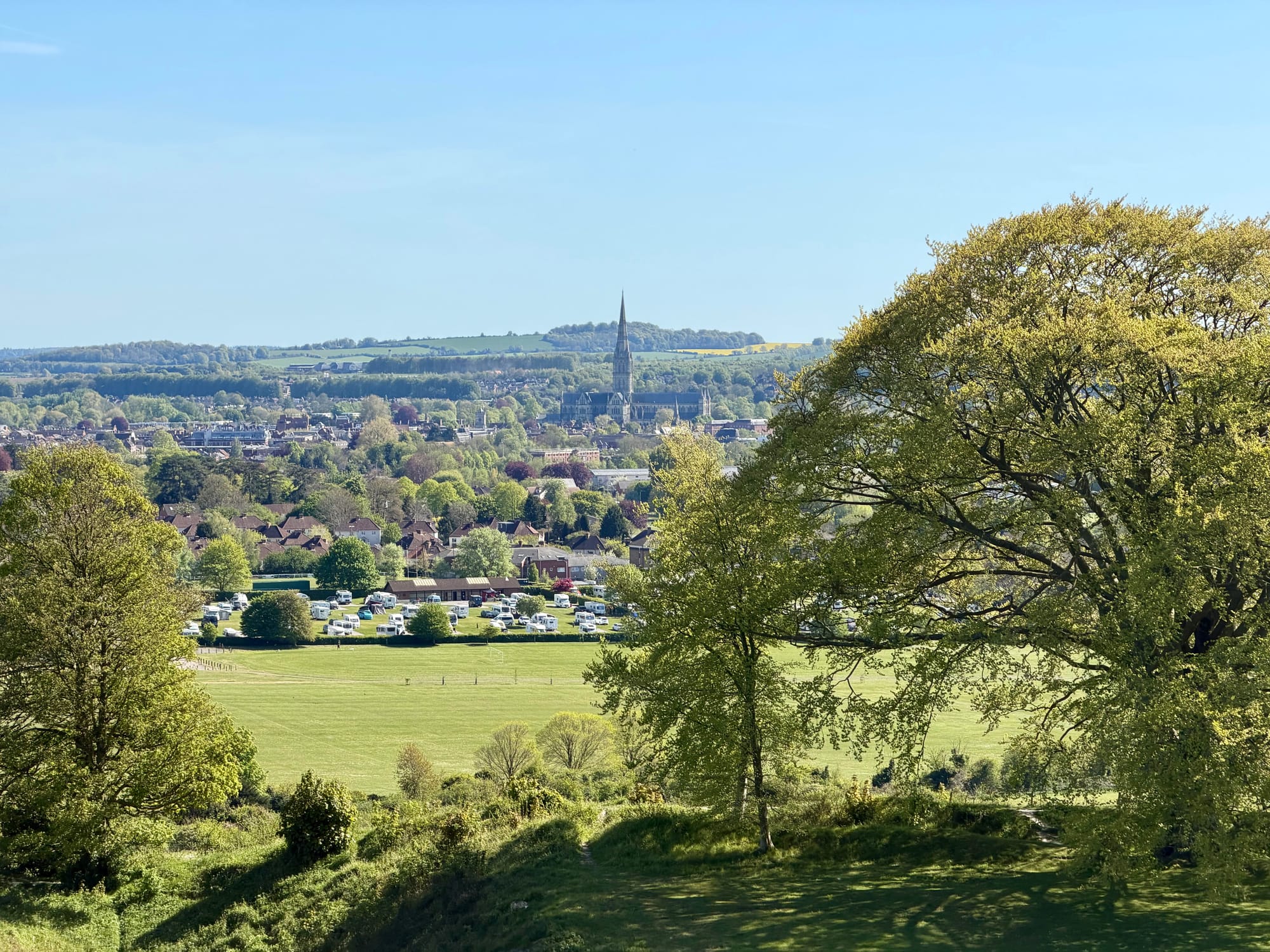
🌳 The City and the Distance That Cannot Be Crossed
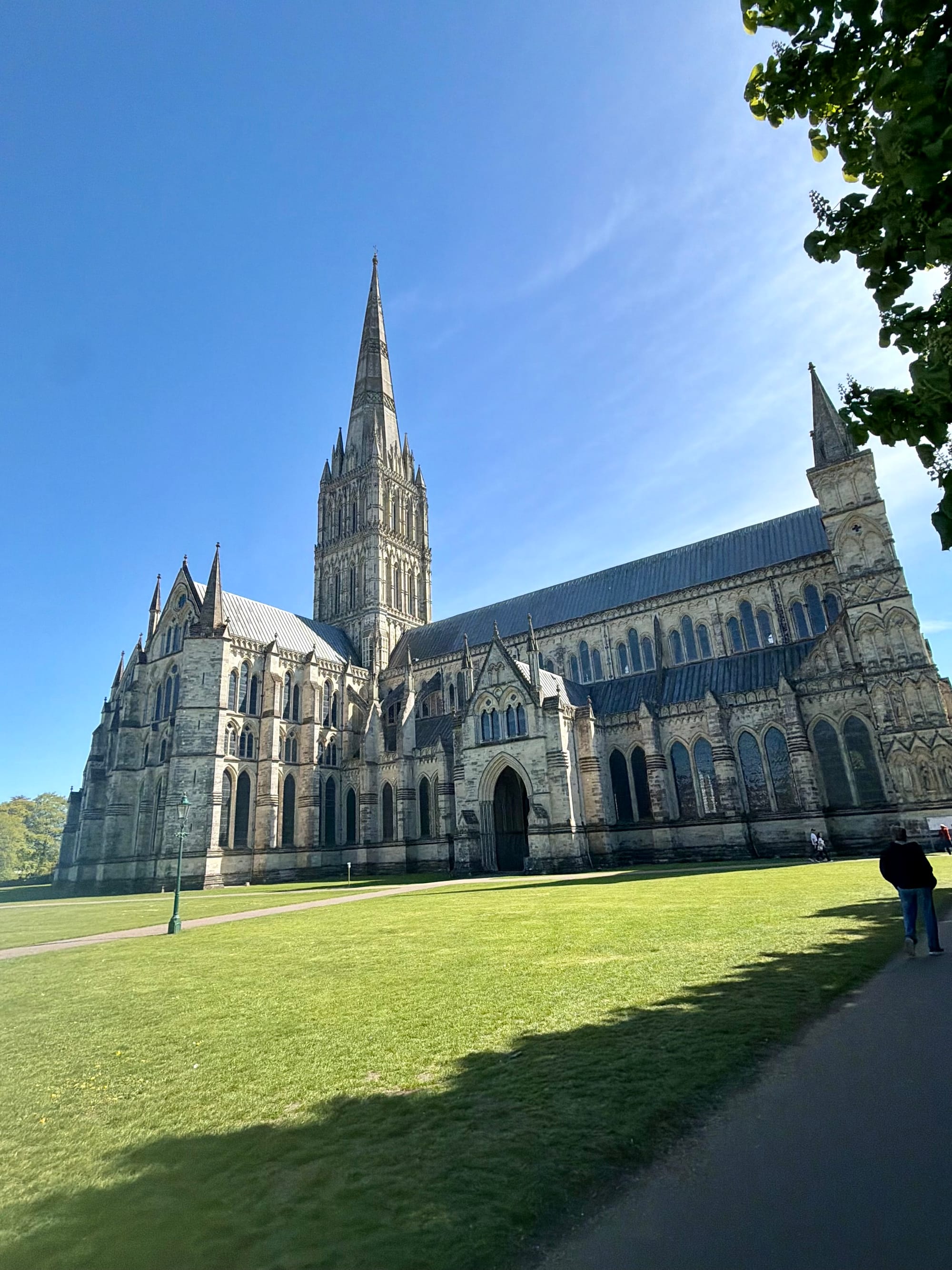
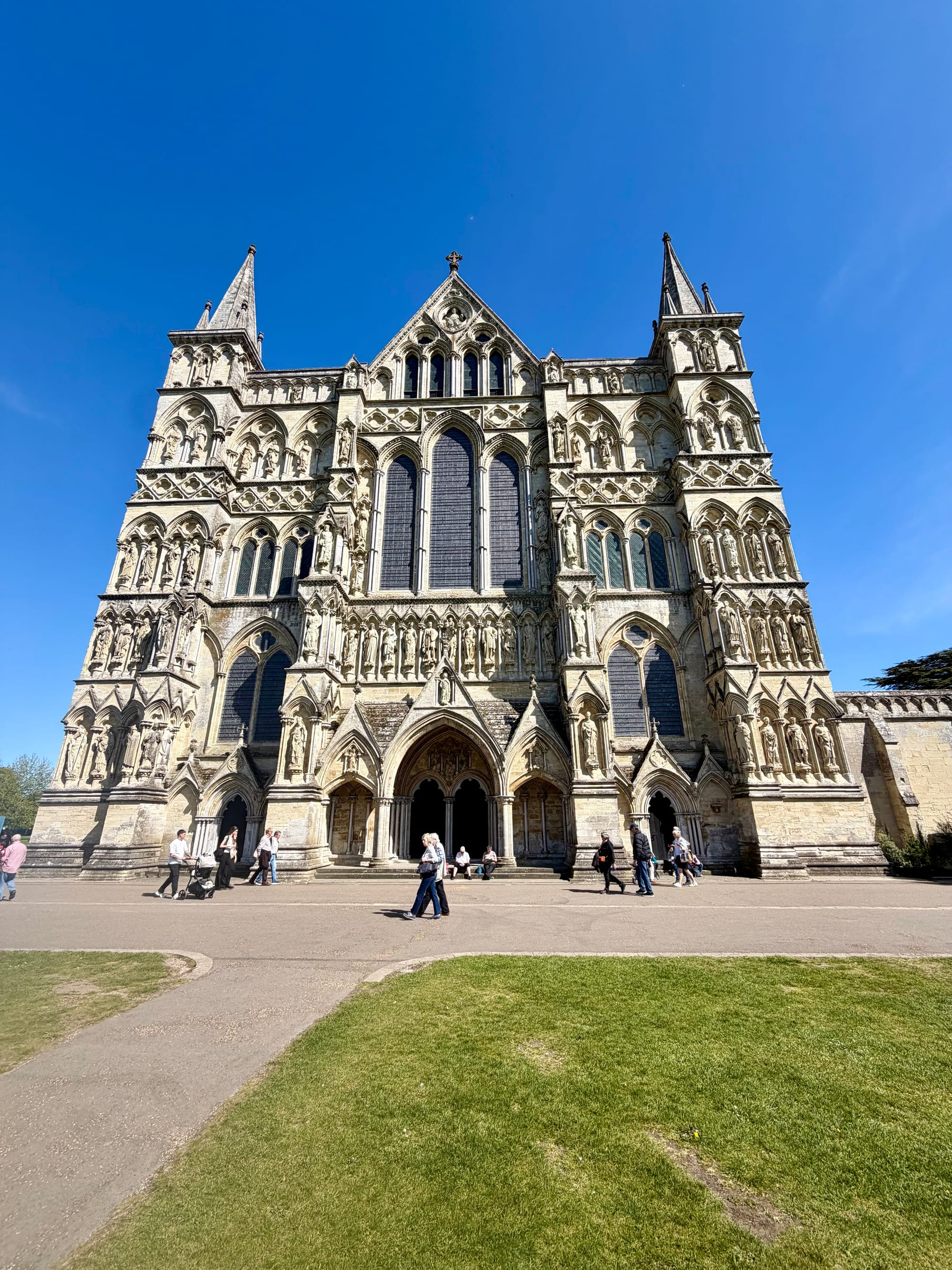
Beyond the hill, the land gathers again. Fields draw into lines, lines into streets, and at their convergence the spire of Salisbury Cathedral rises, not abruptly, but as though it had always been there waiting to be seen.
From a distance, it appears to hold the city together. Everything seems oriented toward it. The eye moves across the intervening space with a kind of confidence, as though what lies between were only extension, not transformation.
“From the child of five to myself is but a step. But from the new-born baby to the child of five is an appalling distance.” — Leo Tolstoy
The disproportion is not visible from within it. What matters most in the formation of anything cannot be re-entered. It is not behind us as something that could be revisited, but finished in a way that resists recovery.
I began to walk down toward the city, expecting the distance to yield. Expecting the spire to grow, to separate itself more clearly from what surrounds it. But something else happened. The closer it became, the less distinct it was. It did not gather the city more tightly. It dissolved into it.
At one point I turned back, trying to recover the earlier view, to restore the separation that had made the relation intelligible. But the hill had already shifted behind me. The spire no longer stood apart in the same way. The distance had not been reduced. It had been lost.
The point of orientation does not remain outside what it orders. It becomes part of it, and in doing so, it ceases to orient in the same way.
The distance was not something that could be crossed. It was what made the relation possible at all.
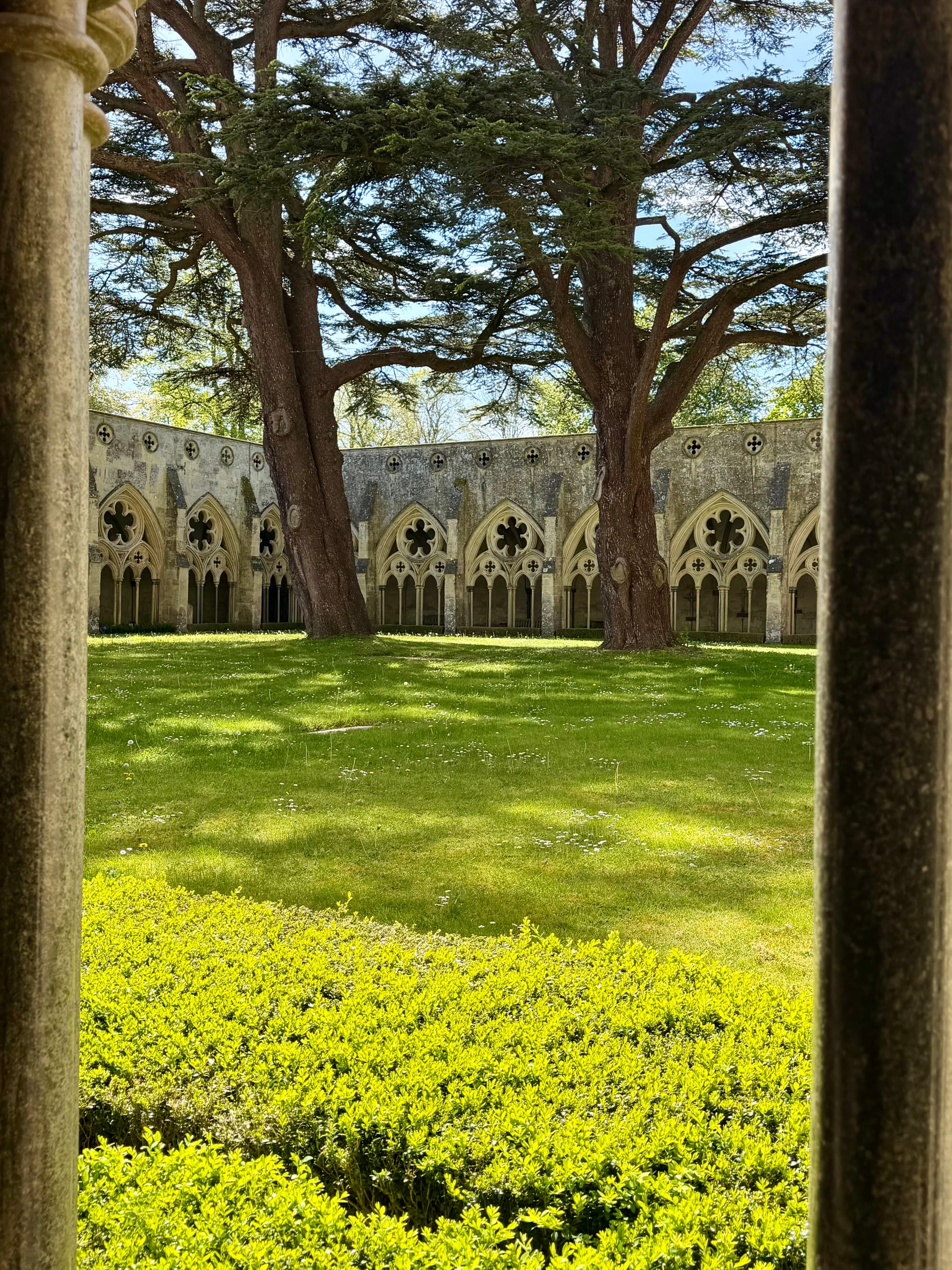
🏛️ The Cloister and the Work of Containment
Withinthe precinct of the cathedral, the space tightens. The cloister encloses a square of grass, framed by arches that repeat with quiet insistence. Each line corresponds. Each opening leads to another. The world is arranged so that it can be taken in at once.
“Through these notions the individual is trying to cut off any personal vision of reality… he uses them as trenches for the defense of his existence.” — José Ortega y Gasset
The order does not present itself as defence. It appears as clarity. As though the arrangement were simply the way things are.
But the longer one remains, the less complete the enclosure feels. The trees rise within the geometry, not outside it. Their growth does not correspond. It interrupts without overturning. The structure holds, but not entirely.
It is not that something has been excluded. It is that what cannot be contained has already been admitted, and does not settle.
For a moment, the repetition steadies the eye. The enclosure seems sufficient. But the steadiness does not extend far. It does not need to. It only needs to hold long enough.
🌾 What Remains Unheld
Leaving the cloister, the eye looks again for the spire. It is there, but not as it was from the hill. It no longer gathers the landscape. It stands among other things, no longer distinct enough to hold them in place.
Somewhere beyond it, though no longer visible, the earthworks remain.
It becomes difficult to say what has changed. The hill has not altered. The city has not shifted. The cloister still encloses what it did before. And yet none of them return in quite the same way.
For a moment, it seems possible to arrange them. To say: first the centre, then its loss, then its reconstruction. But the order does not hold. Each depends on what it cannot retain. Each gives the impression of stability by setting aside what unsettles it.
The forms remain.
What they gather is already elsewhere.
The spire stands where it stands.