The Garden, the Tomb, and the Empty Room
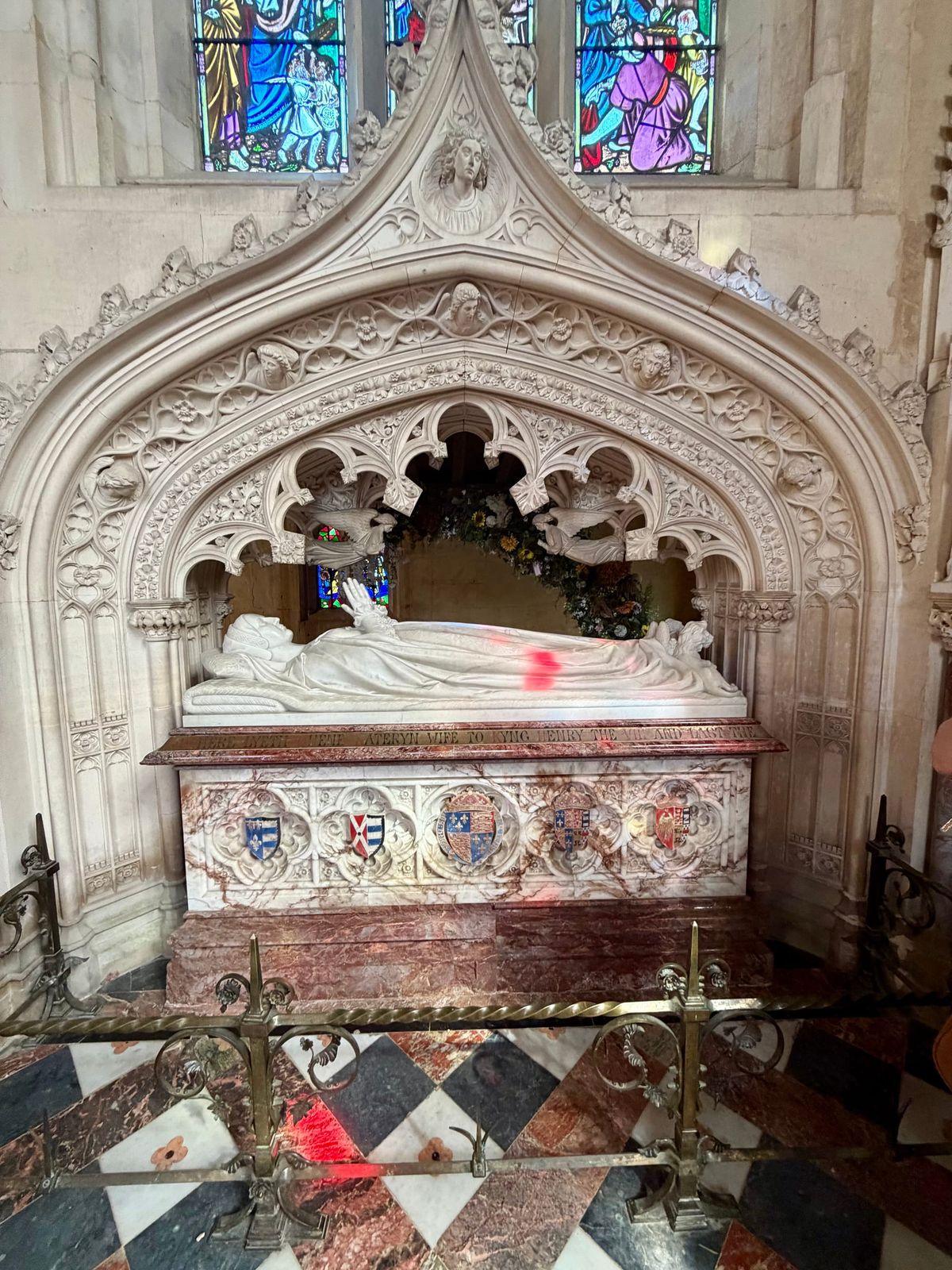
🌿 Sudeley: the discipline of form
At Sudeley, nothing appears to have been left to chance.
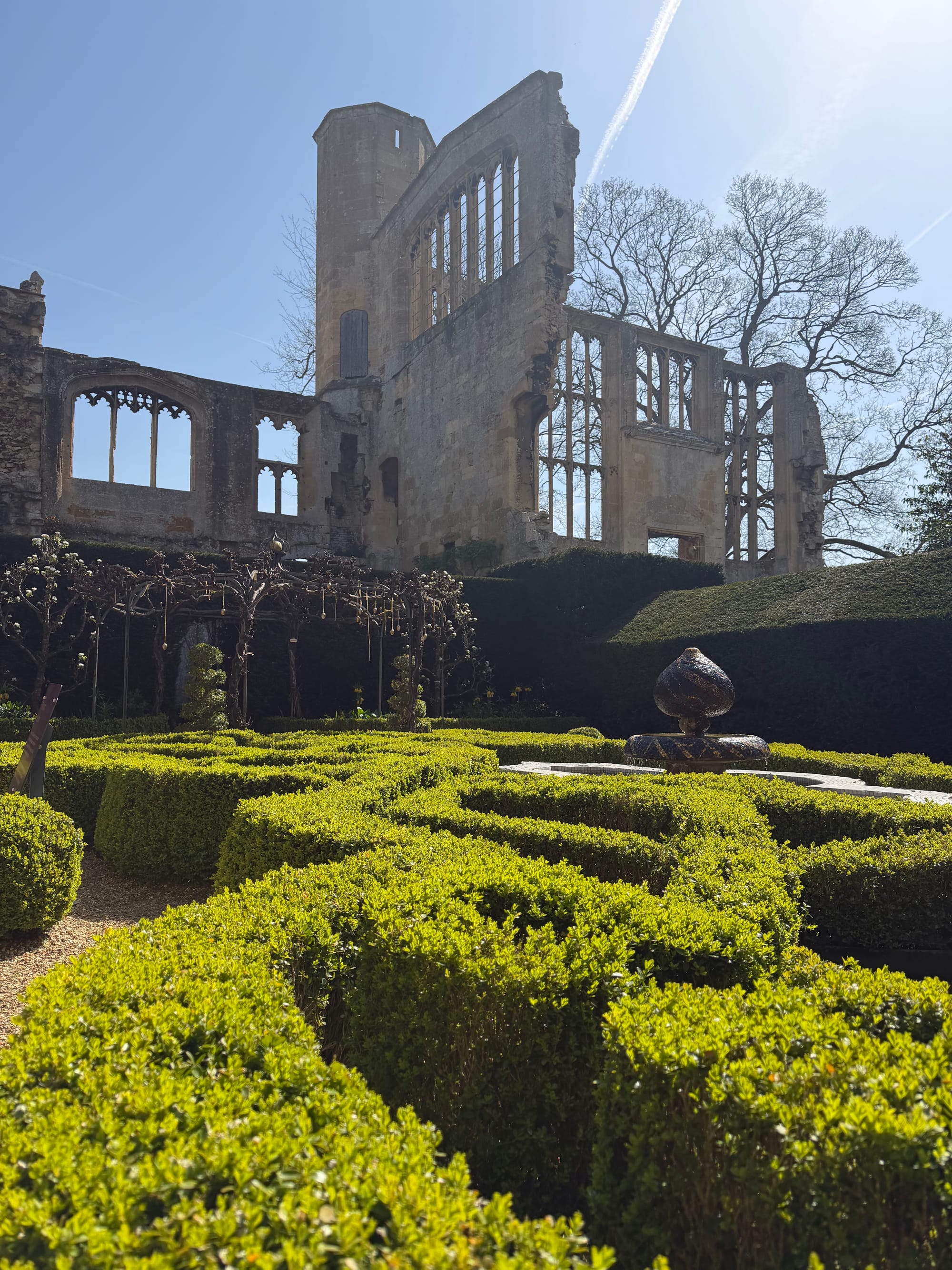
The hedges curve inward with a patience that feels almost moral. Their lines are held, not simply grown. Circles close upon themselves. Paths return. Even the ruins seem to have been persuaded into coherence, their broken edges softened by green, their violence arranged into something legible.
It is difficult not to read this as reassurance. The world, at least here, appears capable of being gathered. Time has passed, but it has not undone. It has been worked back into form.
Moving through the garden, one begins to feel less like an observer than a participant. The order does not compel belief; it invites alignment. For a moment, it seems enough that things fit, that they can be entered, that one’s own presence does not disturb but joins.
The satisfaction is slight, but real.
And yet it depends on maintenance. The symmetry is not given. It is sustained. Without the patient repetition of care, the lines would loosen, the curves would break, the garden would return to something less intelligible.
What feels like revelation begins to resemble rehearsal.
🕯️ The chapel: a life that does not resolve
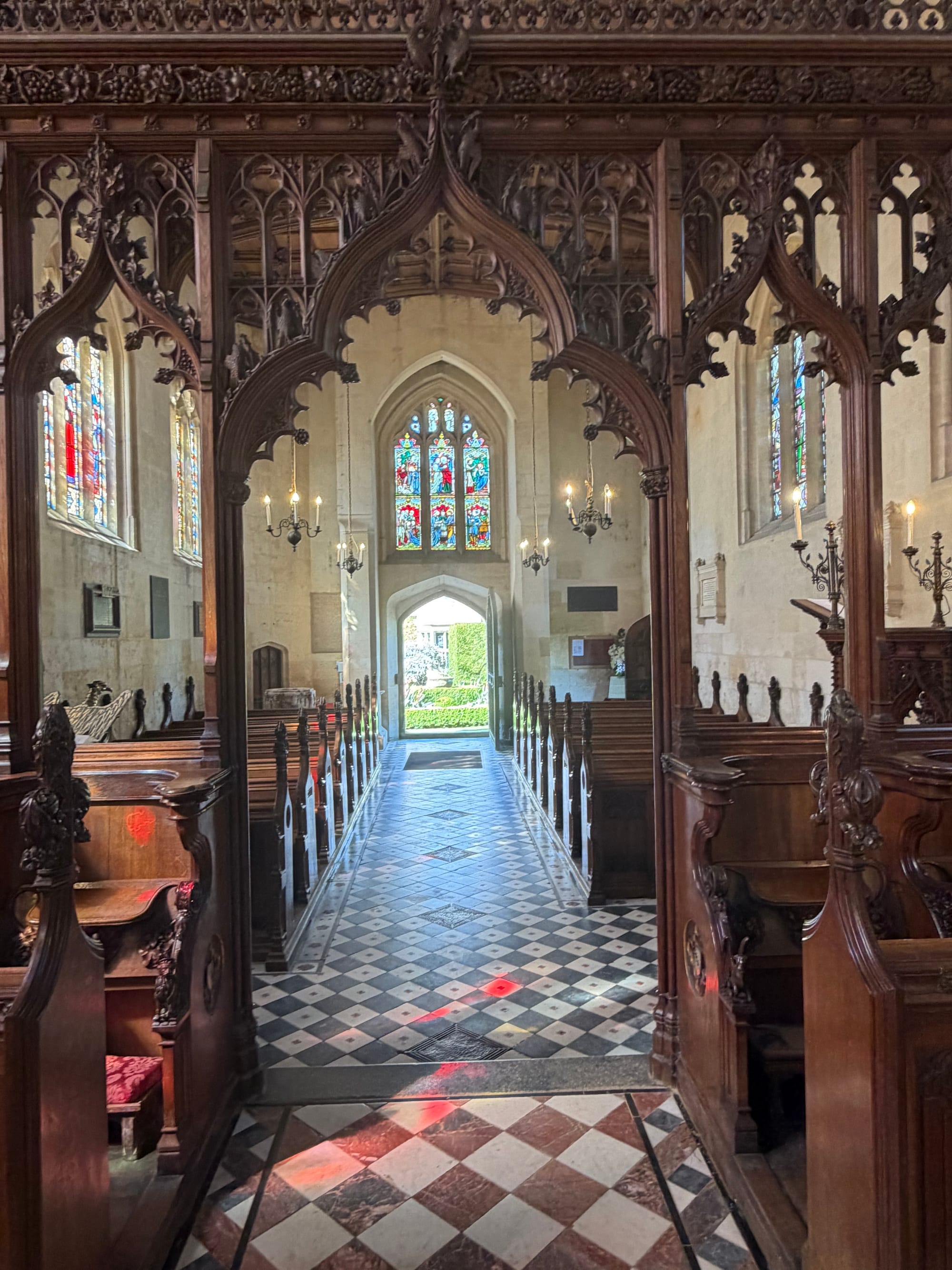
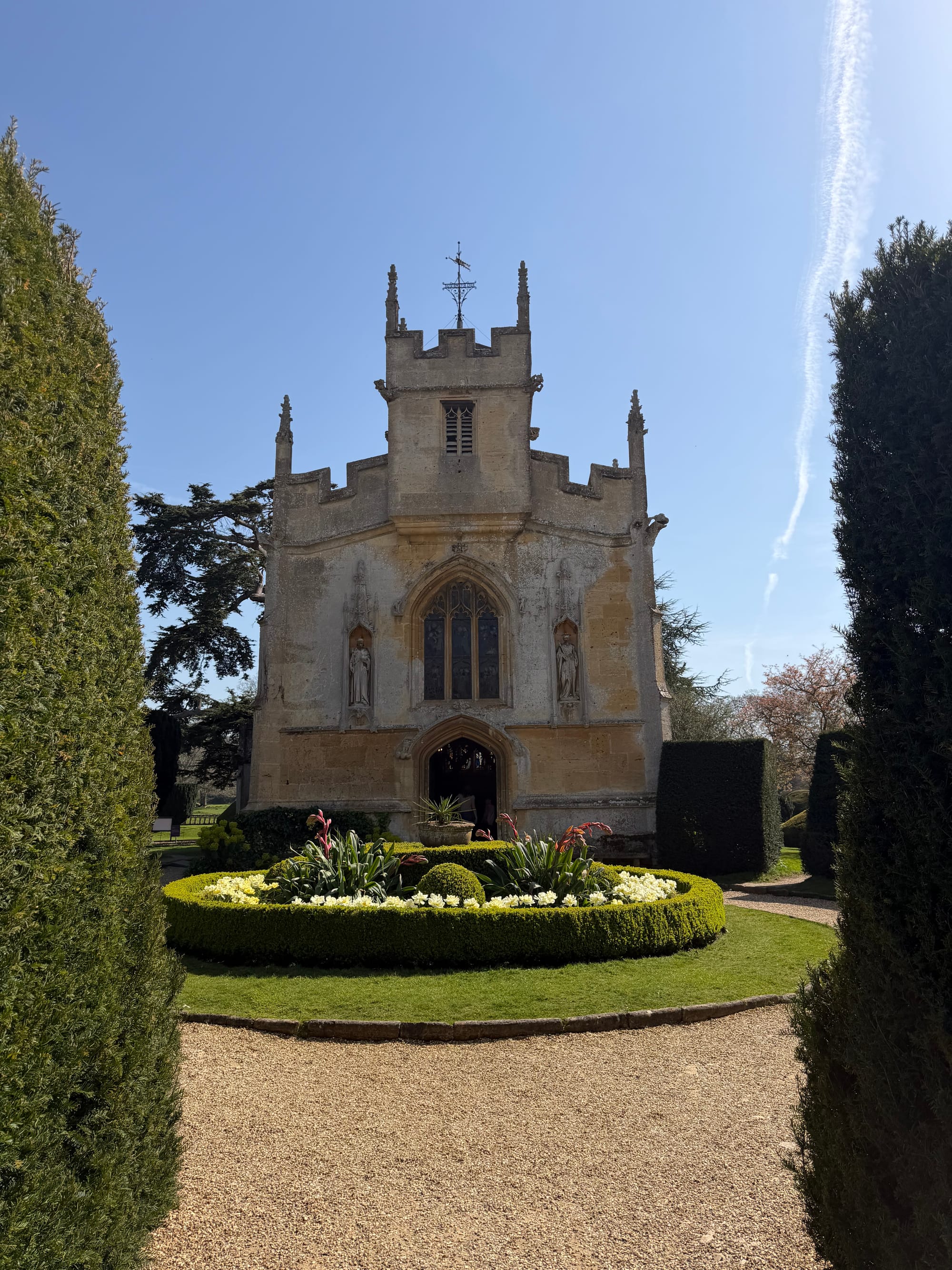
Inside the chapel, the light no longer spreads.
It gathers in colour, falling through stained glass in fragments that refuse to merge. The air feels still, not in the sense of peace, but of interruption. Something has come to rest here, and has not been taken up again.
Catherine Parr lies beneath the glass.
Sixth wife of Henry VIII, she moved through a court in which survival was neither predictable nor secure. She outlived the pattern that defined it. Married again, to Thomas Seymour, in what appears, unusually, to have been something like affection, she arrived here not as an ending, but as a continuation.
And then, within a year, she died. Childbirth, at thirty-six.
There is a temptation to gather even this into sequence. To see her life as one instance within a larger unfolding, another expression of forces that do not pause for the individual. But the tomb resists that movement. It does not present a pattern. It presents a conclusion.
Not necessary. Not explained. Simply complete.
Her survival, her remarriage, her death. Each could have been otherwise. None of it required.
Standing there, the thought that everything belongs to a wider order does not disappear, but it loses its force. It no longer answers. It no longer quiets.
What remains is the fact that this life occurred, and that it did not have to.
🌳 The grounds: what does not gather
Beyond the garden, the land opens, and with it, the sense of containment loosens.
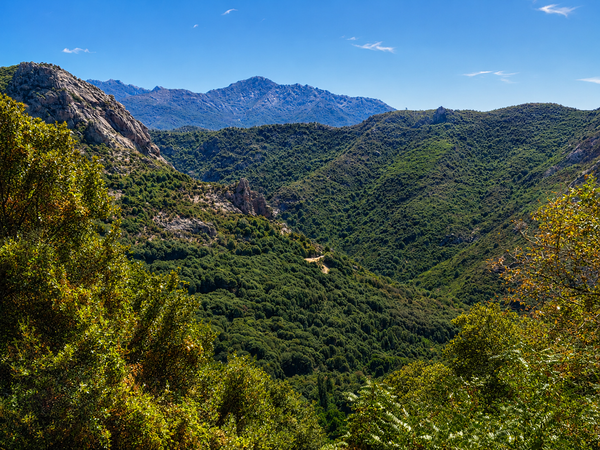
The trees stand at uneven intervals, their branches still bare, holding no pattern beyond their own growth. The hills recede without resolution. The eye moves, but it does not settle. Nothing here suggests that it is tending towards anything.
The effort to step back, to see from above, begins to falter.
From a distance, one might still speak of process, of continuity, of forces unfolding across time. But the landscape does not offer itself to that language. It remains dispersed, indifferent to the need for coherence.
The thought that everything forms part of a whole persists, but it no longer persuades. It becomes something one brings, rather than something one finds.
⚖️ Gloucester: a space prepared
Earlier that day, in Gloucester, the structure had been different.
A courtroom, arranged in expectation. Positions marked. Roles assumed. A space designed for the articulation of fact and consequence, for the movement from event to judgment.
And empty.
No one appeared. No case was called. The room held its form, but the event it anticipated did not occur.
It is a small absence, easily overlooked. Nothing dramatic happened. And yet the absence remains more difficult to place than any presence would have been.
Because the room was ready.
Everything that should have happened had a place prepared for it. And still, it did not happen.
The order held, but nothing entered into it.
🏛️ Gloucester Cathedral: what endures
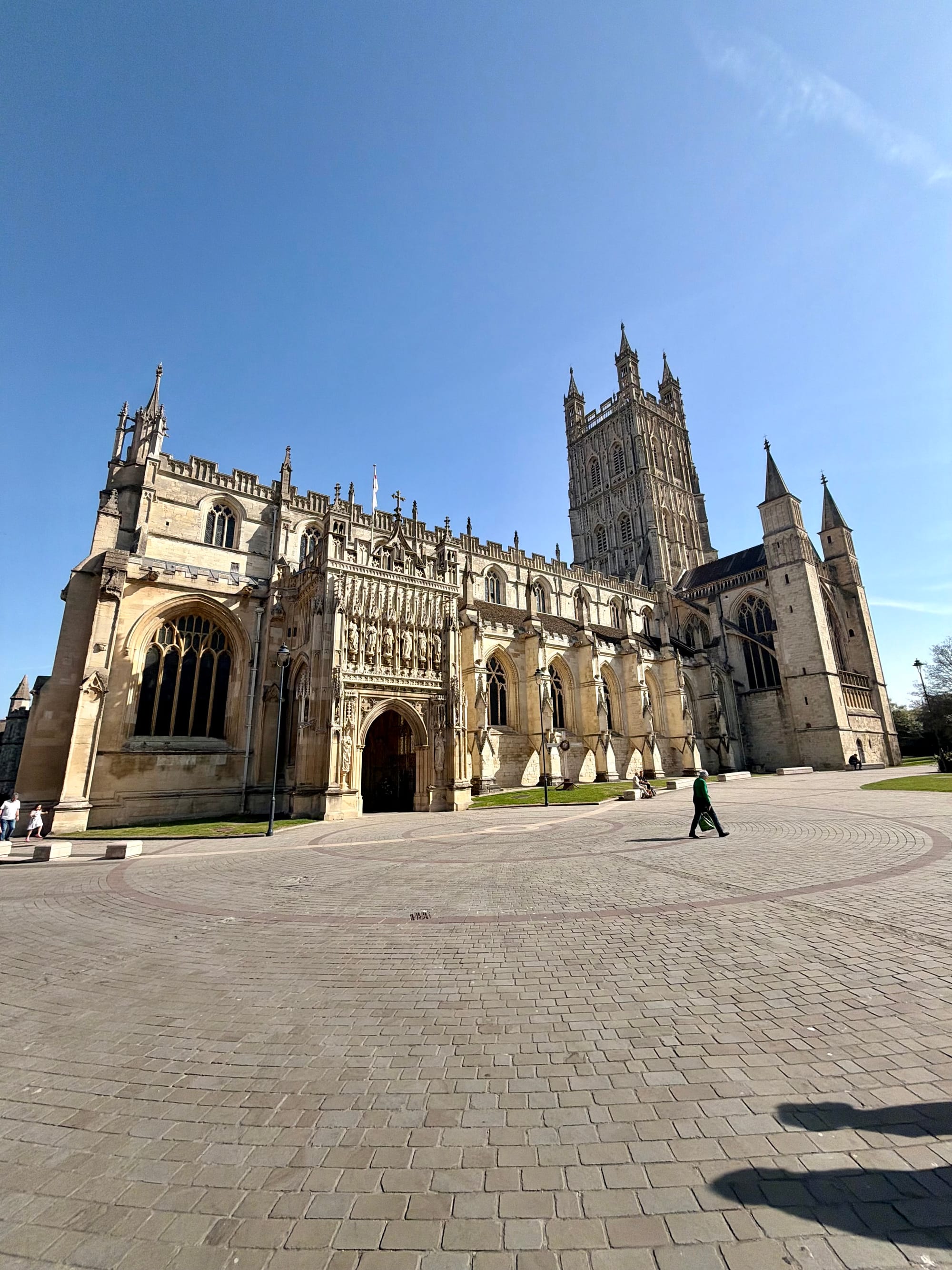
The cathedral does not wait.
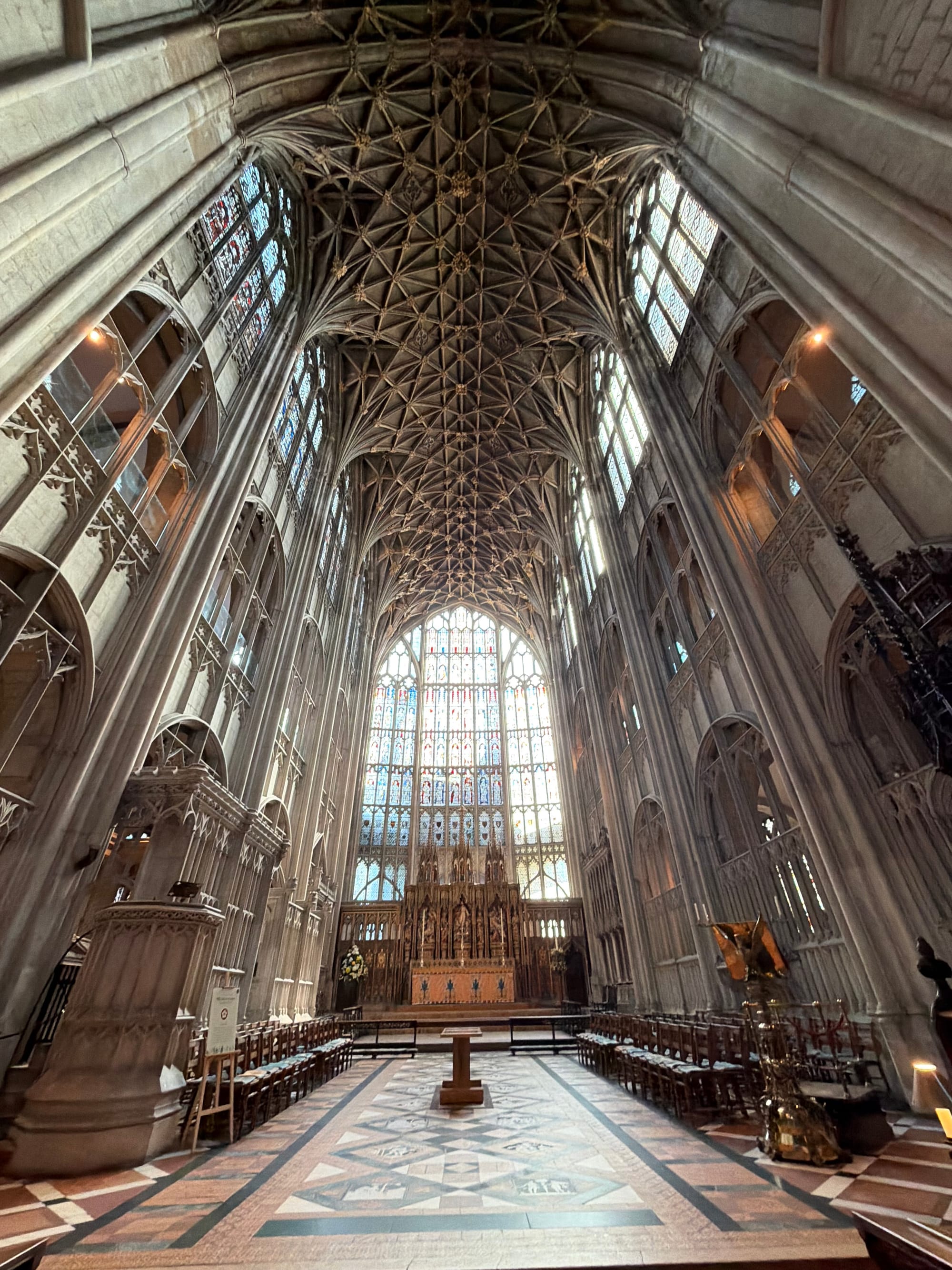
Its scale is not arranged for use, but for persistence. The stone rises beyond proportion, beyond comfort, drawing the eye upward without offering a point at which to rest. The space does not resolve. It extends.
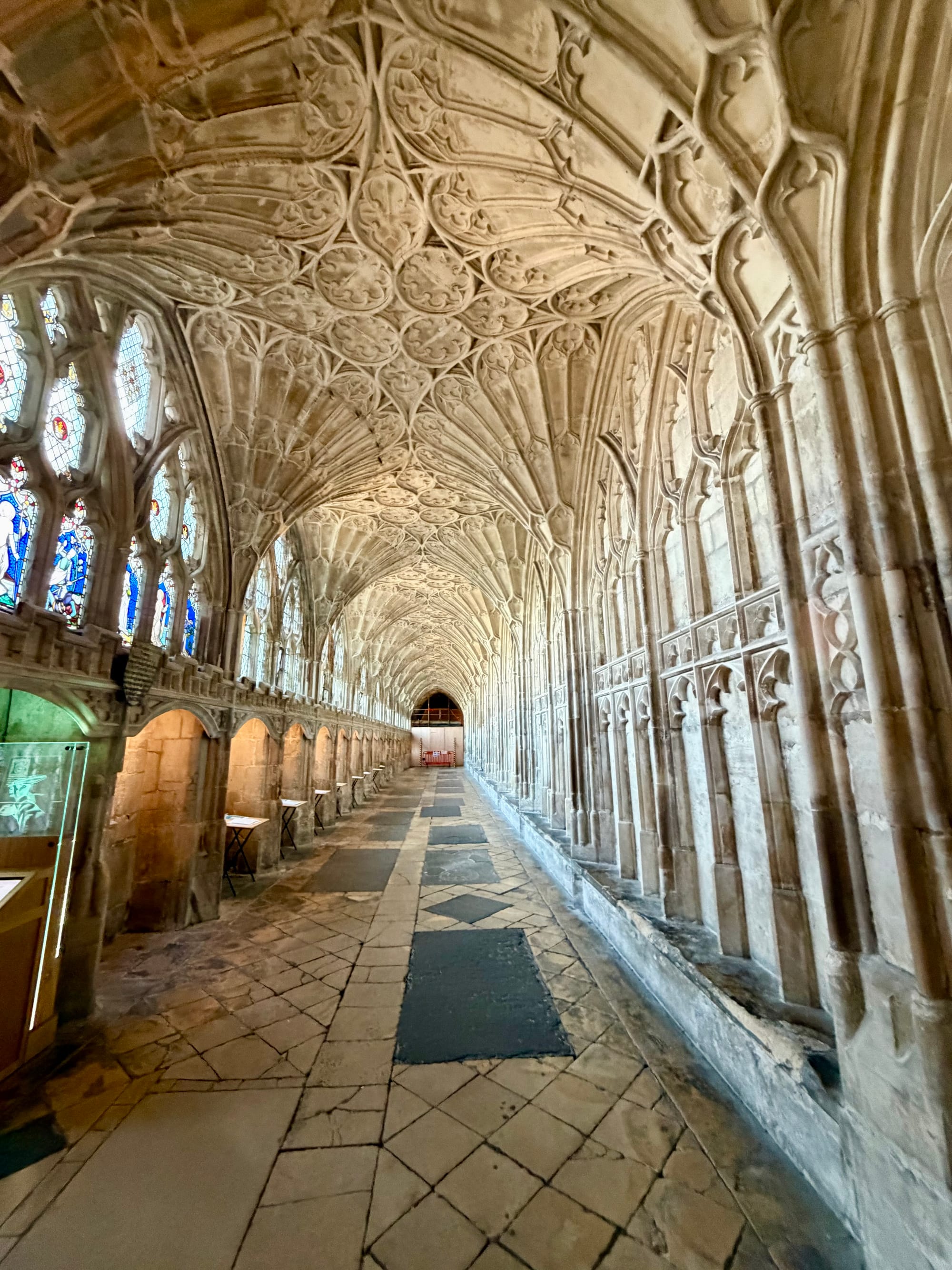
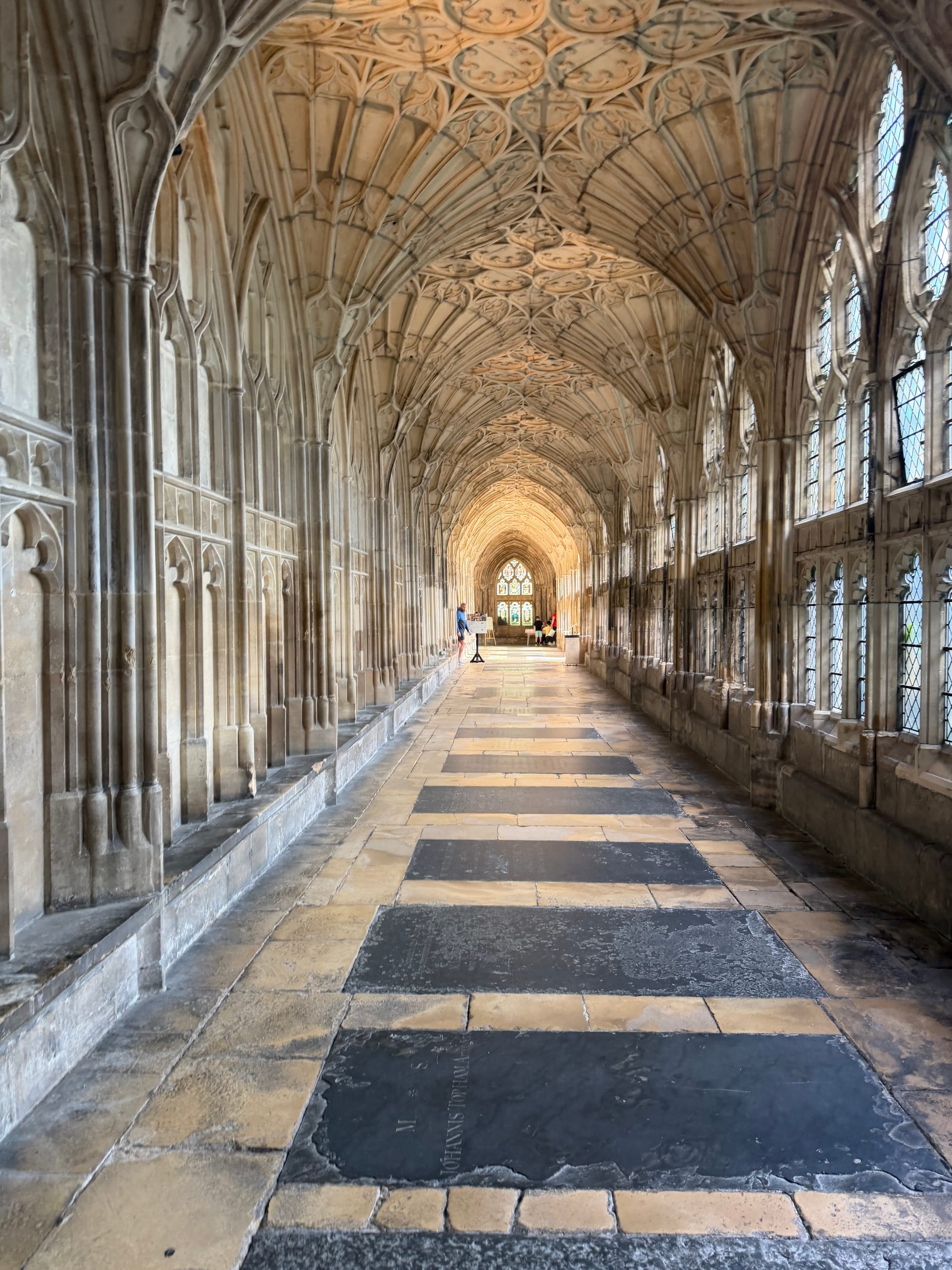
Within, the repetition of the cloisters alters the sense of movement. Each step is taken, but none seems to matter. The arches return, one after another, indifferent to the presence that passes beneath them.
Here, continuity is not suggested. It is enacted.
Lives have moved through this space for centuries, unnoticed by the structure that contains them. It does not remember. It does not require. It remains.
And yet, walking within it, one does not feel excluded.
The building does not need you, but it can be inhabited. For a moment, your presence aligns with it, not as something significant, but as something not entirely separate. The same forces that sustain the stone, that once gathered the labour that raised it, that now hold it in place, do not stop at its walls.
The distinction between part and whole loosens, briefly.
Not because it must, but because it can.
⚖️ What does not settle
The day does not resolve into a single thought.
The garden holds its pattern, but only through care.The tomb marks a life that does not dissolve into anything larger.The courtroom remains prepared for what did not occur.The cathedral endures without reference to any of it.
Each suggests a different relation between form and event, between what holds and what happens.
To step back, to see everything within a single order, is possible. The thought is available. It offers a kind of clarity.
But it does not remove the fact that things occur as they do, or fail to occur at all.
Nor does the insistence on contingency settle anything. To say that nothing is necessary is simply to leave each moment suspended, unexplained.
And yet, moving between these places, something else takes place.
One continues to enter, to align, to respond.
The garden is walked.The tomb is stood before.The empty room is noticed.The cathedral is inhabited.
None of this requires necessity. None of it resolves contingency.
And still, it is done.
✨ Toward evening, the light begins to fall across the stone, and the forms that seemed so stable begin to soften.
The cathedral remains.The garden will be tended again.The tomb will not change.The courtroom will be used, or not.
Nothing here depends on being understood.
And yet, for a time, it is possible to move among these things as though they belong together. Not because they must, and not because they explain themselves, but because they can be held, briefly, within the same field of attention.
How long that holds is uncertain.
But for a moment, it is enough.