The Fabric of Rule
The Things That Hold Together
There is a moment in Plato’s Statesman where politics is stripped of its grandeur and rendered almost domestic. The true statesman, he says, is not simply a ruler or a commander, but something quieter and more exacting: a weaver. Not one who produces uniformity, but one who knows how to take contrary threads and bind them into a single fabric without destroying their difference.
It is an image that lingers because it resists the temptation to simplify power. A fabric is not made by force. It is made by tension, by crossing, by patience. It is made by knowing what must be kept apart and what must be brought together.
I found myself thinking of this not in a library, but walking through the rooms of Hardwick Hall.
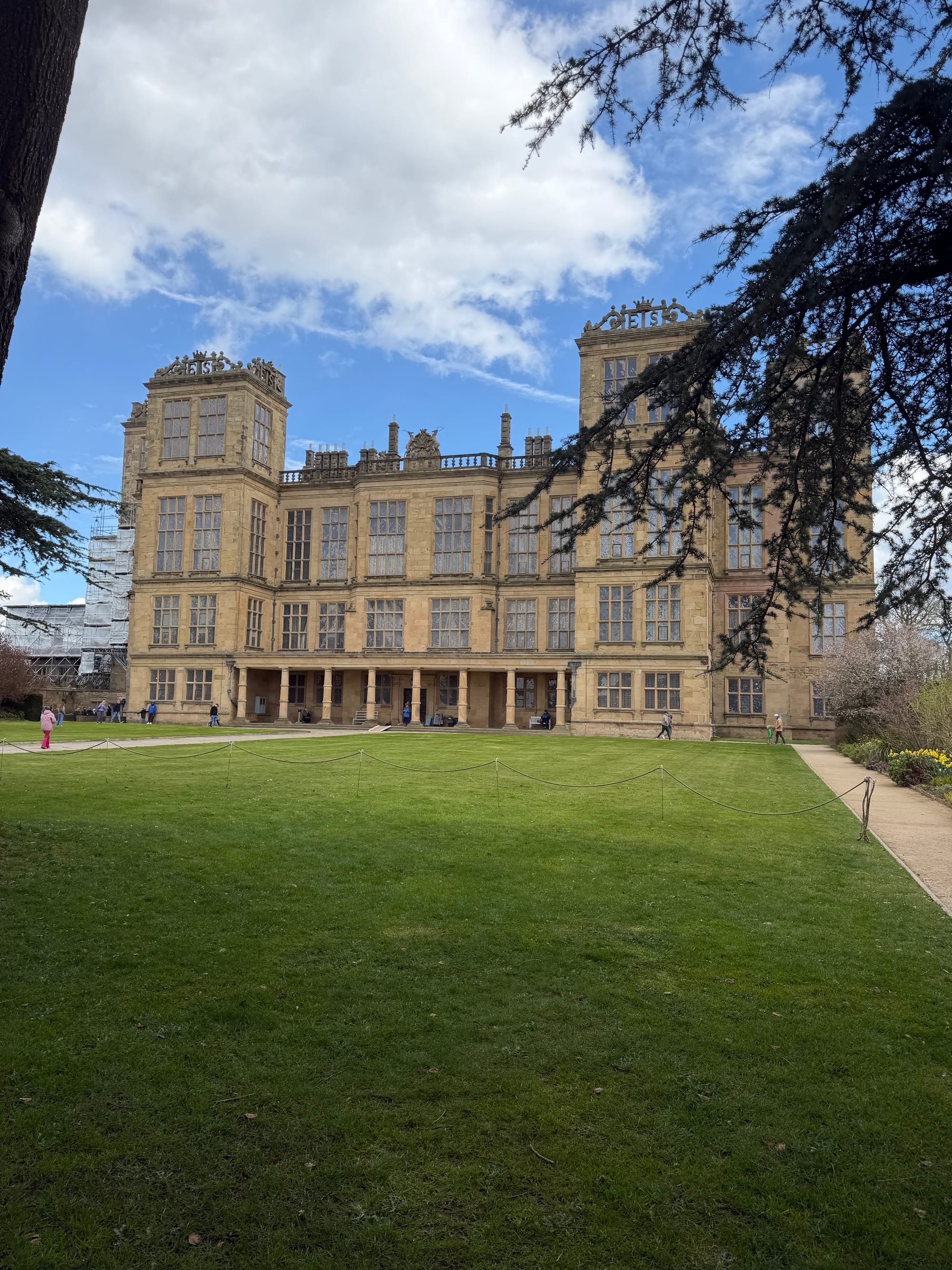
🌿 Hardwick: The Fabric of Power
Hardwick does not present itself as a fortress. It opens, almost disarmingly, in glass and symmetry. It is light, deliberate, composed. But inside, the walls tell a different story.
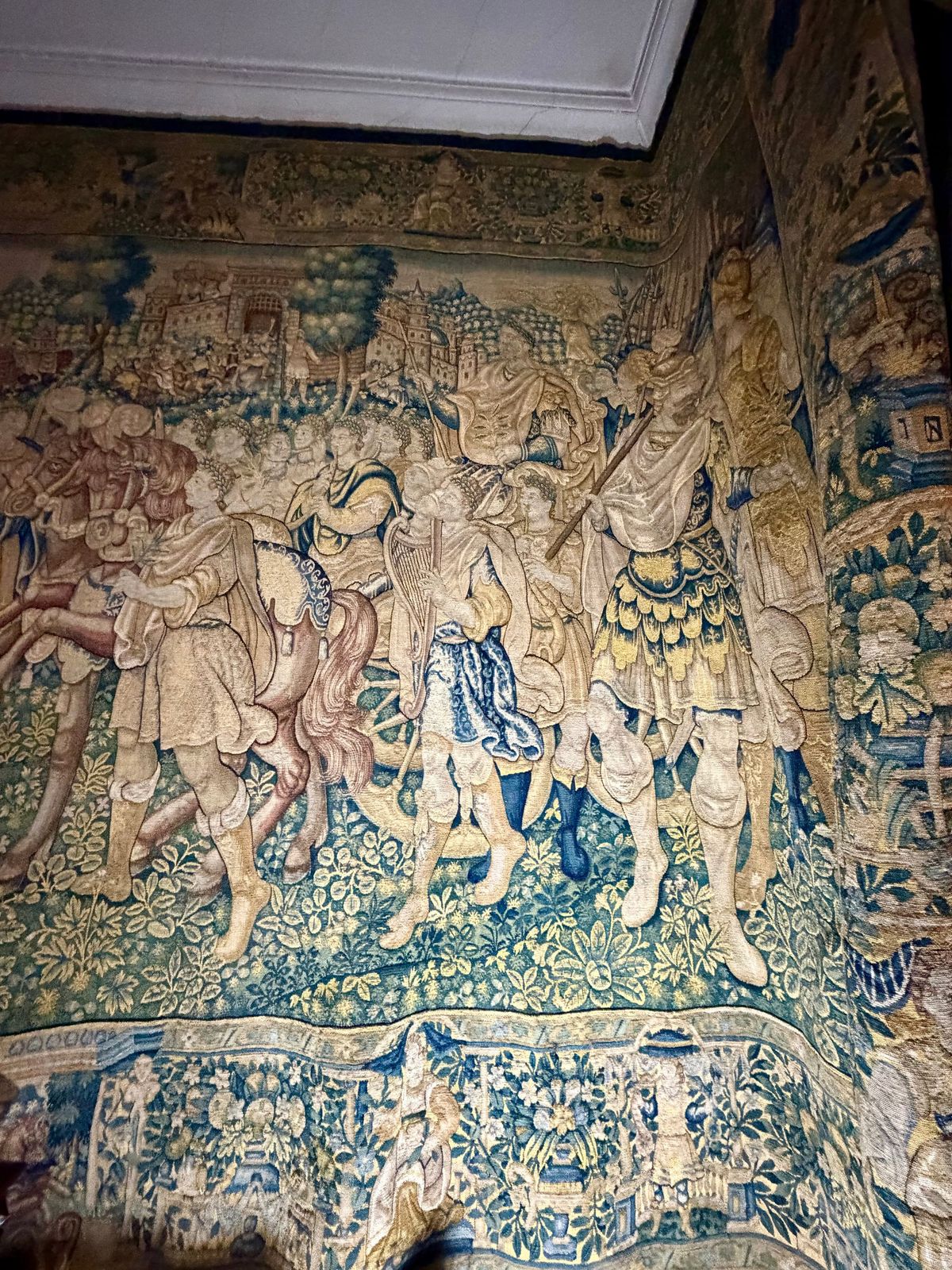
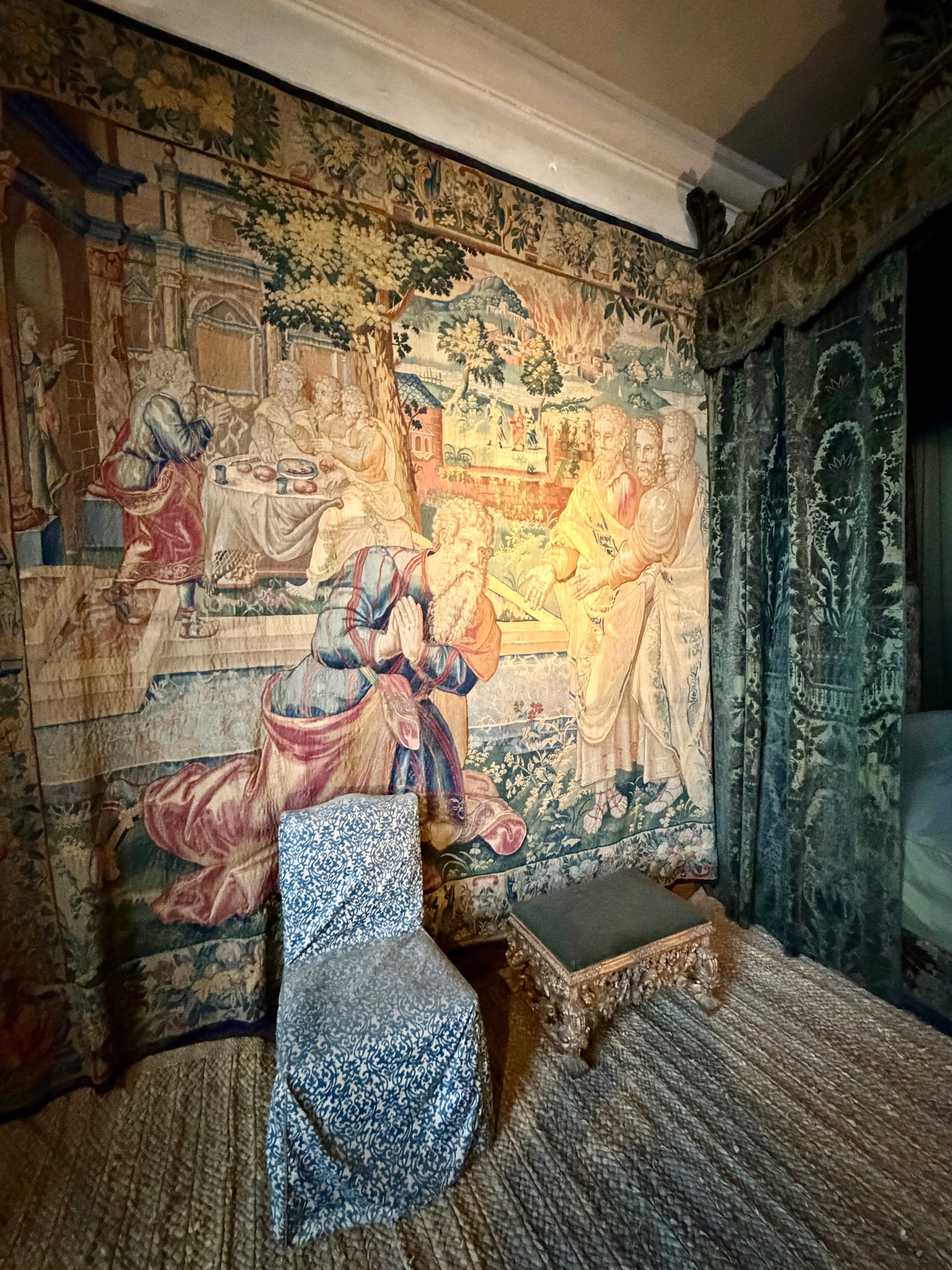
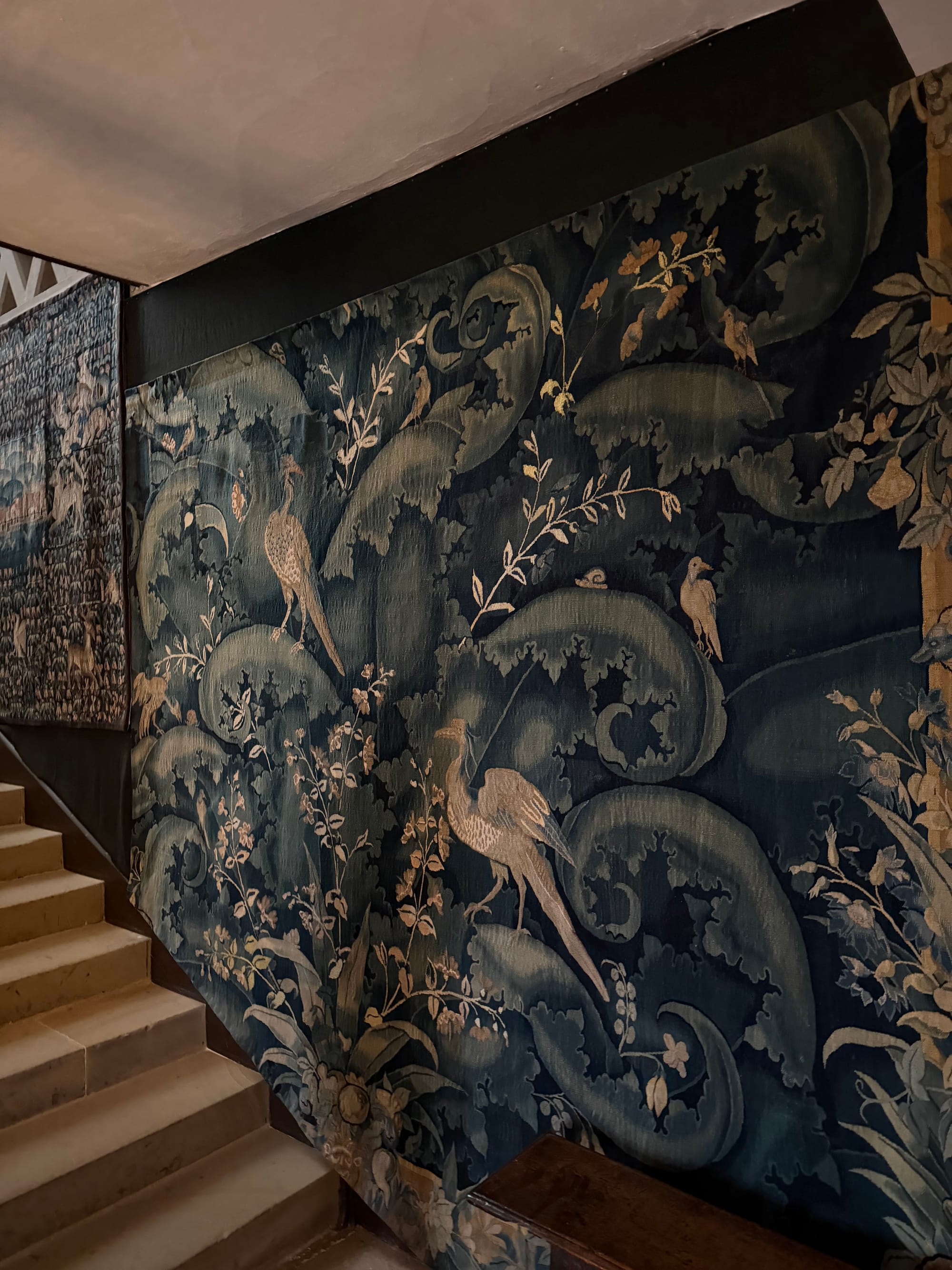
The tapestries are not ornamental. They are overwhelming.
They absorb sound, light, and attention. They depict movement, myth, labour, pursuit. Figures bend, stretch, gather, carry. The eye cannot take them in at once. They demand duration. And in that demand, something becomes clear: this house was not built merely to be seen. It was built to enclose.
Bess of Hardwick did not inherit power in the way men of her age did. She assembled it. Through marriage, through management, through accumulation, through the slow interlacing of household, kinship, and wealth. Hardwick is the visible form of that labour.
And so the tapestries feel apt. They are not metaphors imposed after the fact. They are the logic of the place itself. A household here is not a collection of individuals. It is a composition. Servants, family, alliances, reputations, obligations, all drawn into a single pattern.
Plato’s image comes quietly into focus. Politics is not the elimination of difference. It is the art of holding difference together without tearing it apart.
At Hardwick, power is soft, but not gentle. It is woven.
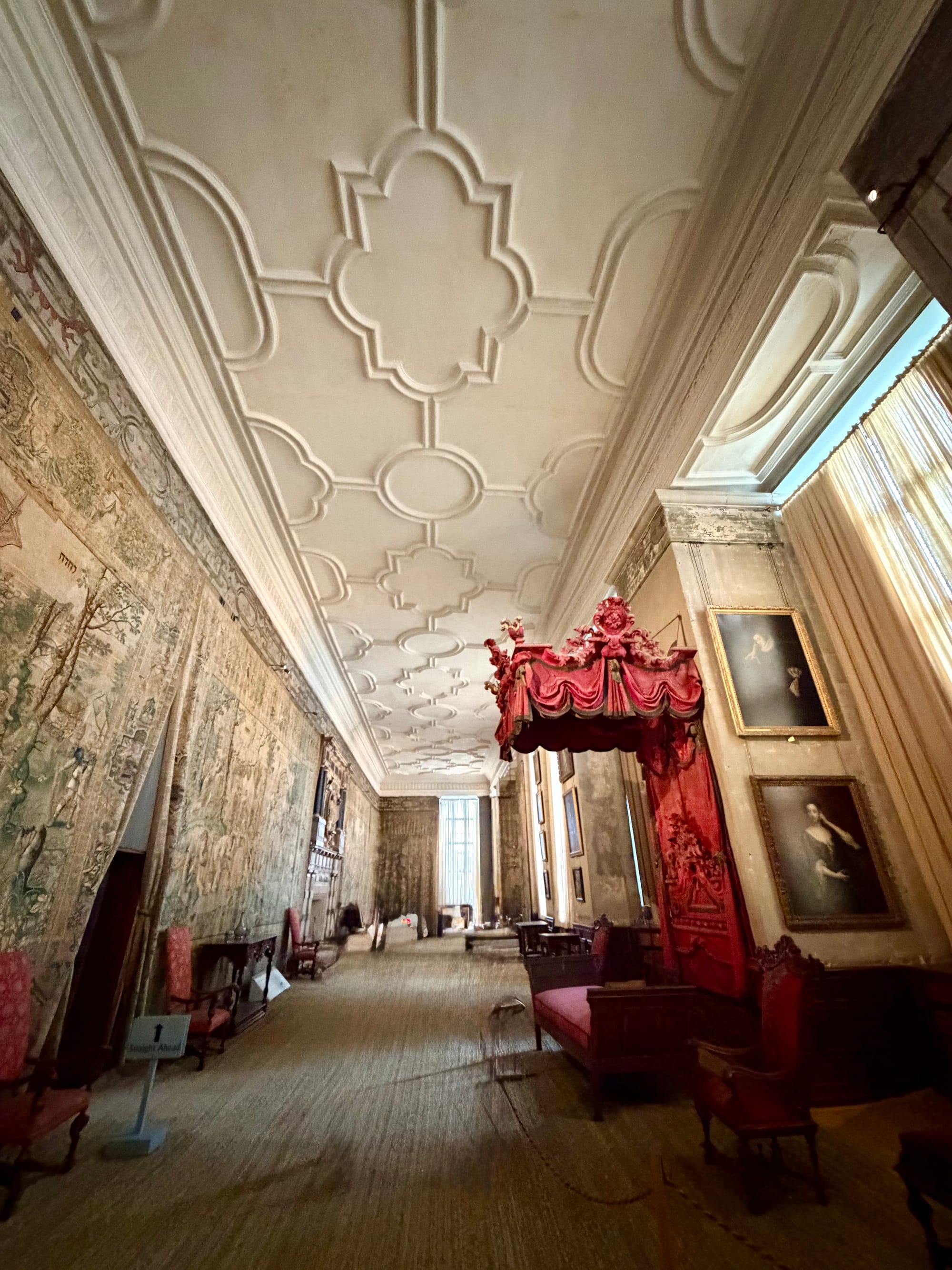
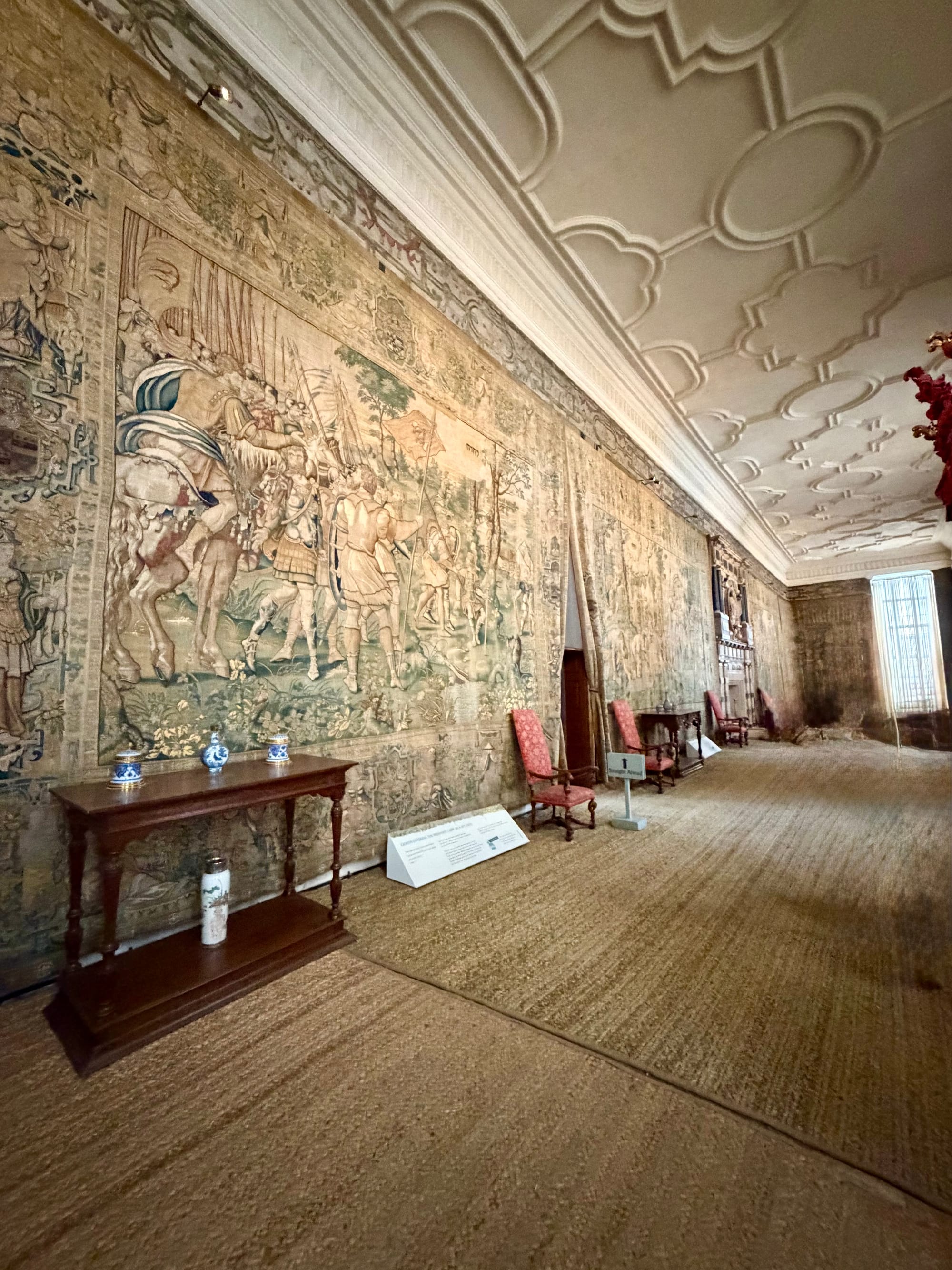
🪡 The Long Gallery
There is a particular stillness in the long gallery.
Light runs along its length. The ceiling holds its pattern above you, calm and repetitive. Portraits observe without pressing themselves forward. The red canopy stands like a residue of ceremony, as though something has just concluded or is about to begin.
Nothing moves. And yet everything feels arranged.
It is here that weaving becomes spatial rather than textile. The room does not overwhelm like the tapestries. Instead, it orders. It places the body within a sequence of perspectives. It draws you forward, not by force, but by alignment.
To govern, in this register, is to compose space so that movement becomes inevitable.
The weaver, in Plato’s sense, is not only binding people together. He is arranging the conditions under which they appear to one another.
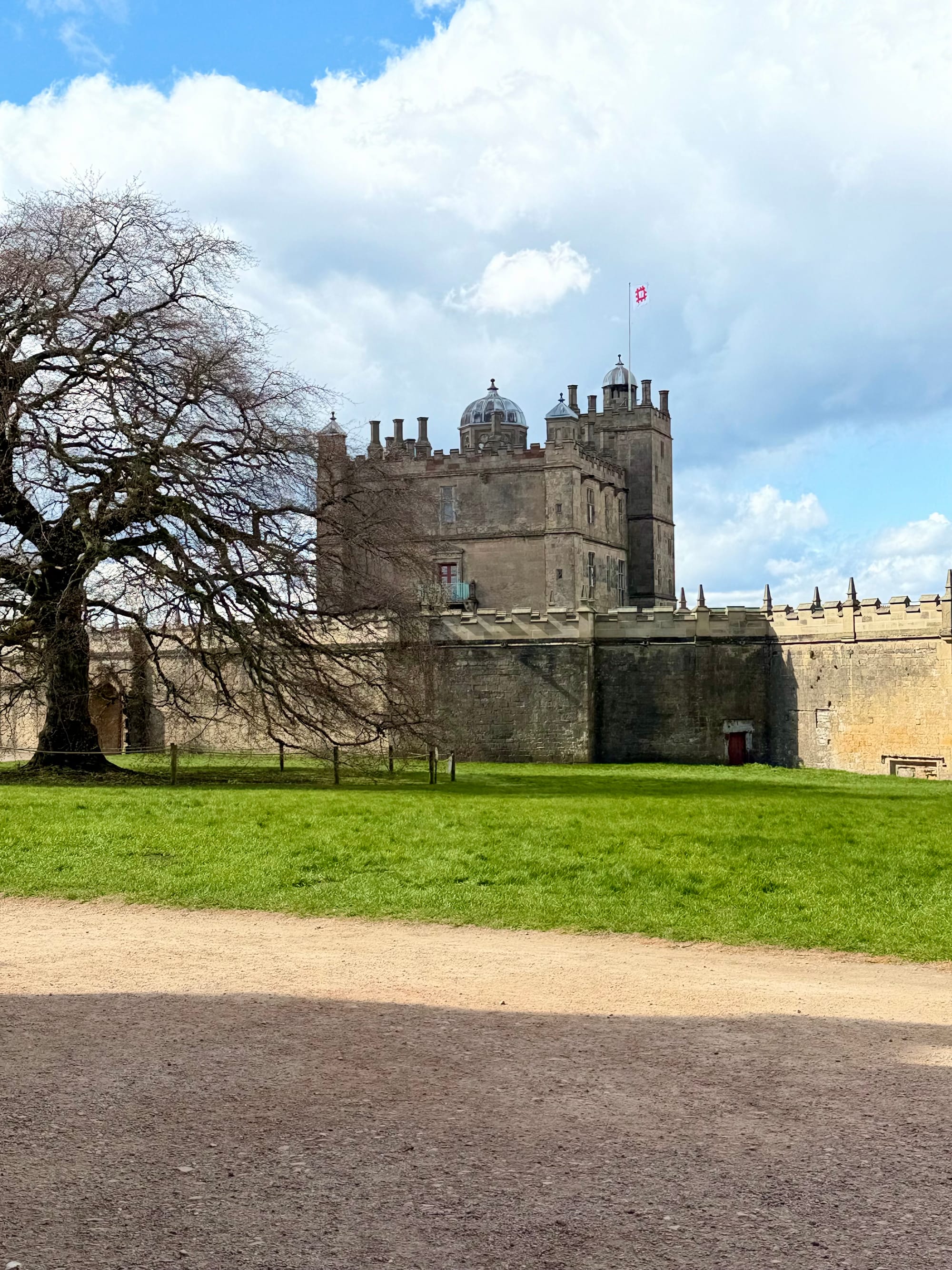
🏰 Bolsover: The Stage of Power
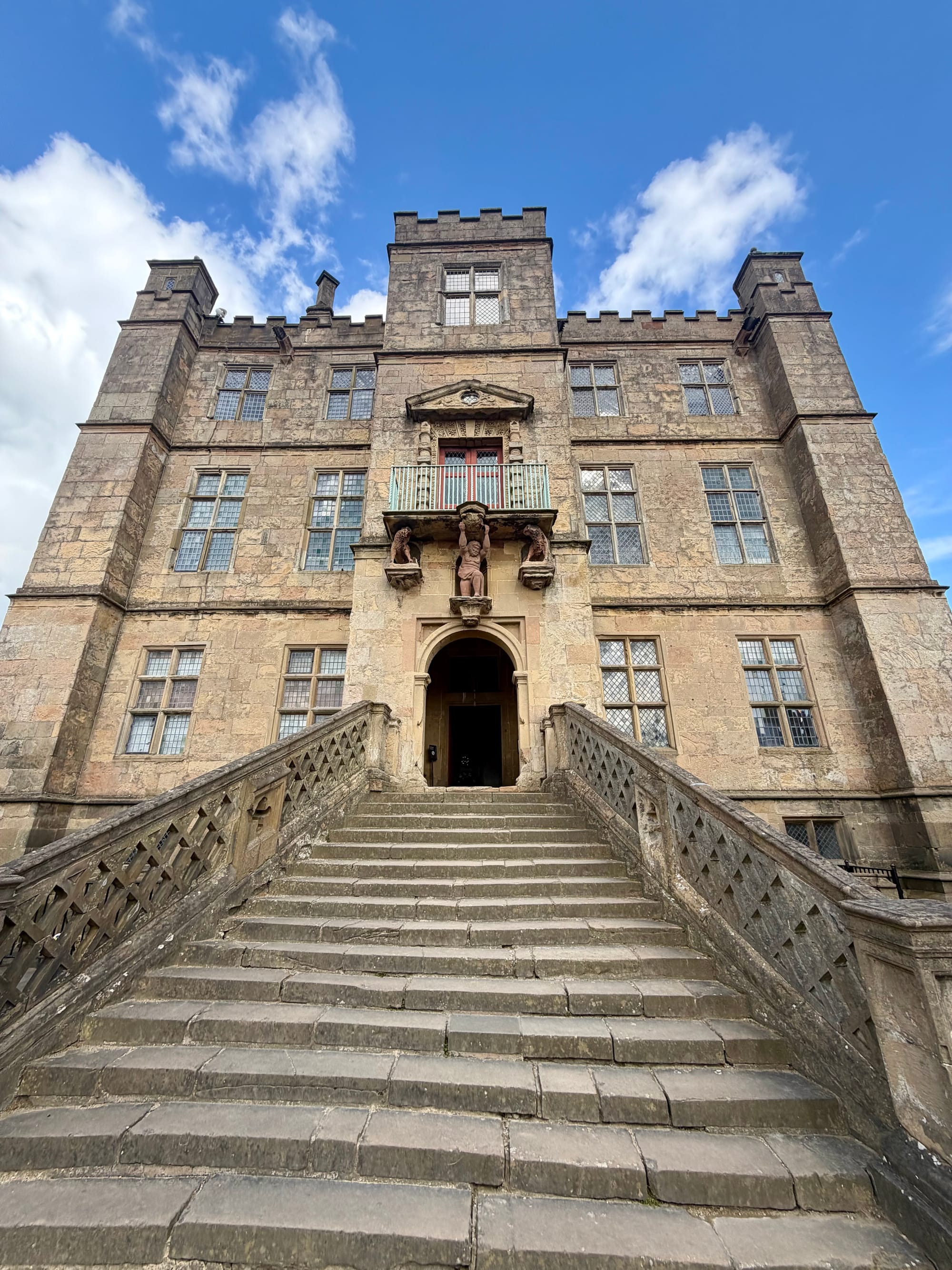
Bolsover arrives differently.
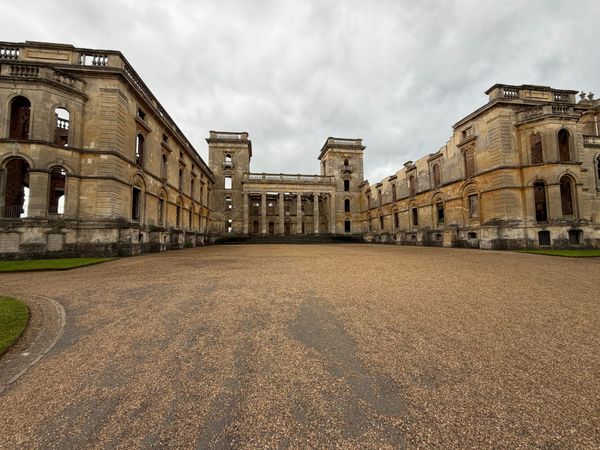
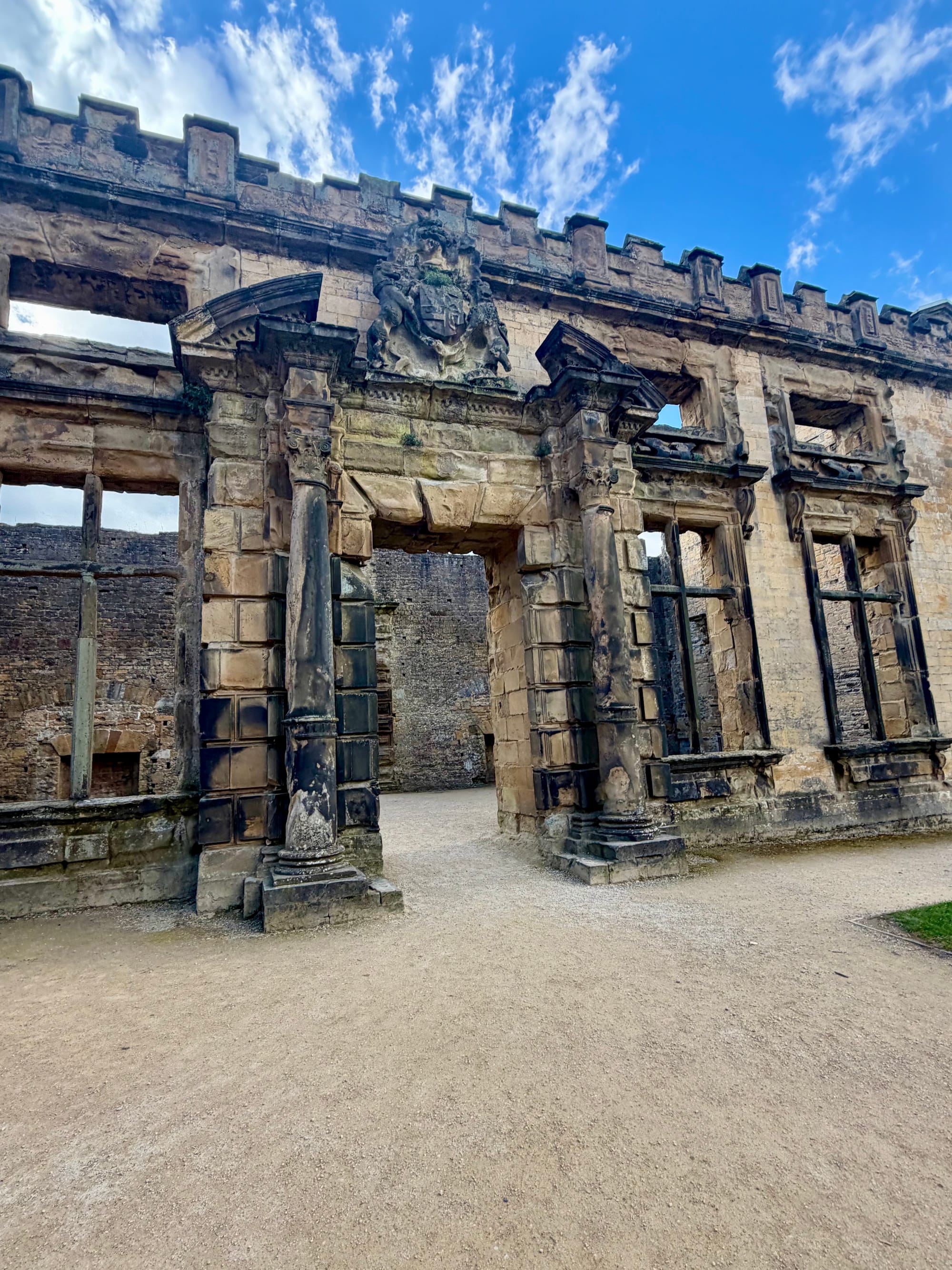
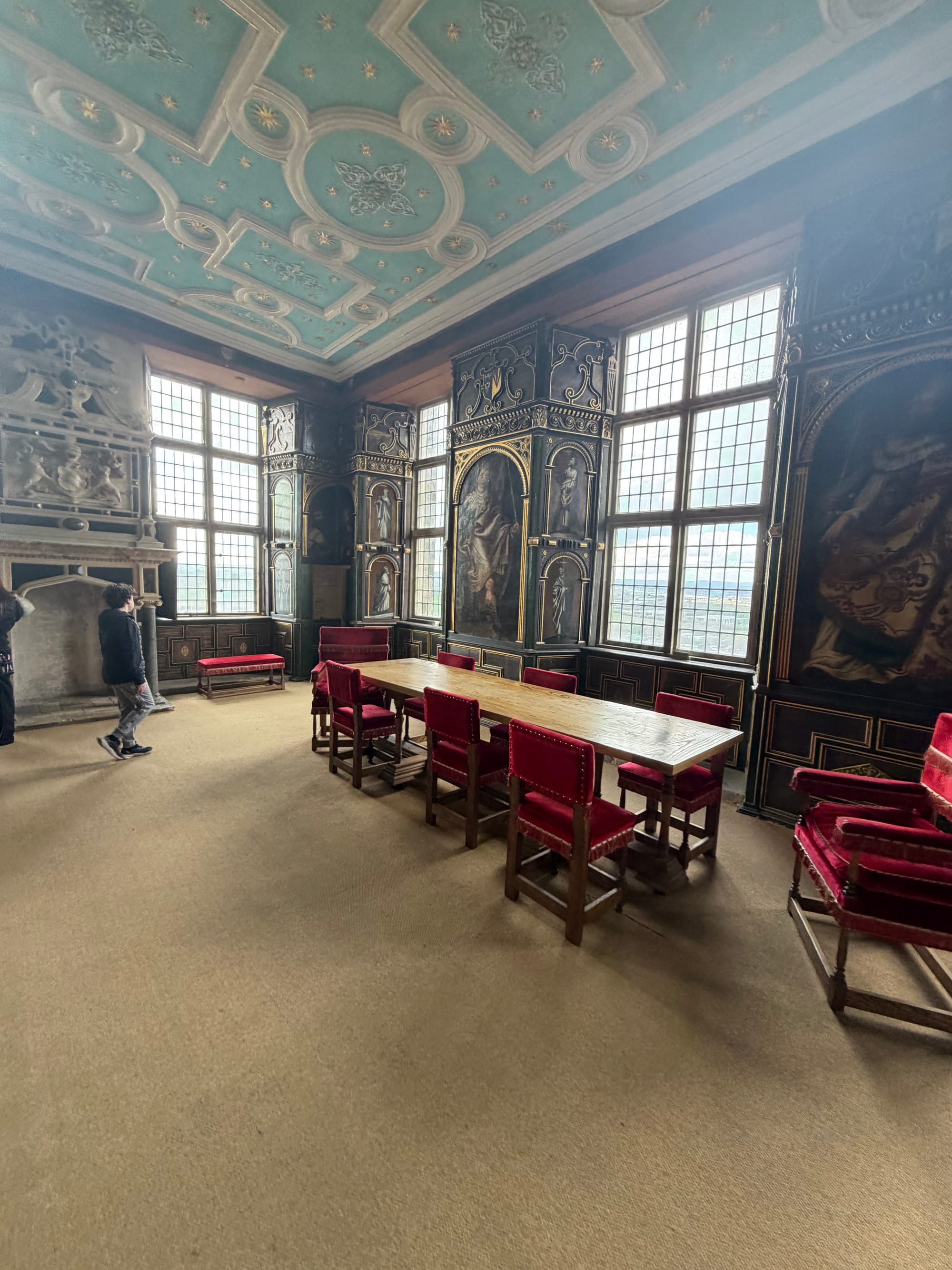
Where Hardwick encloses, Bolsover exposes. The sky is present. The walls are broken. The stone carries the memory of fire, absence, and reconstruction.
And yet, it is not simply a ruin.
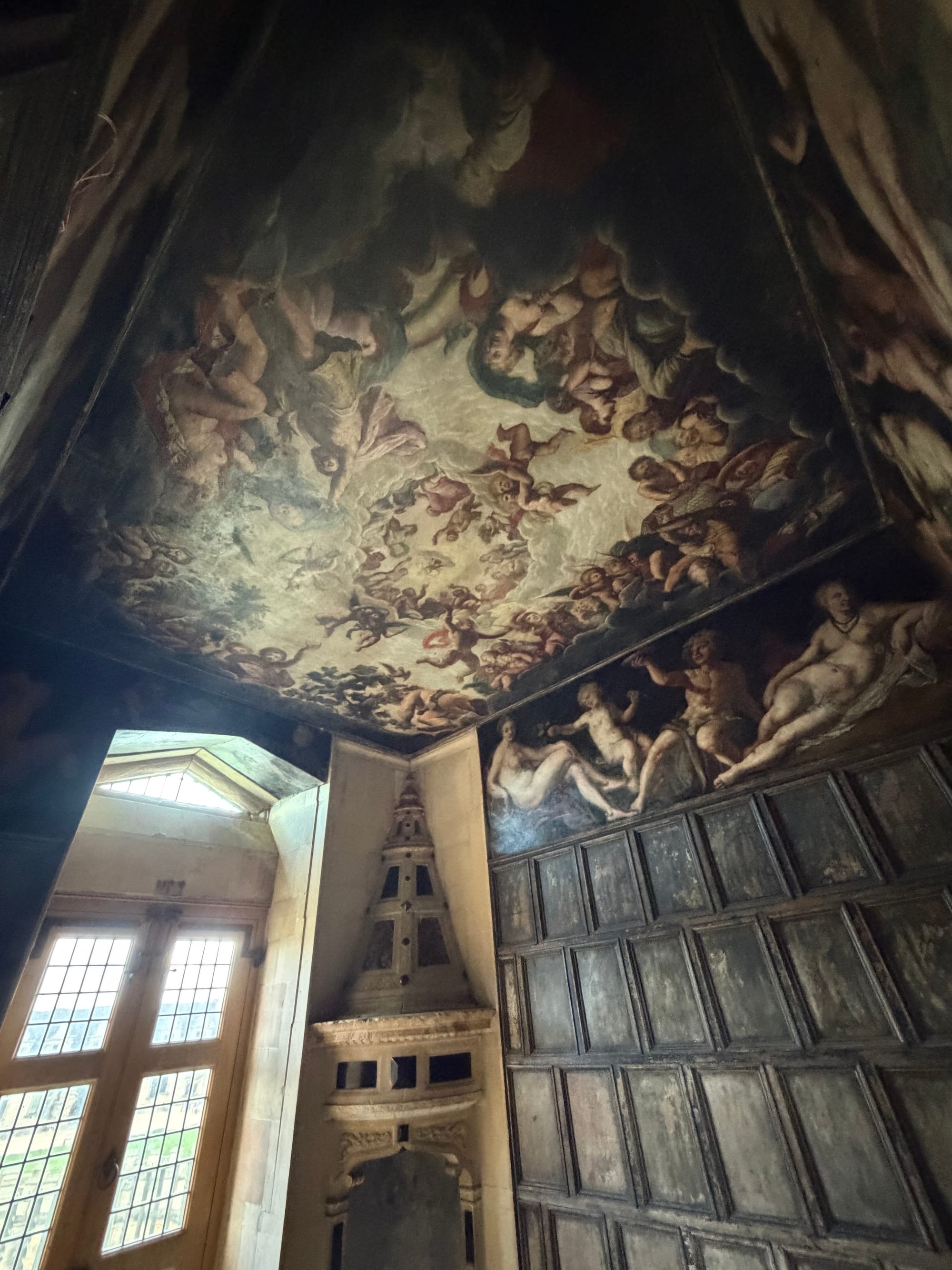
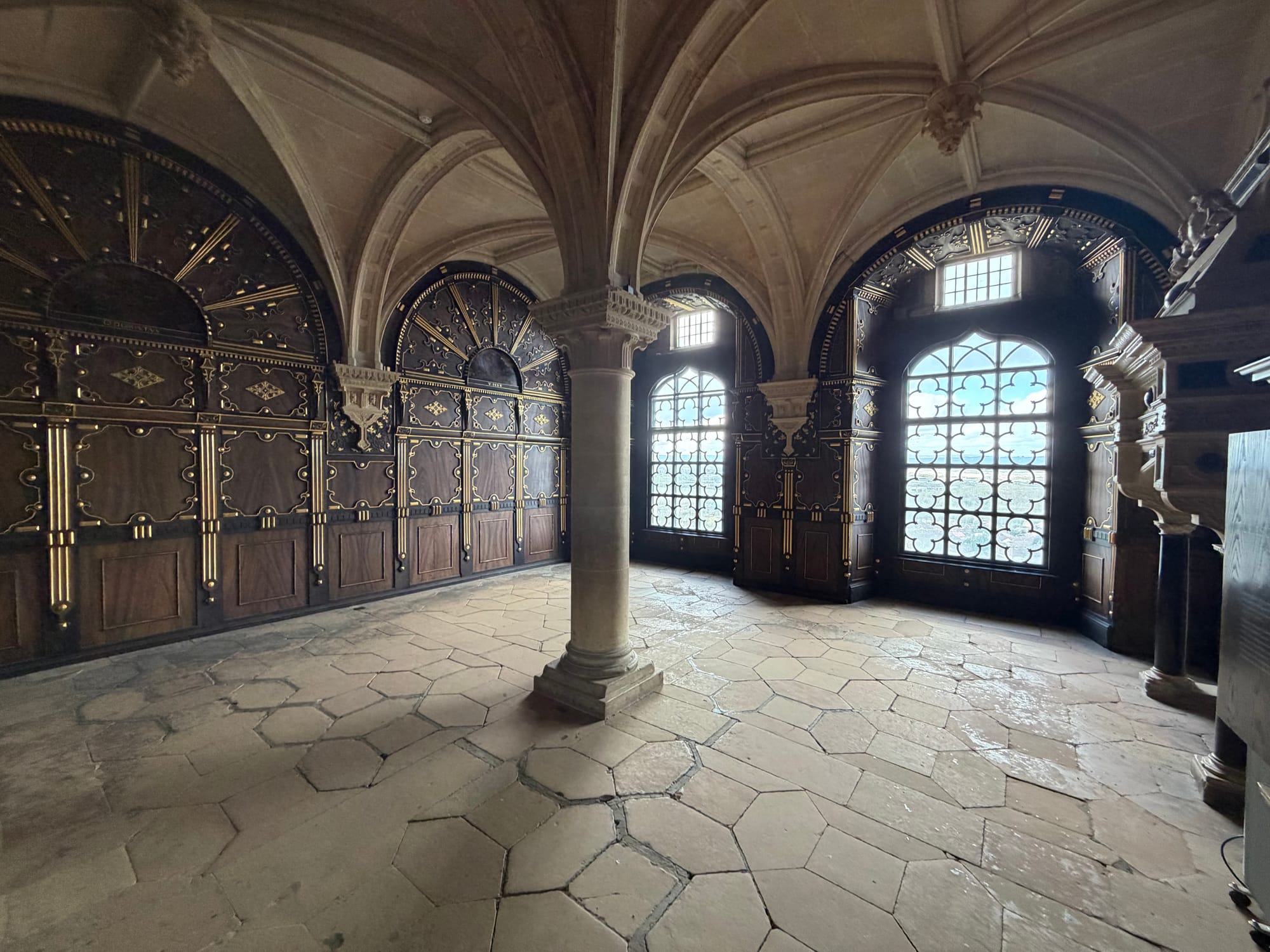
The Little Castle is too deliberate for that. It is theatrical. Rooms open with intention. Ceilings dissolve into painted heavens where bodies float, turn, and descend. The architecture frames not only the landscape, but the imagination.
This is not weaving in the sense of enclosure. It is weaving as staging.
The Cavendish vision here is not to absorb difference into a fabric, but to display it, to choreograph it. The visitor moves through contrasts: ruin and restoration, enclosure and exposure, interior and horizon. Each transition is controlled.
If Hardwick is the loom, Bolsover is the performance that follows.
🌫️ Threads and Ruins
What The Fabric of Rule
struck me, moving between the two, is that neither place believes in stability as a given.
Hardwick holds things together because they might otherwise fall apart. Bolsover stages coherence against the visible fact of fragmentation.
Both are responses to the same problem.
Plato understood this with unsettling clarity. The fabric of a political community is never finished. It must be continually rewoven. Threads fray. Tensions shift. The weaver does not produce permanence, only temporary coherence.
Walking through these rooms, that thought becomes physical.
The tapestries fade. The stone erodes. The painted bodies on Bolsover’s ceiling still move, but their colours have dimmed. Even the most careful composition yields, eventually, to time.
And yet the impulse remains.
To bind. To arrange. To hold.
🌾 Afterthought
We speak easily now of systems, structures, institutions. The language has become abstract.
But these places remind us that politics was once understood differently. Not as something engineered, but as something made with the hands. Something that required touch, judgement, repetition.
Something that could fail if pulled too tightly, or unravel if neglected.
A fabric.
And perhaps that is why the image endures.
Because even now, beneath the language of law and policy, there remains the quieter question:
not how to rule,
but how to hold things together.