🌿 Greenham Common: On What Is Given and What Is Made
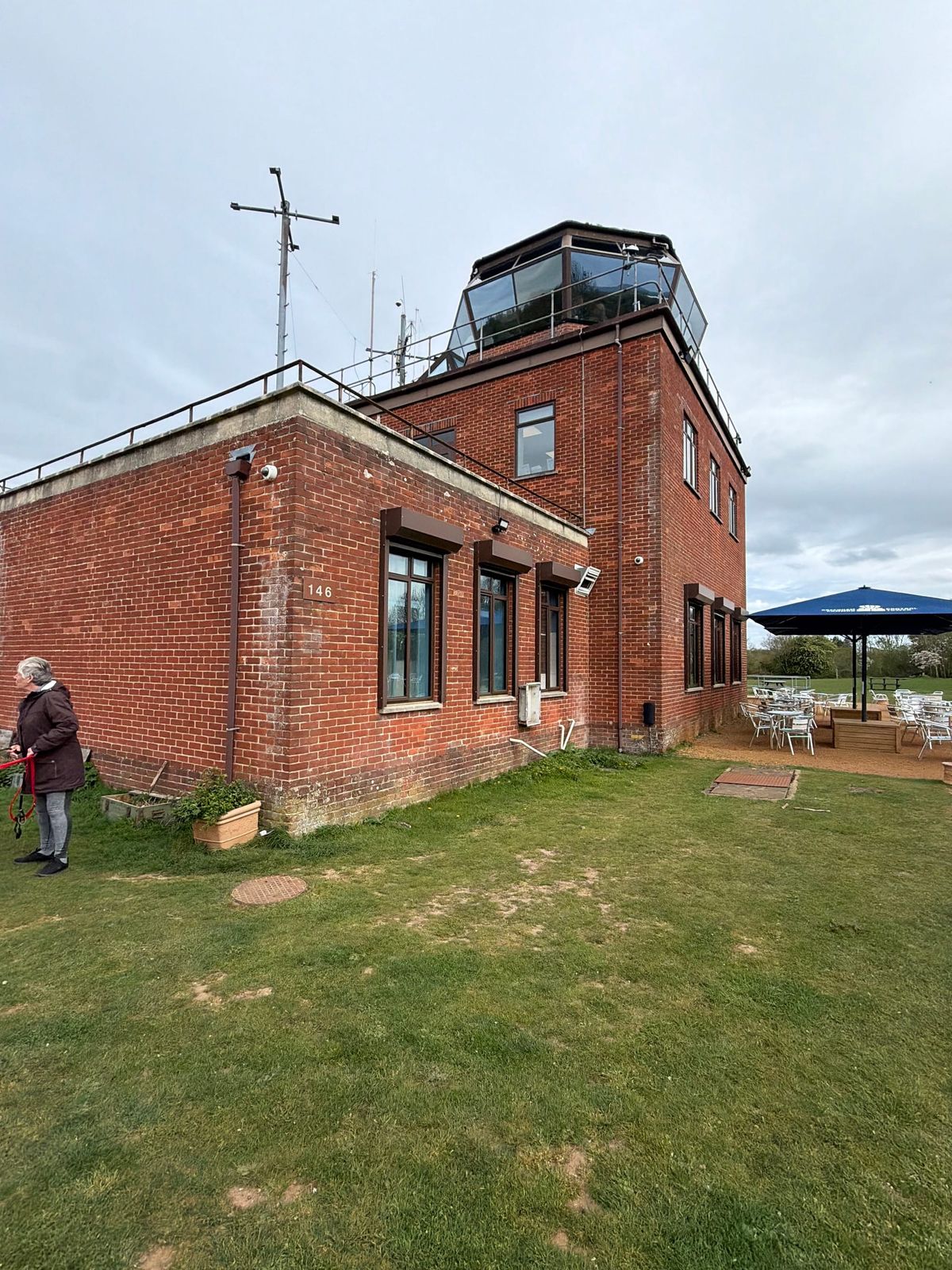
There are places that present themselves as landscapes, and places that resist that reduction.
Greenham Common belongs to the latter.
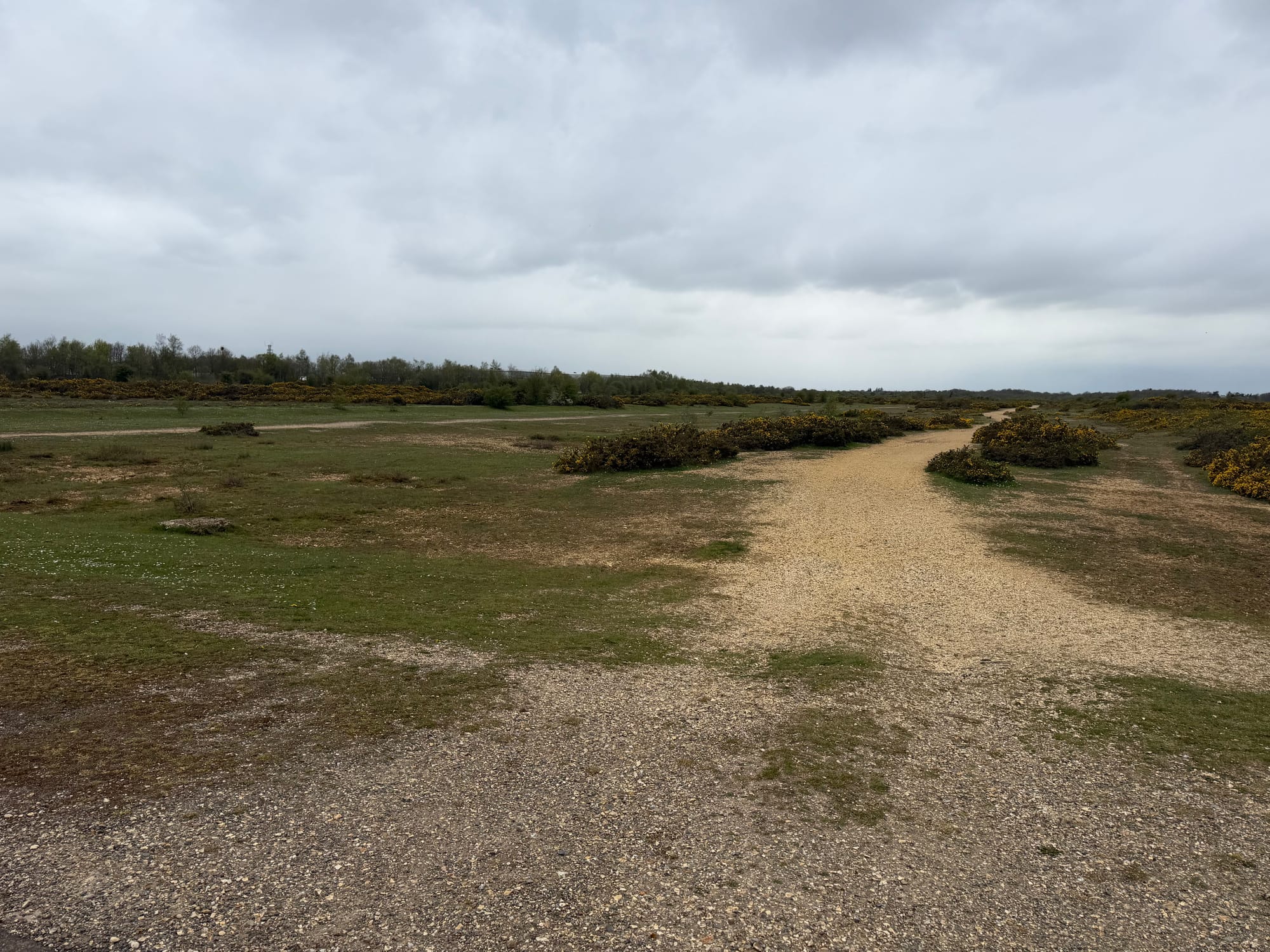
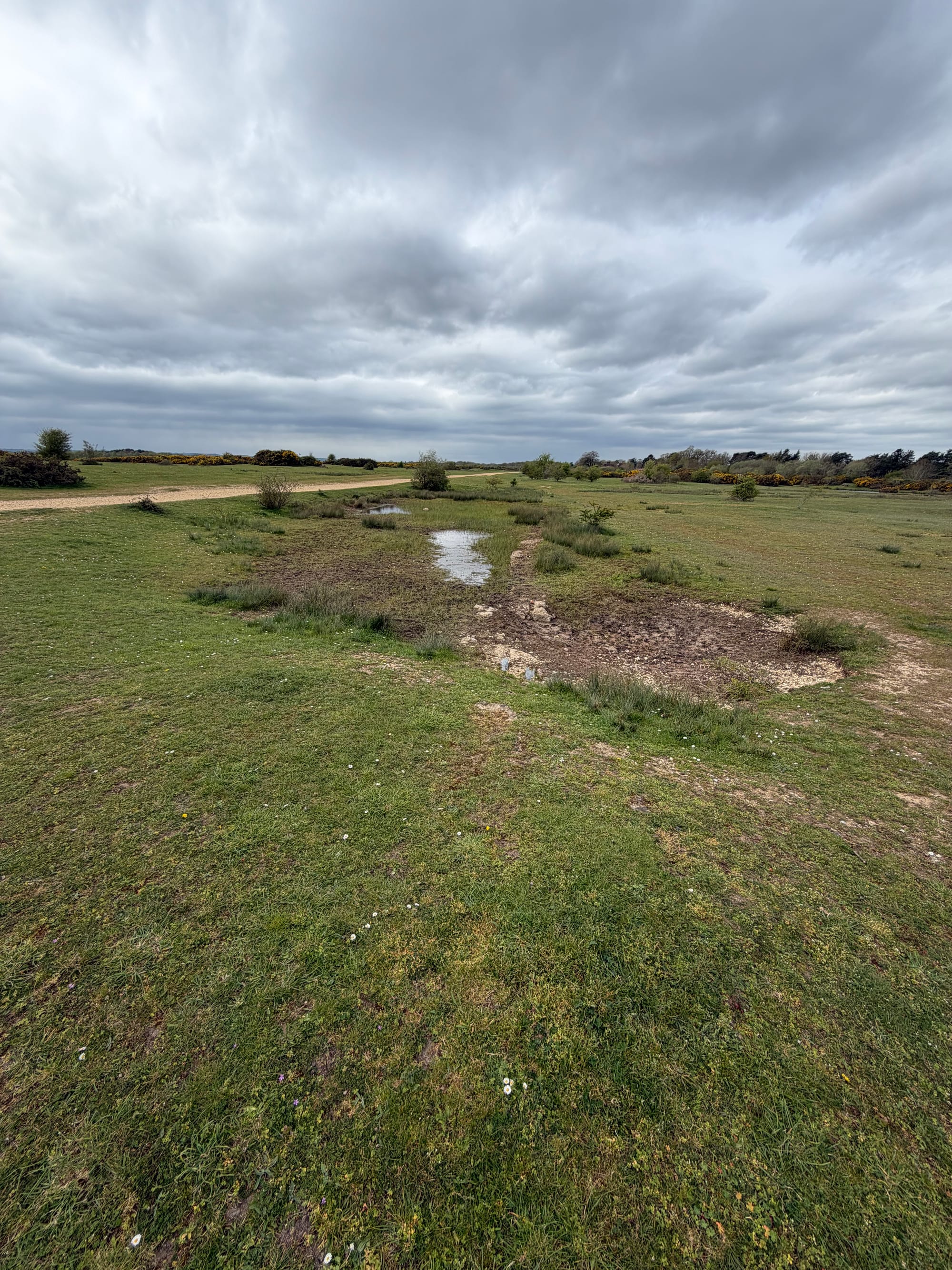
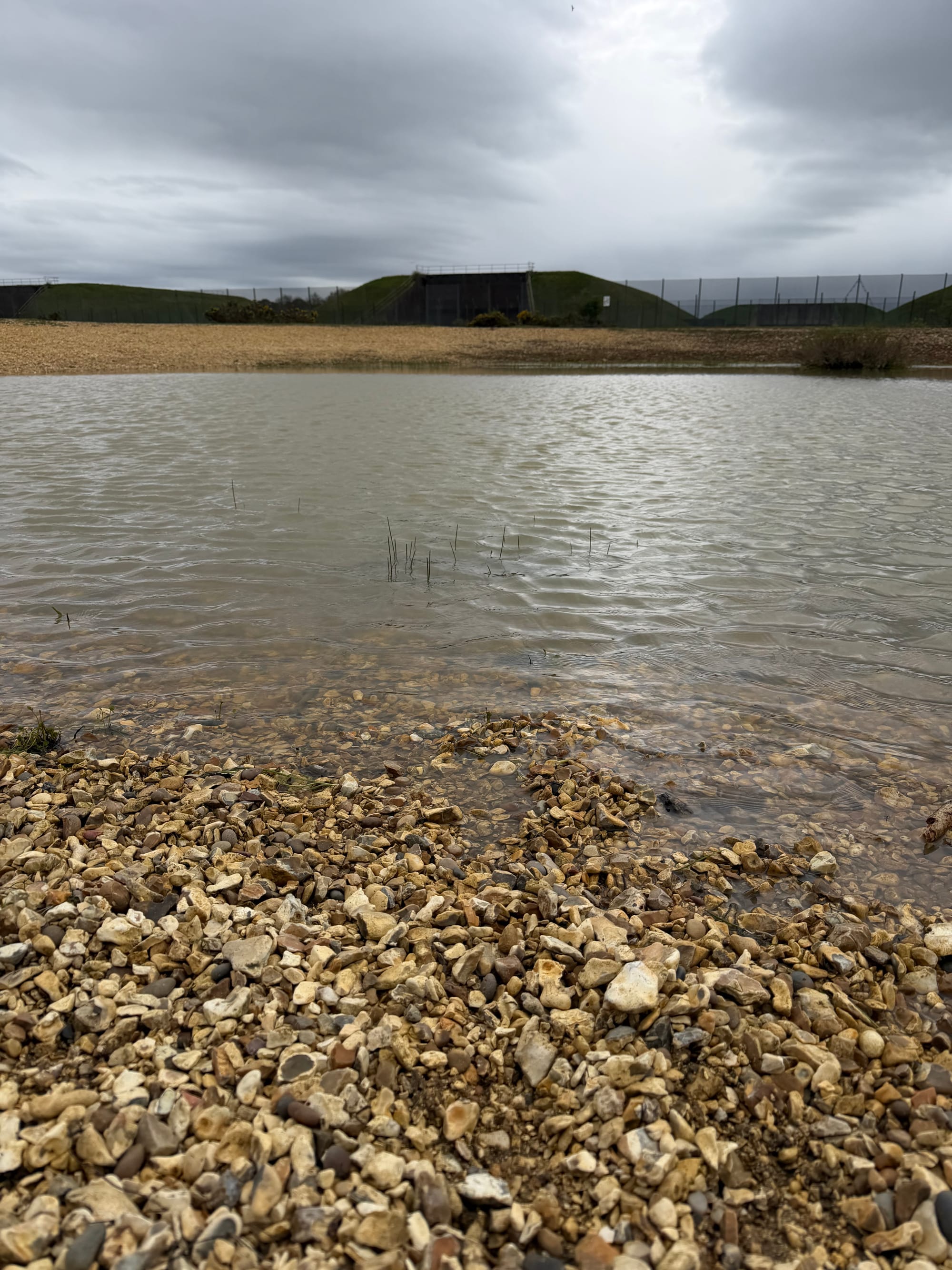
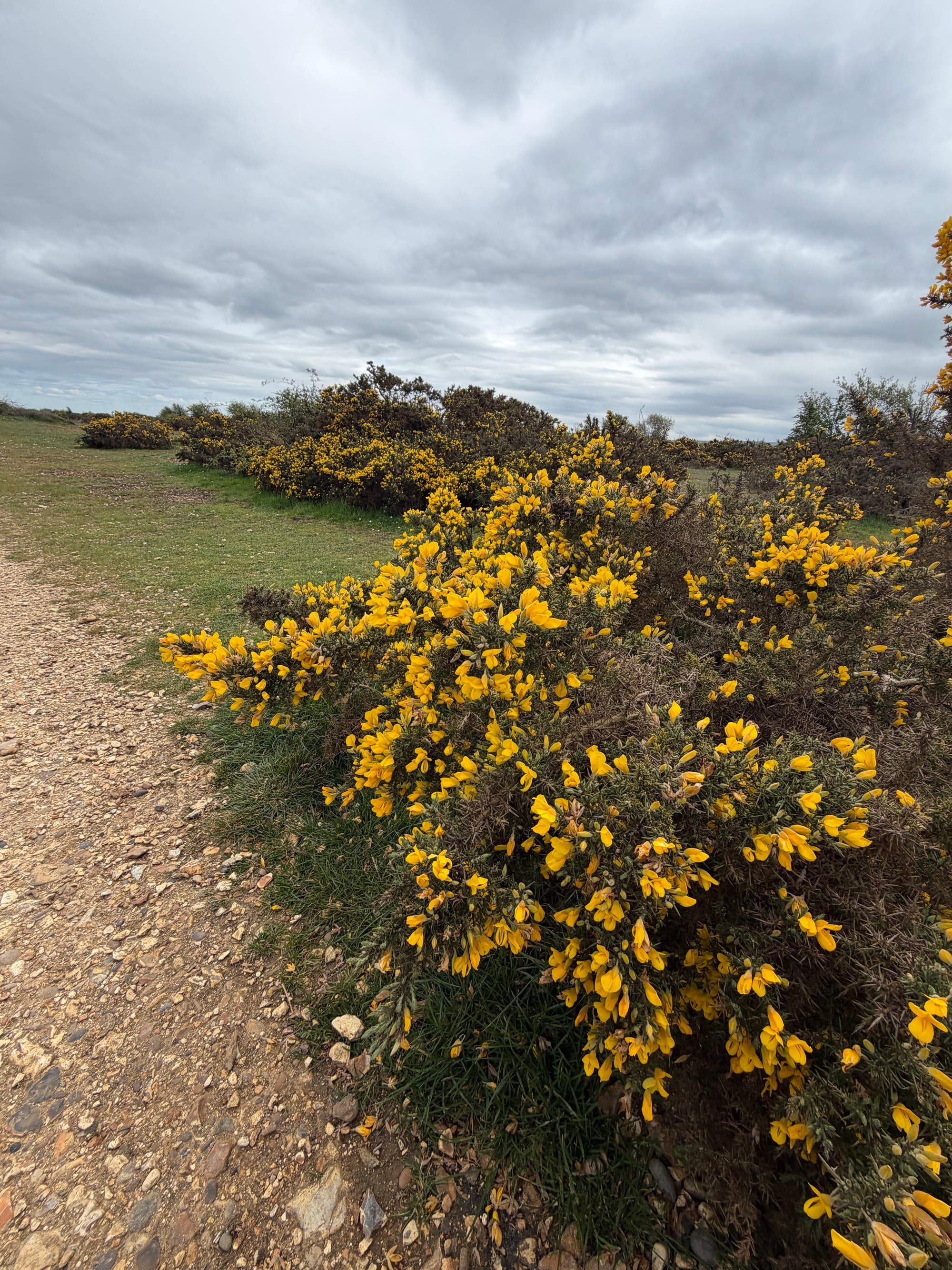
At first glance, it appears almost deliberately unremarkable. A wide, exposed heath. Gravel paths tracing the faint geometry of former runways. Pools of water collecting where the ground has not quite decided what it wishes to be. The gorse flowers, intensely yellow, punctuate an otherwise restrained palette.
Nothing here declares its past. There is no insistence, no attempt to arrest the passer-by. One is free to walk, and just as free not to notice.
And yet, this absence of insistence is not original to the place.
Between 1942 and the late twentieth century, Greenham was not a landscape but an instrument: first an airfield, then a site for the deployment of nuclear cruise missiles at the height of the Cold War. The ground was measured, engineered, secured. It existed not for dwelling, but for deterrence.
It was, in other words, structured by fear.
Fear not as passing emotion, but as organisation. As the principle according to which space is arranged, movement controlled, futures anticipated and contained.
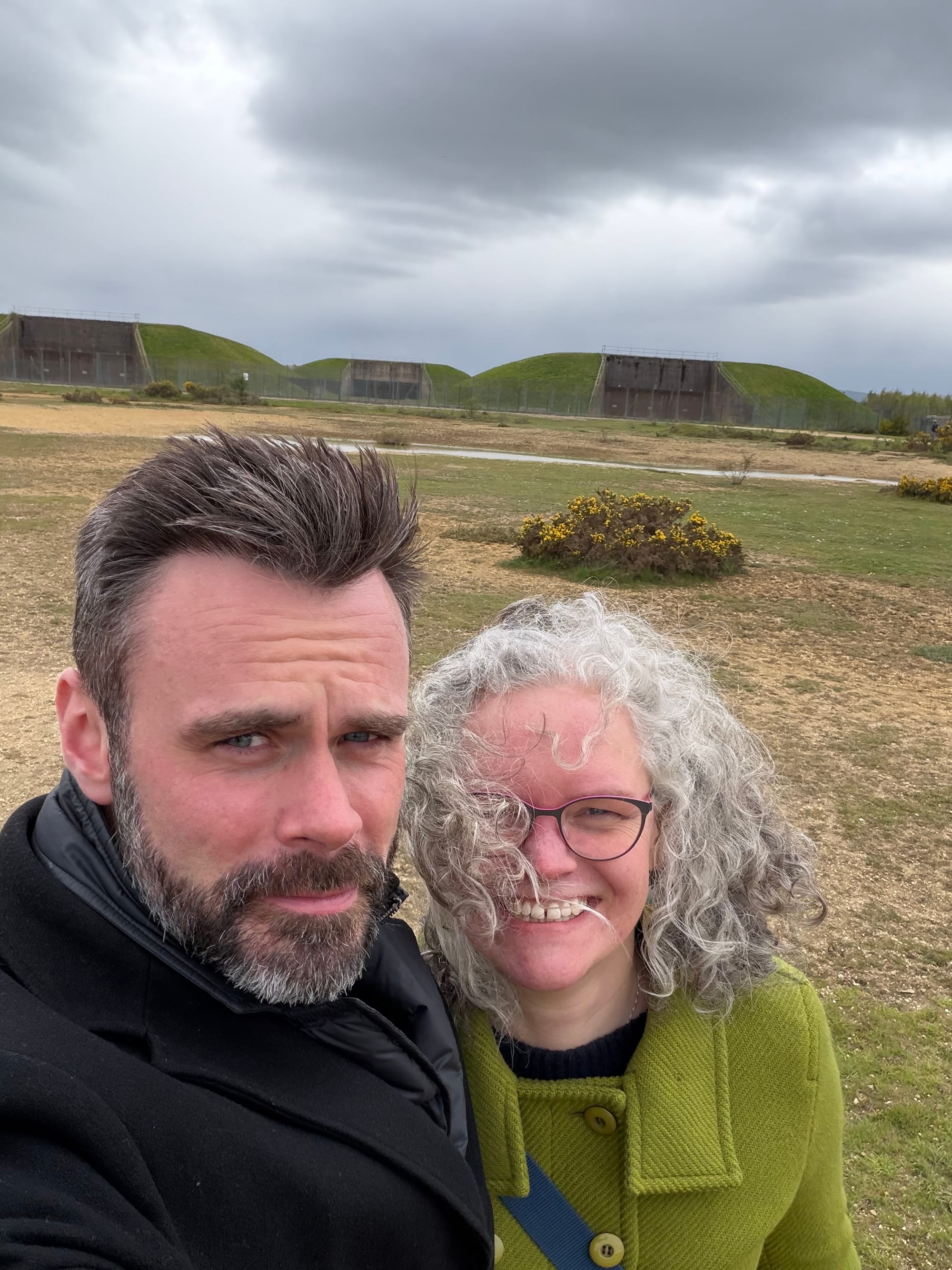
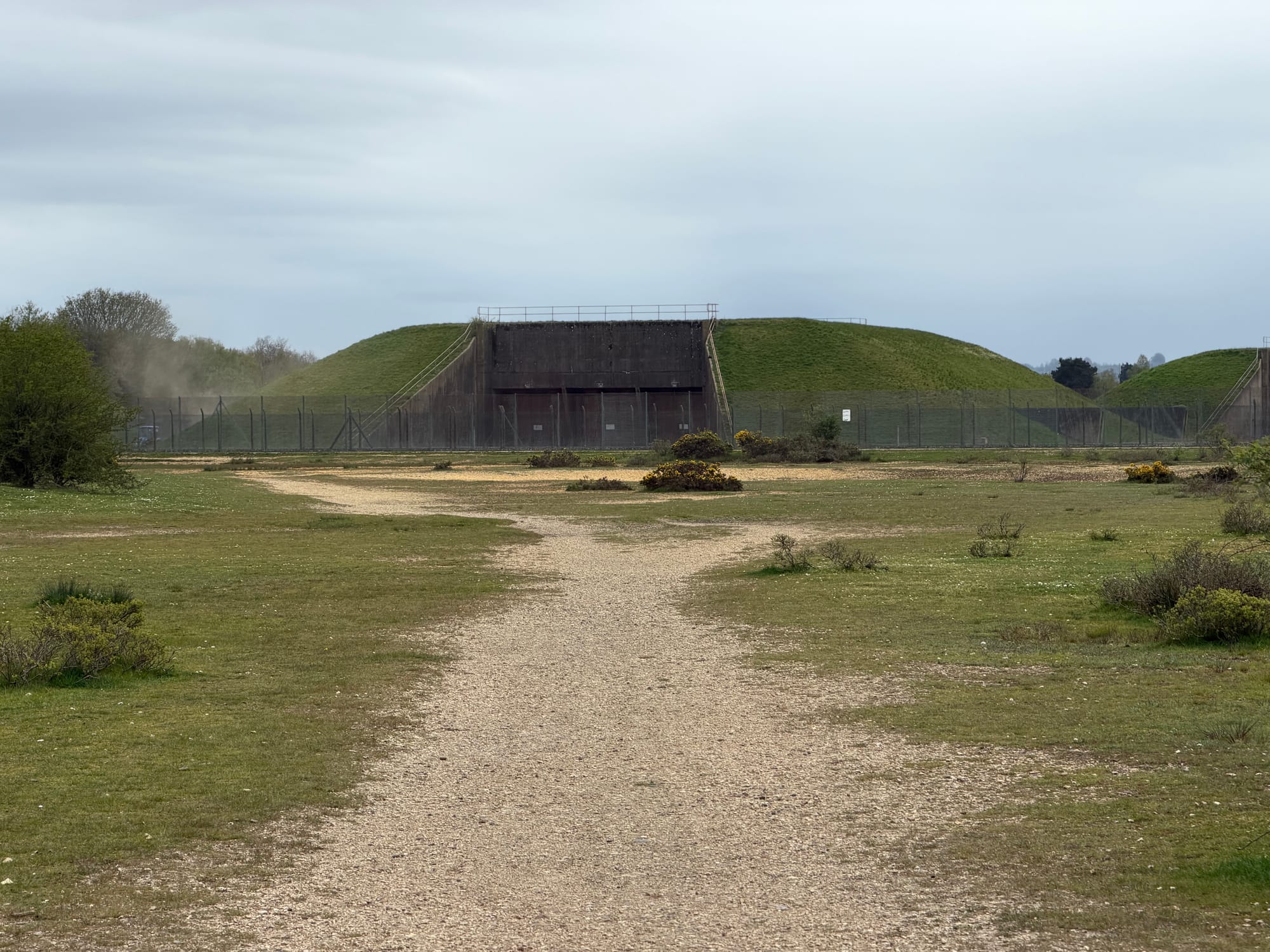
What remains now are the earth-covered bunkers. They rise gently, almost apologetically, from the ground, as though they had always belonged there. One is tempted to read them as geological rather than historical.
The bunkers resemble the Chocolate Hills of Bohol, though where those hills are the patient work of time, these are the residue of intention, softened into landscape.
What was once made now appears given. What once demanded attention now recedes into it.
👩🏫 Maria, and the distance from fear
I walked this place with Maria, a friend and my former German teacher.
We did not speak about the Cold War. That absence, in retrospect, seems more significant than its presence would have been.
Instead, we spoke about something simpler: the difference between boredom and fear.
Fear sharpens the world. It gathers attention, concentrates it, renders everything immediate. Under fear, nothing is neutral. Everything presses.
Boredom disperses it. It allows things to recede, to lose their urgency, to become part of a background that no longer demands response.
And yet, as we walked, the distinction became less secure.
For what is this place now?
Nothing here frightens. There is no urgency, no demand. The sky remains indifferent. The paths open without direction. It is possible to walk for some time without encountering anything that insists upon being seen.
And yet the ground itself has been organised around the anticipation of catastrophe.
We did not name that.
But it remained.
Maria’s presence did not introduce history as subject, but as condition. There was no need to speak of what this place once held. It shaped what could be said without appearing within it.
And this introduces a quieter difficulty.
That what I experience as calm may not be the absence of fear, but its withdrawal into the background. That even this sense of openness may have been prepared in advance, furnished with the forms through which I recognise it.
👣 The path, and what it reveals
At one point, a seeming path presenting a short-cut to the tower appeared.
One route was clearly marked, gravelled, sanctioned. The other was less certain. It appeared to continue, but without confirmation. There were signs, somewhere, about nesting birds. Not here, not directly, but enough to linger in the mind.
We hesitated.
Nothing prevented us from taking the other route. There was no barrier, no enforcement, no immediate consequence. And yet the possibility of transgression was enough to slow us, to make the ground itself feel uncertain.
The path appeared given.
But the hesitation revealed it as something made, structured in advance, even where it no longer announced itself.
We did not decide at once.
It was only gradually, and almost without articulation, that we encouraged one another forward. Not in defiance, exactly, but in a kind of shared testing. A step taken, then another. The path did not resist us. It simply did not confirm us either.
Even then, it did not feel like freedom.
Only like the loosening of something that had already been holding.
And when the uncertain ground gave way again to gravel, we returned to it without discussion.
The line, once reoffered, was taken.
What had been questioned re-established itself. Not imposed, but accepted. As though the moment outside it could not sustain itself for long.
It is difficult to remain outside what has already taught you how to move.
⚖️ What remains when no one is watching
What operates here is not fear in its most visible form, but something quieter.
In Bentham’s account of the Panopticon, power does not require constant presence. It functions most effectively when it is no longer visible, when it has been internalised by those subject to it. The possibility of being seen becomes sufficient. Surveillance is replaced by self-regulation.
Greenham no longer enforces.
And yet, we remained within its lines until we did not.
Even then, the act was hesitant. Not a rejection of the rule, but a negotiation with it. The structure had not disappeared. It had simply become something we carried with us.
What Bentham describes as surveillance becomes, here, indistinguishable from boredom: a space in which nothing appears to constrain, precisely because constraint has already been absorbed.
✝️ Rilke and the discipline of remaining
In Rilke, one finds a resistance to premature clarity. The self does not originate itself, nor does it immediately understand what it receives. One must learn to remain with what does not yet yield its meaning.
To remain in a place like Greenham, where nothing insists and nothing resolves, is not passivity. It is a discipline of attention.
Fear gathers the self into focus. Boredom disperses it. But both are conditions in which something is being formed.
Boredom is not the absence of structure, but its most complete concealment. A condition in which nothing appears to demand attention because the demand has already been absorbed into the way one moves, chooses, and hesitates.
Neither is entirely one’s own.
🕊️ What persists without appearing
From 1981, Greenham became the site of the Women’s Peace Camp, a sustained protest against nuclear deployment. It did not oppose fear with spectacle, but with duration. It remained.
And yet, standing there now, one encounters almost none of this directly.
There is no monument that insists upon interpretation. No narrative that declares itself. The protest, like the missiles it opposed, has passed into the ground.
What remains is not absence, but transformation.
What shapes most decisively no longer needs to appear.
🌧️ What remains when nothing insists
We returned, without quite intending to, to our initial question.
What is the difference between boredom and peace?
Boredom appears as emptiness. Peace as fullness. But here, the distinction no longer holds.
For what appears empty may in fact be saturated with what has already taken place. A space in which nothing demands attention because the structures that once enforced attention have withdrawn from view.
We walked on.
At some point, without remarking on it, we left the clearer path again. Or perhaps we only imagined that we had. It was difficult to tell. The ground did not change, only our sense of it.
Nothing marked the transition.
And yet it felt, however faintly, like crossing something.
What appears given, what appears free, and what appears empty may all be forms taken by what no longer needs to appear at all.
I am not certain that what I felt there was peace.
It may simply be what fear becomes when it is no longer recognised. Or when one has learned not to recognise it.
What appears given is often made. What appears free is often guided. And what no longer appears at all may be what we continue to carry, even as we step beyond it.