Where the Sea Remembers
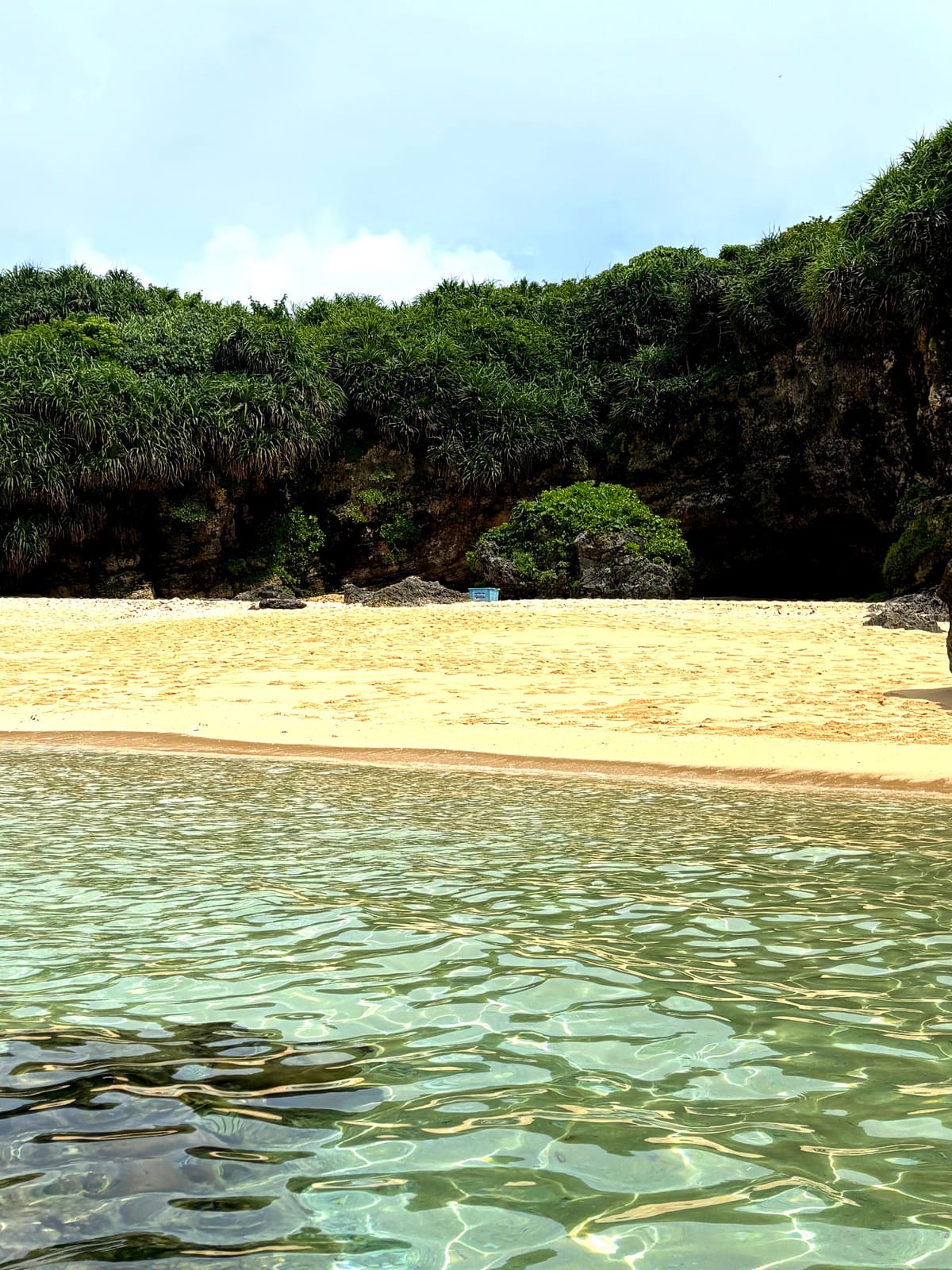
“Exile is not a matter of choice; it is an enforced state of being.”
— Edward Said
🌊 Not Quite, Never Fully
There are places on maps that refuse to be located.
Places that do not belong to the nations that name them.
Okinawa is one of them. Or more precisely: Uchinaa. A name that still resists domestication.
Edward Said taught us that exile is not the condition of leaving home, but of being placed, forcibly, within someone else’s narrative. In Okinawa, this is not metaphor. It is geography. It is policy. It is the sound of military helicopters interrupting a grandmother’s garden.
Today, more than 70% of U.S. military facilities in Japan are located in Okinawa. The prefecture comprises just 0.6% of Japan’s landmass.
Not quite Japanese.
Not Chinese.
Not American.
Never neutral.
The condition is not liminality. It is pressure.
🪨 Ruins That Do Not Explain Themselves
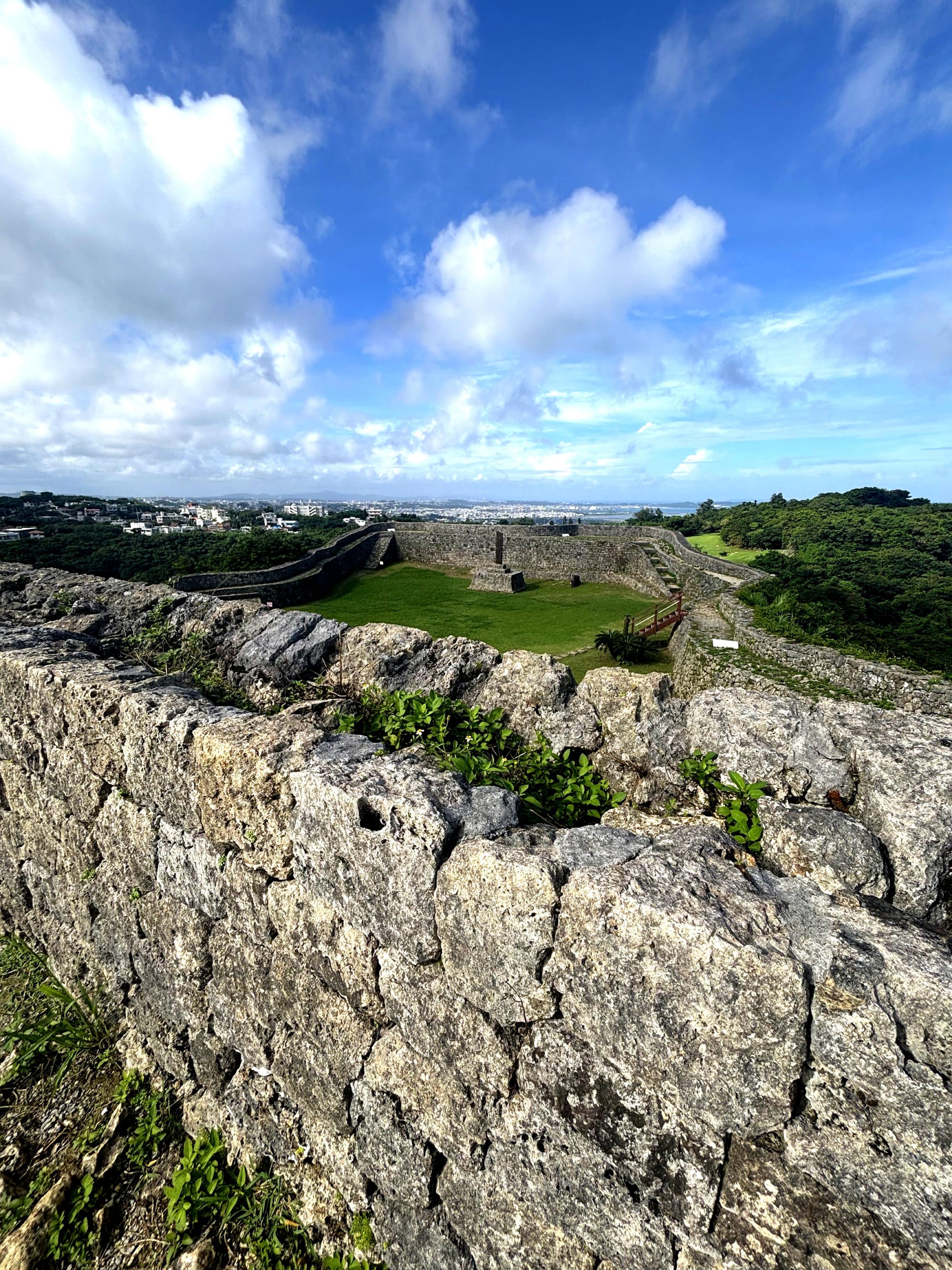
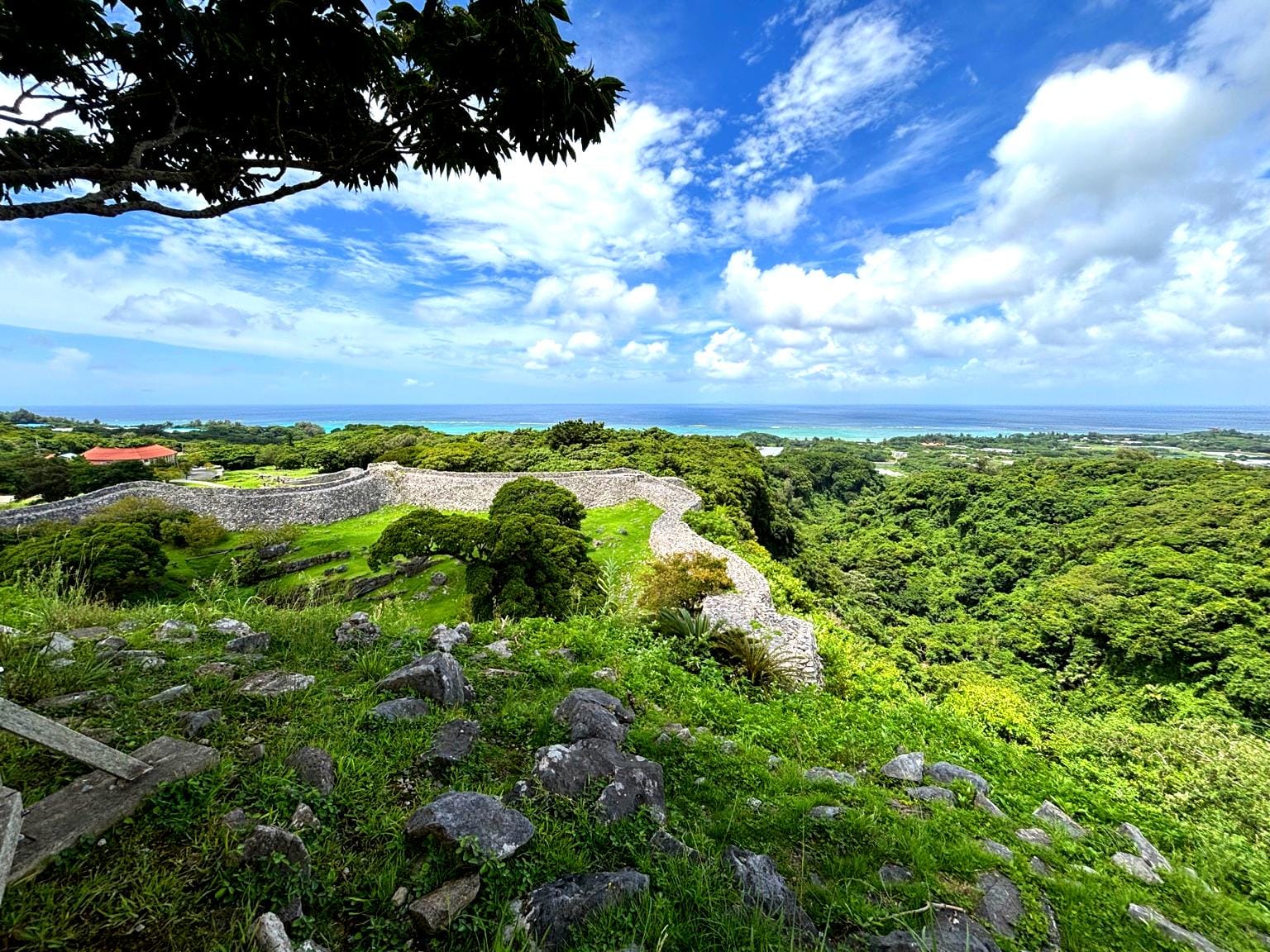
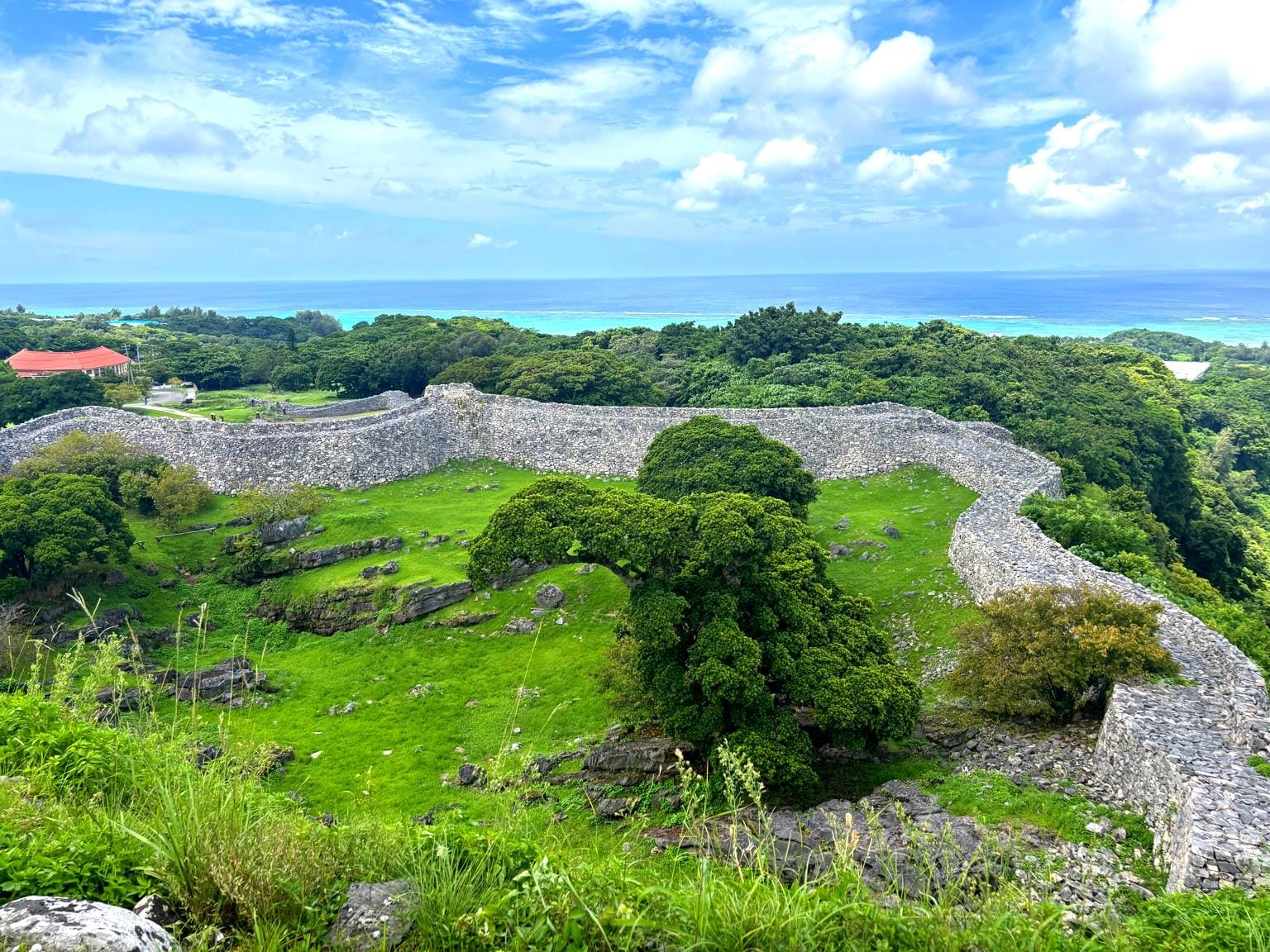
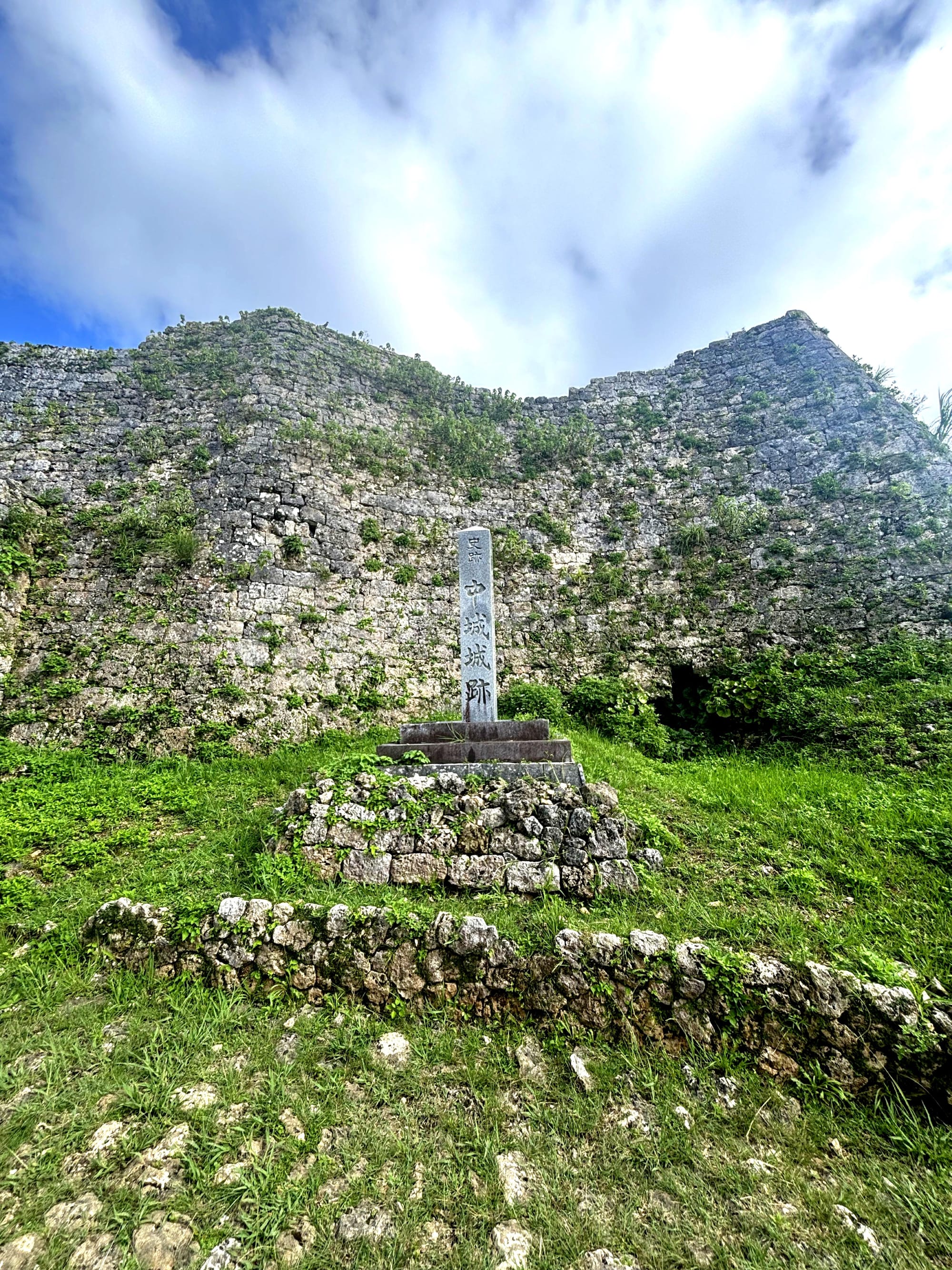
The gusuku walls, Nakagusuku, Katsuren, Zakimi, are not ruins in the romantic sense. They do not seduce. They do not align with guidebook categories. They coil with the land, roughened coral limestone that yields nothing to symmetry.
W.G. Sebald wrote of places where history lingers not as memory but as residue. The gusuku is that: not a preserved past, but an unremoved one. The stone is neither reclaimed nor abandoned. It is still functioning, though we no longer understand what that function was.
At each gate stands a pair of sashi dogs: lion-figures of Ryukyuan cosmology. One open-mouthed, one shut. Some say they inhale and exhale. Some say they speak and silence. Others say nothing.
I stood in front of one and felt no comfort. Just the sense that it had seen too much.
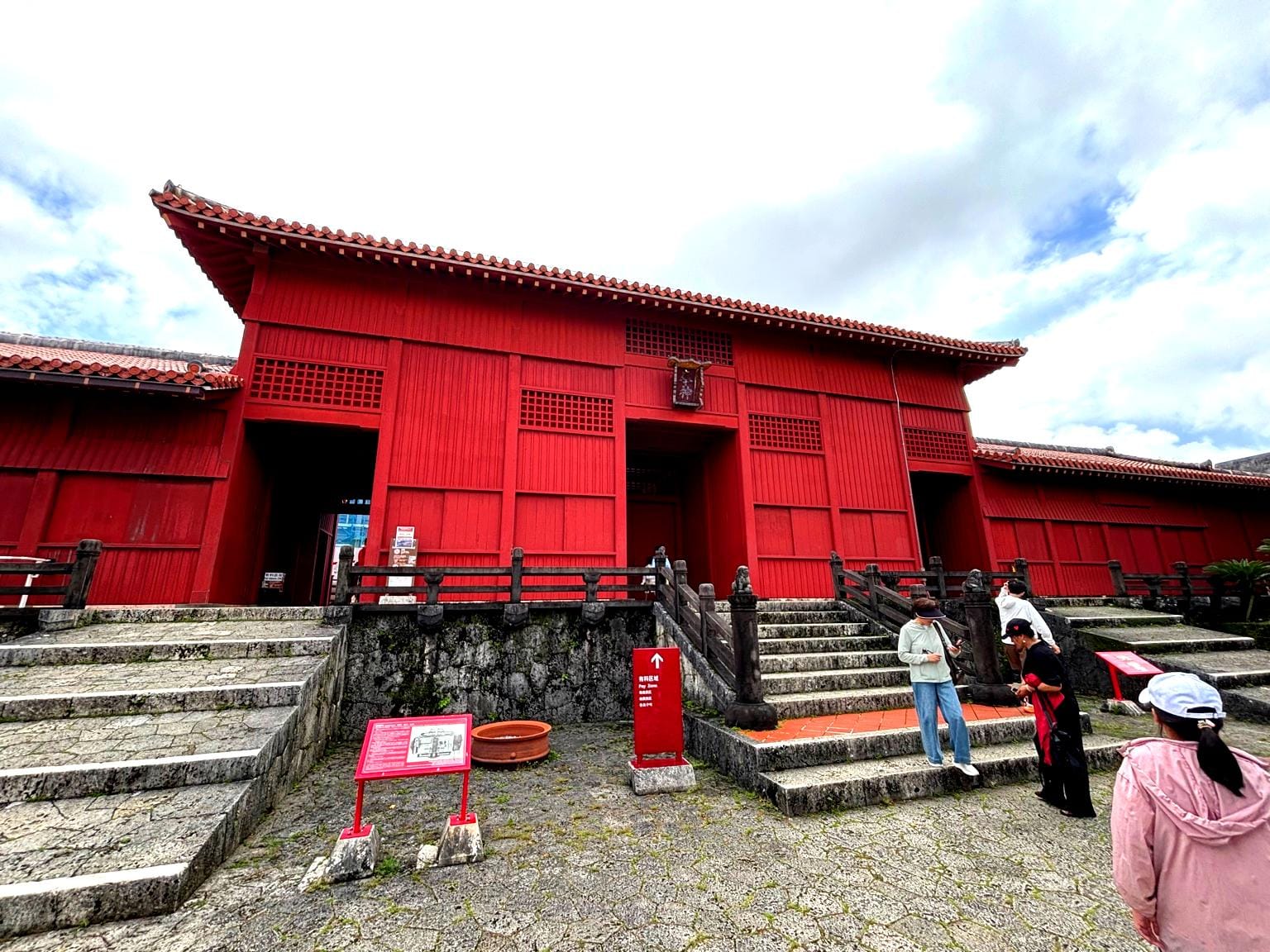
🧧 Red as a Language the State Does Not Read
Shuri Castle burns. Shuri Castle returns.
The colour of its beams, akane, vermilion, sacred red, is not heritage. It is gesture. It does not honour the past; it interrupts the present.
Glissant reminds us that creolised identities are never given; they are performed, re-performed, withheld. Shuri’s red is not for tourists. It does not invite understanding. It demands to be seen without translation.
Its visibility is not access. It is opacity.
🪷 The Garden Refuses Your Reflection
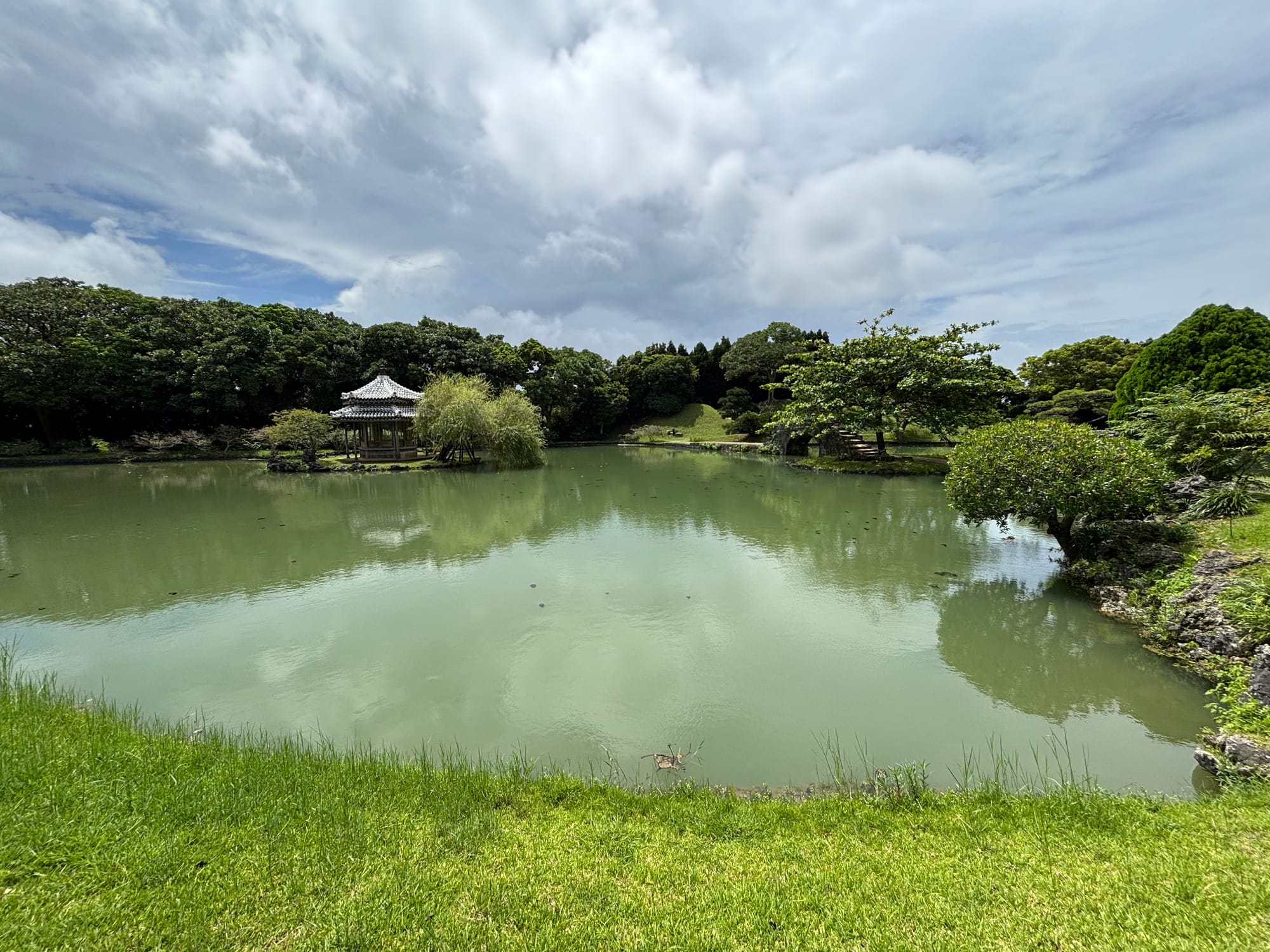
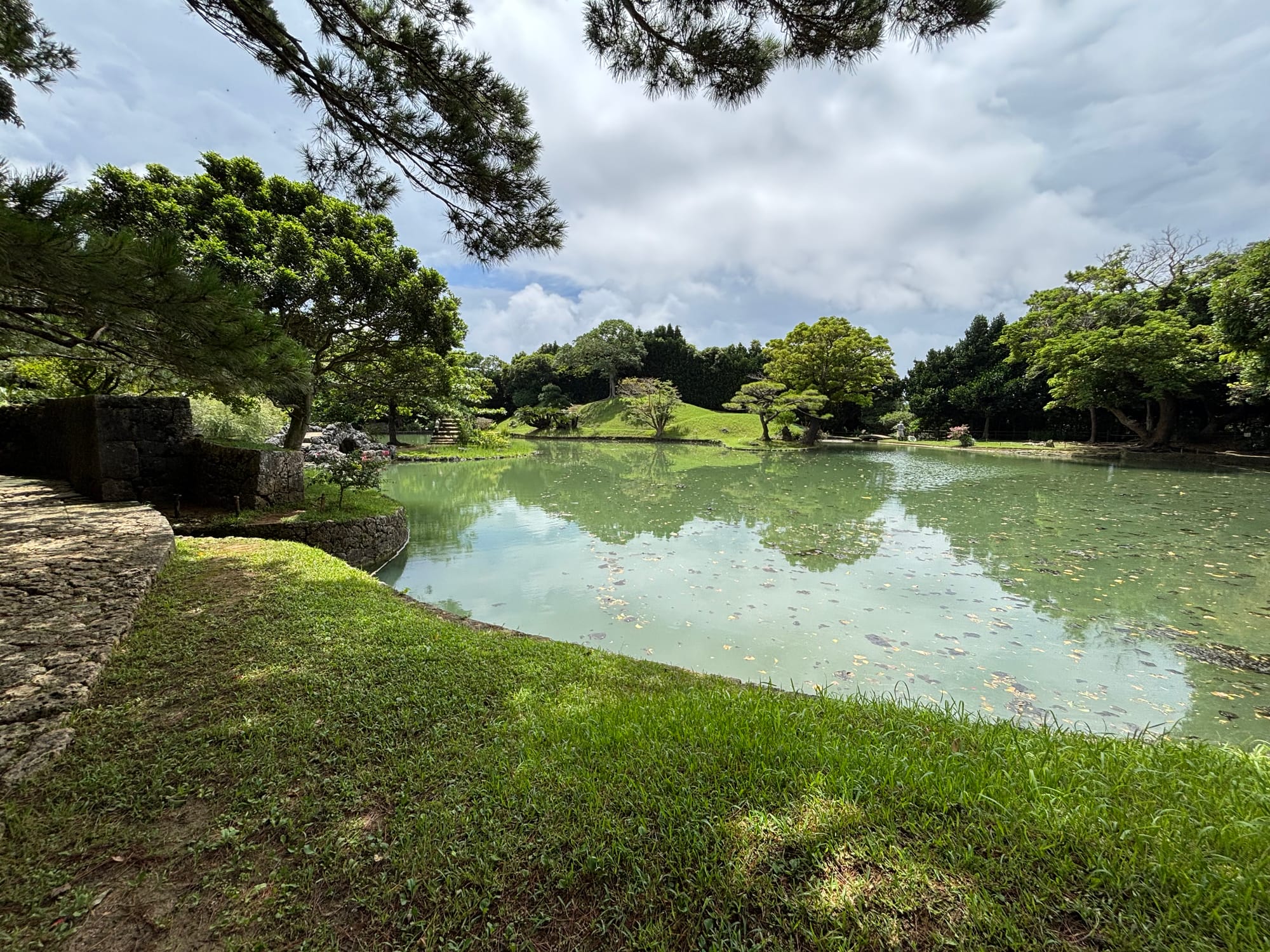
In Shikina-en Garden, the pond does not mirror. The water is too clouded. Or too honest. The bridges arch with no visible destination. There are no perfect lines of sight.
Glissant’s archipelagic thinking is present here: no centre, only relation. Identity scattered, rhythmic, incomplete. The garden is not an arrangement. It is an interruption: of mainland order, of imported categories of “Japanese aesthetics.”
Nothing here aligns with expectation. Which is precisely the point.
✂️ A Rupture in Form
In 2006, Ryukyuan was classified by UNESCO as a language in danger of extinction.
In public schools, children were punished for speaking it until the 1990s.
One surviving noro priestess lives on Kudaka Island. She is 89.
A student protest against U.S. land occupation last month was not reported on NHK.
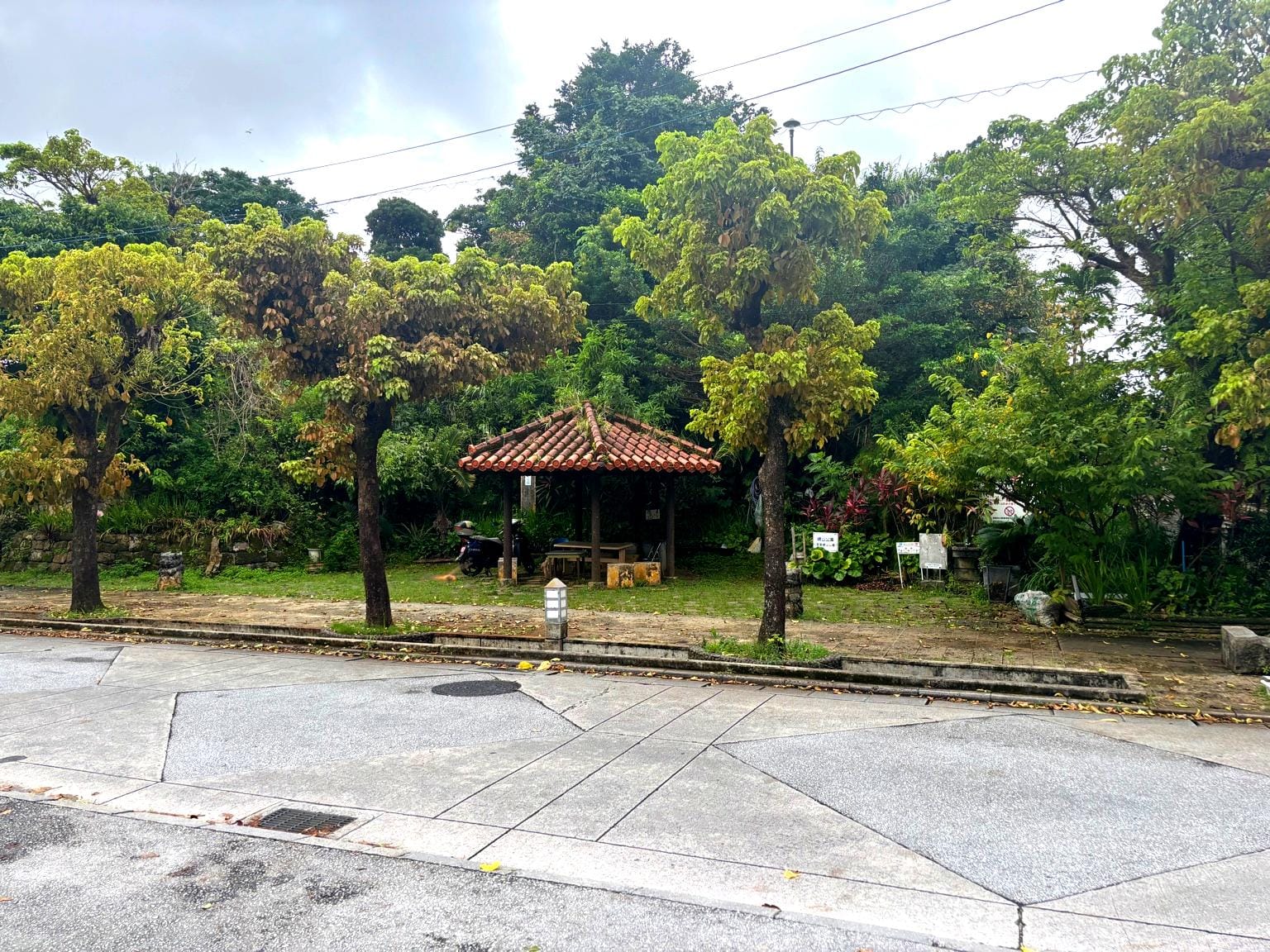
🛖 The Pavilion Without a Name
A rest hut, tiled roof, no sign. A man dozing in the heat. A child with a juice box.
I sit. I do not photograph. I feel unsure what I am allowed to see.
Sebald taught that observation is never neutral. To record is to rearrange. To write is to trespass.
What does it mean for me to be here a guest, not quite foreign, not quite home? I want to say I’m listening. But the fact of my writing proves I wasn’t still enough.
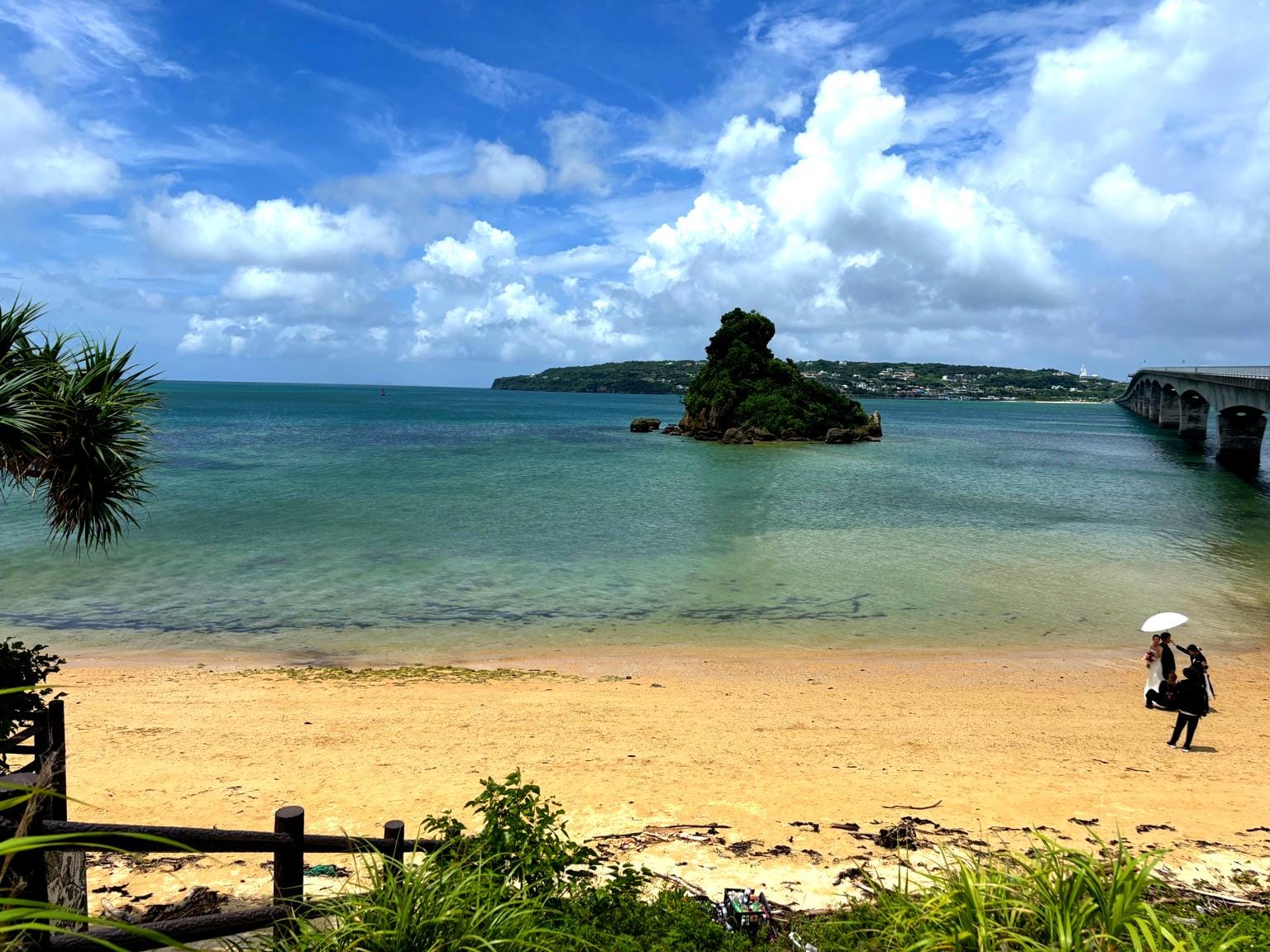
💍 Joy Without Audience
On Kouri Beach, a couple walk side by side. She lifts a white parasol against the sun.
There is a photographer. But no posed display. Just three people, barefoot in the sand.
They are clearly married. It is not a performance; it is presence.
The sea, unconcerned, glitters around them. The moment is theirs alone.
To witness this is not to interpret. It is to step back: to let joy be unclaimed, untranslated.
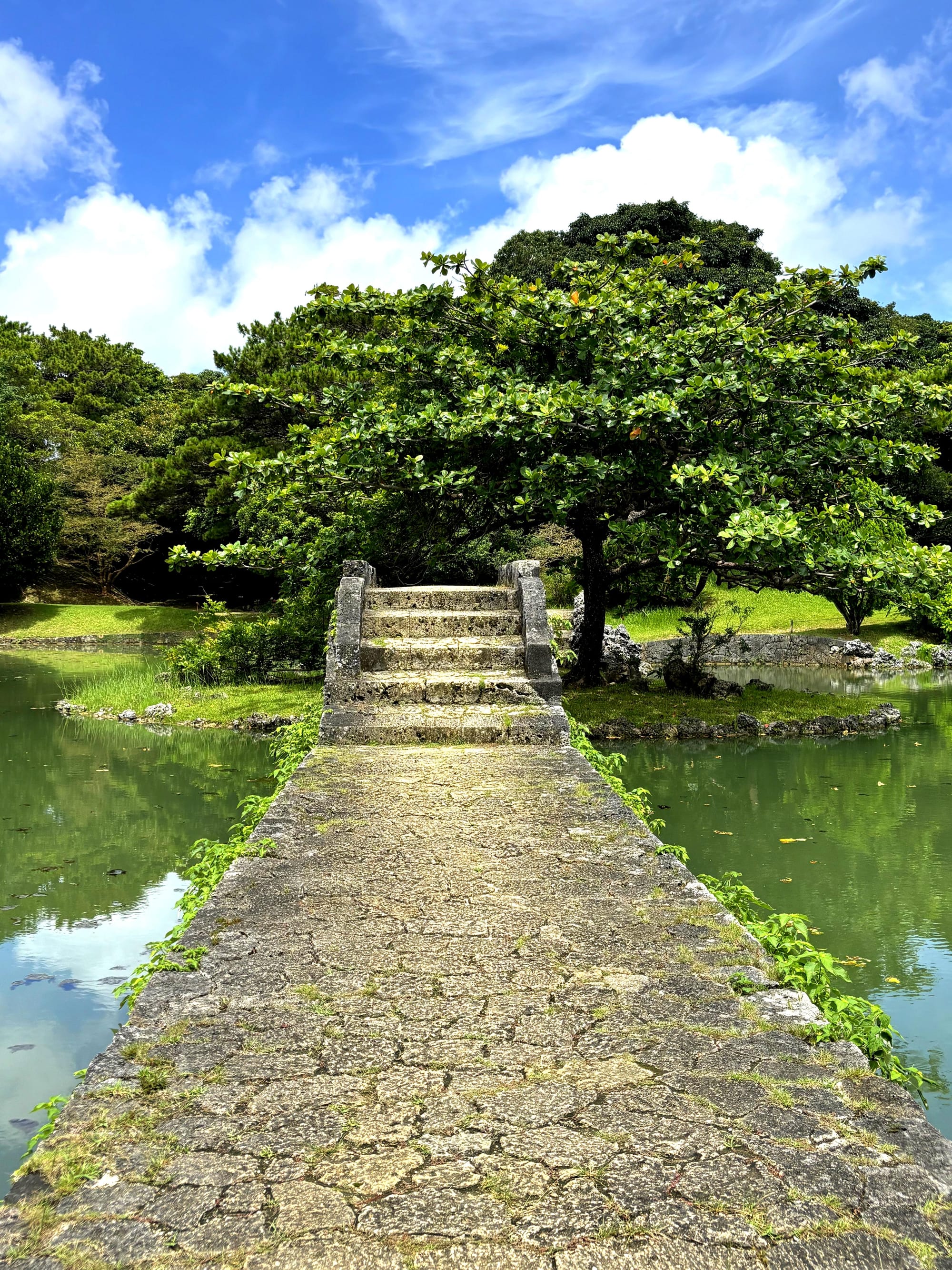
🌉 Bridges That Do Not Connect
The stone bridges do not link points. They bend. They meander.
You walk them and arrive precisely where you began.
This is not metaphor. It is spatial refusal.
No destination. No lesson. Only rhythm.
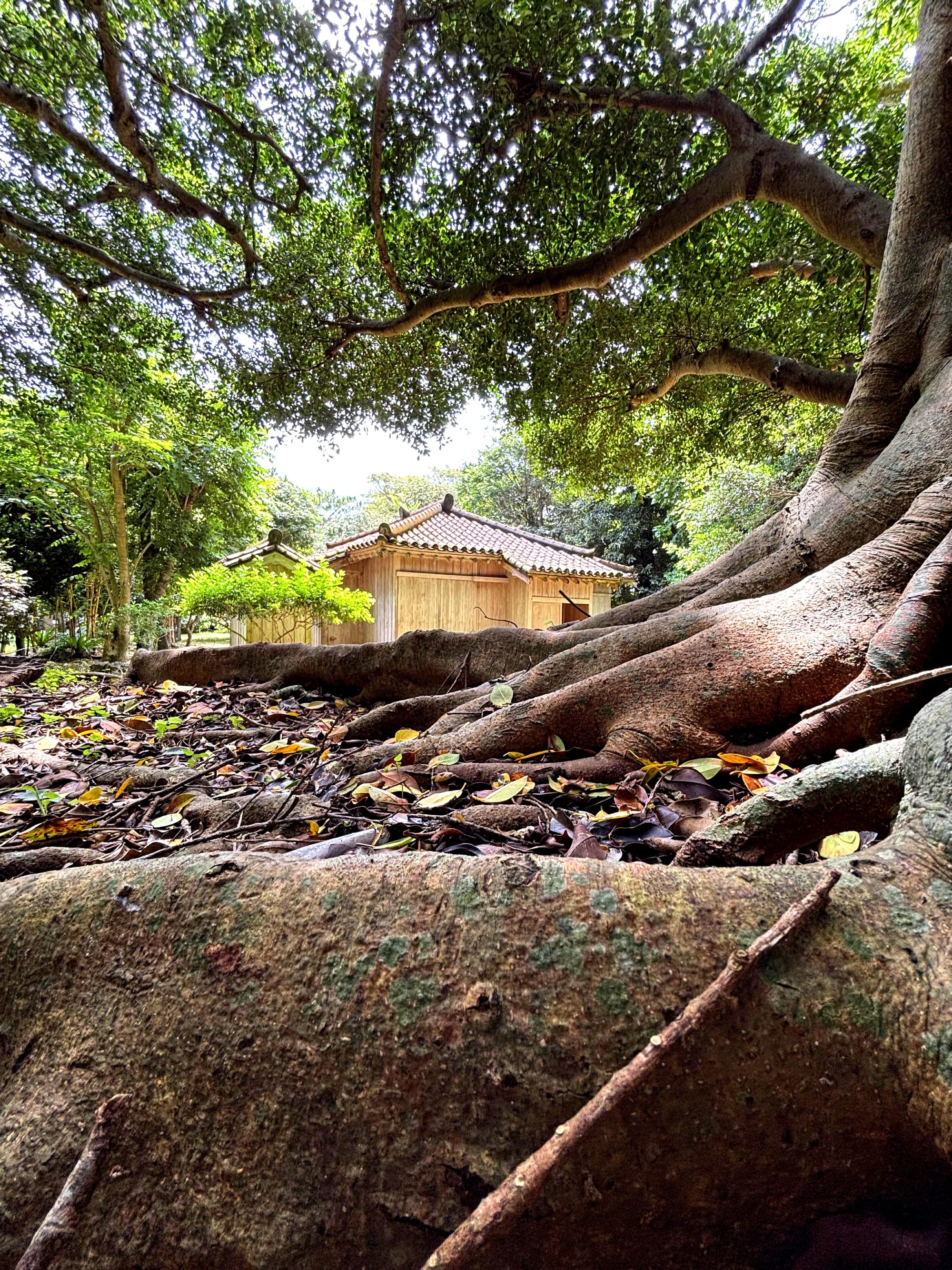
🌳 Root That Resists Erasure
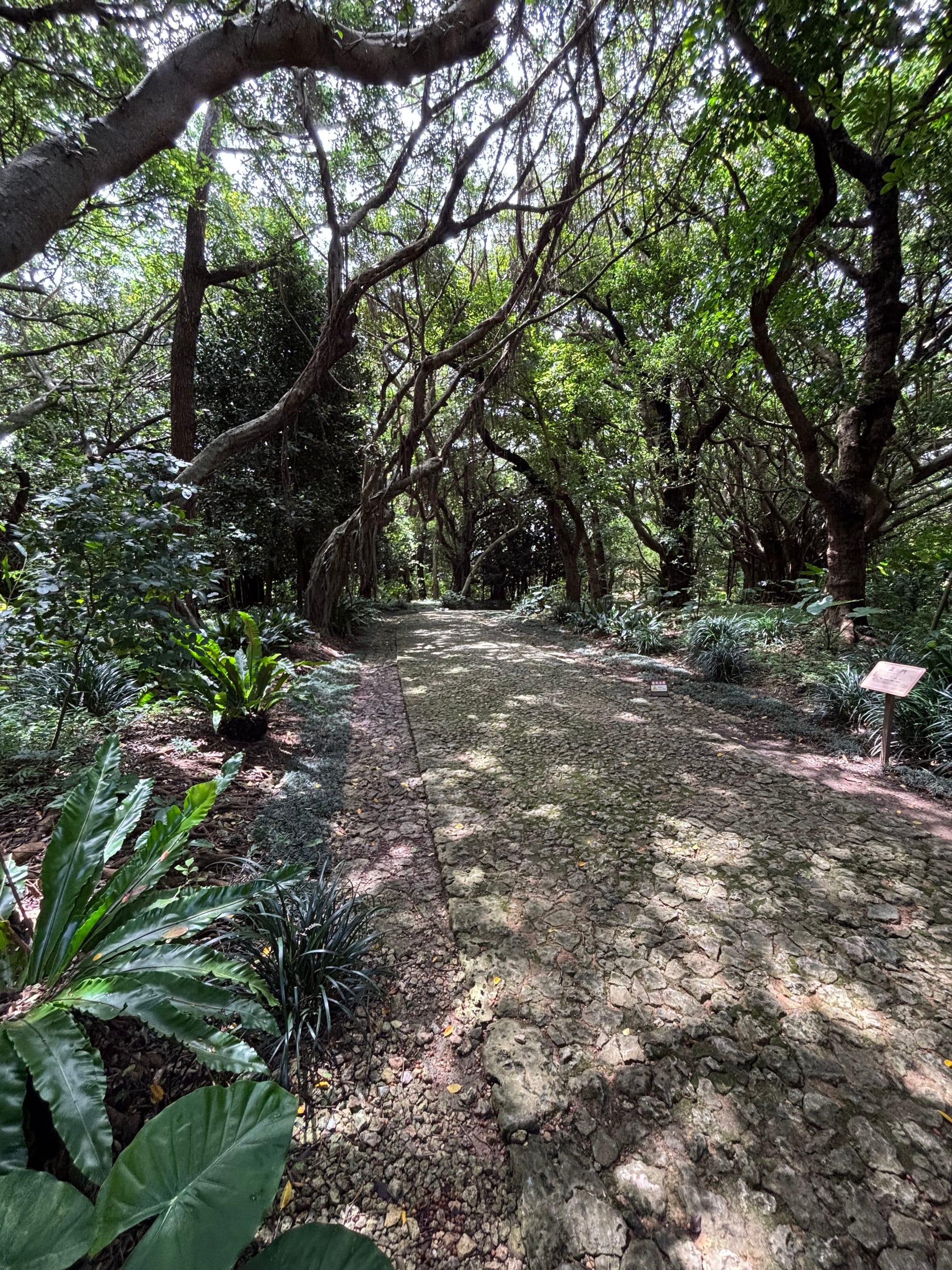
A banyan root breaks open the paved earth of a courtyard. Behind it, a wooden house leans into its own disrepair. No restoration underway. Just use.
Okinawa does not call attention to its survival. It just survives.
Sebald: “The memory of a place is not kept in its preservation, but in the traces it refuses to erase.”
🌀 Coda: The Right Not to Be Known
Glissant gives us the phrase: le droit à l’opacité — the right to opacity. The right not to be reduced, explained, or categorised.
Okinawa lives this right.
It does not ask to be resolved. It does not reward your understanding. It offers only its presence: layered, disrupted, surviving.
And that, perhaps, is the highest form of resistance:
To remain present without permission.
To remain opaque without apology.