What We Take With Us: Ceramics, Care, and the Shape of a Future
“There is a certain sacred image (agalma) buried in the soul, and it is for the sake of this that all our efforts are made.”
— Plato, Symposium
Not all beauty declares itself.
In Plato’s Symposium, Diotima speaks of the agalma : a sacred form, hidden inside the outer casing of the body or an object, waiting to be drawn out through love, through vision, through care. Not surface beauty, but inner truth. Something that glows because it is attended to.
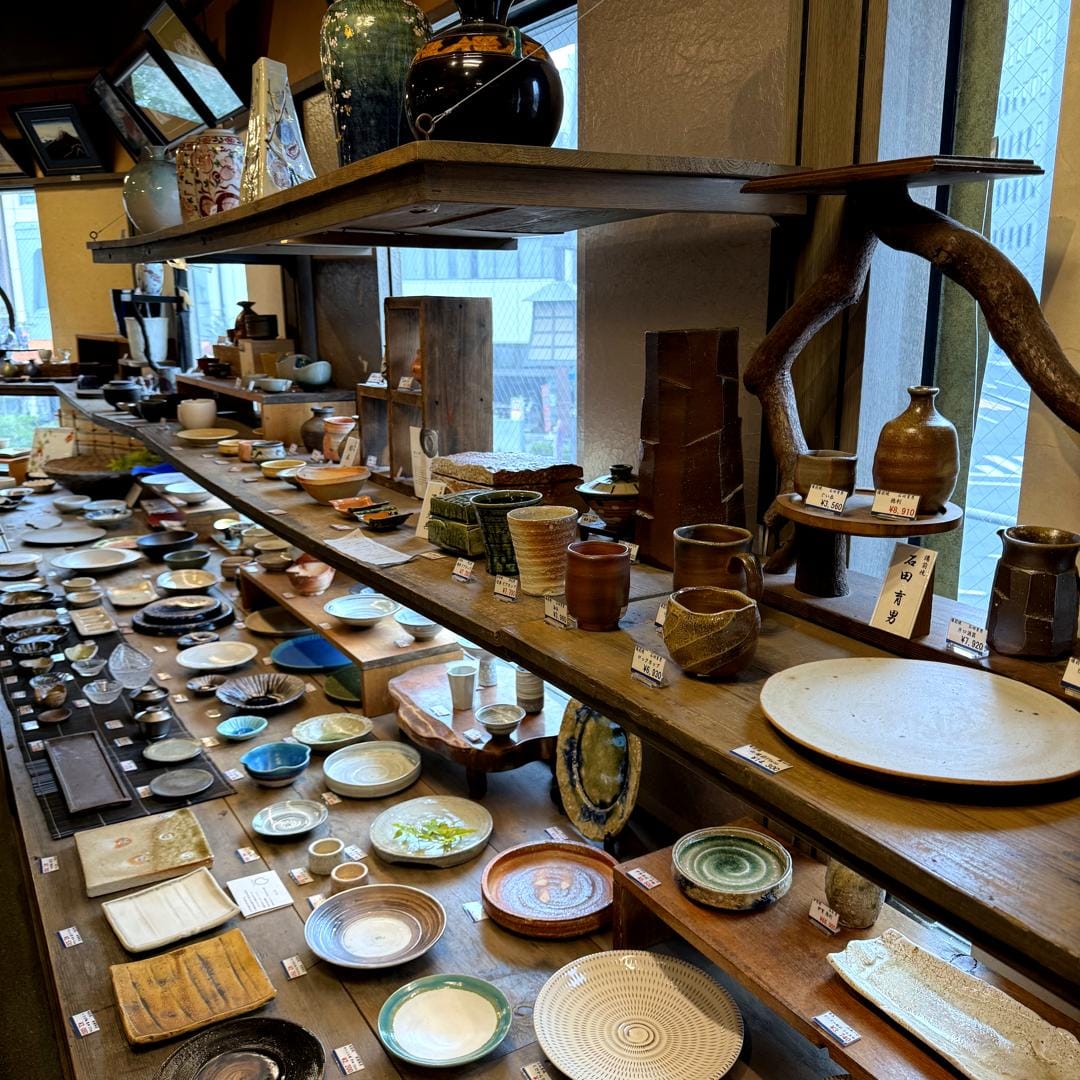
That’s what we saw, standing in Kappabashi Street: holding cups, weighing kettles, studying imperfect bowls. We weren’t just shopping. We were choosing the objects that will furnish a life. We weren’t taking souvenirs. We were selecting agalmata; sacred forms through which future care might be expressed.
🏺 What Craft Can Teach Us About the Future
Japanese ceramics resist ideal forms. They do not aim to impress. They ask to be held, not admired. From the clay-wrapped hills of Gifu, Minoyaki emerges: unbalanced, deliberate, quietly unrepeatable. The glaze is never quite the same twice: a kind of philosophical humility fired into form.
In Being and Time, Heidegger reminds us that the world does not present itself through theory, but through use. We come to know a thing not when we look at it, but when we handle it, when it becomes part of our intentions, our habits, our care. The cup is not a cup because of what it is. It is a cup because of what we do with it.
“The being of a useful thing is to be ready-to-hand.”
— Martin Heidegger
The kettle, the bowl, the glass: these are not decorative. They are anticipatory. They do not preserve memory: they make memory possible.
🔥 Craft Traditions as Ontology
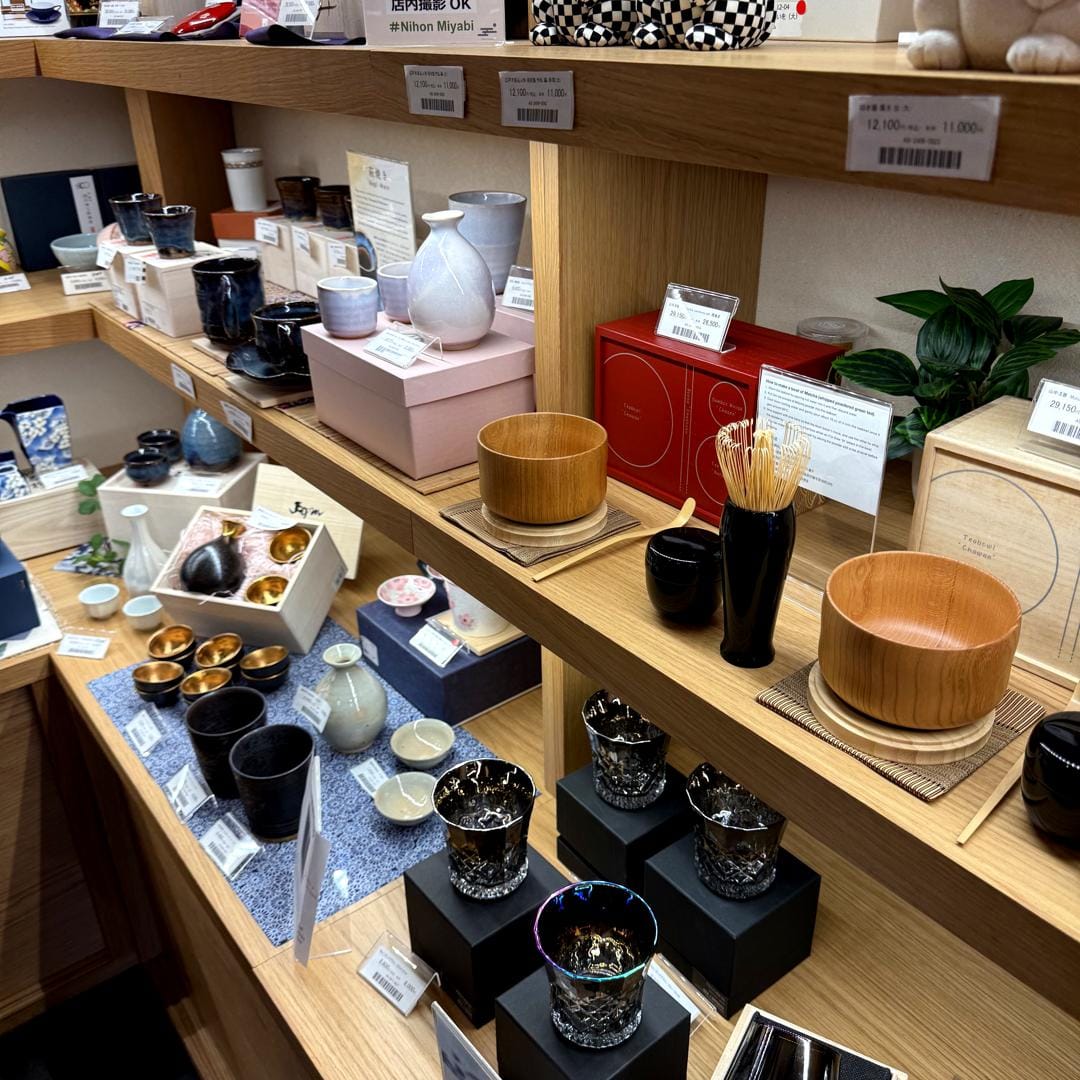
- Minoyaki – from Gifu: rough-hewn, intuitive, fire-kissed. Formed by hand and flame, not perfection.
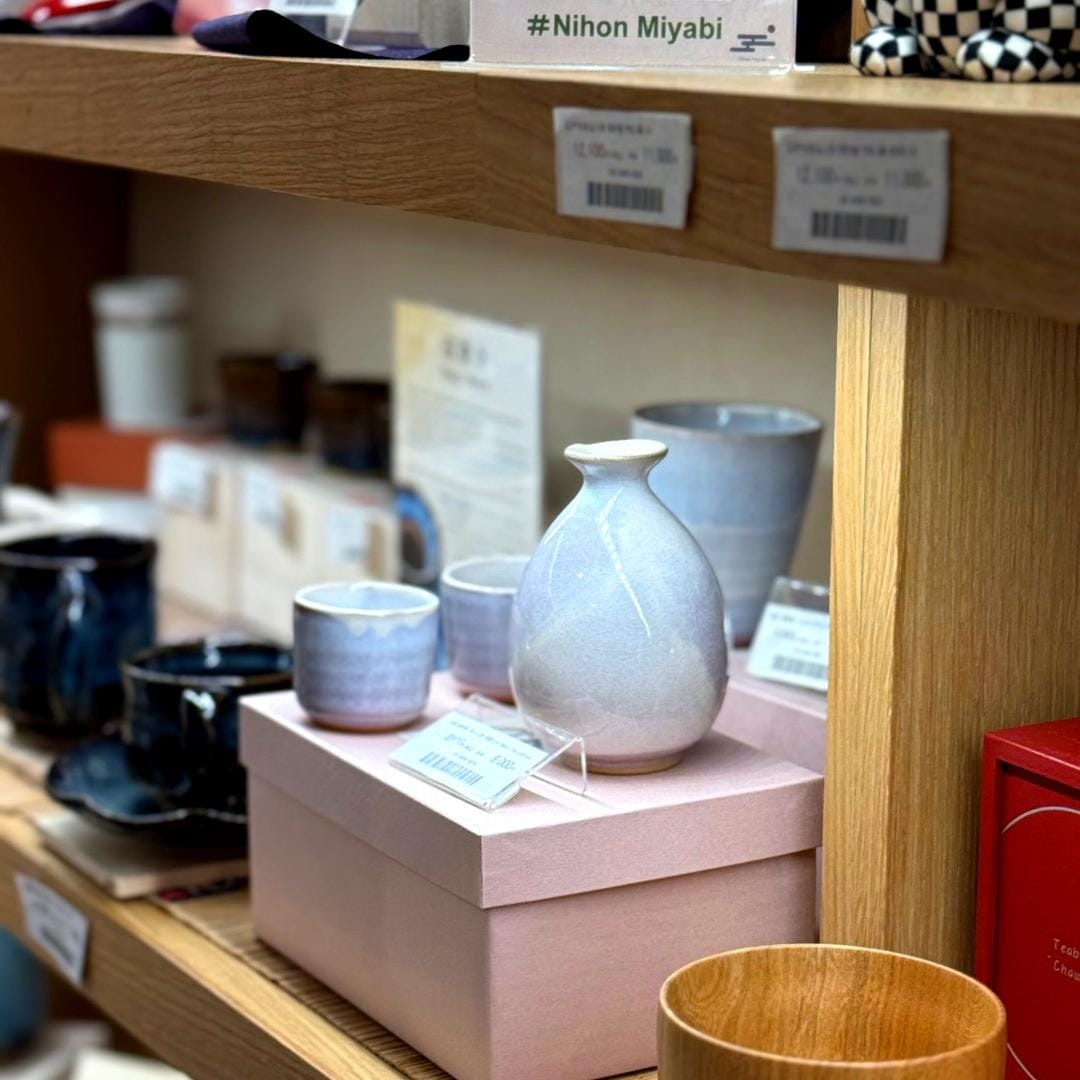
- Shigaraki ware – from Shiga: pots not shaped like nature, but as nature. Scarred, cracked, breathing.
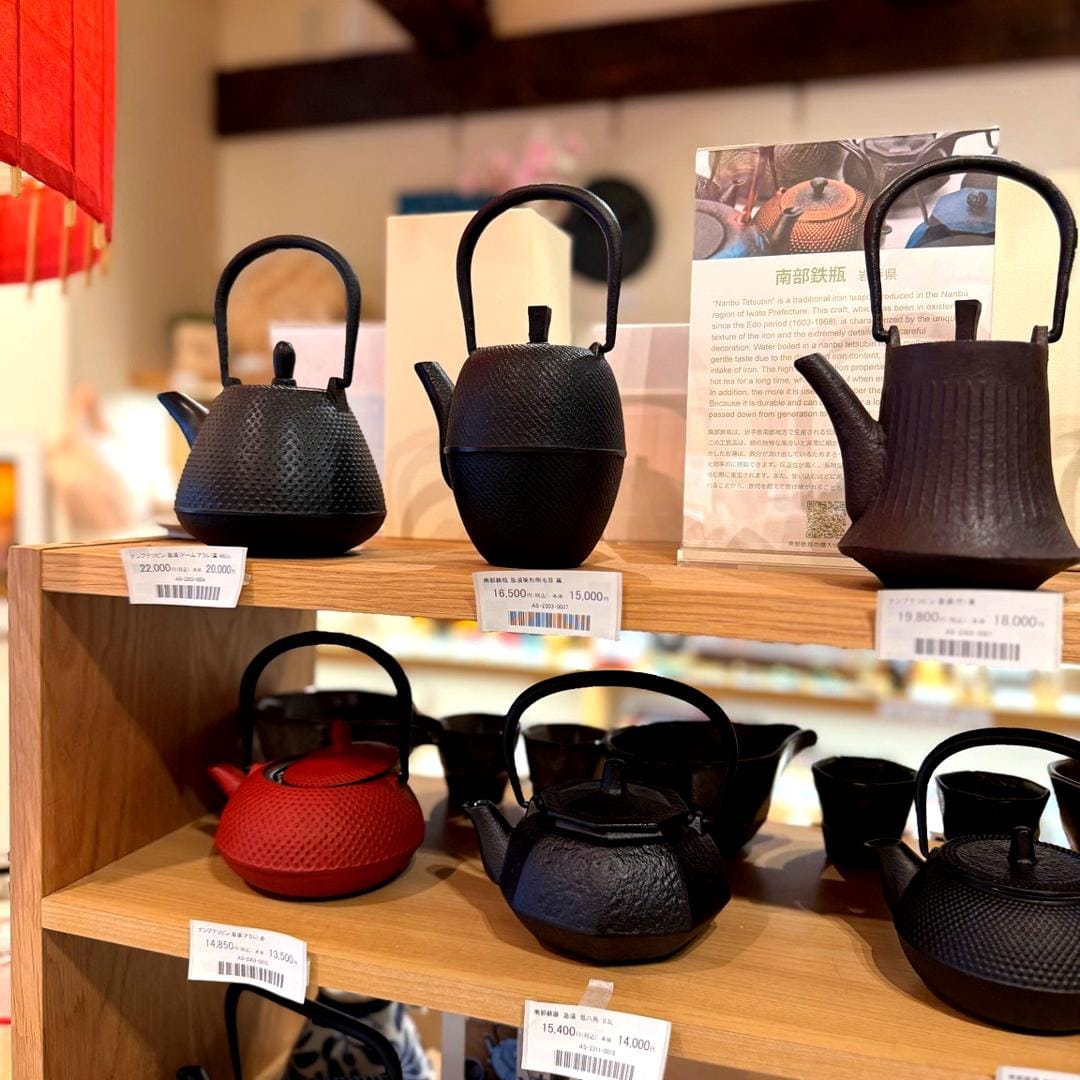
- Nanbu Tekki – from Morioka: cast iron kettles that pour not ornament but presence. Heavy, restrained, unflinching.
- Kutani porcelain – colour as silence, brushwork as whisper. Every motif a suggestion rather than a statement.
- Edo Kiriko – glass that holds light captive, geometry made gentle. The city before it glittered.
🧠 Heidegger, the Handmade, and the Future-Forming Gesture
Heidegger wrote that we are always “being-toward.” The future is not something we wait for. It is something we are always already shaping, with our hands, our words, our small repeated gestures.
When we chose these objects, two teacup, two bowls, one set of chopsticks, we weren’t choosing possessions. We were choosing a structure for attention. A way to notice. A way to share mornings. A way to build time.
These objects are not completed. They are waiting — not to be admired, but to be used lovingly.
They are not relics of Japan. They are readiness. They are forms of care-in-waiting.
✈️ What I’m Bringing Back
I will return to the UK soon, and begin a new life. It won’t begin in ceremony or spectacle. It will begin at the table. With heat. With patience. With a pot steeping tea. With small rituals made by hand. Not grand, but real.
Each object I’ve packed: a chipped teacup, a blue-glazed bowl, a glass that catches the morning light is a gesture toward that future. A soft insistence that care is not theory. It is touch. It is repetition. It is being-with.
✍️ Final Thought
These are not souvenirs.
They are slow poems.
Written in earth.
In heat.
In patience.
In time.
And in the quiet of their use, the agalma, that hidden sacred, begins to shine.