🎭 Through the Mask, a Voice
A meditation on Namahage, Greek tragedy, and the philosophy of the face
“Give me a mask and I will tell you the truth.”
— Oscar Wilde
🌍 The Oldest Invention
Before we built cities or wrote down laws, we made masks.
Across cultures and centuries, they appear in ritual, theatre, mourning, celebration. We have worn them to grieve and to laugh, to perform and to believe.
But what a mask does depends on what we think a person is.
In some traditions, the mask hides.
In others, it reveals.
🪓 The Mask that Comes Down the Mountain
In Oga, Akita, the mask is not performance. It is presence.
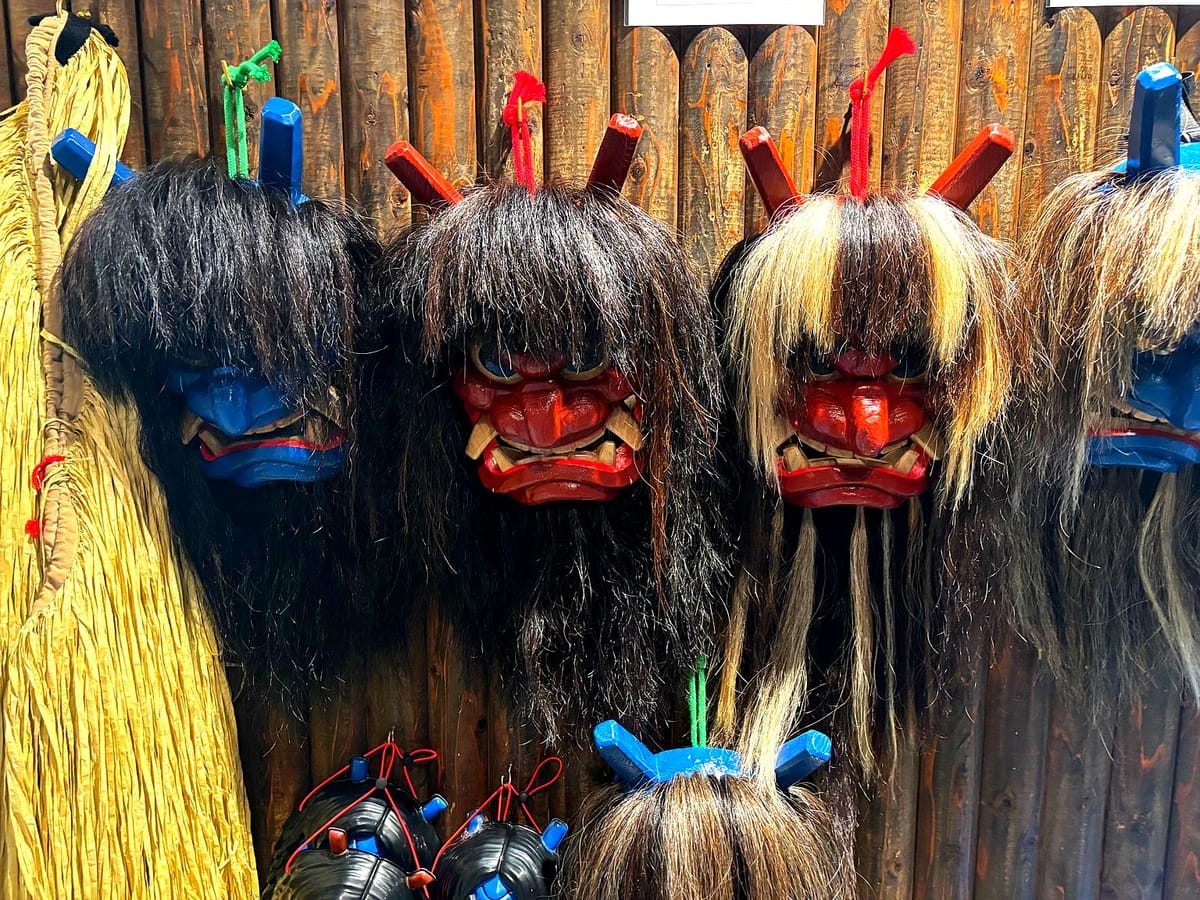
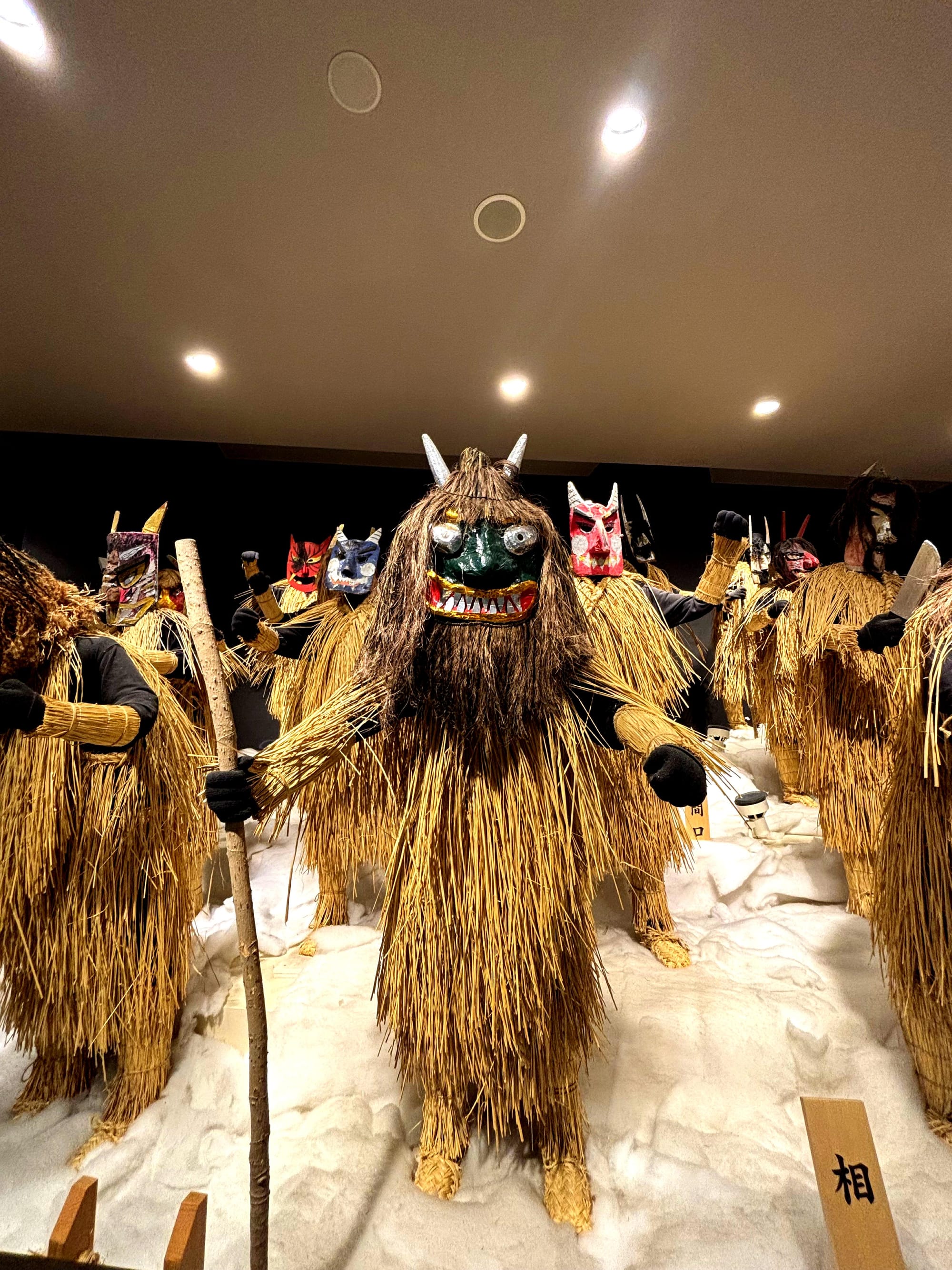
Each New Year, men from the village don straw cloaks and fierce wooden masks and descend into town from the mountains. They knock on doors. They cry out to children.
Are there any lazy ones here? Any who disobey?
This is the Namahage. Its face is angry. Its purpose is moral. The masked figure rebukes idleness, disobedience, forgetfulness of duty. But it does not punish. It warns. It asks for mochi, accepts sake, and departs.
No one believes the being is real. And yet no one treats it as pretend.
The mask here is not a disguise. It is a visitation. It is how the mountain enters the home.
🎭 The Mask on the Stage
In the classical West, masks were also sacred.
In Greek theatre, actors wore the prosopon: a word that means both “face” and “role.” From this word we derive persona and eventually person, and with it an entire tradition of identity as performance.
The mask in tragedy was solemn, stylised, proportioned for distant spectators. It was not meant to hide the self but to amplify it. It enlarged the voice and clarified emotion. It made interior suffering visible.
In comedy, the mask was grotesque and exaggerated. It invited irreverence. It gave permission to mock rulers, gods, and the self. Where the tragic mask dignified, the comic one disrupted.
The chorus wore masks as well. They were not individuals. They were the voice of the city. A shared conscience. Their words came not from character but from collective memory.
The mask, in all these forms, did not deceive. It enabled. It made truth public.
📜 From Theatre to Theology
The word prosopon would travel beyond the theatre.
In early Christian theology, it became a way to describe the persons of the Trinity. One essence. Three prosopa. One divine nature. Three relational presences.
This shift tells us something important. In the Western imagination, the mask became a way of thinking about identity itself. To be a person was to play a role. To relate. To appear before others.
But always, it implied a distinction between inner and outer. Between what is worn and what is true.
The West, shaped by Plato and Christianity, came to see the self as something hidden within. The mask became dangerous. It threatened authenticity. It raised the fear that performance might replace being.
🗻 Namahage and the Liminal Face
The Namahage mask offers no such tension.
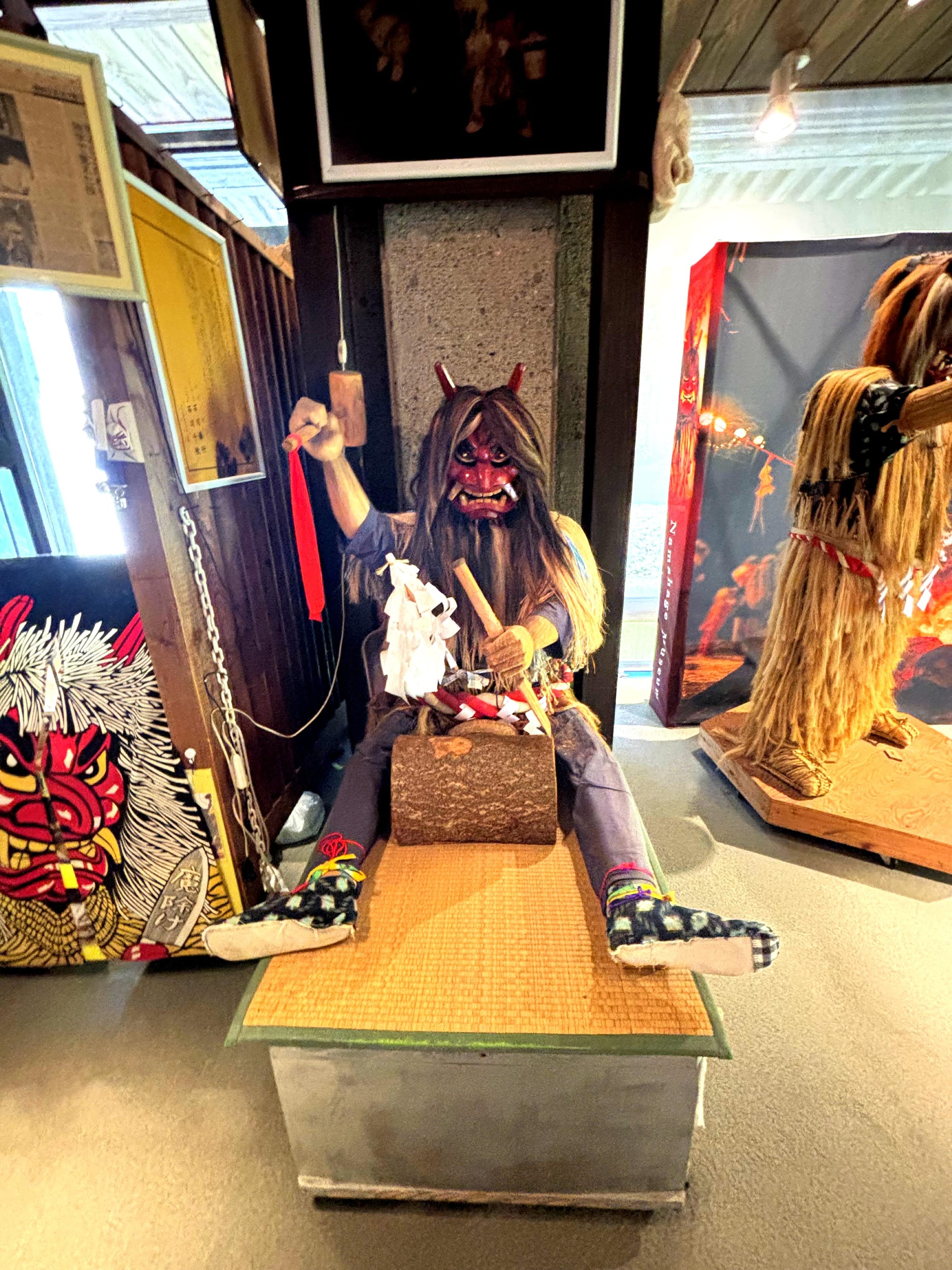
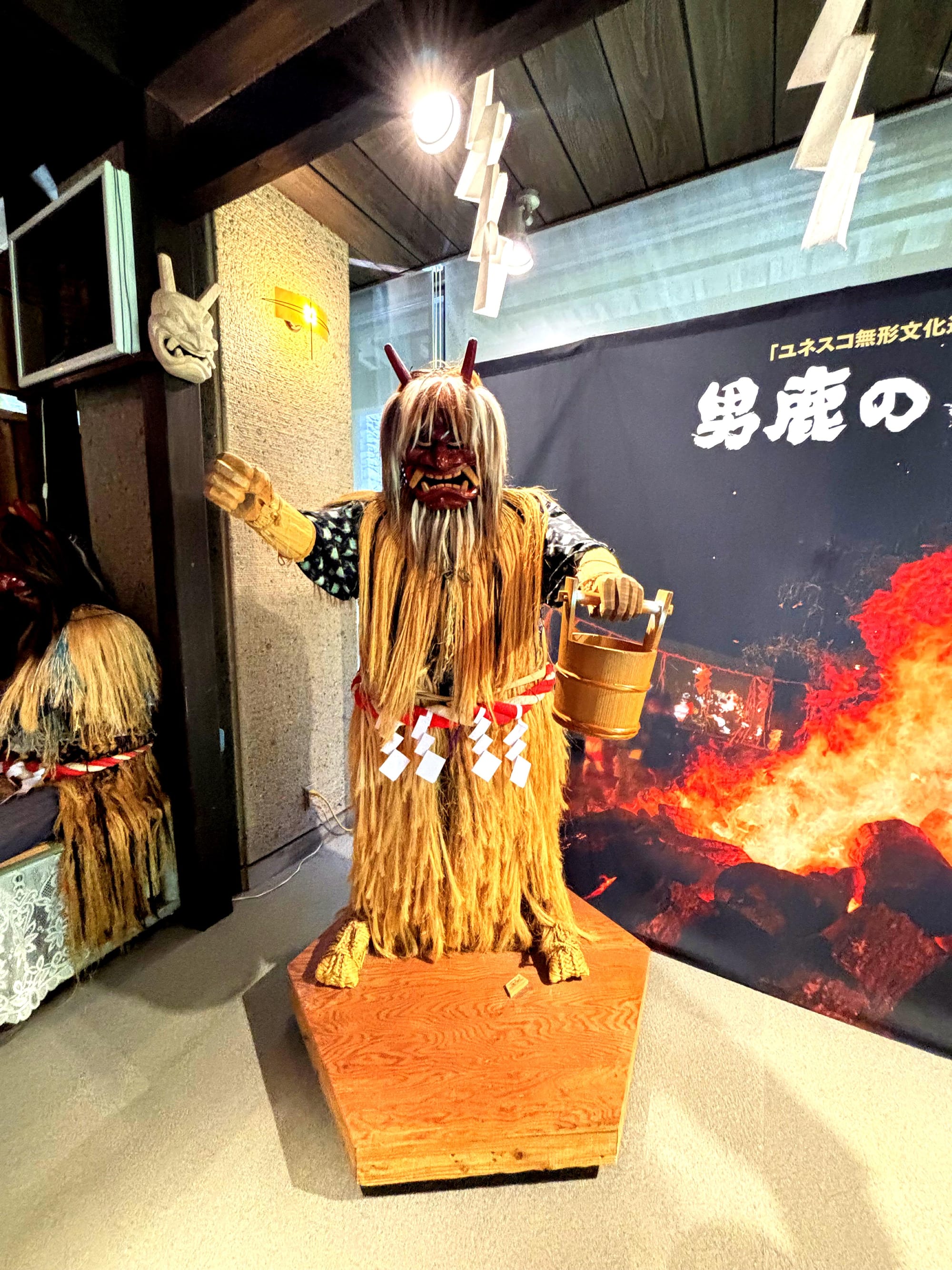
It does not separate the man from the role. It fuses them. The ritual is not a rehearsal. It is a crossing.
The masked figure descends from the forest. It is treated as a spirit. Children cry. Adults bow. Offerings are made. The person beneath the mask is irrelevant. What matters is what the mask allows to speak.
This is not theatre. It is threshold. The man becomes something more than himself, not by pretending, but by participating in a shared cosmology.
The Namahage does not live in the village. It visits. The mask is not just a face. It is a doorway.
🌀 The Face as Relational, Not Essential
Here is the deepest contrast.
In much of Eastern philosophy, the self is not a hidden essence to be discovered. It is a network of gestures, rituals, and relations. There is no true face beneath the mask. There is only the presence that flows through it.
In Noh theatre, masks are carved with subtle asymmetries. Tilted upward, they appear to smile. Tilted downward, they seem to weep. One mask carries many moods. Its meaning emerges not from what it hides, but from how it moves.
These masks are not false. They are relational. They respond to space, to light, to breath. They teach that truth is not static. It arises in encounter.
The Namahage mask is more primal. Its features are exaggerated. Its teeth are sharp. Its paint is bright. It does not aim for subtlety. It aims for presence.
It does not suggest emotion. It embodies force. It is not a character. It is a guardian.
💭 A Thought for the Way Back
We often imagine the path to truth as a process of unmasking.
We peel back the layers. We confess. We seek what lies beneath.
But the mask offers another model.
Not truth as exposure, but as embodiment. Not self as interior, but as action. Not essence, but encounter.
In Oga, the mask does not cover the soul. It gives it form.
The man wears the mask and becomes something that speaks beyond him.
And so I left the museum not with the sense that I had seen something concealed, but that I had been visited by something disclosed.
Not revealed through removal.
But made visible by form.
A face not worn to hide.
A face worn to speak.