The Bloom That Needs No Reason
“The rose is without why. It blooms because it blooms.
It cares not for itself, asks not if it is seen.”
— Angelus Silesius, Der Cherubinische Wandersmann I.289
🌾 I. Hokkaido’s Refusal to Explain
There is a different stillness in Hokkaido. Not the composed silence of Honshu’s gardens, measured and moral, but something older, less curated, more withdrawn. Honshu’s beauty often reveals itself in stages, as a gesture of hospitality. It speaks in signs, seasons, arrangements. The moss is meant to be admired. The plum blossom is a syllable in a longer poem.
Hokkaido offers no such syntax. Its landscapes feel unspoken. The coastlines do not open into vistas. They recede. The forests do not charm. They wait. One is not guided toward significance. One is invited only to remain.
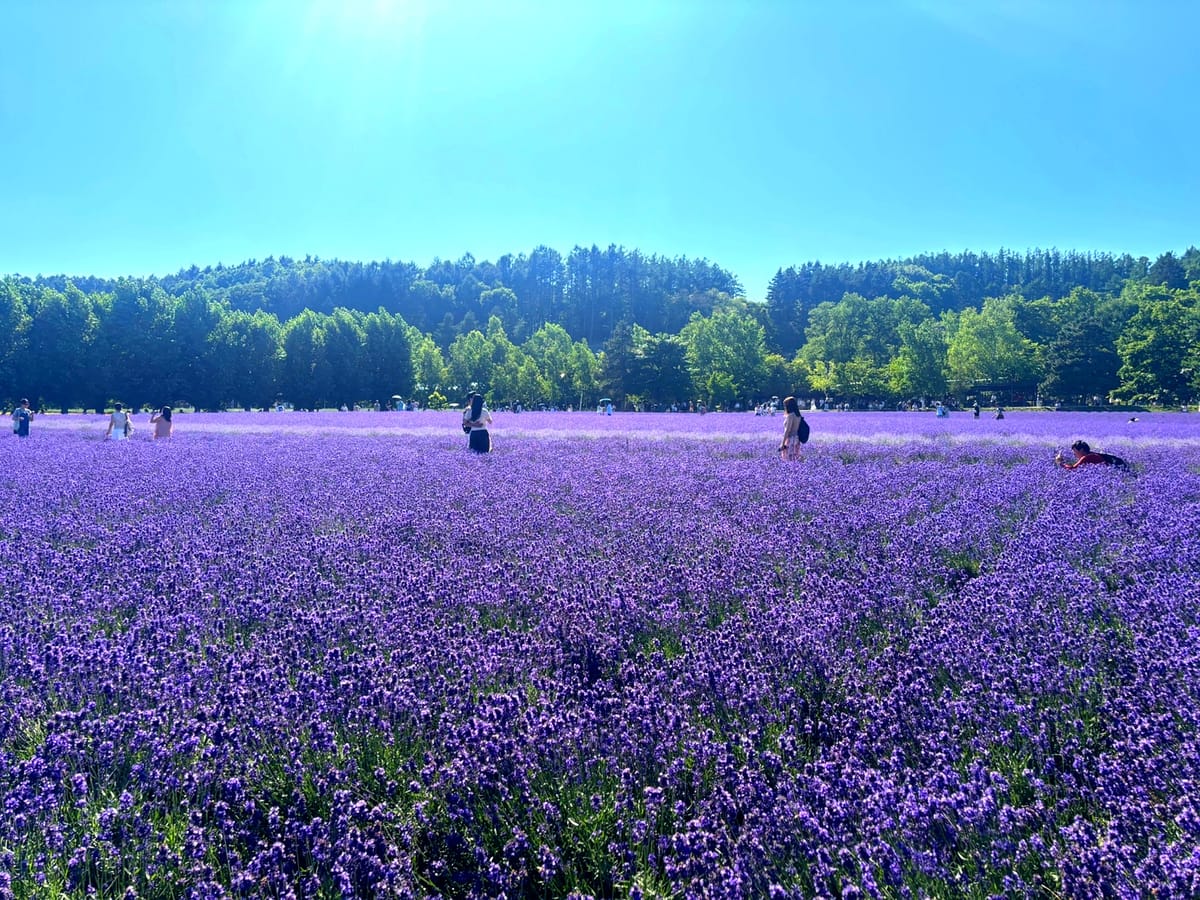
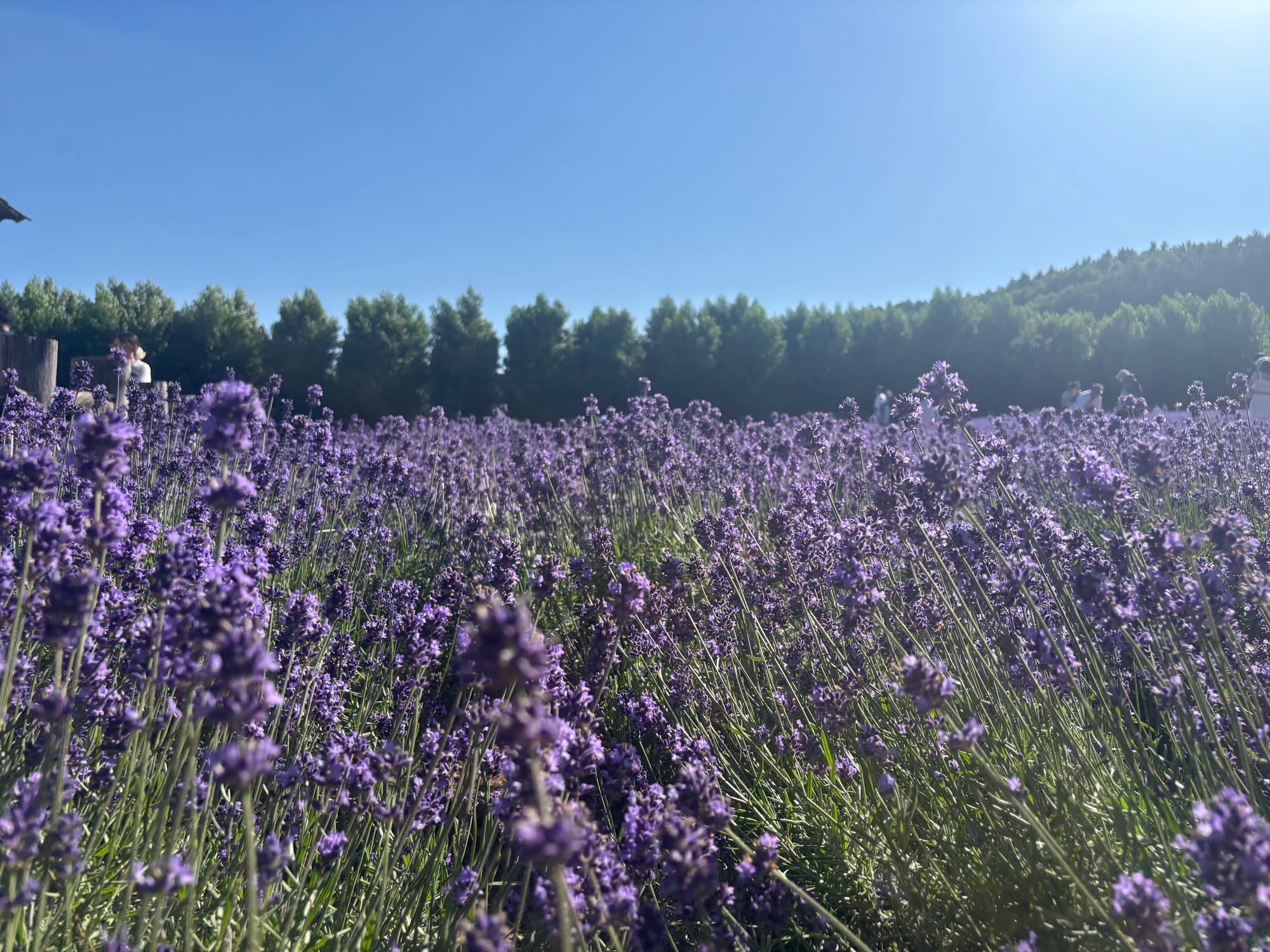
It was in this setting, on a field pressed by wind and colour, that I came upon lavender. I had not come to find peace, yet peace appeared; not like revelation, but like saturation. Not sudden, but deepening.
The field did not ask to be photographed. It made no demand on attention. It did not welcome me, nor ignore me. It simply was. And in that “was,” it brought with it a form of presence that had no origin in narrative.

🐝 II. The Bloom Without Why
Angelus Silesius once wrote that the rose is without why. It does not bloom in order to be seen. It does not explain itself. It does not ask to be known. Heidegger, who lingered over this line many times, saw in it a key to another kind of thought: not the thought that calculates or controls, but the kind that waits. The kind that lets things show themselves as they are, without reducing them to function.
The lavender field gave me this. Not meaning, not insight, not understanding, but a slow and fragrant refusal. It did not say, “Look at me.” It said nothing. And in that nothing, I began to notice. The scent arrived before the thought. My body slowed without intention. There was no decision to remain. Remaining happened.
This is not the kind of beauty that seeks response. It is not symbolic. It is not sublime. It does not demand interpretation. It is more ancient than art and more patient than metaphor. It is, simply, what appears when something allows itself to appear: and we stop trying to grasp it.
Silesius’ rose is not a metaphor for spontaneity. It is an image of being. It is what happens when a thing exists without reference to our need for justification. Lavender, too, is without why. And that is why it matters.
🌬️ III. Lavender and Gelassenheit
In Heidegger’s later work, the word Gelassenheit becomes central. Usually translated as “releasement,” it refers to a stance toward the world in which the will loosens. It does not abdicate. It simply allows. It no longer pushes, designs, imposes. It lets things be.
Standing in the lavender field, I did not think in sentences. I breathed. I did not walk with a goal. I moved with the wind. This was not transcendence. It was congruence. The feeling of being aligned, for once, with what is.
Heidegger wrote that to dwell is not merely to live in a place. It is to care for what appears. Not to possess it, but to preserve it: to let it endure in its own time, its own form.
Lavender taught me how to dwell. Not by offering itself, but by staying near. Its peace was not the absence of disturbance. It was the presence of rhythm. Breathing, colour, wind, scent: all of it bound into something whole, something unspoken.
🌸 Final Reflection: To Remain Without Reason
There was no lesson. The field did not explain itself. And for that reason, it stayed with me.
Furano taught me the kind of peace that is not earned, but recognised. Not revealed, but received. A peace that does not lift one out of the world, but roots one more fully in it.
Silesius wrote that the rose does not ask to be seen. It does not bloom for an audience. It blooms because blooming belongs to it. There is no ulterior purpose. No function. No lesson. Just form in fidelity to itself.
That is what I found in the lavender field.
Not something to take away, but something to dwell with.
It did not change me. It reoriented me.
And I left not with a thought, but with a rhythm.
The lavender did not explain.
It bloomed.
And that was enough.