🎭 Stone and Blossom: Palladio, Noh, and Kabuki
🤲 Prologue: Back in Europe
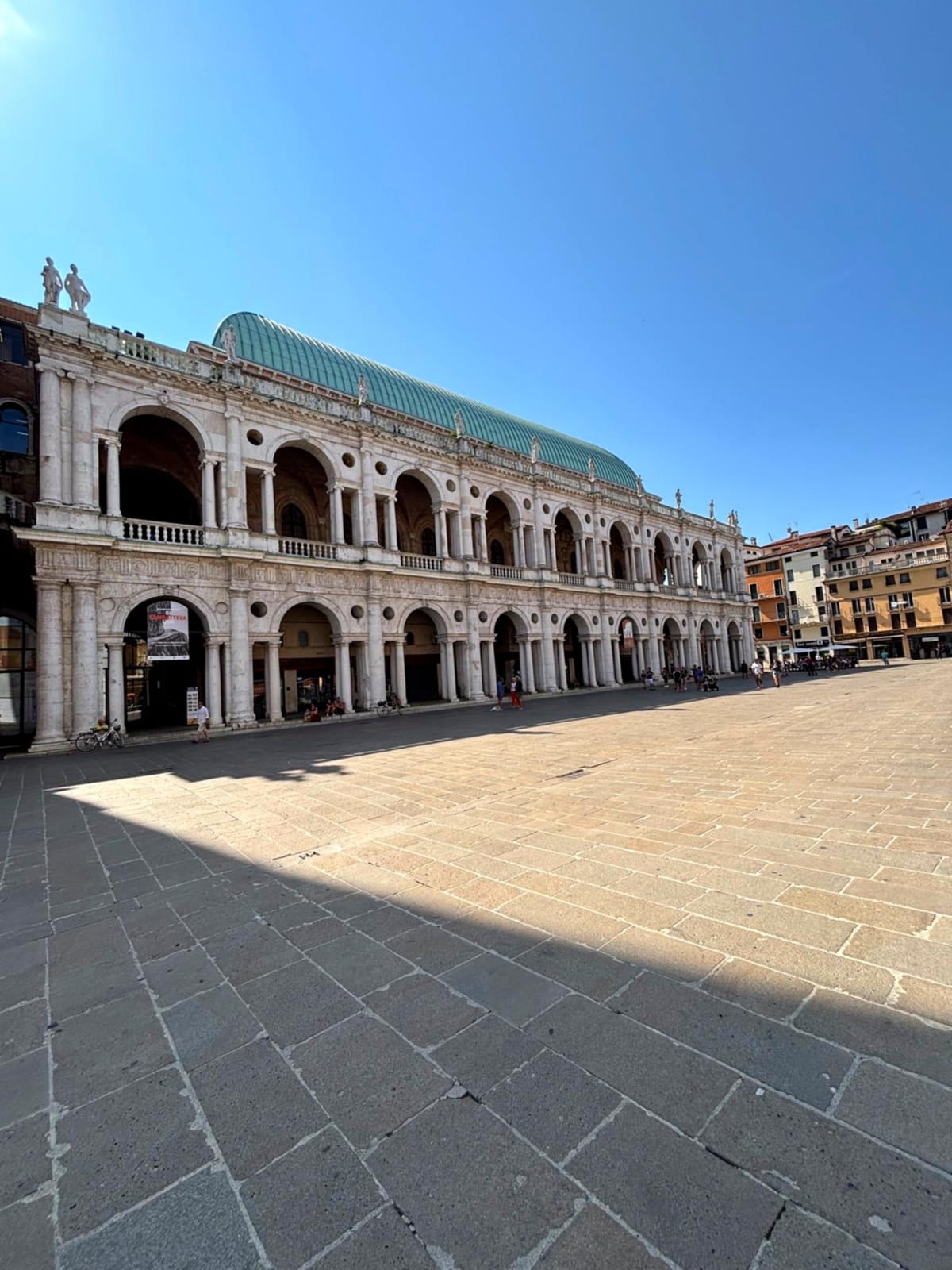
After months in Japan, I arrived in Vicenza and felt the weight of Europe return to me. Shadows here fell hard against stone, after months of light diffused through paper walls. Facades did not breathe or bow; they stood square and certain of their outlines.
In Japan, beauty had appeared as something brief: a shaft of sunlight through cedar boards, a blossom gone before the day ended, a stage that lived only for the night of its performance. Vicenza pressed upon me another conviction: that beauty, once shaped, should endure, that it must be built so firmly it could not pass away.
I felt the difference in my body: a return not just to Europe, but to myself.

🏛 Palladio’s Eternal Stage
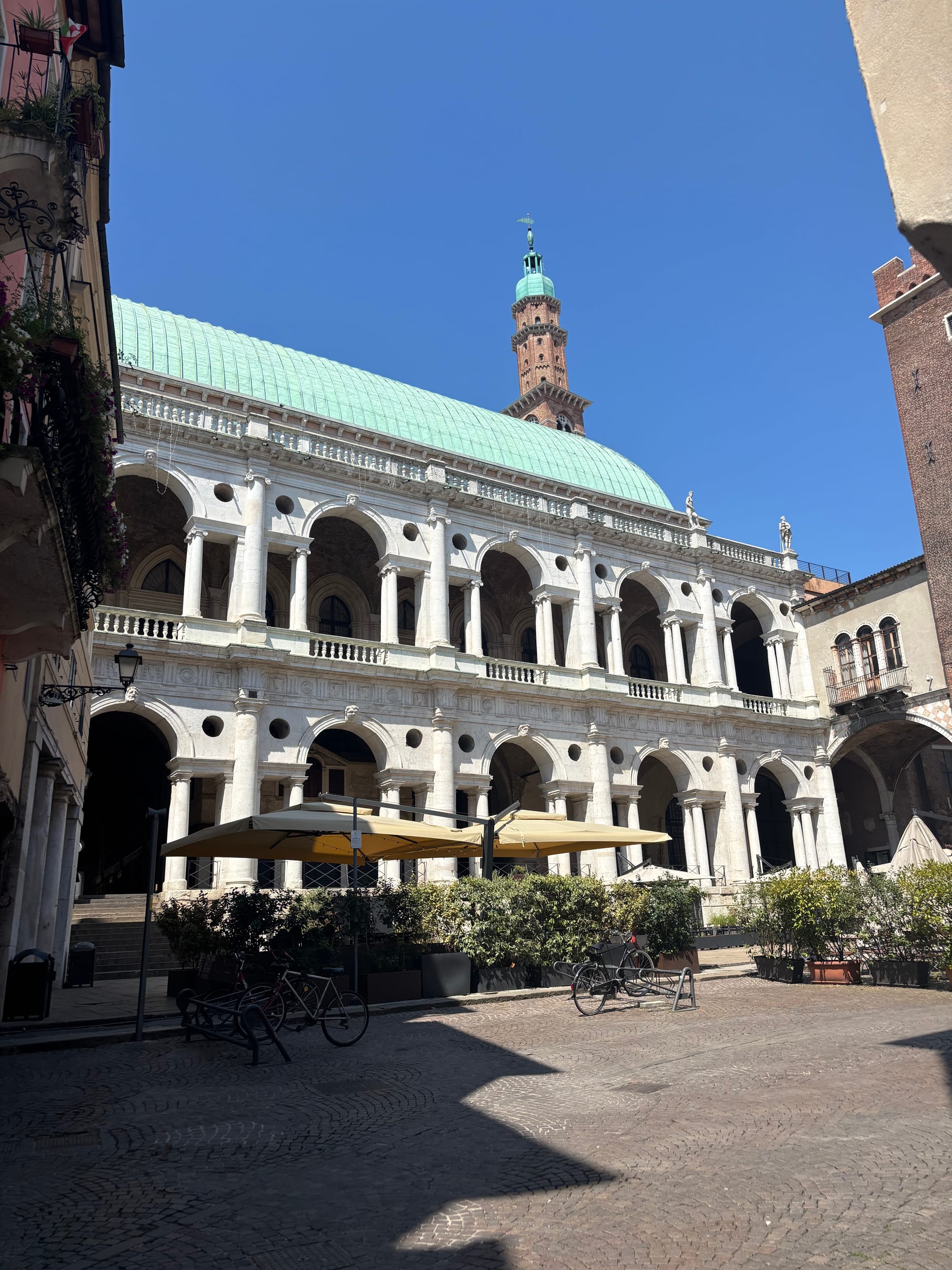
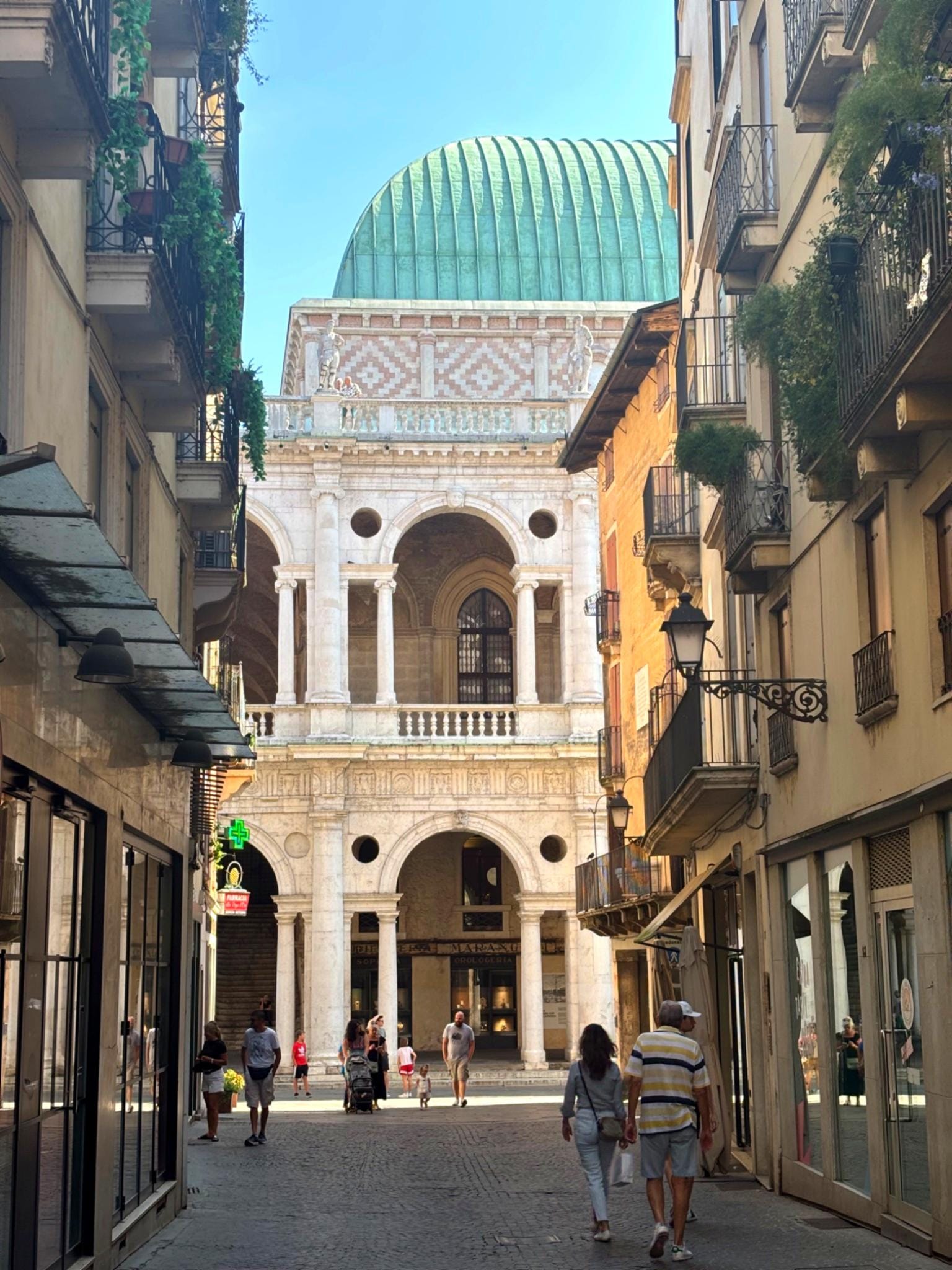
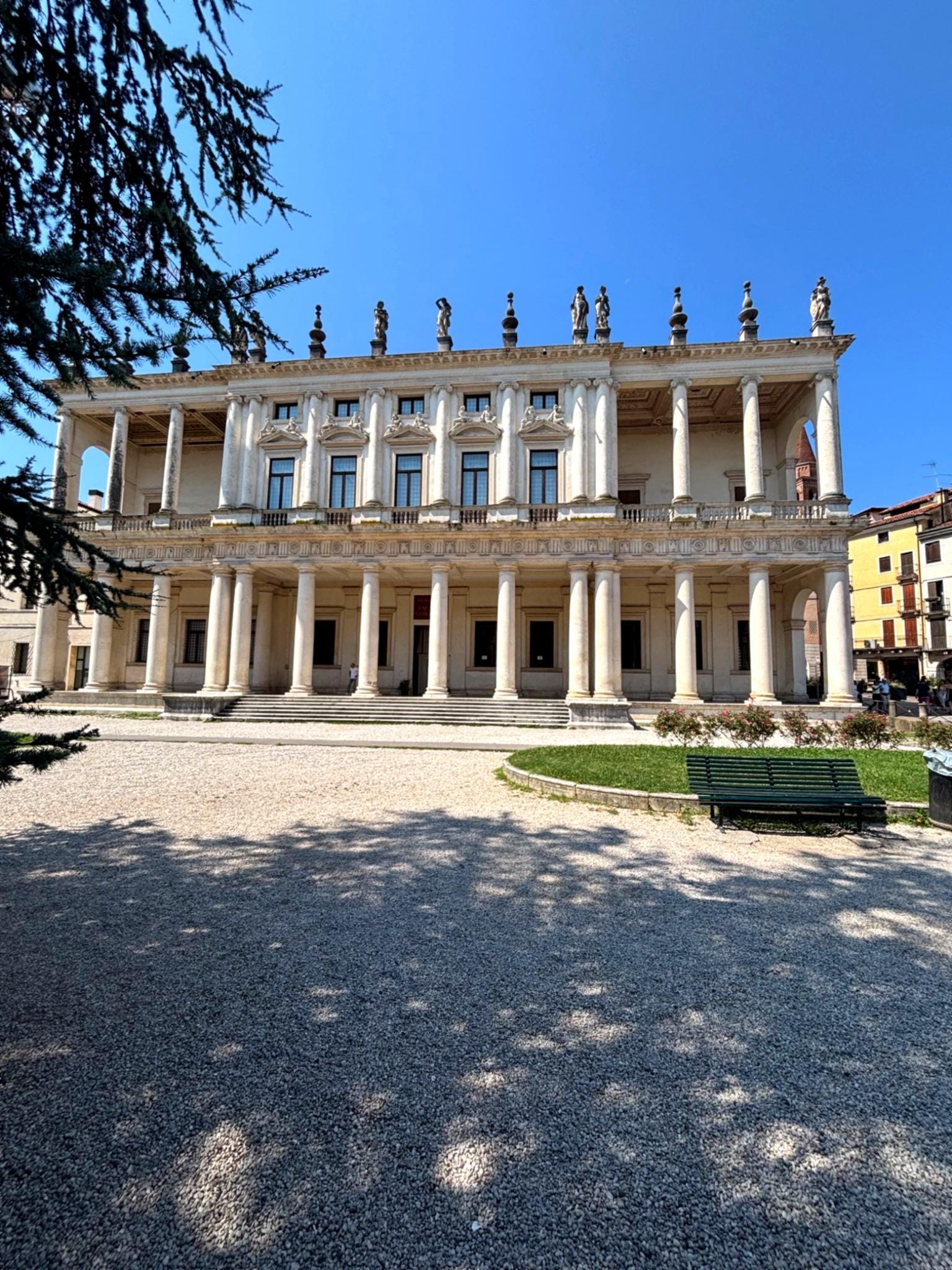
The heart of Vicenza is Palladio. His churches, villas, and loggias give the city a rhythm of proportion, an order that feels civic as well as sacred. But nowhere is his conviction clearer than in the Teatro Olimpico, his final work.
To enter is to step into a philosophy. The semicircle of seats embraces the audience in stone, like citizens gathered for ritual. The stage rises as a triumphal arch, and behind it plaster streets unfold into painted distance, frozen in perfect perspective. The illusion is total, yet it never changes. The set itself is the performance.
Palladio was heir to Vitruvius, who had written that architecture must embody firmitas, utilitas, venustas: strength, utility, beauty. He also drew from Alberti, who declared that true beauty is “a harmony of all parts fitted together with such proportion that nothing could be added or taken away except for the worse.” The Teatro Olimpico realises these principles in brick and plaster. It is proportion turned into destiny.
But as I sat within it, I wondered if its perfection was not also a kind of sterility. For what lives in a theatre that does not change? The stone carried eternity, but at the cost of breath.

🌸 The Flower of Performance
Japan had taught me another vision of theatre. In Noh, the stage is almost bare: a square of polished wood, roofed like a shrine, open on three sides. A fan may become a sword, a chant may summon a mountain. What matters is not scenery but presence.
Zeami, the master of Noh, called this fleeting beauty the hana: the flower of performance. “When the flower blooms it is beautiful,” he wrote, “and when it falls, it is also beautiful.” The flower’s truth is its impermanence. It blooms only once. To preserve it would be to destroy it.
Kabuki moves with a different energy: loud, disruptive, playful. Revolving stages transform before the eye; trapdoors erupt with actors; the hanamichi walkway collapses the distance between performer and spectator. Yet the spectacle is not mere ornament. Kabuki thrives on interaction: shouts from the audience, stylised pauses (mie) where the actor freezes into an image charged with communal recognition, laughter and gasps that become part of the performance itself.
Where Noh cultivates stillness and suggestion, kabuki cultivates energy and immediacy. It is a theatre of shared breath, where illusion is remade every night with the crowd’s complicity. If Noh is a flower that blooms once and falls in silence, kabuki is a firework: dazzling, noisy, impossible to repeat, vanishing into smoke as soon as it appears.
Both resist permanence. One through quiet fading, the other through explosive excess.
⚖️ Two Ways of Beauty
The dialogue between Palladio and Zeami is stark.
For Alberti, beauty meant completion: a form so proportioned that nothing could be altered without loss. His theatre, realised by Palladio, stands as a monument to that conviction. Beauty here is stable, enduring, incapable of dissolution.
For Zeami, beauty lay in its opposite: incompletion. The flower must bloom and fall; the performance must vanish as soon as it is born. For kabuki, beauty is not in balance but in rupture, in the communal spark that lives for a moment and is gone.
Both positions risk excess. Alberti’s harmony can become rigidity, perfection that suffocates. Zeami’s flower can become too fragile to console. Kabuki’s energy can tip into chaos, spectacle without depth. Yet between them, a truth emerges: permanence steadies, impermanence humbles, vitality unsettles. Each guards against the other’s danger.
🪞 Return and Resonance
Sitting in Palladio’s theatre, I realised how European I am. The marble, the geometry, the conviction that truth is something you can build and it will stand; this felt like home. There was comfort in it, almost relief. After a year in Japan, I found myself weary of the otherness I had loved: of silences that left meaning unsaid, of blossoms that scattered before I had even grasped them, of theatres that refused to endure. Palladio reassured me that beauty could last, that proportion could carry truth through centuries.
And yet part of me resisted. I could not forget the other stage I had known: the stillness of Noh where a gesture was enough to conjure a world, the flare of kabuki where audience and actor breathed together in an energy that dissolved as quickly as it was born. Japan had unsettled me in ways I did not expect. It had shown me that beauty might not need to last to be true. That the flower falling could matter as much as the stone standing.
Europe felt like mine. Japan felt like other. And yet it was in that very otherness that something had shifted in me. I no longer trusted Palladio’s permanence without remembering Zeami’s blossom. I no longer believed in Alberti’s harmony without hearing the audience’s shout in a kabuki theatre.
I belong to the stone, but the blossom has marked me.

🌅 Epilogue: Between Stone and Blossom
In Vicenza, Palladio carved eternity into stone. In Kyoto, Zeami taught that beauty blooms only once. In Edo, kabuki erupted into colour and sound before vanishing into air. Between them lies not only geography, but three visions of the world: beauty as permanence, beauty as fading, beauty as shared immediacy.
To walk between them is to live in paradox. To sit in a theatre that never changes, yet to remember a flower that falls, a firework that dissolves. To accept that permanence and impermanence both fail, yet both console.
For the flower will fall, the firework vanish, and the stone weather. Beauty is not in what endures, nor in what disappears, but in the tremor between them: a tremor that steadies and unsettles, comforts and disquiets, reminding us that nothing we love is ever secure, and that this, too, is its truth.