🏛️ St Albans: Truth, Power, and the Body at Risk
‘Non facit martyrem poena, sed causa.‘
‘It is not the punishment that makes the martyr, but the cause’
Augustine, Sermon 307
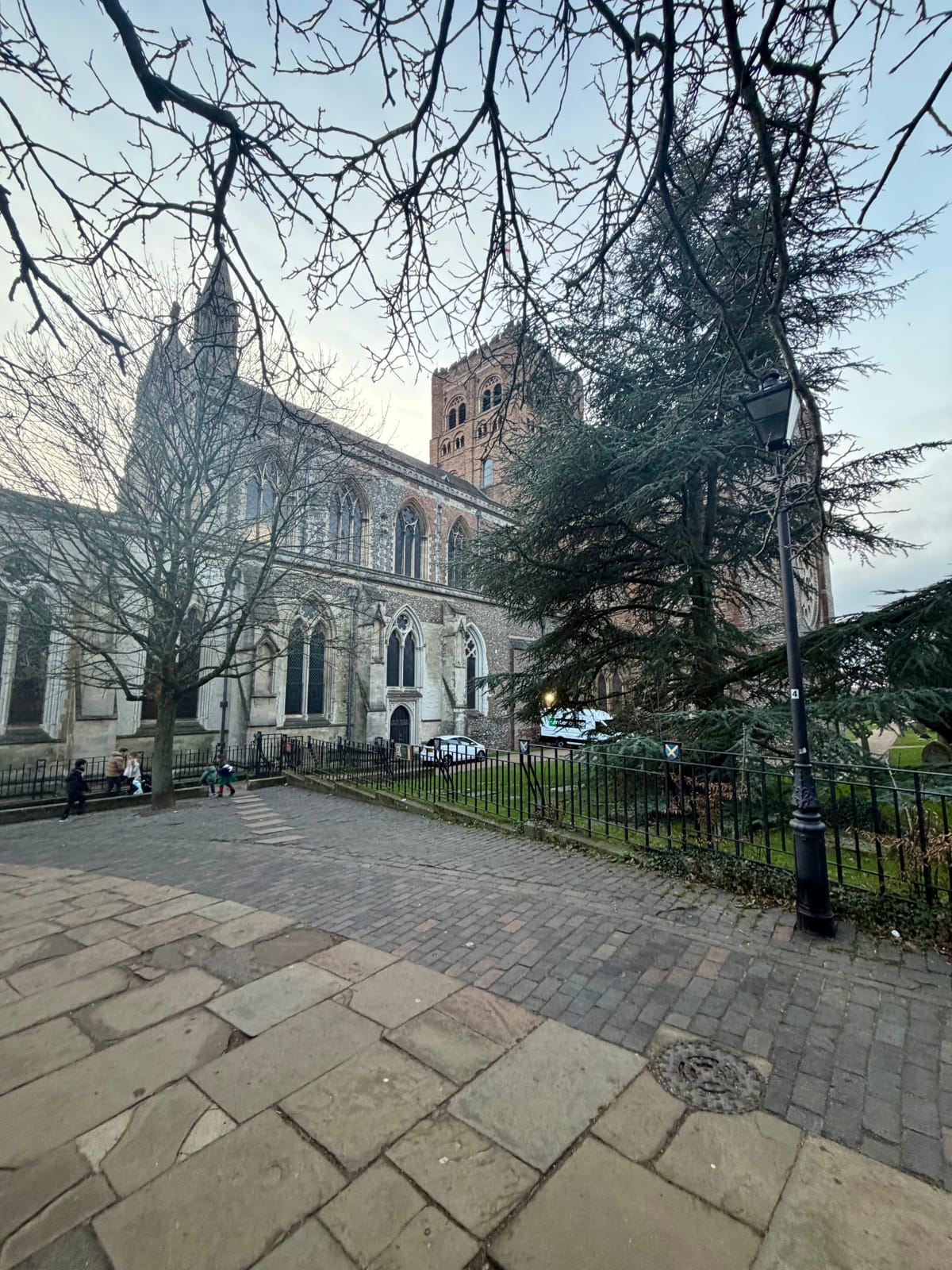
St Albans does not shout. It does not arrange itself for reverence. It lives in weather, stone, and the ordinary rhythm of an English town. Yet here, a man once counted truth worth more than himself. A Roman town. A priest hidden. A refusal to obey when obedience was expected. No heavenly signs. No haloed certainty. Just a decision that risked everything and a body that paid for it.
The difficulty is not describing what happened. The difficulty is facing what it means that faith once demanded this, and that the Church has blessed it ever since.

✒️ Augustine: Judgment, Intention, and the Terror of Wrongly Loving
Augustine does not admire every death for God. He fears them. He distrusts those who pursue glory in dying. He worries about vanity disguised as holiness. He worries about those who love the idea of themselves as martyrs more than they love God. He believes that even suffering can become an idol.
So Augustine tightens the conditions. Sincerity is not enough. Intensity is not enough. Even courage is not enough. What matters is the ordering of love. The heart must be disciplined. The self must be examined. The Church must judge. The martyr does not author his sanctity. The community discerns it, with trembling.
Against that severity, Alban feels almost fragile. He shelters a priest. He substitutes himself. He stands before Roman judgment when he could have stepped aside. His act is ethically beautiful at the level of human love before it is theologically defined. But Augustine would refuse sentimentality. Alban’s courage must be interrogated. His conscience must be weighed. His act cannot be romanticised simply because it ended in blood.
Augustine does something profoundly uncomfortable. He insists that martyrdom is not a stage for spiritual heroism. It is a grave moral category that risks damnation if badly motivated and requires judgment even after death. The saint is never safe. Not even in admiration.
⚔️ Foucault: Power, Flesh, and the Machinery of Meaning
Foucault makes Augustine’s severity feel almost comforting. Augustine at least believes that pure love can exist. Foucault refuses even that reassurance. He reminds us that truth is not simply discovered. It is manufactured, cultivated, disciplined into bodies and communities through practice, expectation, ritual, punishment, and memory.
Power does not only command. It teaches. It forms. It writes identity into flesh.
Martyrdom appears within that machinery. Rome uses execution to teach obedience. Christianity uses martyr narratives to teach faithfulness. One order disciplines by fear. The other disciplines by sanctifying refusal. Neither operates outside power. Both produce forms of life capable of loyalty and sacrifice.
The martyr’s body is therefore not merely killed. It is staged. It is narrated. It is claimed. It becomes material for communal identity. Alban does not simply die. He is seized by memory. He becomes a symbol. He becomes an instrument. His pain becomes pedagogy.
This is where Foucault bites hardest. Martyrdom may indeed witness to God. But it also witnesses to the capacity of institutions to turn suffering into authority. The Church does not merely remember martyrs. It uses them. It teaches with them. It legitimises itself through them. That may be holy. It may also be dangerous.
Perhaps both.

🛡️ Alban: Not a Legend, a Decision
Strip away the cathedral. Strip away relic, hymn, and feast day. What remains is a man in an imperial province who made a decision with no guarantee that his death would mean anything at all. He does not yet know he is a martyr. He is simply someone who refuses to hand over another human being. He acts, and only later does theology arrive to interpret him.
This feels morally purer. It is also more frightening. Because once Alban dies, he no longer owns his story. Power owns it. Memory owns it. The Church owns it. His body passes from personal suffering to public symbol.
If we reverence this too quickly, we become dishonest.
⚖️ Between Augustine and Foucault
Augustine will not let us admire martyrdom lazily. Foucault will not let us sanctify it innocently. Augustine disciplines love with judgment. Foucault disciplines truth with suspicion. Augustine fears the soul that mistakes fanaticism for holiness. Foucault fears communities that disguise power as faith.
Together they force a question we may prefer to avoid.
Is martyrdom a revelation of God’s truth, or is it a brilliant moment in which power learns how to clothe itself in sanctity? Or does it live in the terrifying space where both are true at once?

🕯️ Witness in Our Age
We do not live under Rome, nor beneath Augustine’s church. We inhabit a world of curated selfhood, performative conviction, and spectacle without cost. We tweet our outrage. We aestheticise moral courage. We call ourselves brave for risking embarrassment, not flesh.
Martyrdom cuts across that with something deeply indecent. It reminds us that serious belief may still demand more than comfort. It suggests that there are truths worth bodies. And yet it also exposes how ready institutions are to baptise suffering, to sanctify loss, to tell beautiful stories about death in ways that can become dangerously seductive.
So we cannot feel entirely proud that martyrdom still moves us. There is admiration there, but there should also be unease.
🔥 What Finally Remains
In St Albans the stones do not preach. They remember. They hold the memory of a man who acted because he believed something mattered more than fear. They also hold the weight of what was done with that memory afterward.
Martyrdom does not prove God. It cannot excuse every holy violence justified in its name. But it reveals something stubborn about human beings. It shows that we can live as if truth deserves risk, that love can sometimes pull a person past the boundaries of safety, and that faith, at its most serious, refuses to remain theoretical.
It is deeply unsettling. It should be. And perhaps that unsettledness is the most honest form of reverence we can still offer.