Ribs in the Vault: Architecture Against the Sovereign Self
🏛️ I. Sovereignty in the Age of Strongmen
In recent years, modern politics has rediscovered a taste for sovereignty. Donald Trump performs it theatrically, as if will alone could bend institutions. Peter Thiel articulates it more quietly, arguing that democracy dilutes decisive agency and that exceptional individuals must be liberated from procedural restraint. Across very different registers, the message is similar: the individual must recover primacy. Authority must be concentrated. The self must become decisive again.
This vision depends on a particular anthropology. It imagines the individual as self-grounding, self-authorising, capable of standing alone against systems and history. The sovereign self becomes the model for the sovereign state.
But what if sovereignty is the illusion?
What if strength is not autonomy but structure?
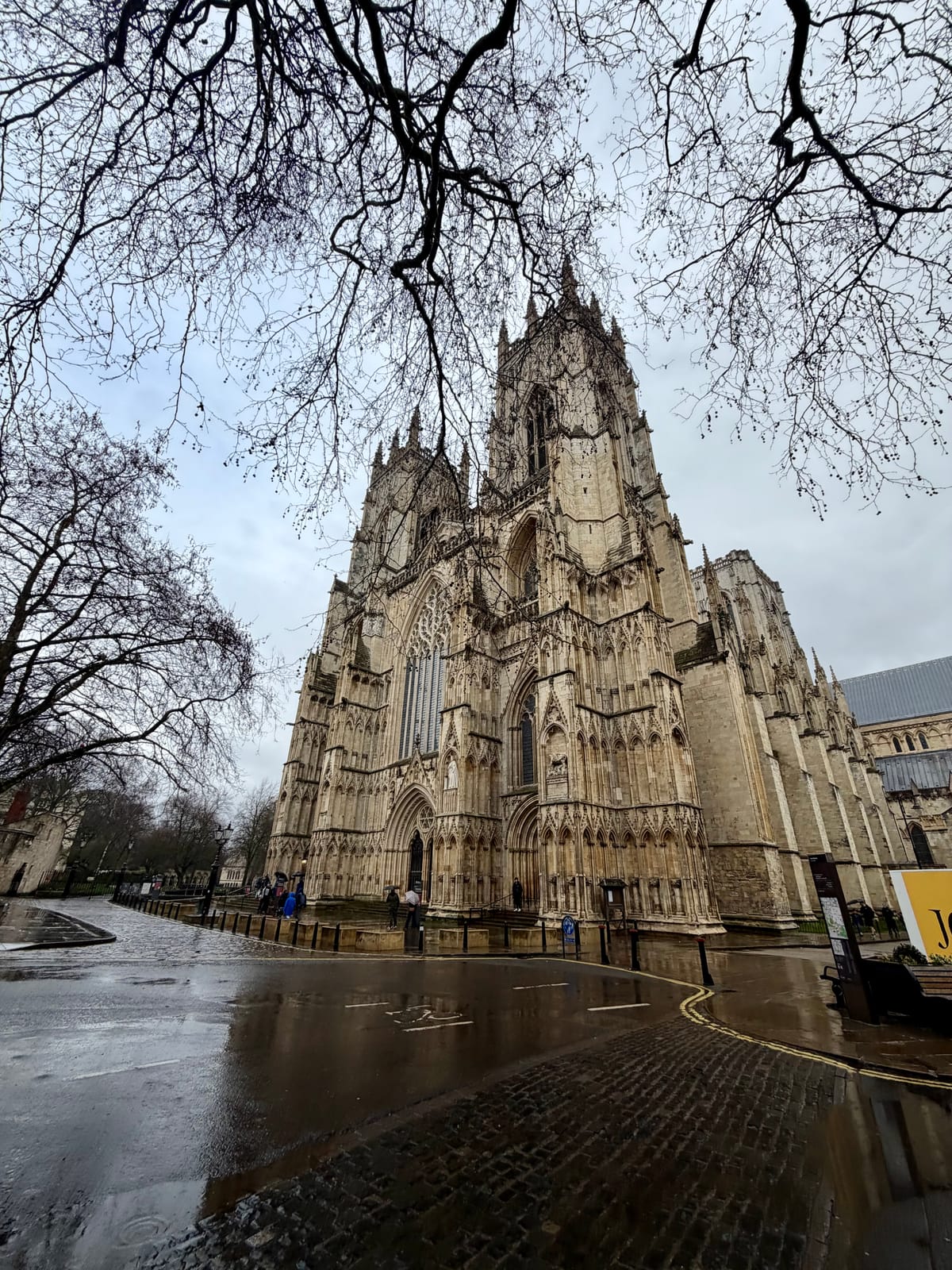
It was with that question in mind that I found myself standing in the rain before York Minster.
🌧️ II. Façade in the Rain
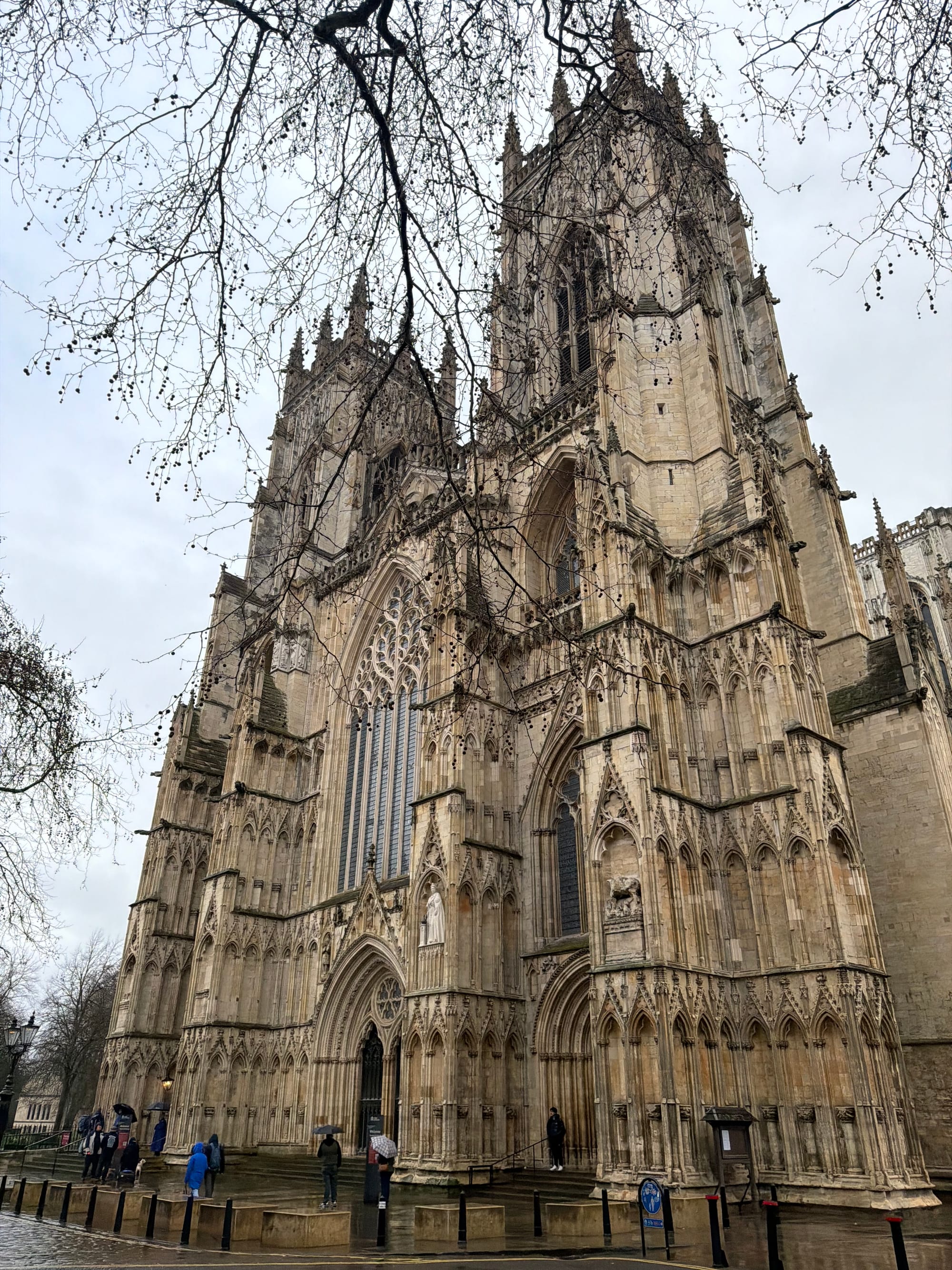
From a distance the Minster appears sovereign. It rises above traffic and umbrellas. It seems complete, self-contained, almost indifferent to the smallness below.
And yet the longer one stands there, the more the illusion thins.
The façade is not solidity but articulation. It is lace in limestone. Every pinnacle leans on something else. Every vertical thrust is countered by outward pressure. Remove the tension and the structure would fall.
Bataille insists that no being is self-sufficient. Each is only a temporary configuration within a greater whole. What looks monolithic is, in truth, relational. York Minster is not a block. It is an arrangement.
Heraclitus would have recognised it instantly. Stability is tension. Identity is conflict held in balance. What appears sovereign is only a resting point in the vast flux of things.
The Minster does not refute impermanence. It refutes isolation.
Modern politics dreams of façades.
Architecture reveals buttresses.
🪨 III. The Vault and the Surplus of Being
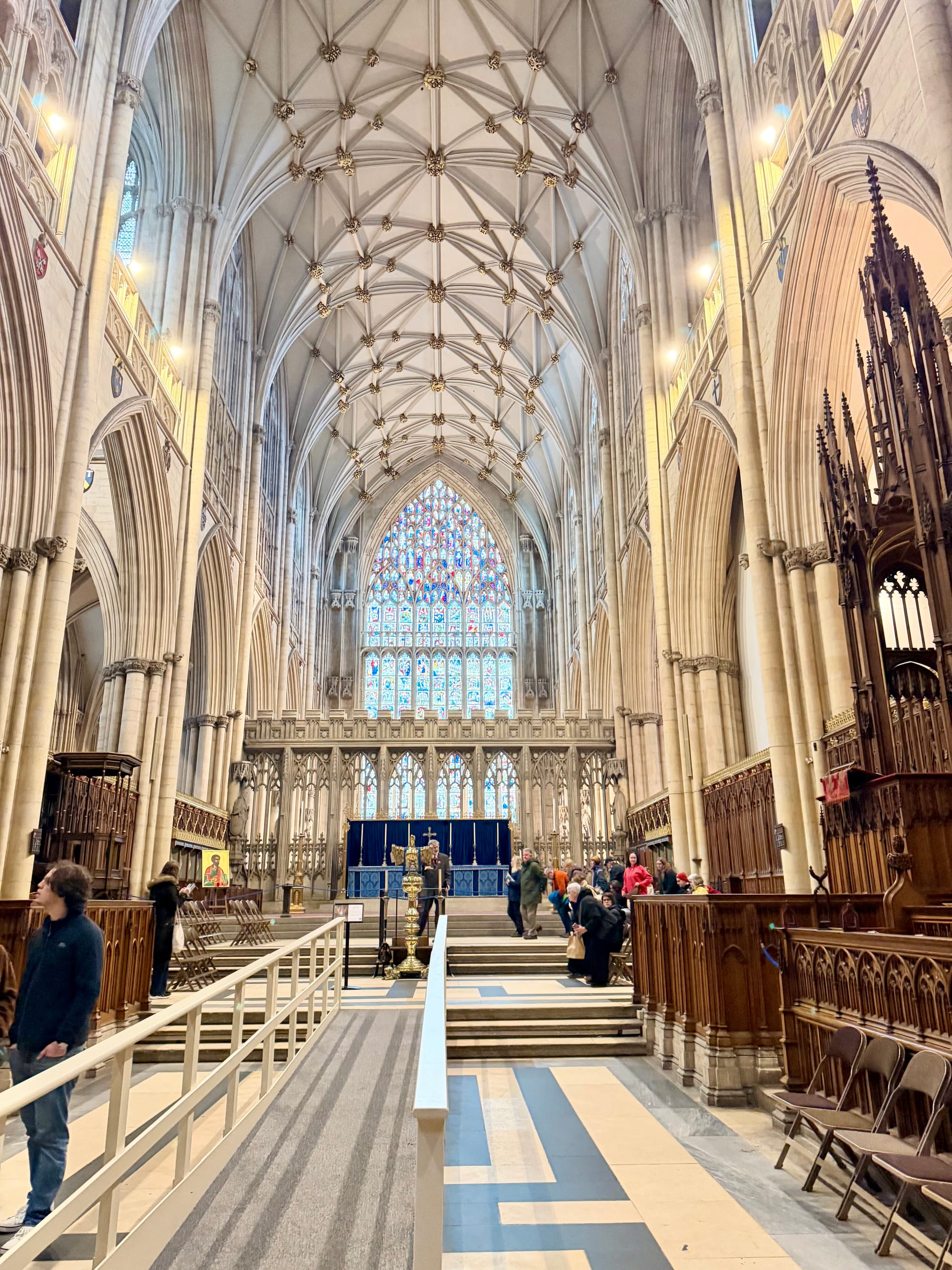
Inside, the ribs of the vault cross and interlock. The ceiling is not a ceiling but a geometry of pressures. It exists because forces move through it continuously. Weight travels along arcs. Stress distributes itself outward.
Nothing here stands alone.
Bataille’s most unsettling claim is that insufficiency arises not from lack, but from surplus. There are too many beings, too many forces, too much interpenetration for any one element to seal itself off. We are insufficient not because we are empty, but because we are exposed.
Under these vaults that exposure becomes visible. Each rib communicates with another through load and resistance. Each stone exists by virtue of others.
To be is to be in relation.
A politics built on the fantasy of the self-sufficient individual resembles a ceiling without ribs. It may impress at first glance. It will not endure.
⚰️ IV. Ipseity and the Failure of Permanence
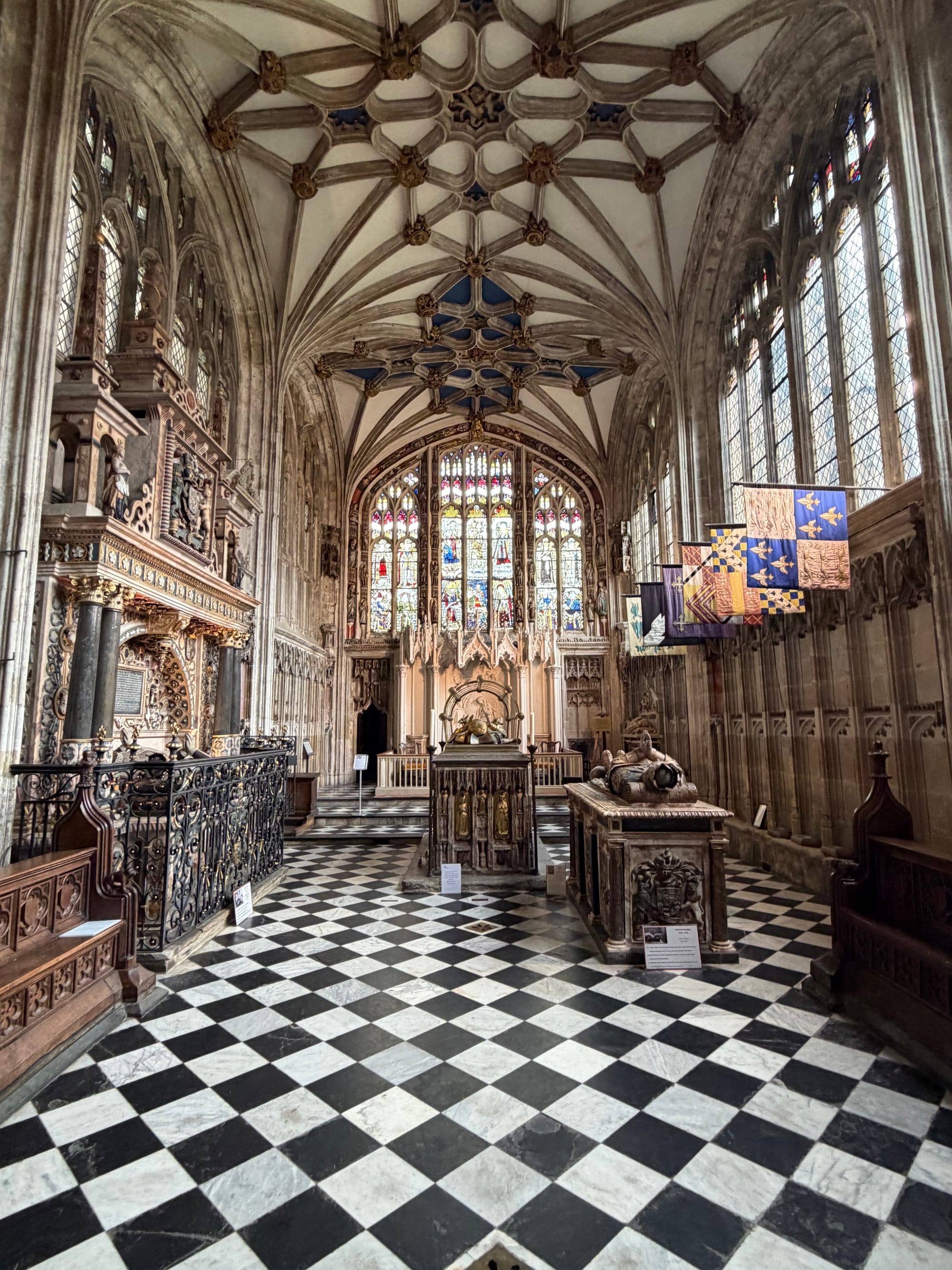
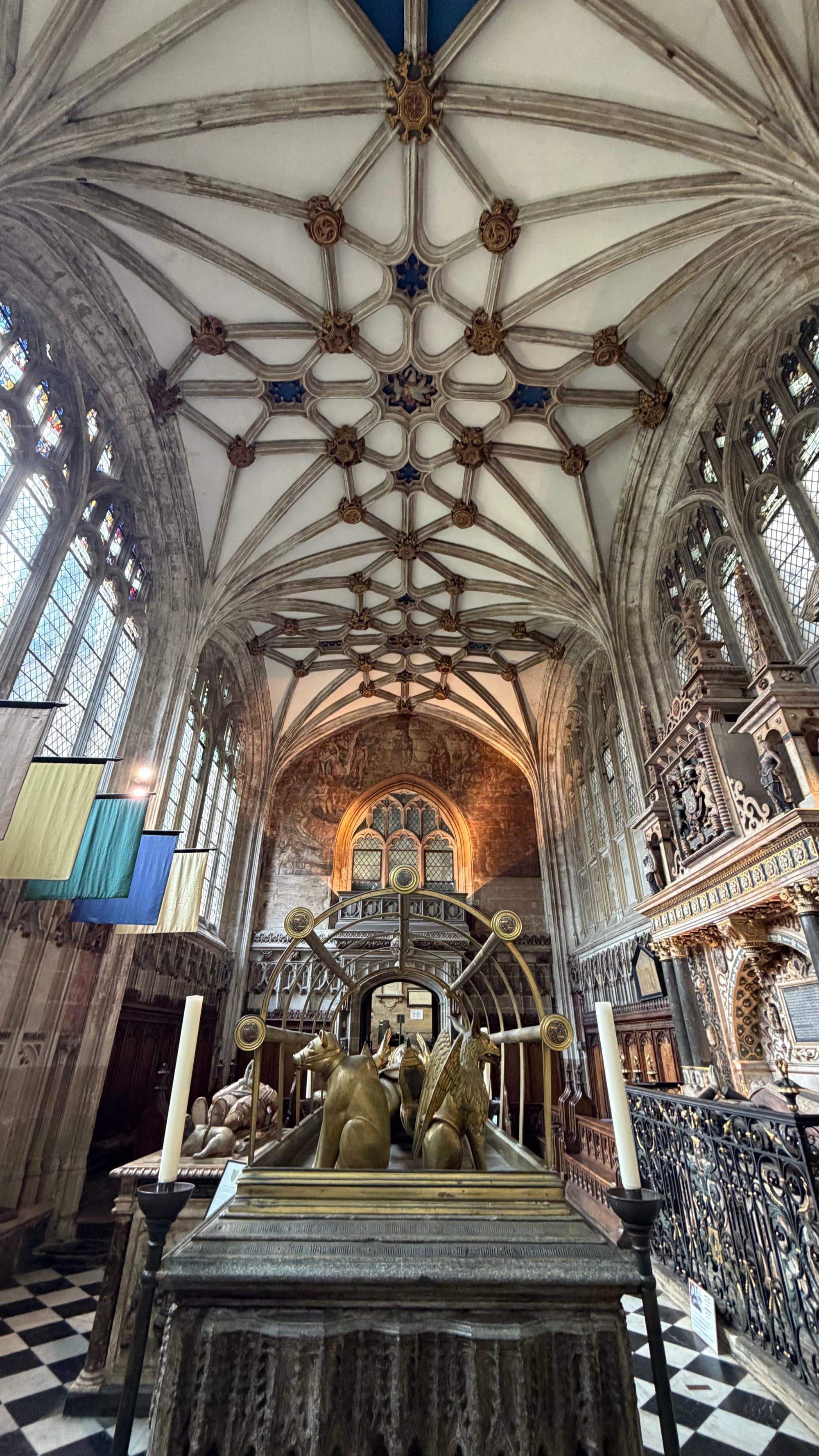
The Beauchamp Chapel attempts permanence.
Effigies lie in armour, hands folded, faces composed into still authority. Heraldry fixes identity in stone. Titles are carved as if they could arrest time.
This is the aesthetic of ipseity, the fantasy that a being is equal to itself, fully possessed, self-grounded. It is also the aesthetic of political strongmen, who carve their names into institutions as if inscription could secure permanence.
But no being is equal to itself. The effigy rests upon a body that has dissolved. The carved face remains, but the life has dispersed.
Heraclitus reminds us that the self appears as a problem, not as triumph. Time absorbs every attempt at singular permanence.
The tomb proclaims sovereignty.
History replies insufficiency.
🕯️ V. Colleges and Continuity
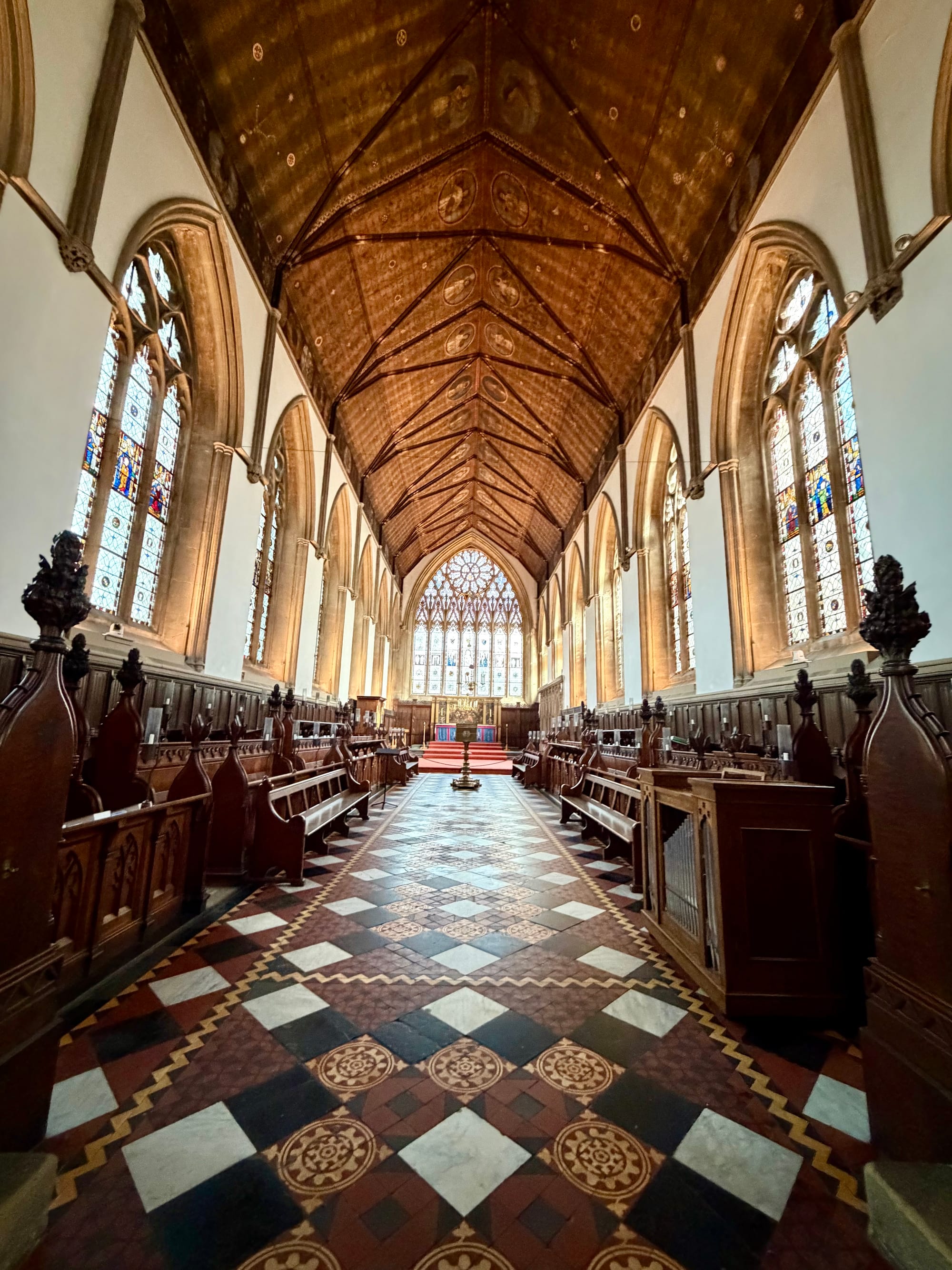
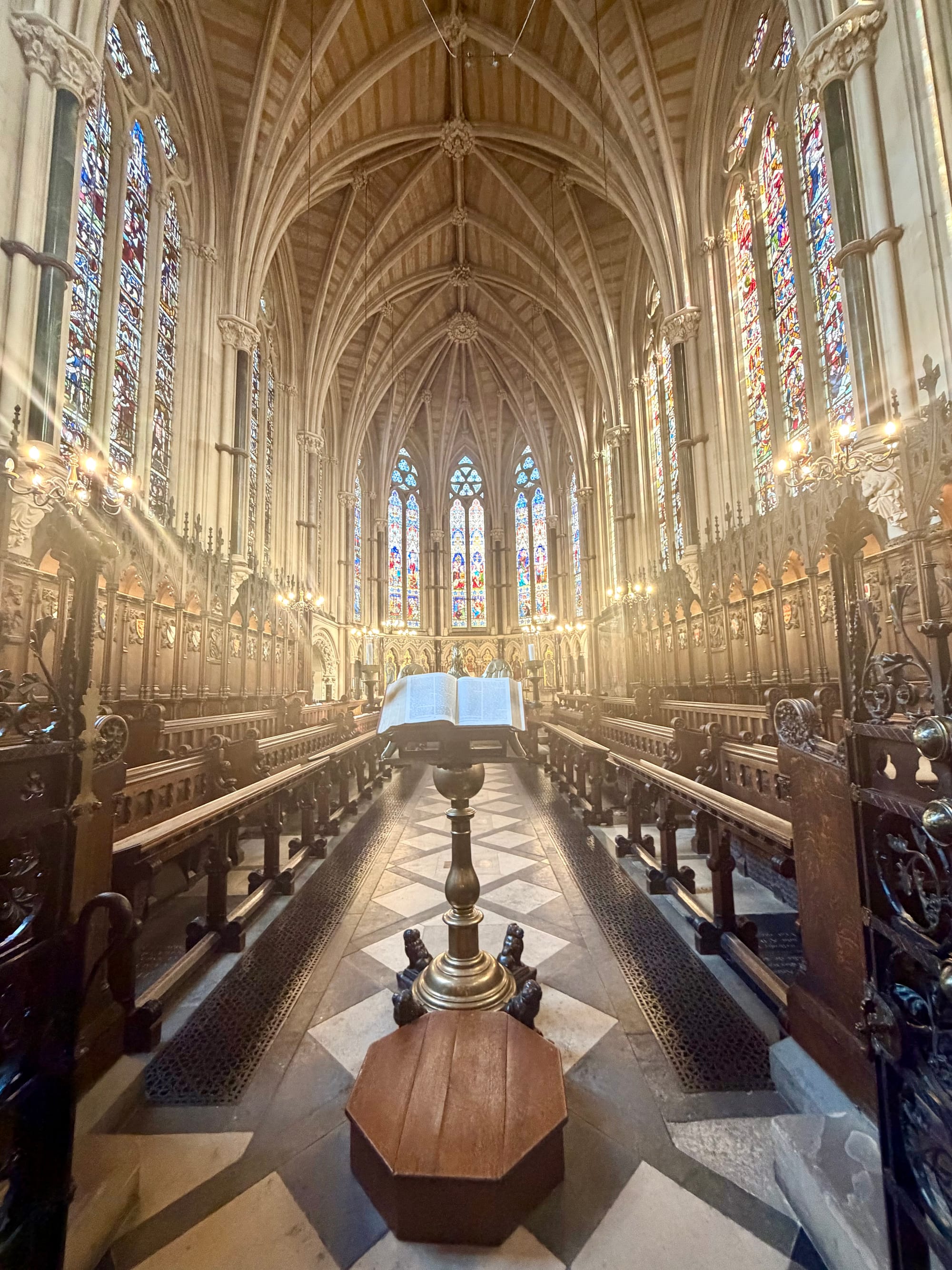
In Oxford the lesson is quieter.
At Exeter the chapel rises cleanly, almost confidently. Its vertical lines draw the eye upward. But the light that fills it comes sideways, fractured through stained glass.
At Merton the floor bears names worn smooth. Scholars lie beneath the stone they once crossed. Individual ambition dissolves into collegiate continuity. The college endures precisely because no individual does.
Bataille writes that every being belongs to a greater being while being composed of smaller ones. The college embodies this truth. No mind is unborrowed. Each scholar enters a conversation already in motion.
Institutions survive not through singular assertion but through layered dependence.
The sovereign thinker is as fragile as the sovereign ruler.
🕊️ VI. Blackfriars and the Shared World
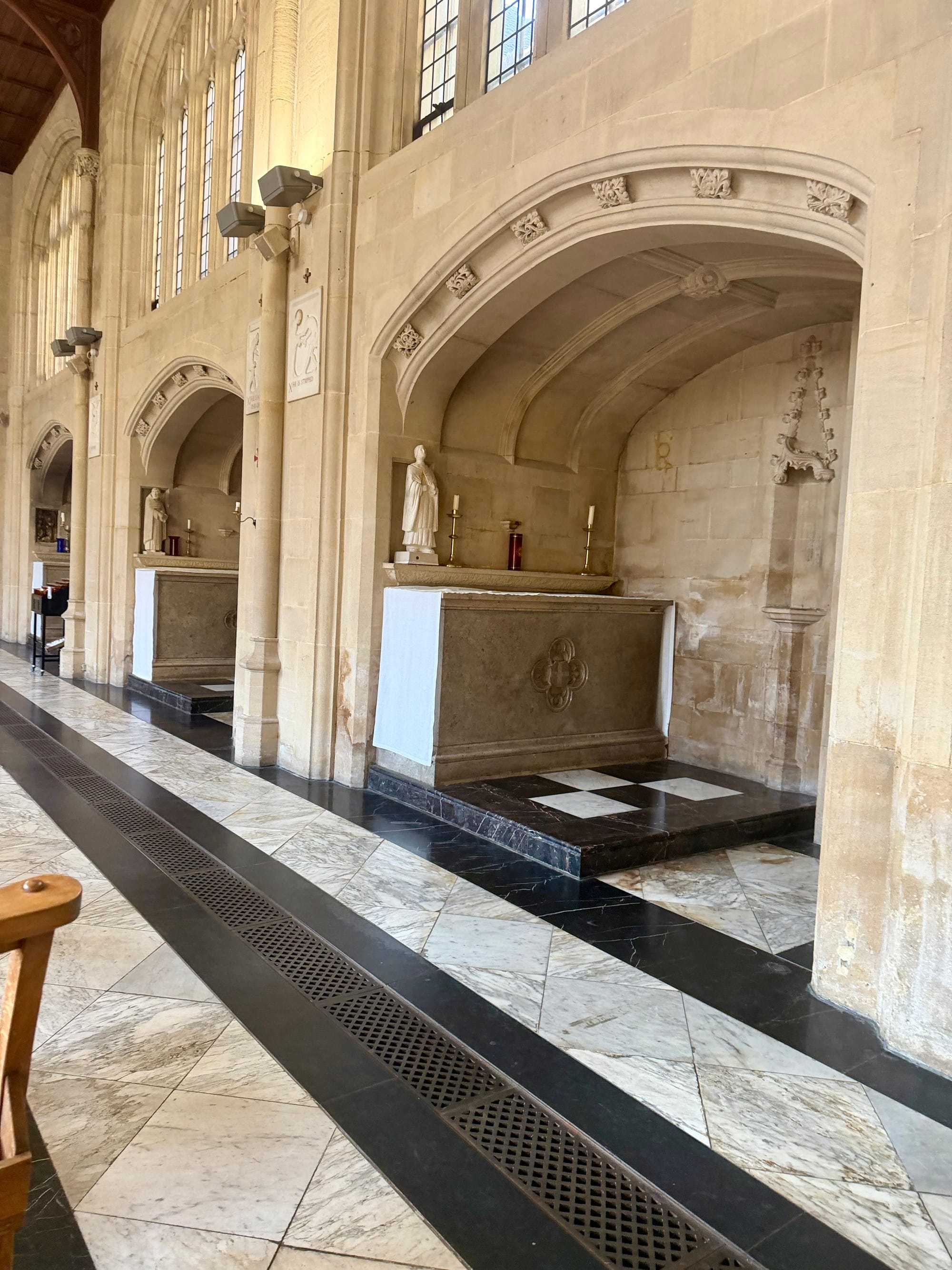
Blackfriars feels almost anti-monumental. Simpler. Restrained. Built for speech and listening rather than spectacle.
Heraclitus distinguishes between the private world of the sleeper and the shared world of the awake. The friary belongs to the shared world. It resists enclosure.
To preach here is not to dominate but to participate. Authority is not seized. It is received, mediated, shared.
Against a political culture that prizes disruption and unilateral will, such spaces quietly insist that strength lies in communion.
📖 VII. Choir Light and the Indifferent Cosmos
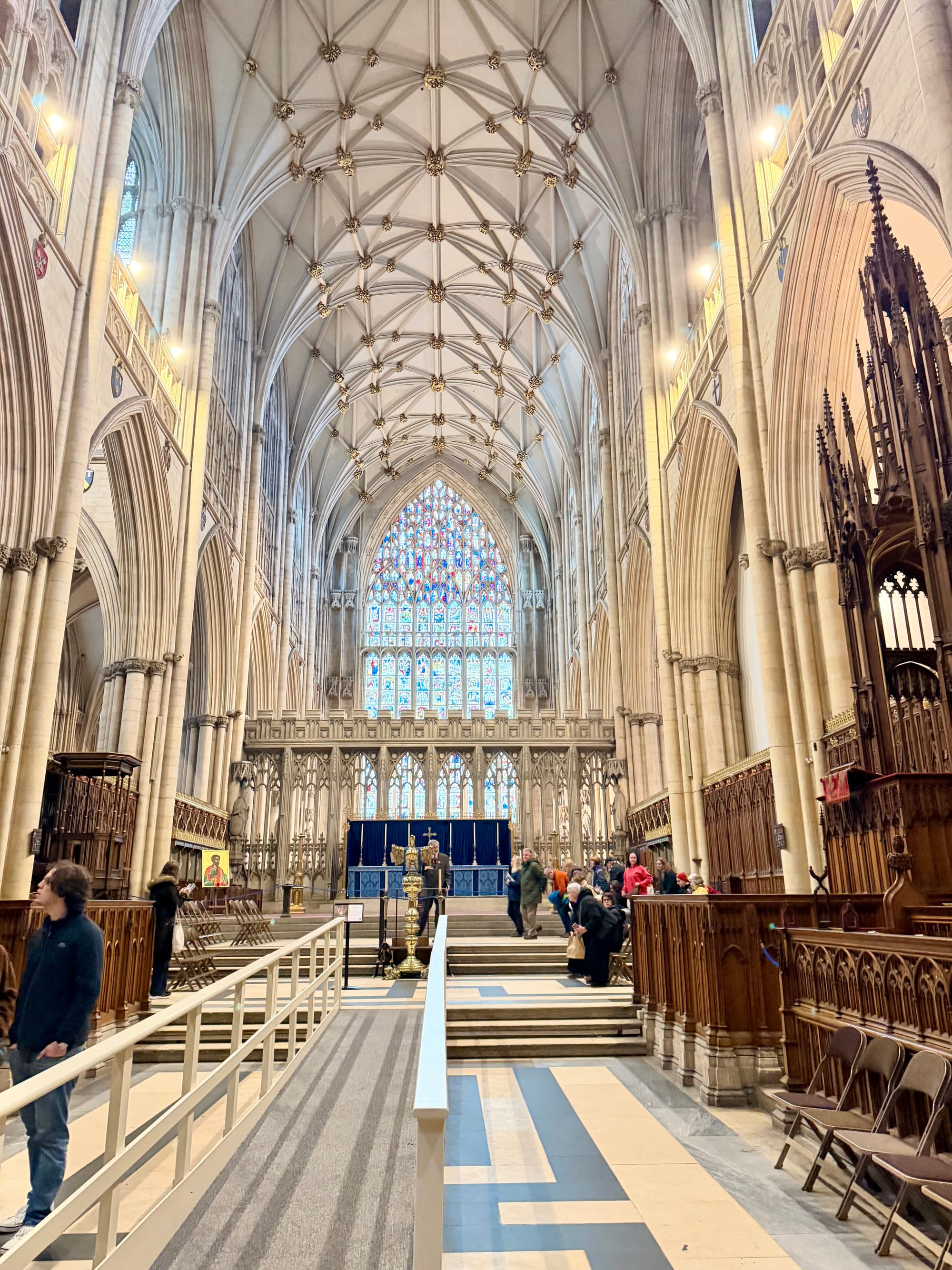
In the choir at York, light filters through stained glass and settles on an open page. The scene is quiet, almost gentle.
At the scale of the universe, Bataille reminds us, the world is process, not possession. We are particles within it. The Minster will erode. The glass will fracture. The names carved in stone will fade.
Nothing escapes flux.
Heraclitus’ world is not chaos but order through tension. Bataille’s insufficiency is not despair but interdependence.
The building endures because it does not pretend to be self-grounded.
Stone survives because it yields to structure.
Modern politics dreams of decisive individuals.
Architecture teaches a harder lesson.
We are ribs in a vault.
Resting points in a flux that exceeds us.
Strong not because we stand alone, but because we are held.