Petals of Time: A Journey Through Japan's 72 Microseasons
In Japan, the year isn’t measured only by months or temperature shifts. It moves with the flowers; not just cherry blossoms, but dozens more, each whispering a quiet change. The Japanese calendar, once divided into 24 solar terms and then into 72 micro-seasons (七十二候), is a reminder that life turns not in sudden revolutions but in petals, in fragrances, in the precise angle of rain against leaf.
This is a record of the year I spent listening to flowers.
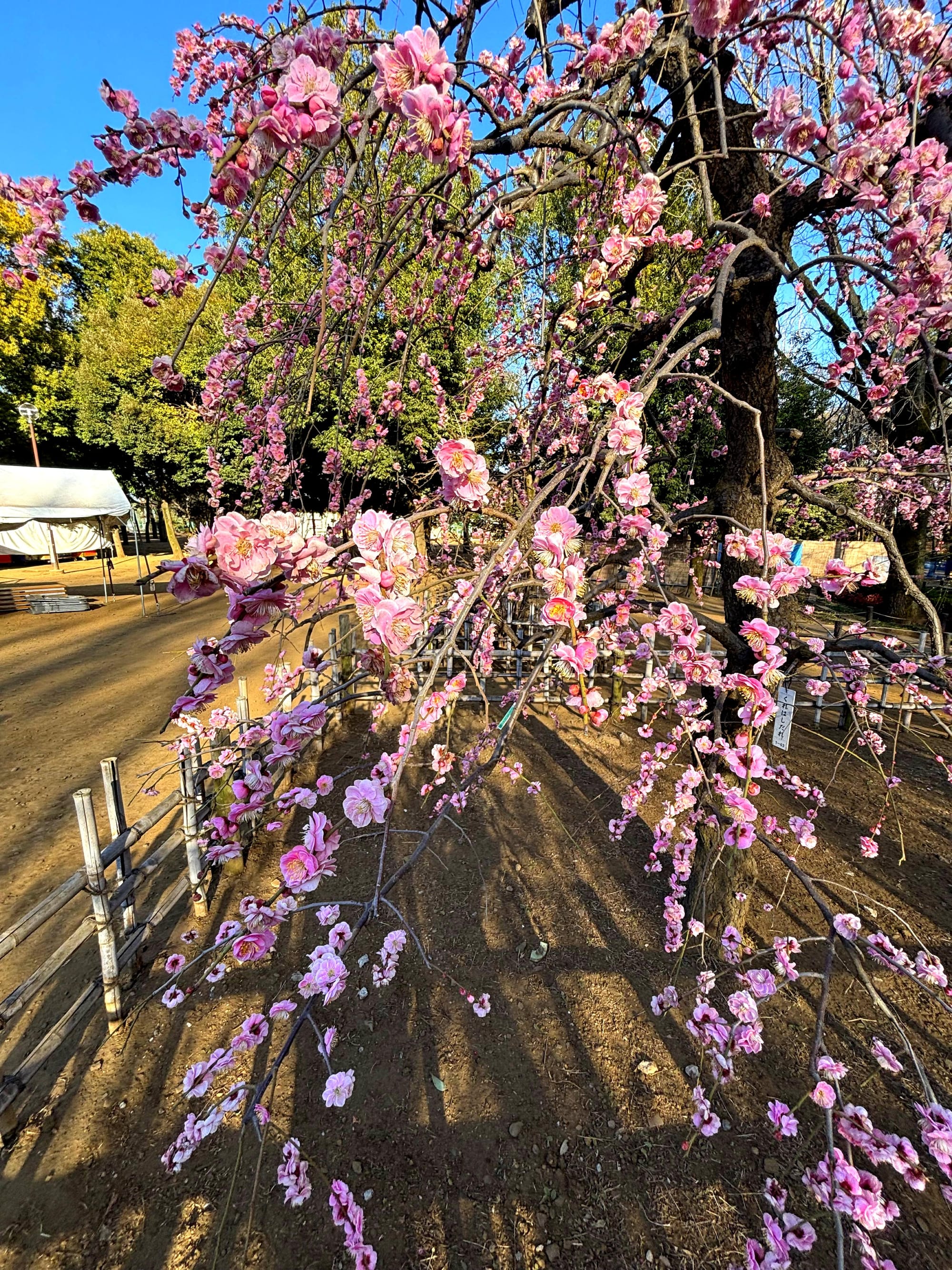
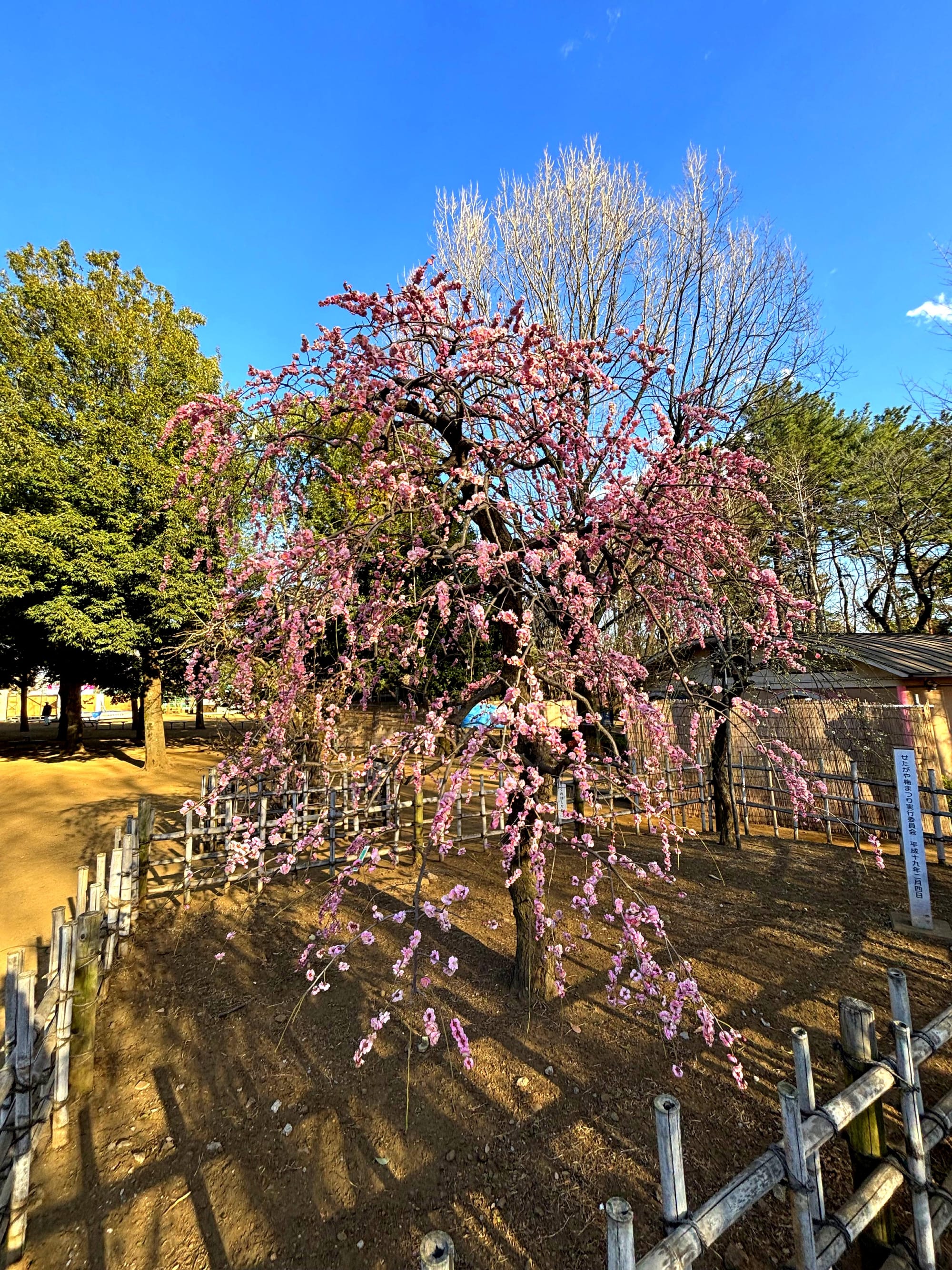
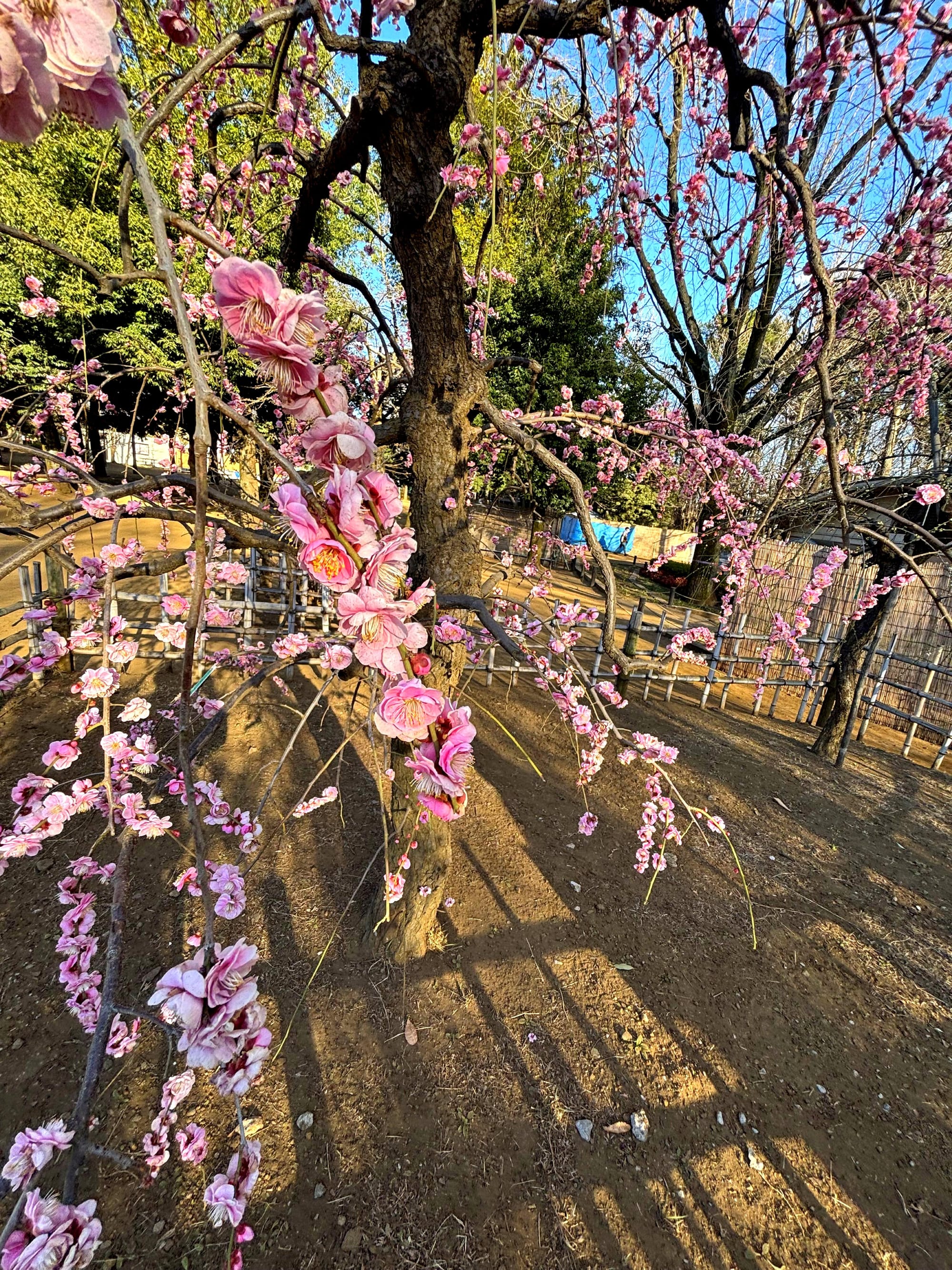
🟣 Plum Blossoms — Setagaya, Late Winter
Season: 初花 (Hatsuhana – “First Flowering”)
Literary excerpt:
「梅は百花の魁」— "The plum is the harbinger of all flowers." — Old Japanese proverb
Before the fanfare of sakura, before warmth returns in earnest and the parks fill with voices, it is the plum blossoms that arrive. Quietly, without ceremony, they emerge into the thinning chill of late winter, like a breath released after long restraint. In Setagaya, I wandered among them, soft drifts of white and the faintest pink, their fragrance unexpectedly sharp, like something remembered too suddenly. It cut through the air not with sweetness, but with clarity, the way memory sometimes does.
The trees themselves still bore the posture of winter. Their branches were gnarled and dark, twisted with the cold that had not yet fully lifted. And yet, from this austerity, the blossoms unfolded, delicate but unsentimental. They held something older than beauty, something closer to persistence. Not a display but a gesture.
Unlike cherry blossoms, which bloom to celebration, plum blossoms feel inward. They do not seek admiration. They do not perform. There are no picnics beneath them, no festivals timed to their peak. They bloom into emptiness, not applause. And perhaps that is why they feel truer. They do not announce spring. They endure winter.
There is a kind of dignity in their timing. To appear when nothing else dares, to soften the starkness without denying it, that is a different kind of courage. The plum does not open in response to warmth. It opens in defiance of cold.
As I walked among them, I felt less like a visitor and more like a witness. The blossoms were not inviting me to celebrate. They were simply continuing, quietly, as they have for centuries. Not asking to be seen, but impossible to forget.
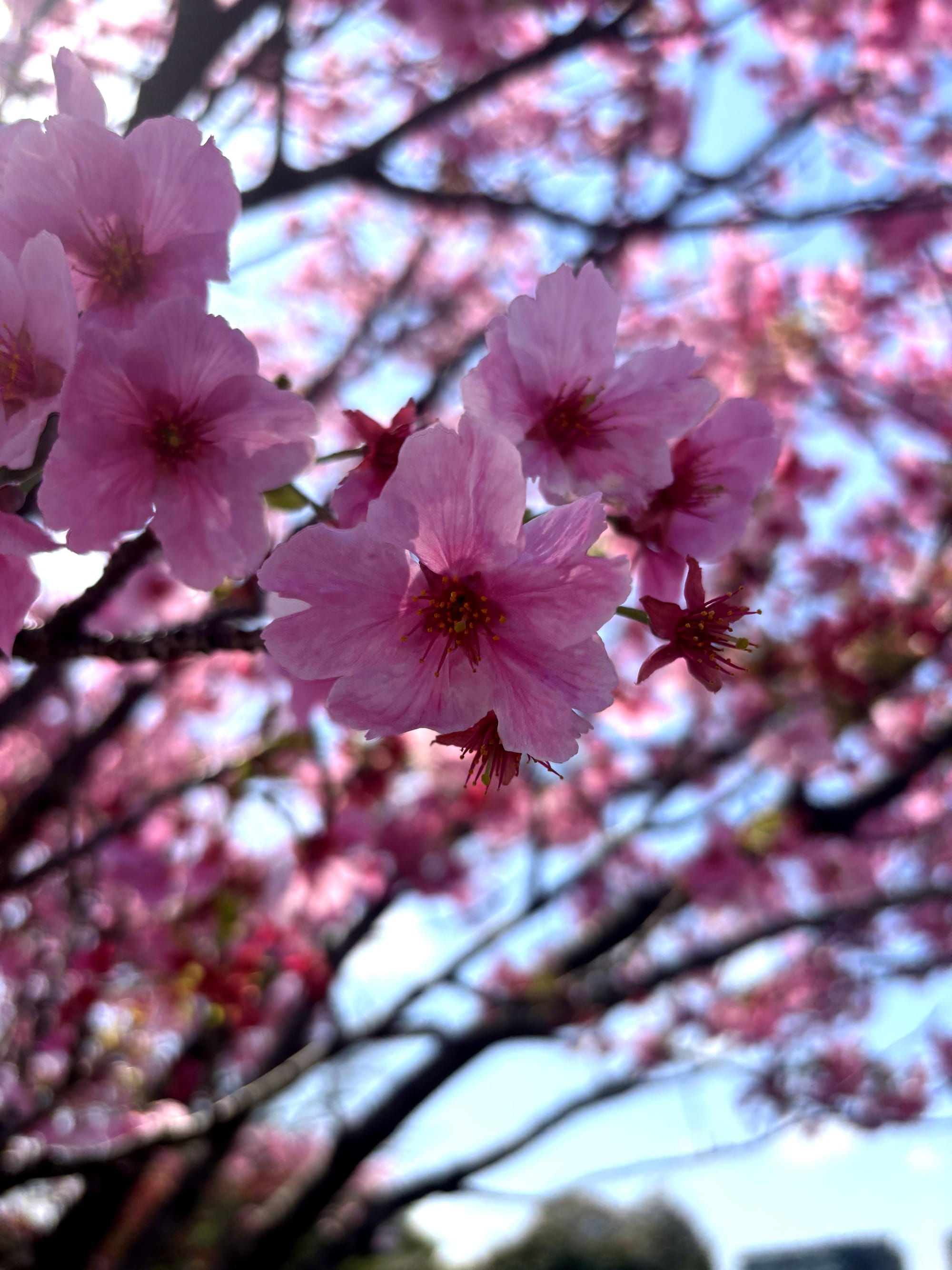
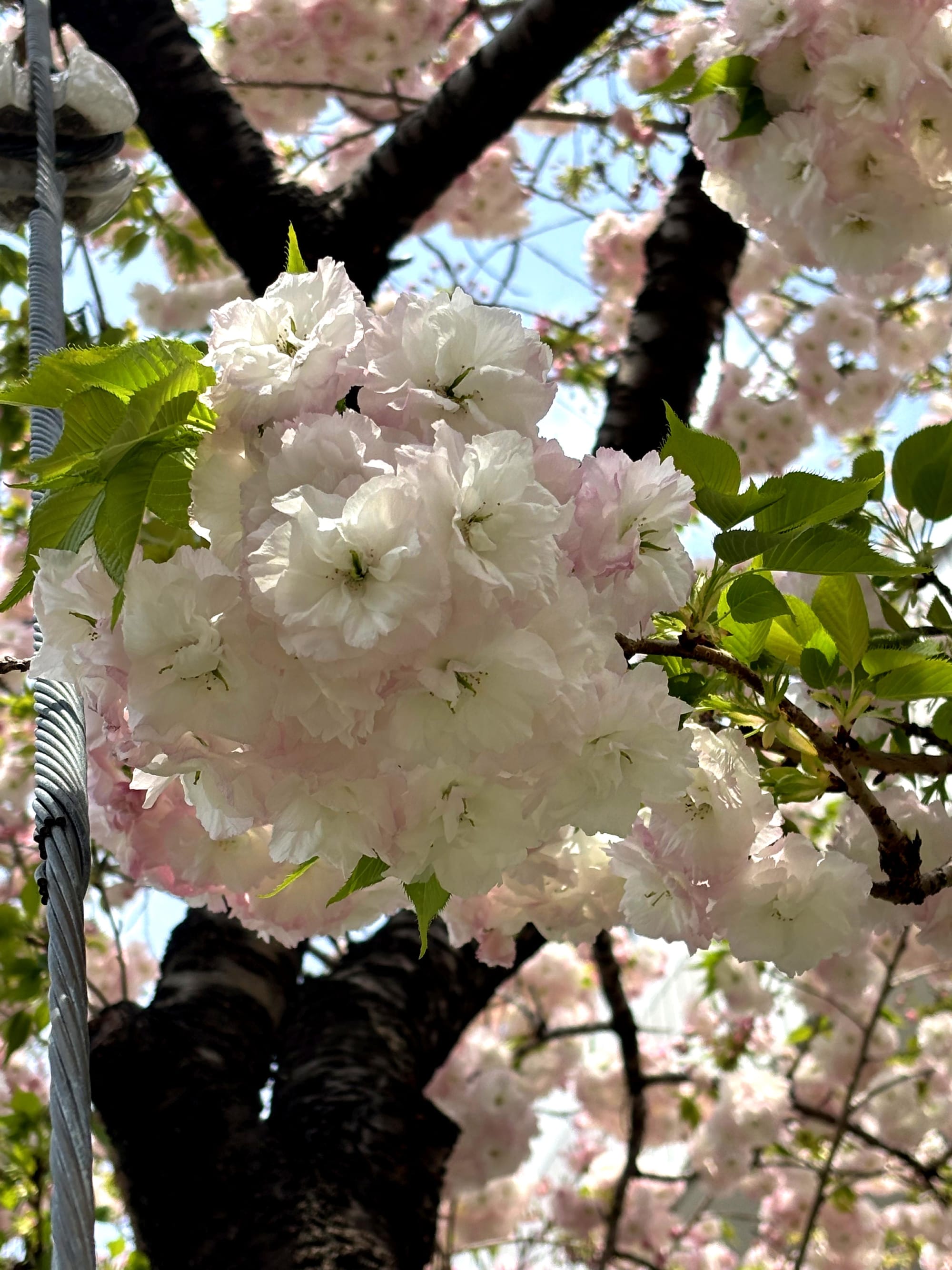
🌸 Sakura — Shinjuku Gyoen, Early Spring
Season: 桜始開 (Sakura hajime te hiraku – “The first cherry blossoms open”)
Literary excerpt:
「花の色は 移りにけりな いたづらに」— “The colour of the flowers has already faded in vain…”
— Ono no Komachi
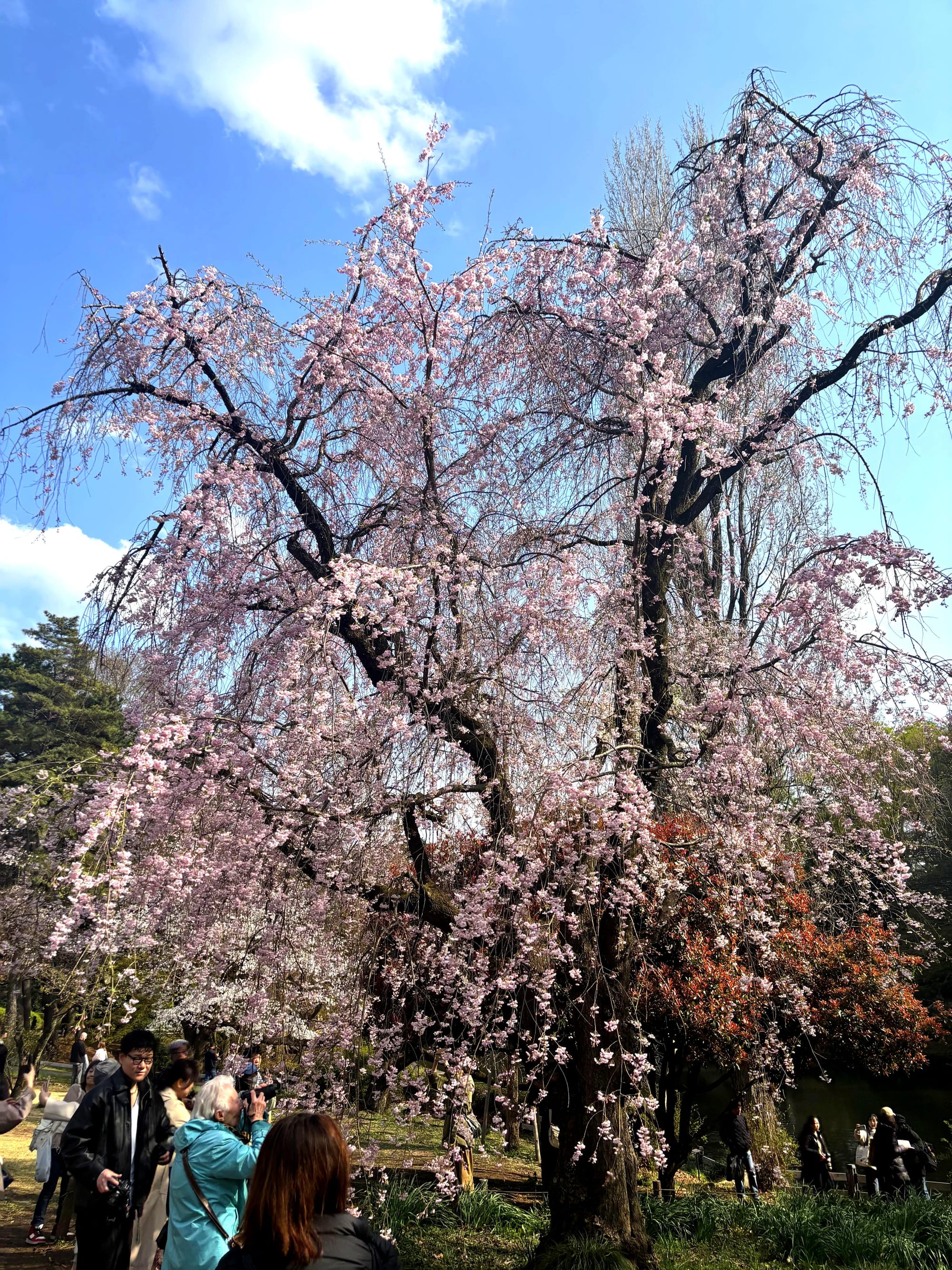
At Shinjuku Gyoen, the sakura gathered the crowds, the cameras, the collective hush. I arrived just after peak bloom: petals scattered like confetti across the path, a soft echo of something already gone. The trees were not bare, not yet, but the moment had slipped just out of reach. Komachi’s verse came to mind: “The flowers wither / Their color fades / In vain…” — and that is its point. Beauty fades, and that is what makes it beautiful.
We speak so often of hanami, flower viewing, the brightness, the joy, the gatherings beneath the branches. But we rarely speak of hanaore: the falling away. And yet, that’s where the poetry resides: not in full bloom, but in the act of passing. The single petal clinging to a sleeve. The breeze that sends the rest across the stones. The stillness after wonder.
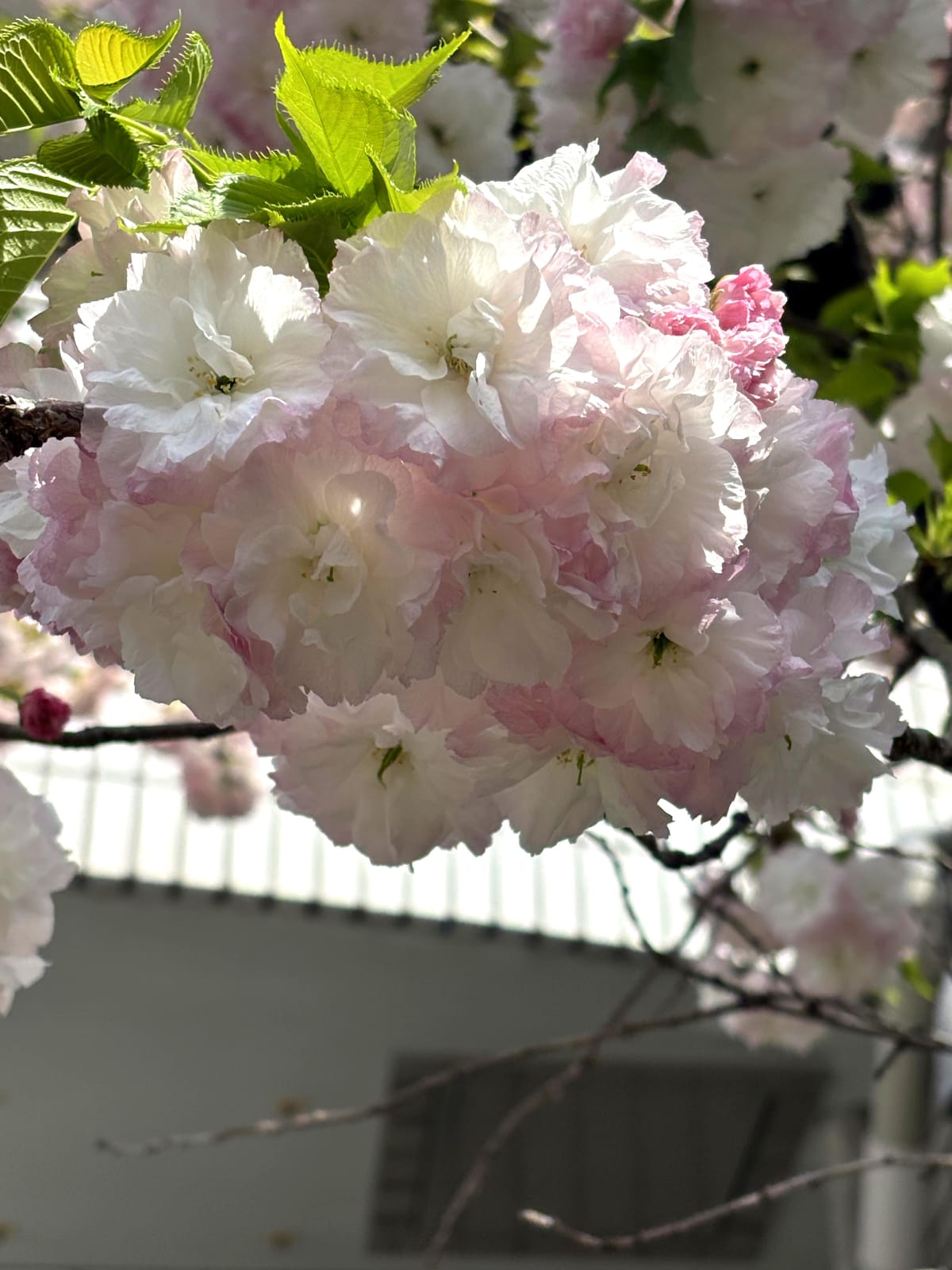
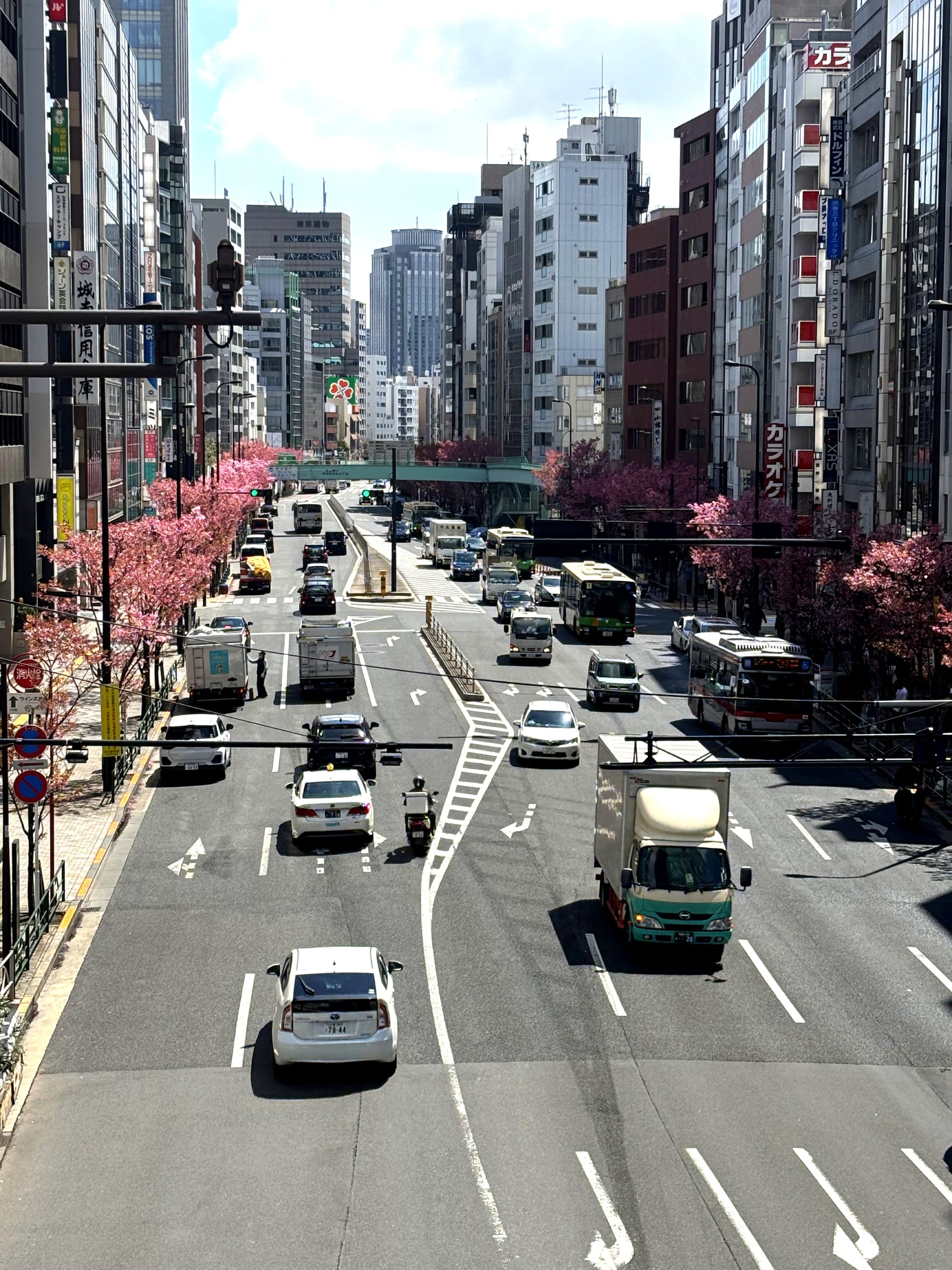
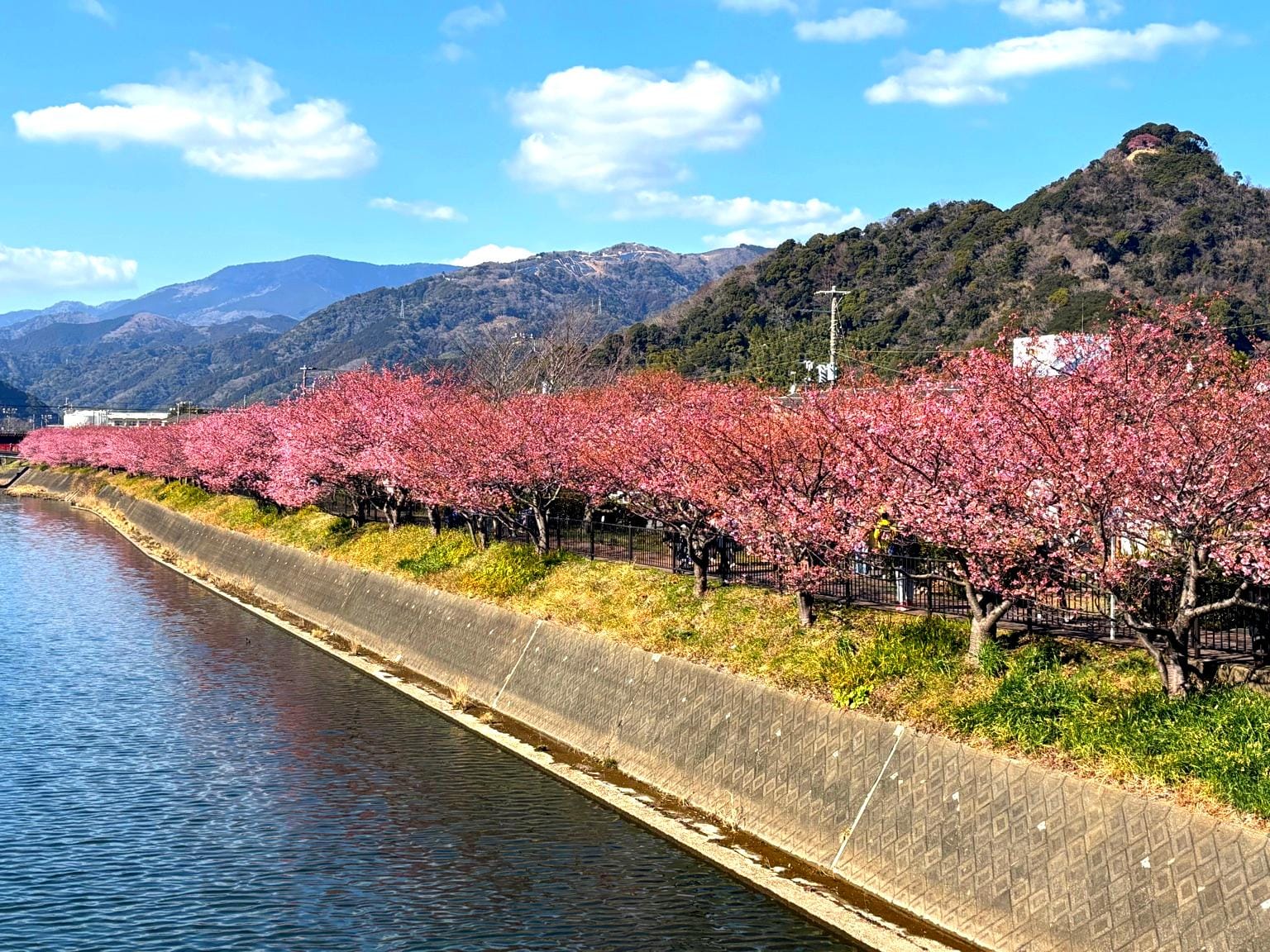
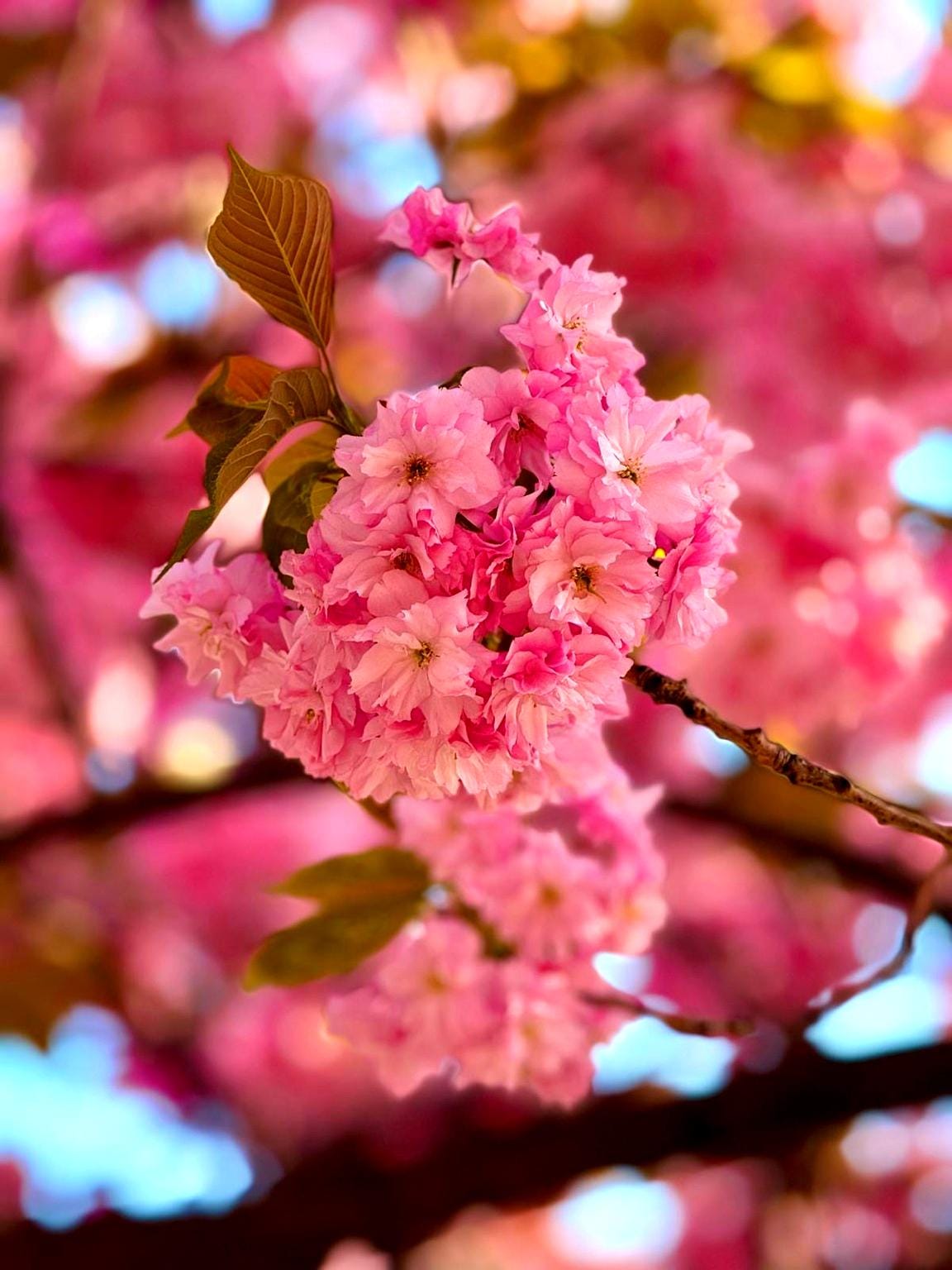
I had also seen the darker pink sakura in Kawazu weeks earlier: the early bloomers, fuller, fluffier, almost unreal in their abundance. At first, I thought perhaps the reverence was overstated. No flower, I believed, could deserve so much ritual, so much pause. But standing beneath those trees, I felt it. The way the blossoms seemed to hold light, to soften the air around them. The way even strangers fell quiet.
Sakura doesn’t demand awe. It invites stillness. It is not just the bloom we witness, but the disappearance. And in that quiet unraveling, something human stirs; a reminder that to love something is also to let it go.
💠 Nemophila — Hitachi Seaside Park, Mid Spring
Season: 霜止出苗 (Shimoyamiete naesugu – “Frost ends, rice seedlings sprout”)
Literary excerpt:
「青は藍より出でて藍より青し」— “Blue comes from indigo, but is bluer than indigo.”
— Chinese proverb often quoted in Japanese poetics
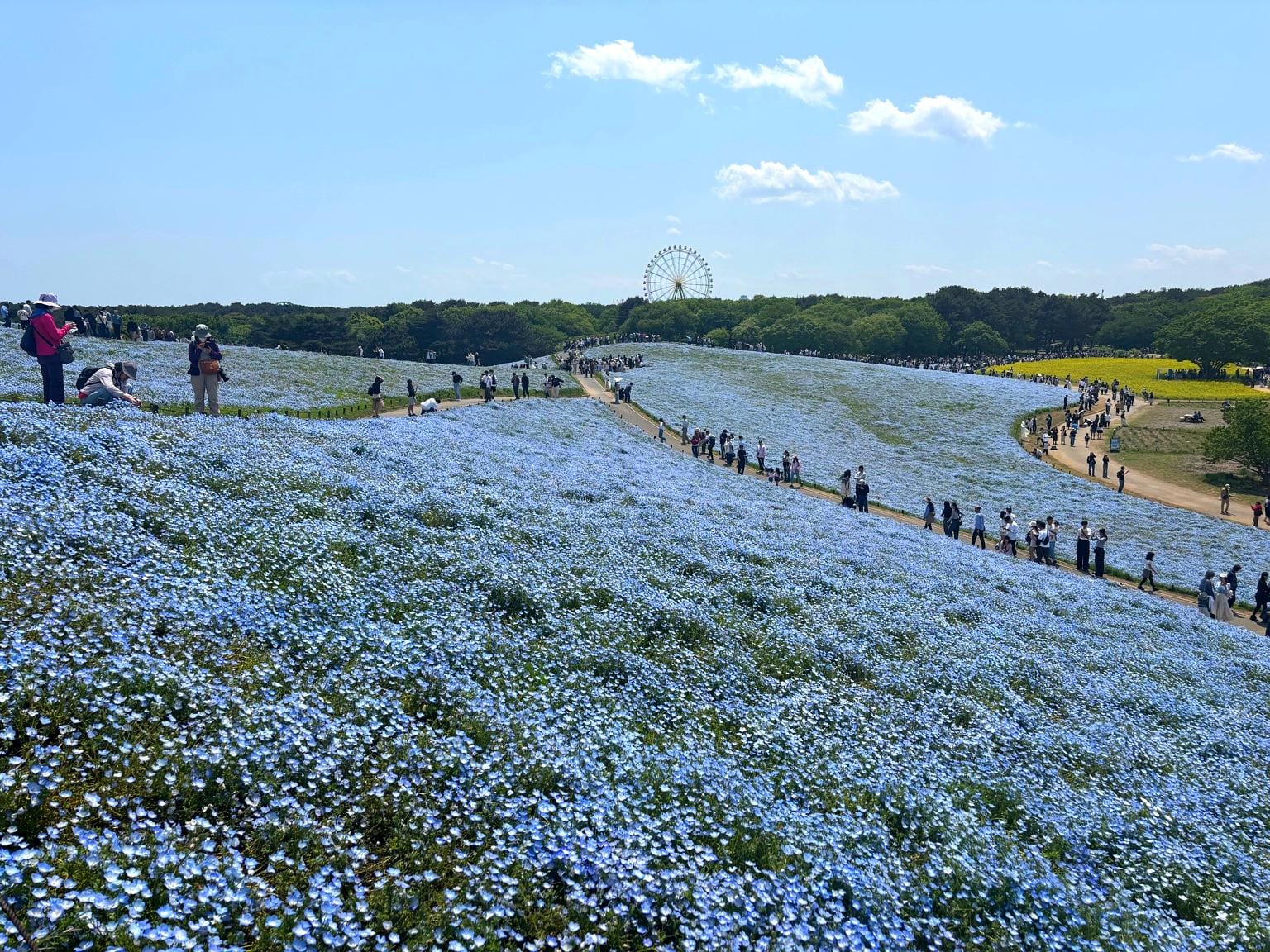
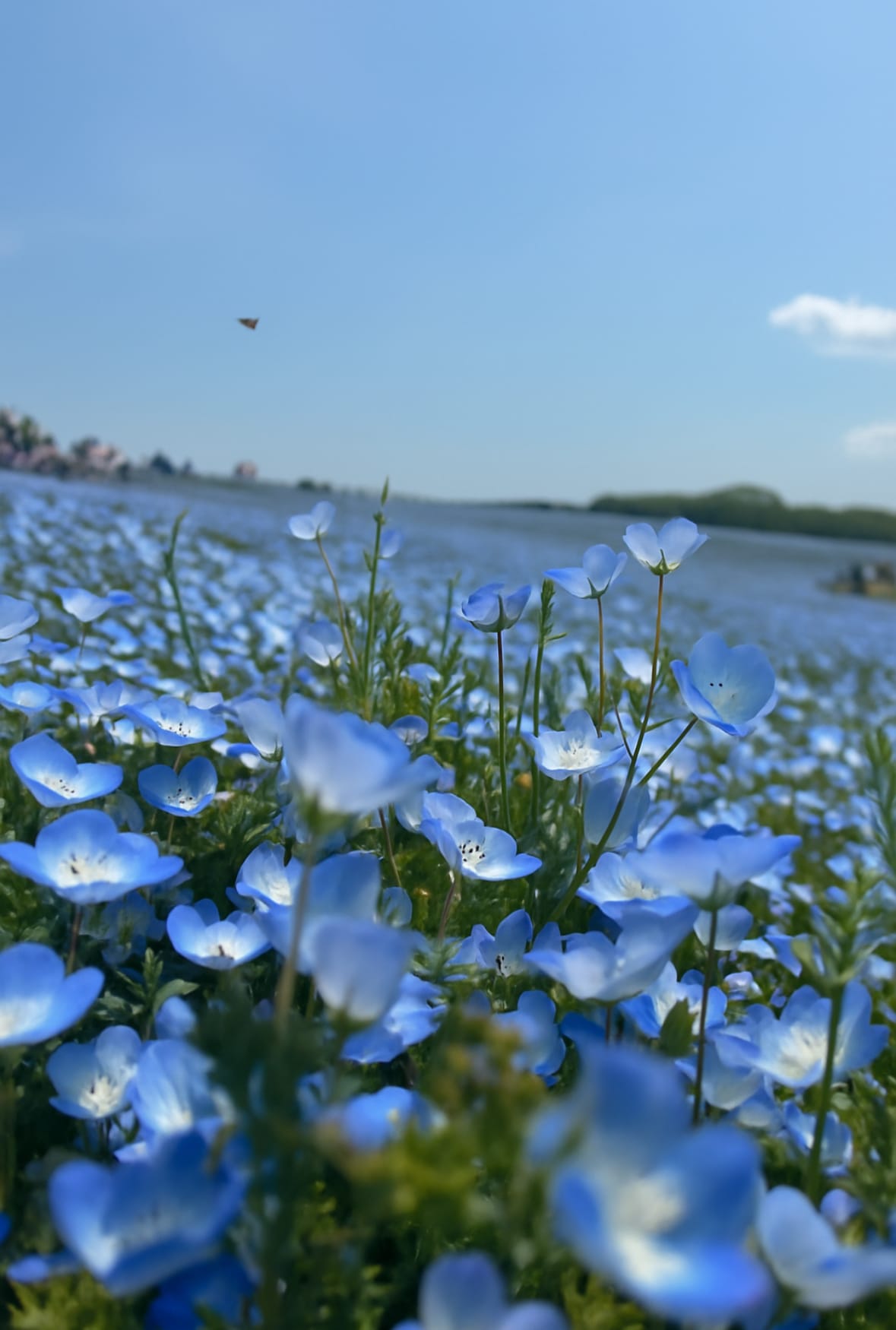
Each May in Ibaraki’s Hitachi Seaside Park, nemophila, or baby blue eyes, spill across the vast curves of Miharashi Hill in waves that seem to unmoor the senses. They do not bloom in polite clusters but in great sweeping fields, so complete that the boundary between earth and sky dissolves. There is no horizon. Only blue. Layered. Breathing. Endless. The petals lift not in offering but in recollection, as though the land itself has remembered the sky and chosen to echo it.
In that quiet immensity, people fall silent. We come with cameras, but most of us linger longer than we plan. The urge to capture is overtaken by the need simply to witness. I walked among them in silence, my thoughts thinning like mist in morning light. Children’s voices drifted through the air like wind chimes, gentle and far away. No one spoke much. In that stillness, we were reduced to sight, to presence, rinsed clean by a beauty so soft it did not demand attention, only acceptance.
Though nemophila are not the bluets of Maggie Nelson’s Bluets, the resonance is unmistakable. Both are small, modest flowers, easily overlooked, and yet they hold within them the architecture of something immense. The blue of the sky, Nelson writes, depends on the darkness of empty space behind it. Blue is something of an ecstatic accident produced by void and fire. Her words ring true here. The colour does not settle. It hovers. Trembles. Refracts. It is not pigment but atmosphere. Not substance but feeling. What is blue here is not decorative. It is metaphysical.
I thought, too, of another blue. Yves Klein’s International Klein Blue, seen a year ago at Tate Modern. That blue had no image, no reference, no landscape. It simply was. Pure presence. It hung on the wall like a portal to somewhere that could not be entered, only felt. It refused narrative. Refused meaning. It asked nothing. It filled the room.
The nemophila fields offered the same quiet astonishment. A blue without language. A blue that undoes the self, not through awe but through surrender. Here, beauty is not a spectacle. It is a condition. A state of being. An ecstatic accident of void and light, blooming quietly across the face of the earth.
🌿 Wisteria — Kameido Tenjin Shrine, Late Spring
Season: 藤始開 (Fuji hajime te hiraku – “Wisteria begins to bloom”)
Literary excerpt:
「紫の雲のように咲く藤は、別れを告げる花である。」
“Wisteria, blooming like violet clouds, is a flower that speaks of parting.”
— Yasunari Kawabata
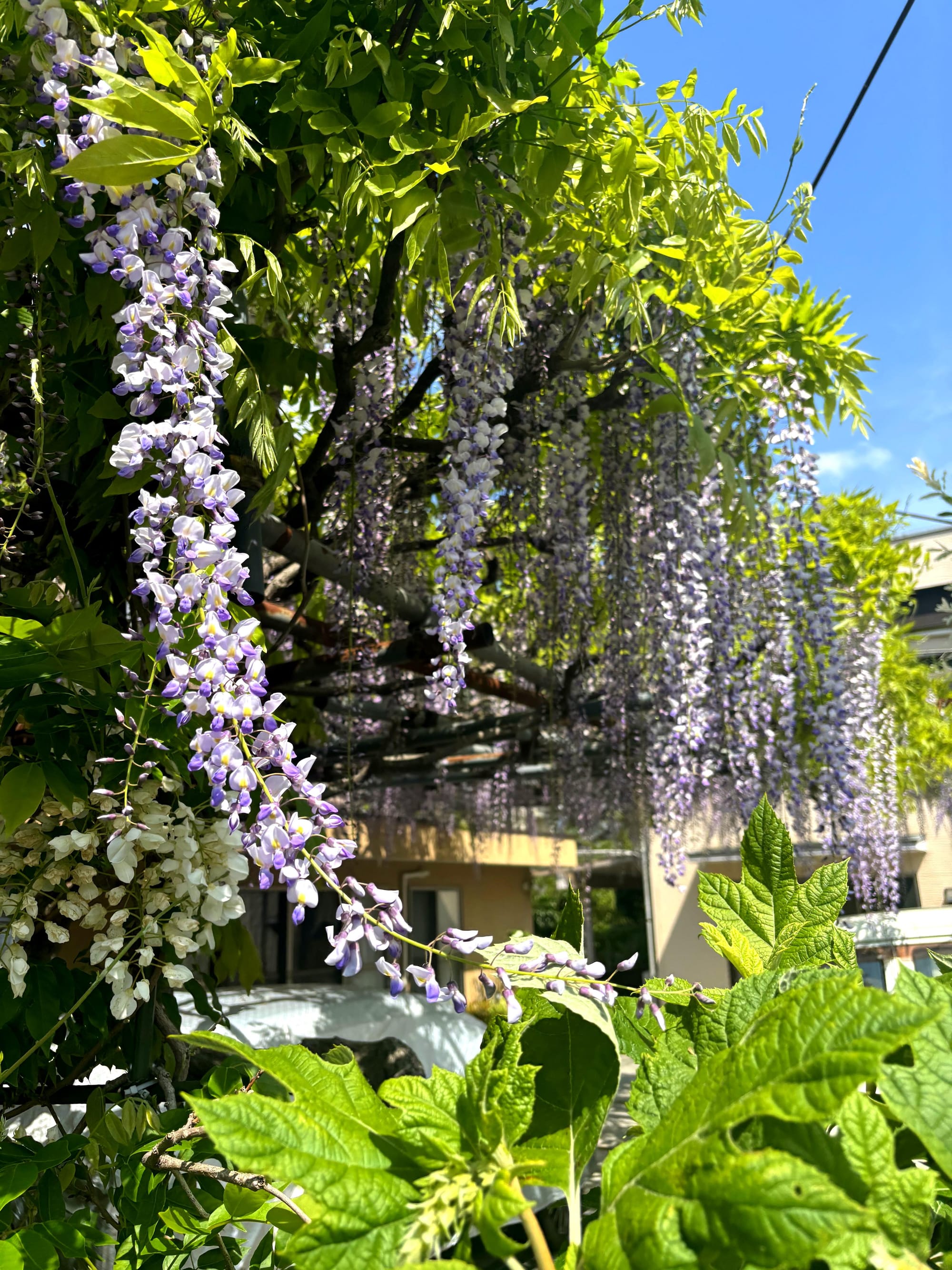
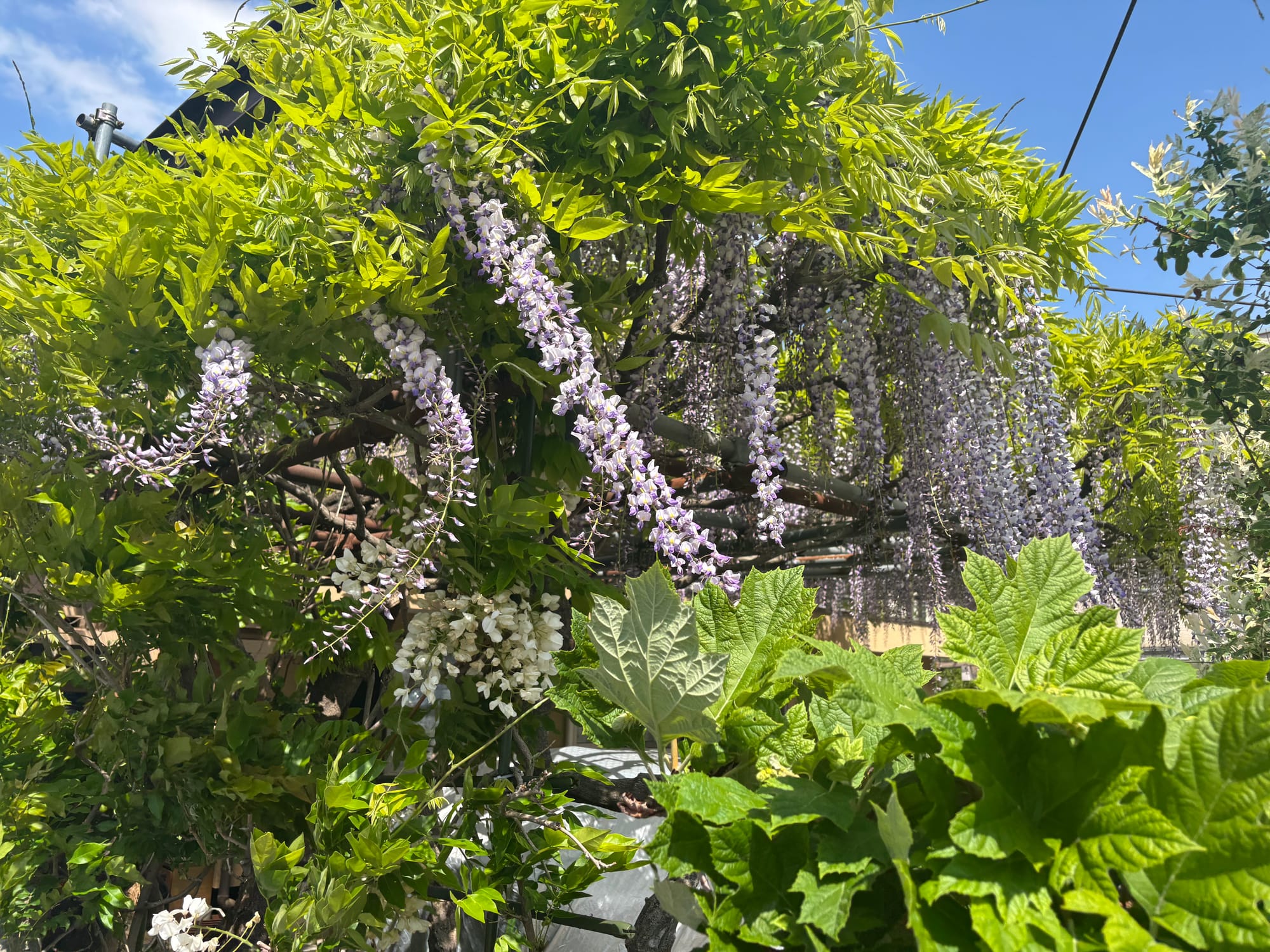
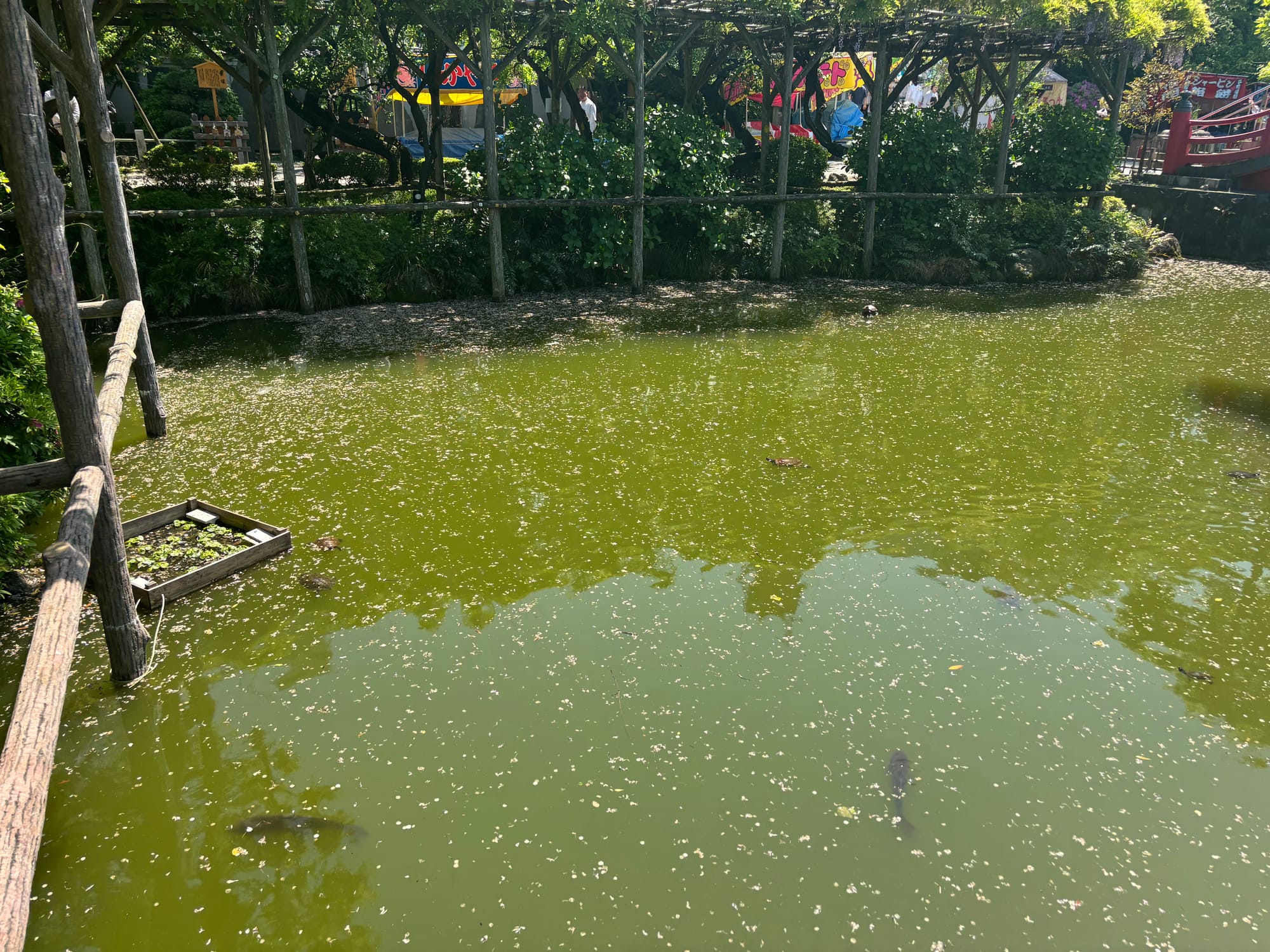
I had missed the wisteria by a day. A storm had swept through the night before, and most of the shrine’s blossoms now floated in the water pale purple shadows drifting in silence. I had resisted visiting earlier, hoping to catch them at their fullest. I wanted the moment at its peak, the bloom in full command of the air. But nature doesn’t wait. Carpe diem, I thought too late.
At Kameido, the wisteria hang like silk dreams but theirs is not a joyful bloom. Kawabata understood: these are flowers of distance, of farewells. They do not burst forth like cherry blossoms. They descend slowly, deliberately, trailing across the trellises with a kind of dignified sorrow. In their sway is a pause: the breath before saying goodbye.
I stood beneath them longer than I expected, even in their absence. Perhaps I, too, was saying farewell, to a version of myself I had quietly outgrown. Some departures are not marked by doors closing, but by standing still beneath fading flowers, and feeling that something has already moved on.
🔴 Azalea — Nezu Shrine, Early Summer
Season: 薫風至 (Kunpu itaru – “Fragrant wind arrives”)
Literary excerpt:
「つつじ咲く 君を思えば 色に酔う」
“Azaleas bloom — thinking of you, I am drunk on their colour.”
— Modern haiku by Takahama Kyoshi
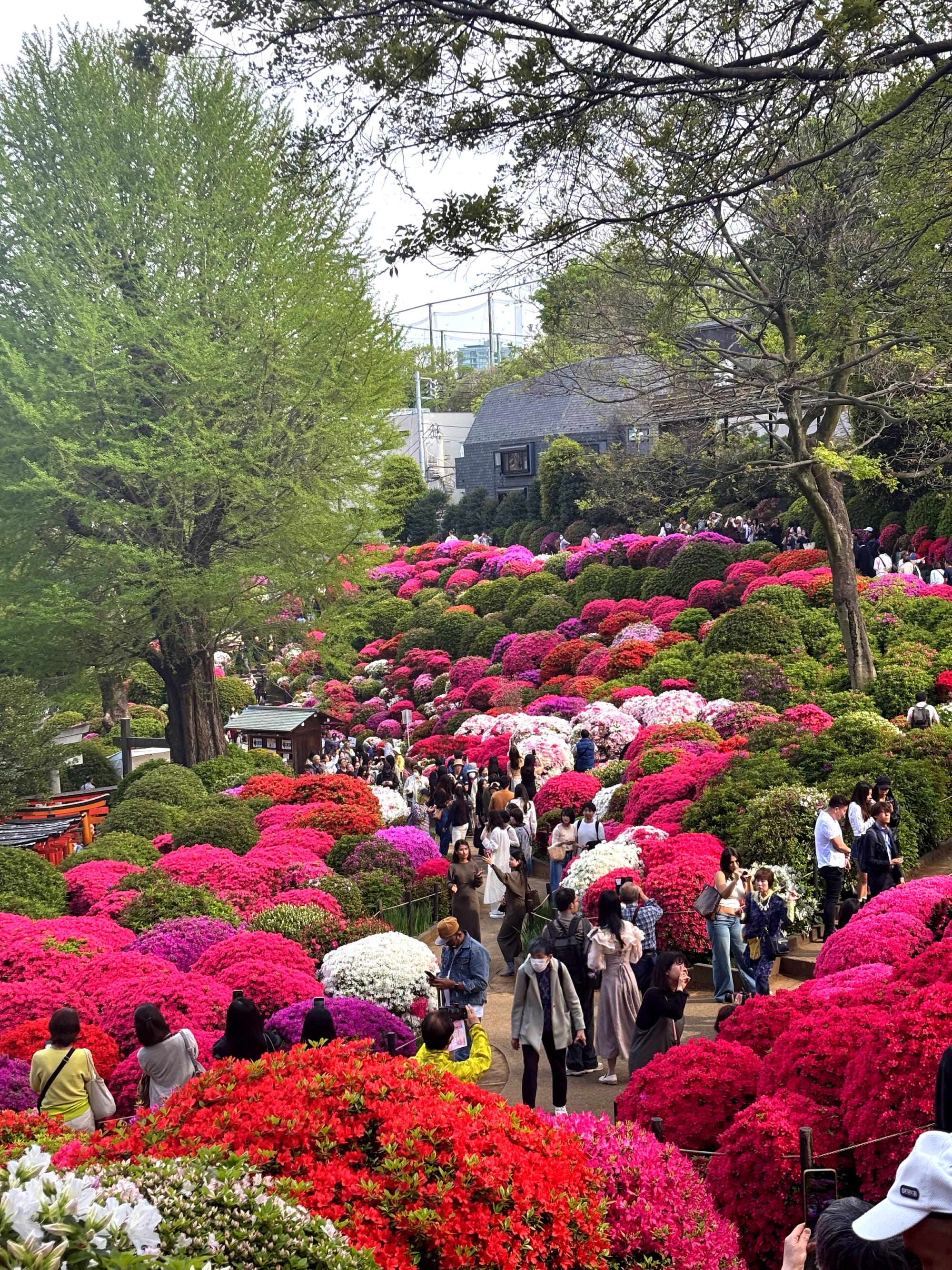
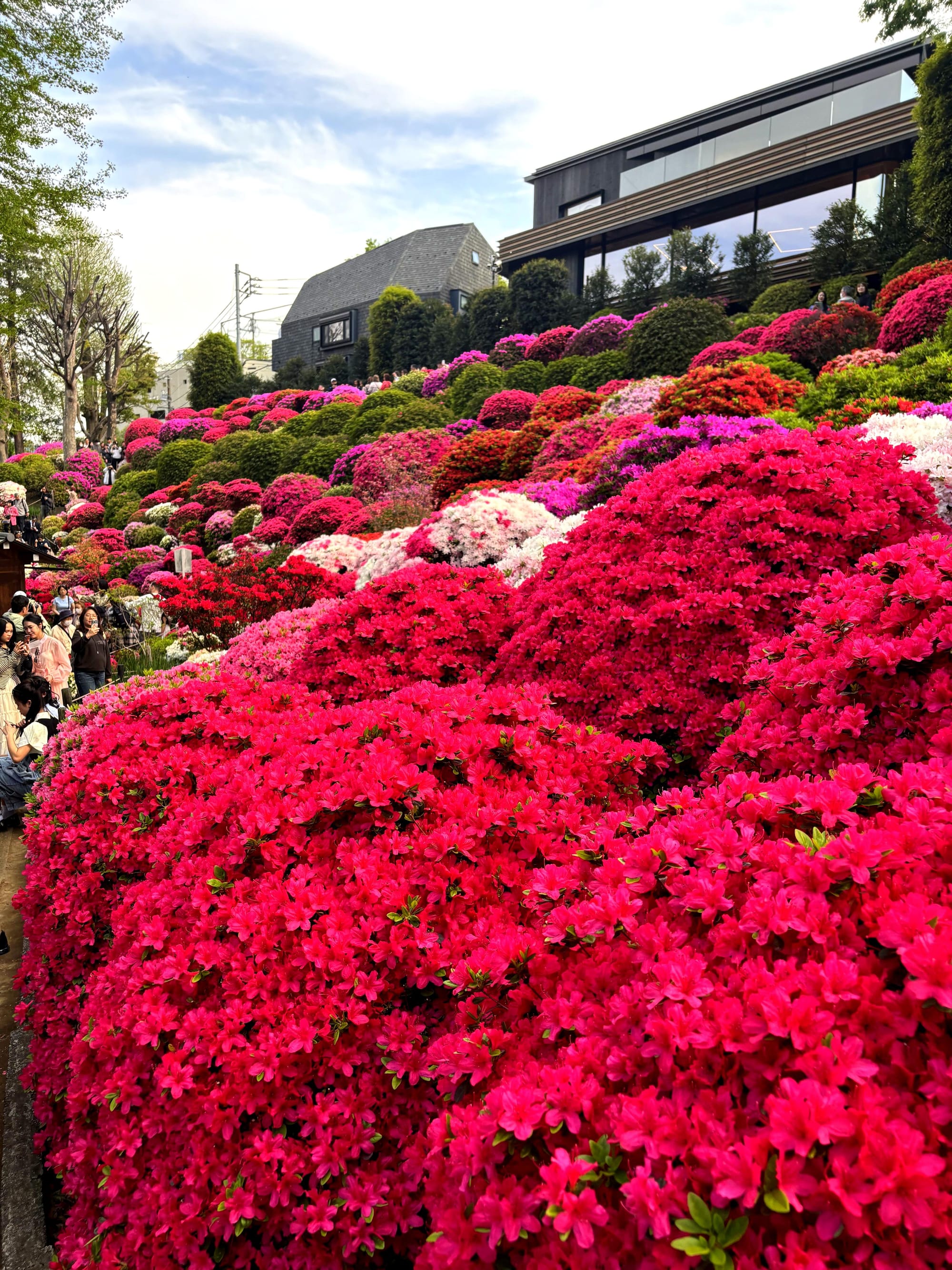
At Nezu Shrine, the azaleas defy order.
In a culture where beauty is often defined by subtlety, by restraint, asymmetry, and the space around things; the azalea is a kind of floral rebellion. The hillside doesn’t bloom; it bursts. Saturated pinks and reds crowd the eye, vibrating with a kind of wild insistence. There is no quiet wabi-sabi here, no pale transience. Just abundance. Just color. Just now.
Walking the hedge-lined paths, I felt the season turning: early summer in its first fever, humid and indulgent. Around me, visitors moved slowly, as if softened by the air, lulled into a kind of dreamy disarray. A woman stood still at a bend in the path, hand half-raised to her chest, caught mid-thought, or mid-feeling. Something in the color had stopped her.
Kyoshi’s haiku rose in me like a blush: “I am drunk on their colour.” The word “drunk” felt right: not just intoxicated, but unguarded. The azaleas overwhelm the senses. They do not whisper their beauty; they shout it, blush it, spill it. Their song is not composed, but ecstatic.
In a place so often shaped by discipline, in line, in form, in gesture, the azaleas remind us that beauty can also be unruly. It can arrive without balance, without apology. And sometimes, it’s that excess, not what is withheld, but what overruns, that makes us stop, and feel something dangerously close to joy.


💧 Hydrangeas — Takahata Fudoson, Rainy Season
Season: 半夏生 (Hange shō – “Half-summer arrives”)
Literary excerpt:
「紫陽花や 昨日の誠 今日の嘘」
“Hydrangeas—yesterday’s truth, today’s lie.”
— Matsuo Bashō
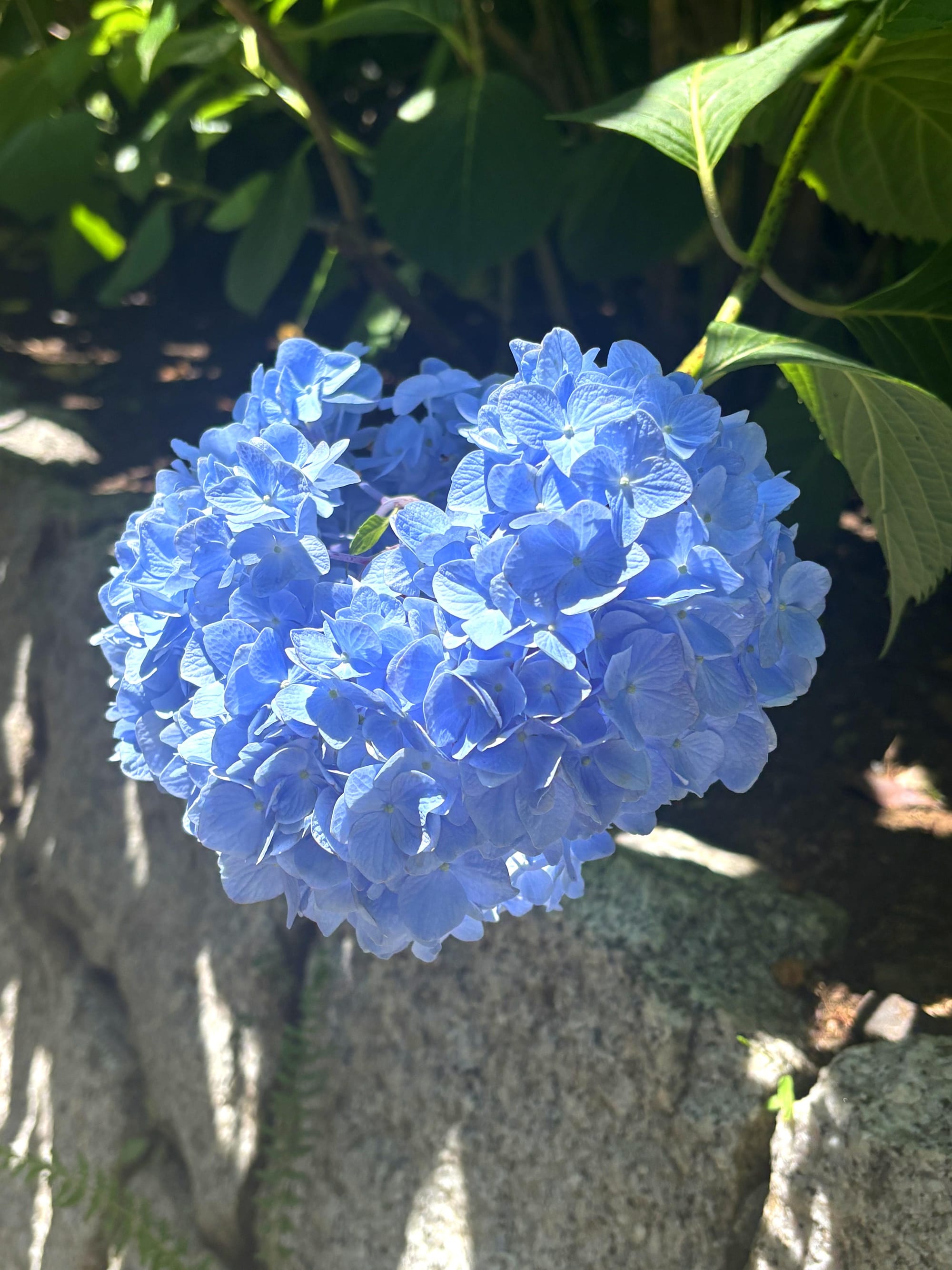
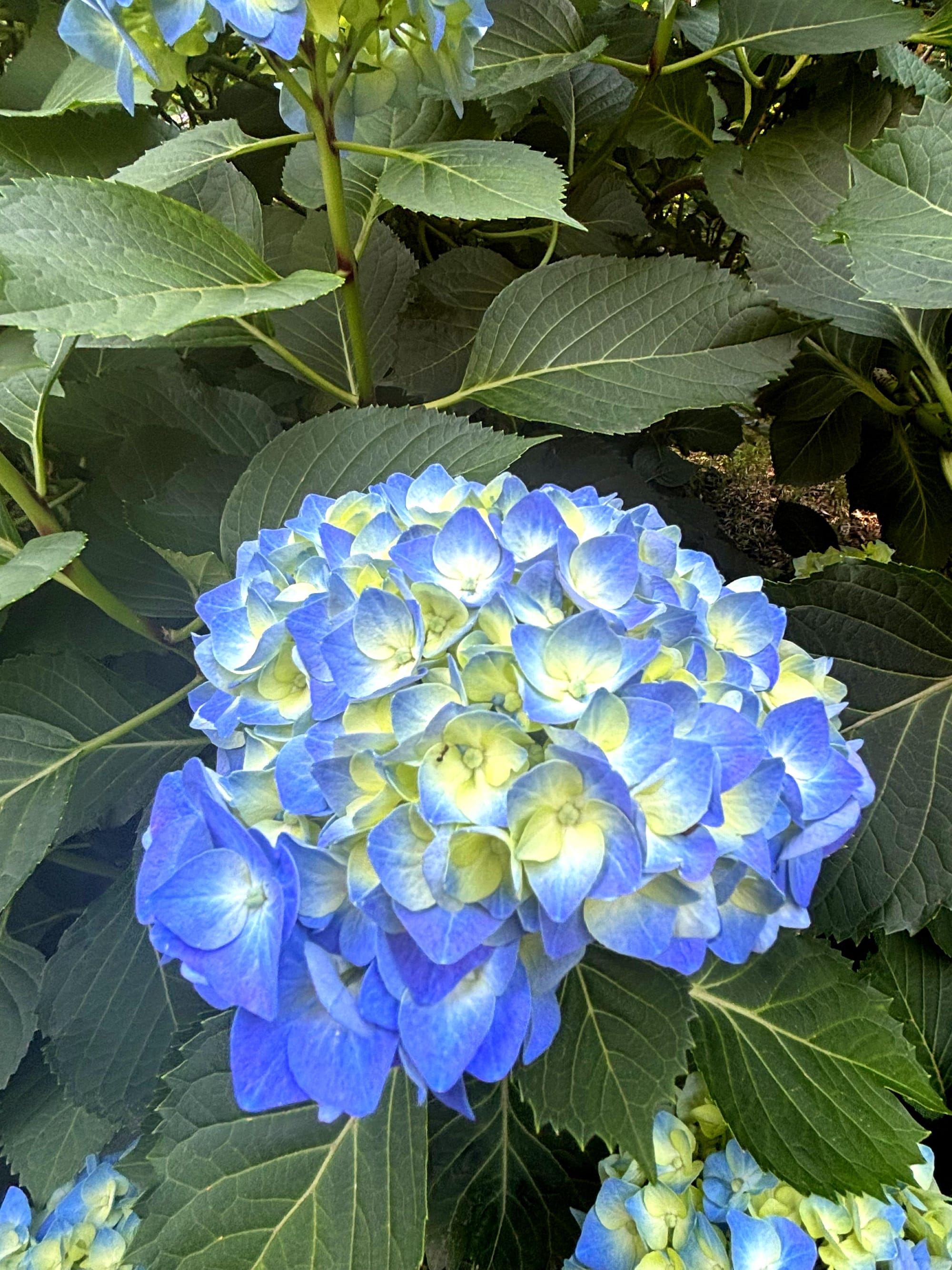
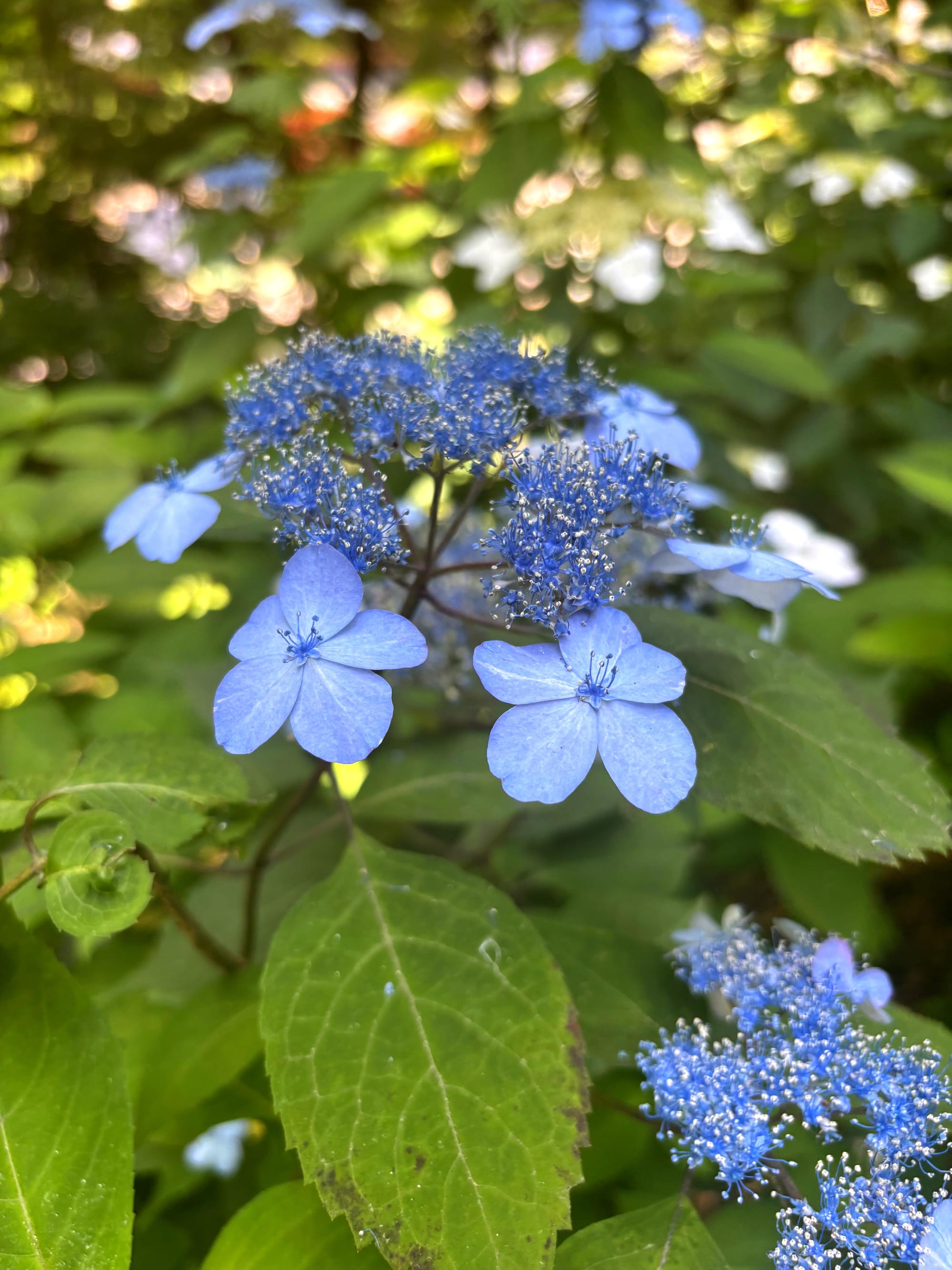
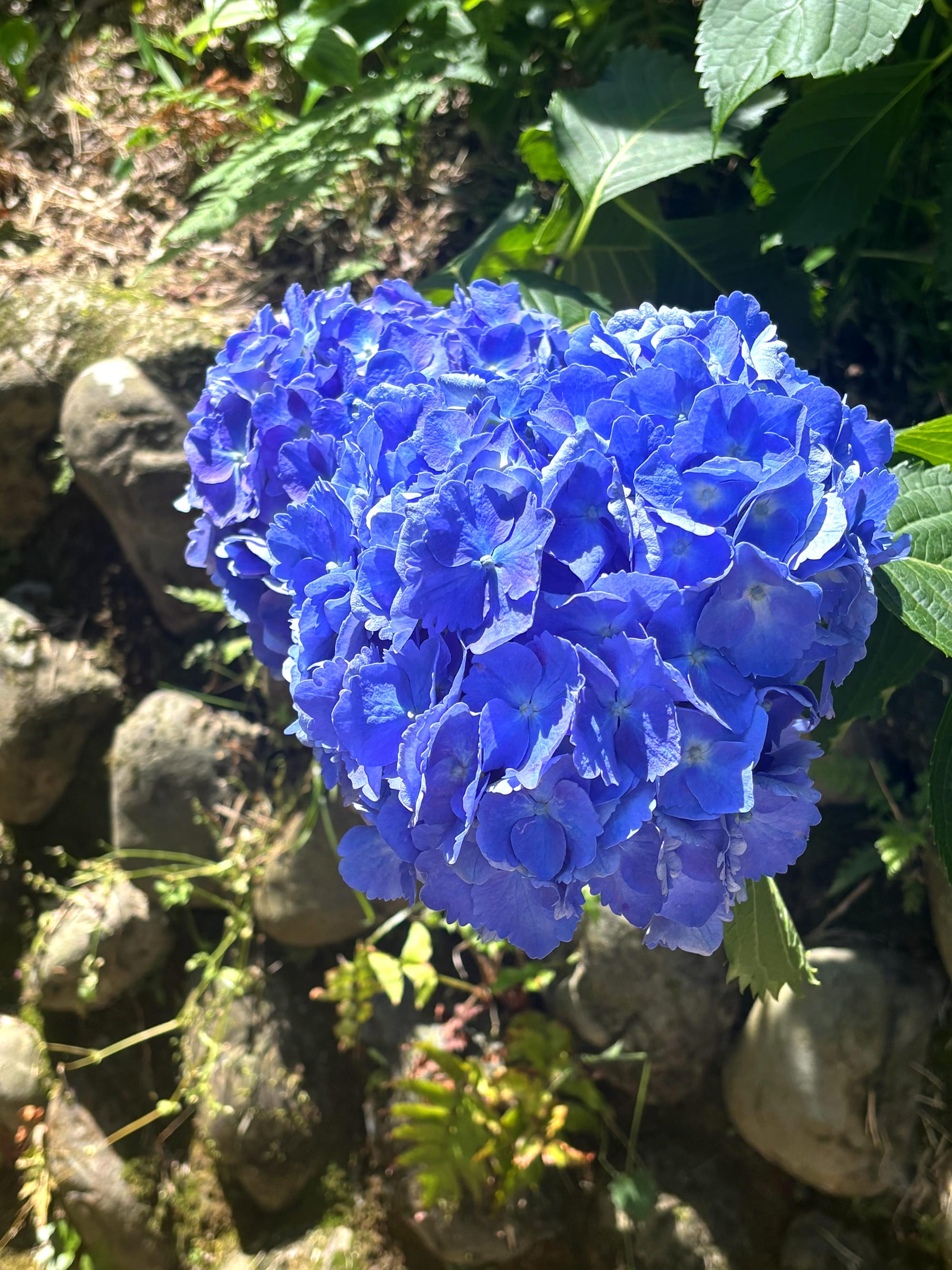
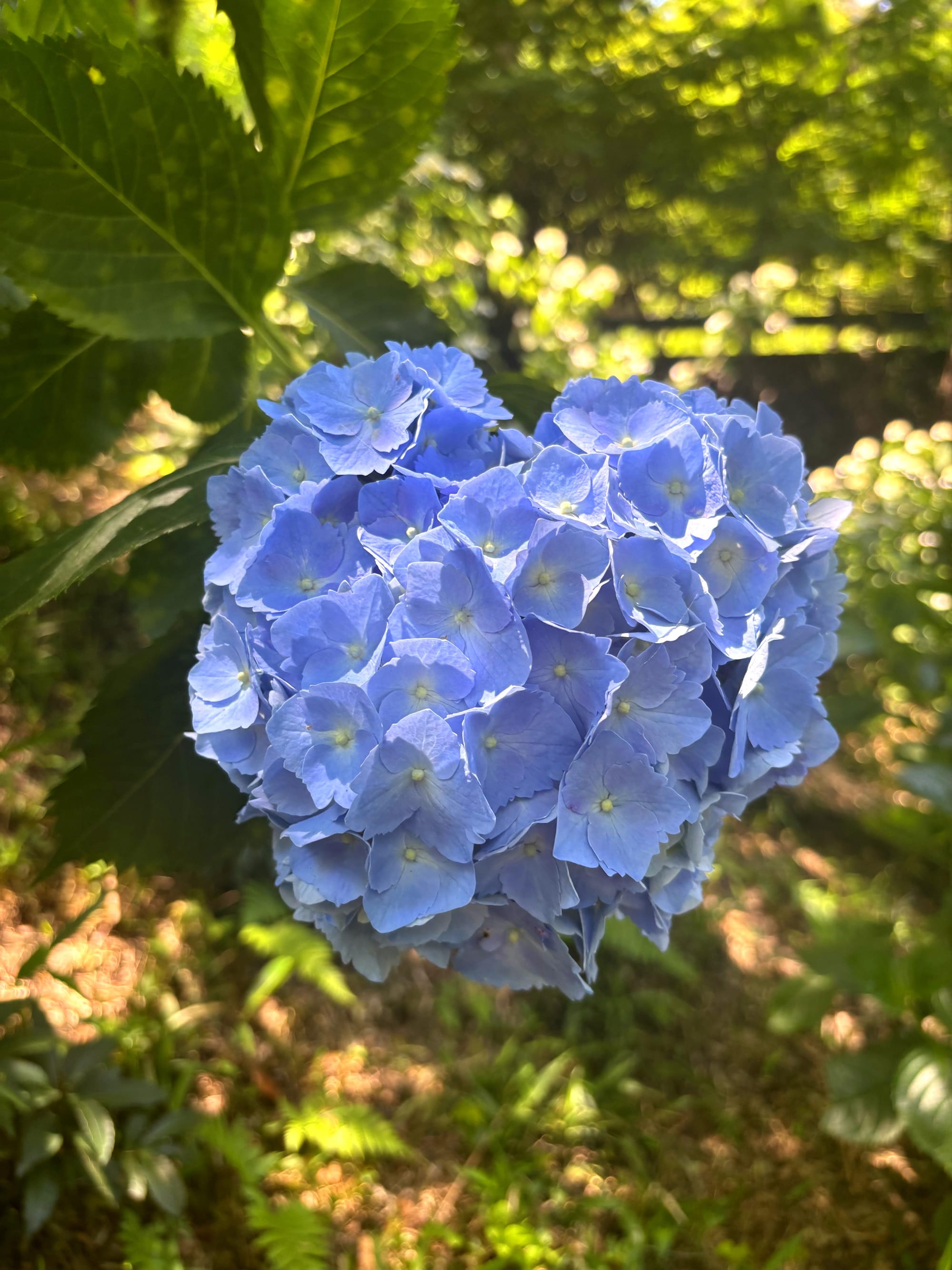
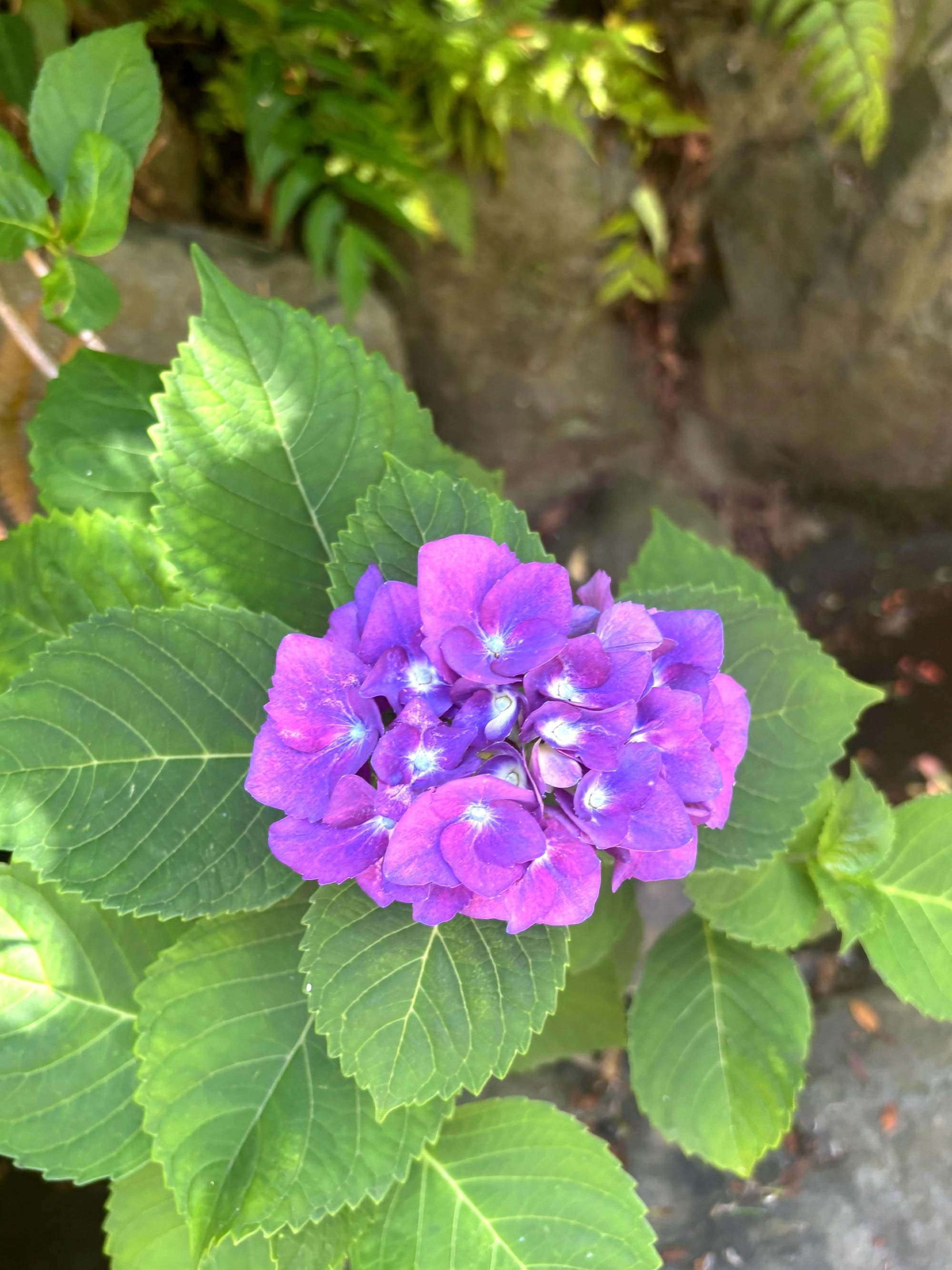
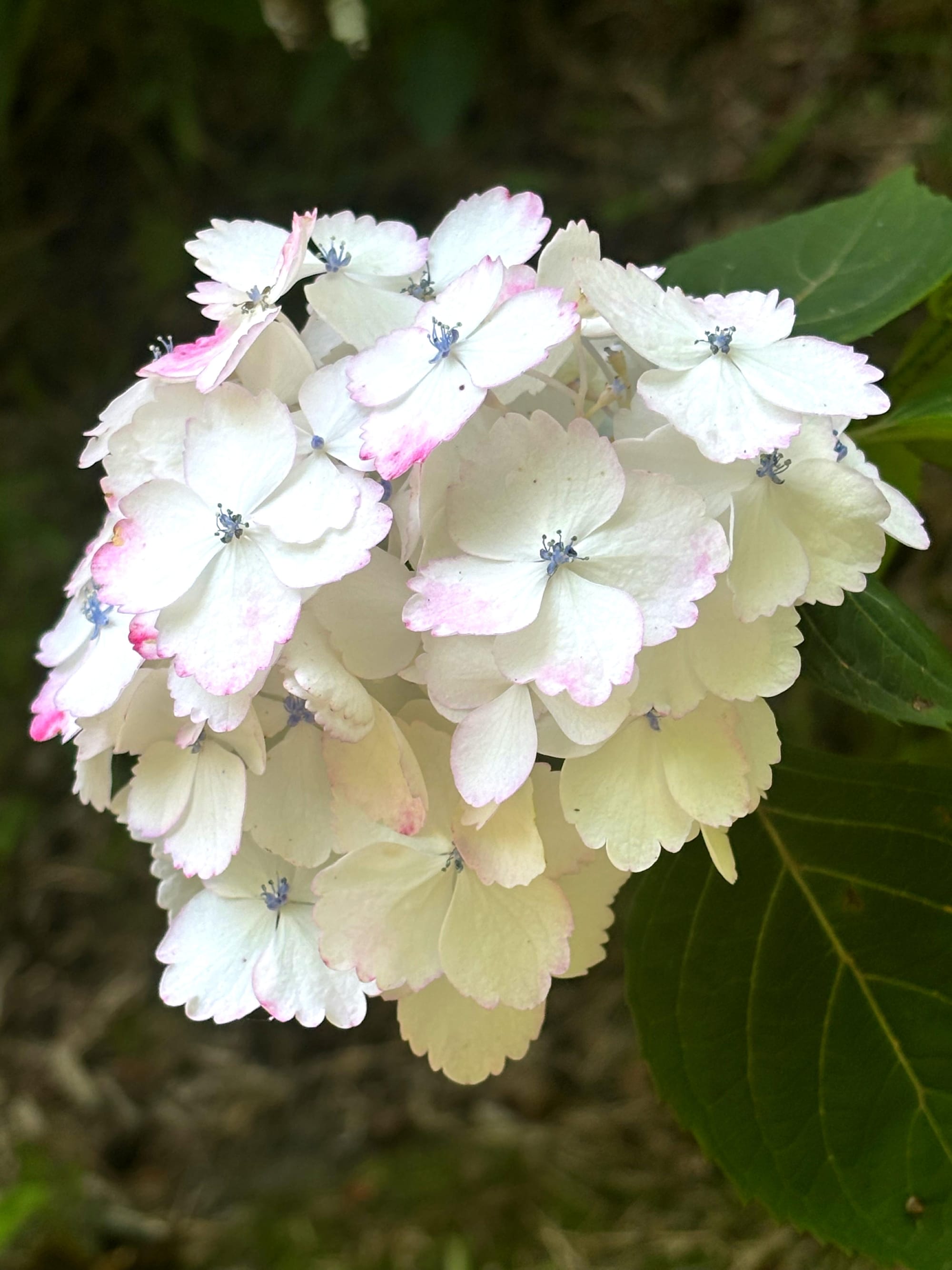
In the hush of Takahata Fudōson, the hydrangeas glowed: slick with rain, heavy-headed, their hues shifting like moods. Blue, violet, rose: the soil decides. What is blue here may be pink elsewhere, and neither is fixed. Their colour is not a quality, but a response. A flower of change, of soft reversals.
Bashō captured it simply: the hydrangea as a symbol of impermanence, of beauty that refuses certainty. And Rilke, too, understood:
"As though they could dissolve the colour in their being / and all that darkened in them, they reveal as blue."
— Blue Hydrangeas
There is something quiet and sorrowful in that: a beauty that blooms by absorbing darkness. These flowers do not shout their presence. They seem to listen.
I lingered here longer than anywhere else. Perhaps because hydrangeas do not dazzle: they haunt. Their bloom is not brilliant, but bruised, like memory. And when they do turn pink, as Rilke writes, it is with startling softness:
"And suddenly the pink has the faded tenderness / of flesh that will no longer resist."
— Pink Hydrangeas
The hydrangeas ask for nothing. They offer no climax. They merely exist, shifting with the ground beneath them, teaching, quietly, that beauty is not in permanence, but in the grace of continual change.
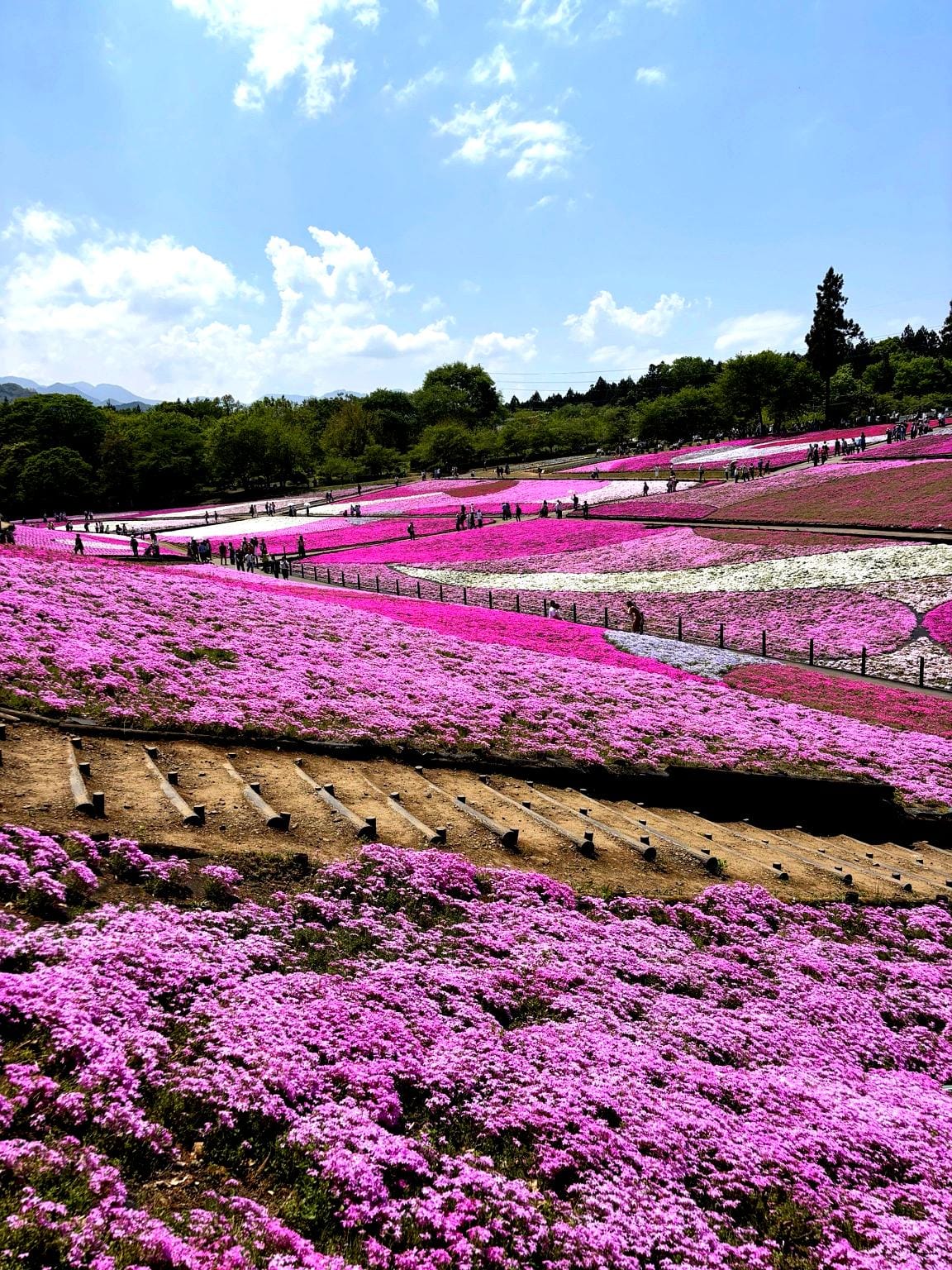
🌷 Moss Phlox — Saitama, Late Spring
Season: 牡丹華 (Botan hana saku – “Peonies bloom”)
Literary excerpt:
「地を染めて咲く芝桜 春の嘆き」
“Moss phlox staining the earth — the lament of spring.”
— Anonymous Edo-period waka
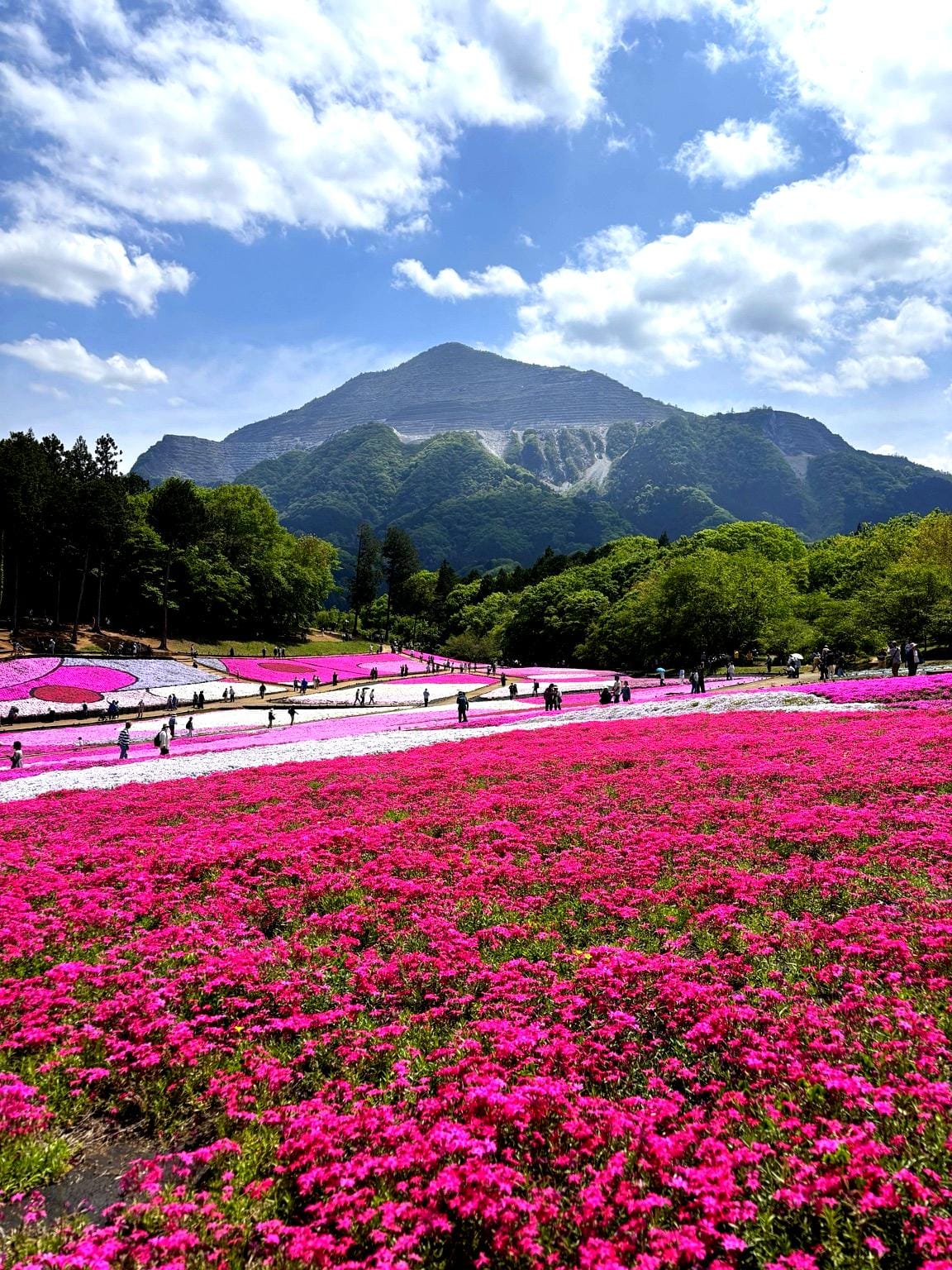
The moss phlox in Saitama spill like pigment across the hillsides: great swaths of pink and white, as if the land itself had been dyed. From a distance, it’s breathtaking: a living tapestry, each petal part of a vast design. And yet, walking among them, I felt something else stirring beneath the beauty: a kind of stillness that wasn’t peace, but arrangement.
There is something about a flower too perfect, too composed, that reminds one of artifice. Unlike the wild azaleas or the rain-drenched hydrangeas, these blooms seemed… directed. Every line of colour, every path, every carefully bordered patch spoke not of spontaneity, but of curation. And perhaps that was the point. Perhaps this was not nature left to be itself, but nature shaped to reflect us, our longing for order, for spectacle, for something that will hold still, just for a moment.
They were beautiful. Undeniably so. But also mournful in their symmetry, like something trying too hard to last.
And spring is already leaving. The light has shifted. The air has thinned. The flowers, even in their perfection, cannot hold back time.
💭 A Thought for the Way Back
The 72 seasons teach us something gentler than progress. They teach us to notice. That there is a season when frogs begin to sing. Another when silkworms start spinning. Another still when the dew becomes white.
To walk through Japan is not simply to travel. It is to move through the subtleties of becoming: flower by flower, season by season.
And in that subtle unfolding, I began to notice something else blooming:
attention. Presence. A self, not new but finally awake.