Nagano’s Snow Monkeys, Without the Snow

“The monkey is the most perfect animal, and the most nearly resembling man.”
— Voltaire, Philosophical Dictionary
There is a peculiar kind of disillusionment that can only occur when reality too closely resembles caricature.
At Jigokudani, the famous “snow monkeys” of Nagano are touted as contemplative bathers, half-monks, half-mascots—soaking in steaming pools beneath falling snow, their scarlet faces pensive, enlightened.
But I came in summer.
No steam. No snow. No spectacle. Just macaques, tourists, and a smell that left no room for metaphor.
🧠 The Mirror, Unflatteringly Held
It is easy to admire the monkey from a distance: elevated, aestheticised, winter-filtered. But proximity reveals something far more complex, and far more human.
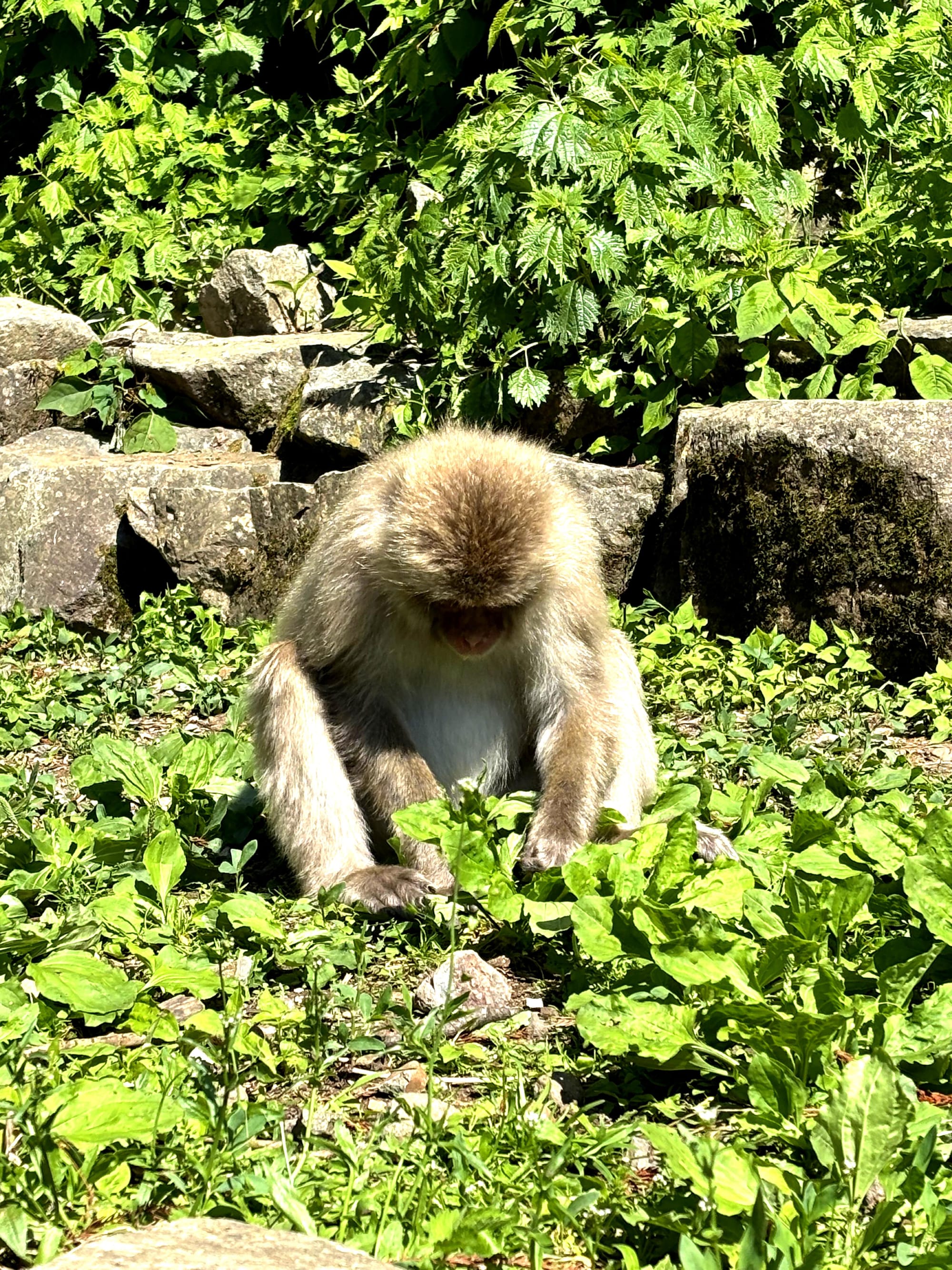
Macaca fuscata is not a symbol. It is not a lesson. It is a primate. Its world is hierarchy, heat, and scent. It grooms. It steals. It sulks. It stares.
There is intelligence here, yes, but of a discomfiting sort: too close to our own, yet not quite ours. If the Enlightenment promised reason, the monkey complicates it. Voltaire, ever the ironist, understood this: resemblance does not imply dignity.
In the eyes of the macaque, one sees not wisdom but calculation.
Not philosophy, but strategy. Not reflection, but recognition.
👃 On the Olfactory Truth of Existence
The scent of the monkey park hits before the monkeys do. It is not metaphorical. It is metabolic.
That pungent, musky humidity, ripe with decay and biology, is a truth hard to aestheticise. And yet, it is a kind of clarity. What we perfume, they wear. What we conceal, they emit. Their presence lingers not just in the trees but in the air, unapologetically mammalian.
If existence has a scent, this is it: warm, sour, enduring.
It is not a smell we associate with spirituality. But perhaps we should.

🥾 The Pilgrimage of the Underwhelmed
To reach the park, one walks. The path winds for nearly two kilometres through shaded forest. It feels vaguely ceremonial, like the approach to a shrine.
But what awaits is not revelation. It is reminder.
Monkeys clamber on fences. Infants cling. Adults posture and pick. There is no reverence. No hush. Just tourists and creatures and the quiet indifference that exists between them.
You begin to wonder: is this disappointment? Or honesty?
🔬 Nature Without Romance
Jigokudani in summer is not sublime. It is behavioral science. There is no snow to blur the outlines, no steam to sanctify the primates. There is just interaction. Patterns. Hierarchies. Grooming. Teeth.
We prefer nature as idea. We like it best when it behaves. But here, in this unspectacular season, nature behaves like itself: and that, perhaps, is the most disturbing part.
The monkeys do not pretend to be wise.
Only we do.
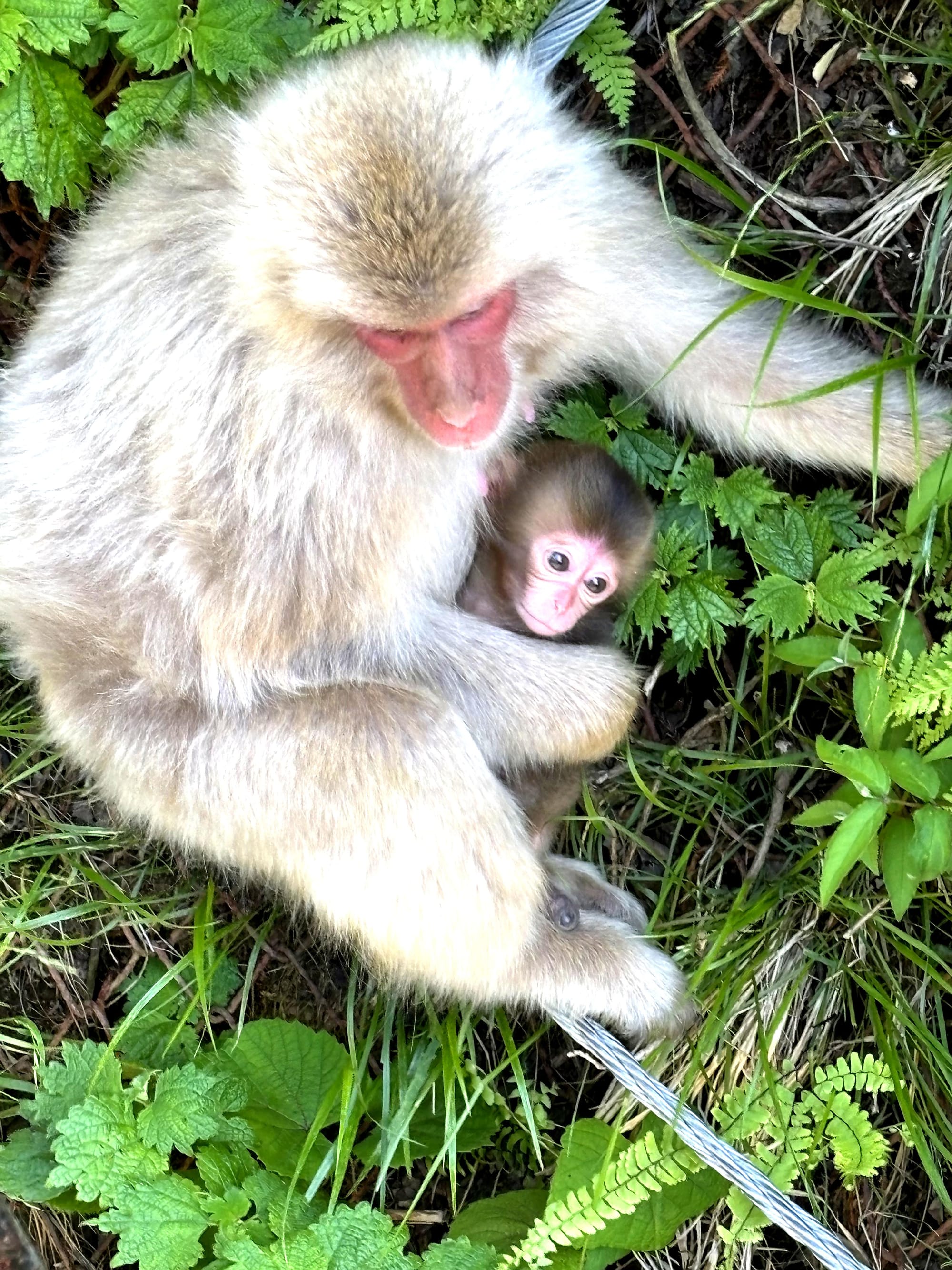

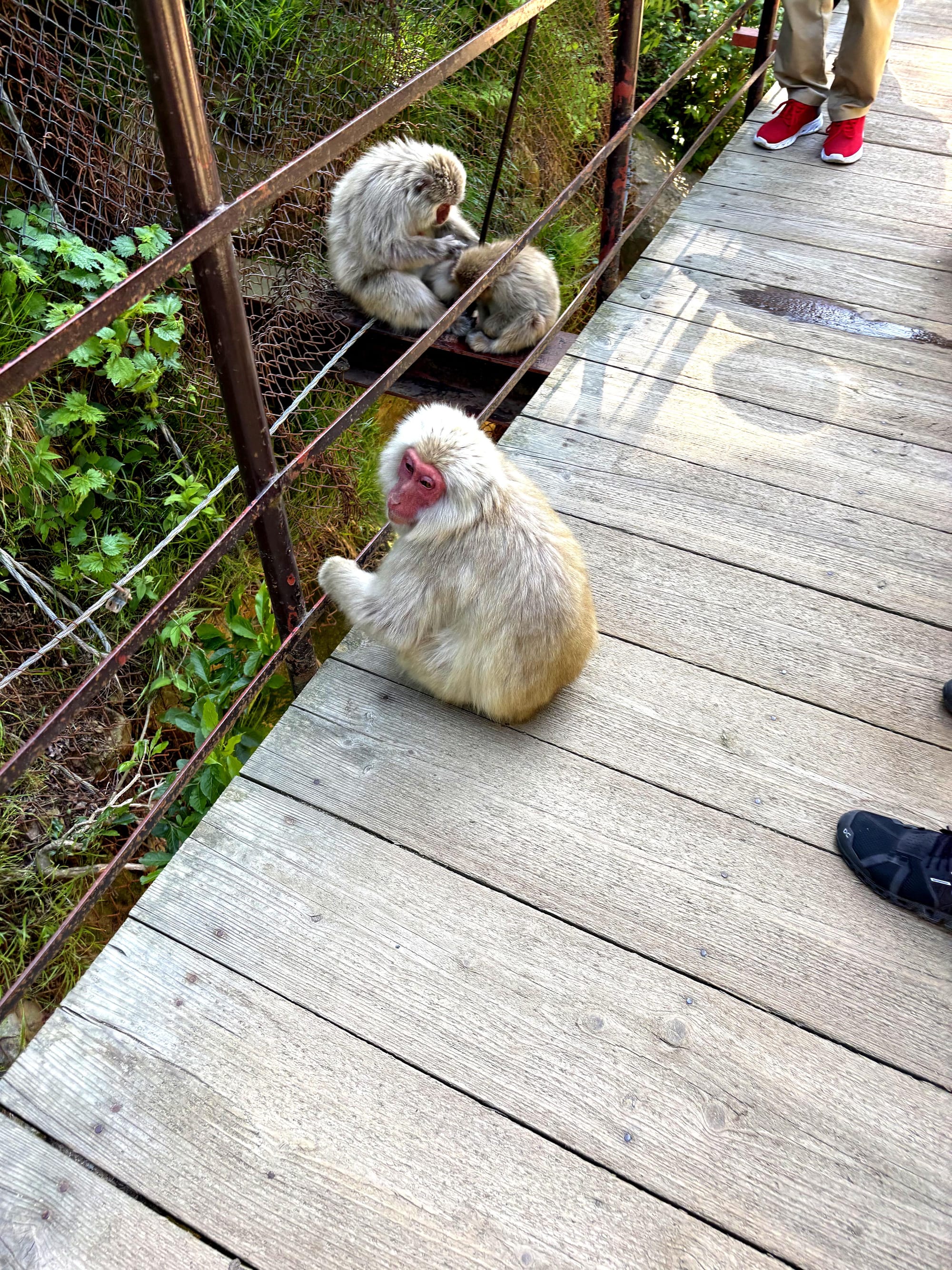
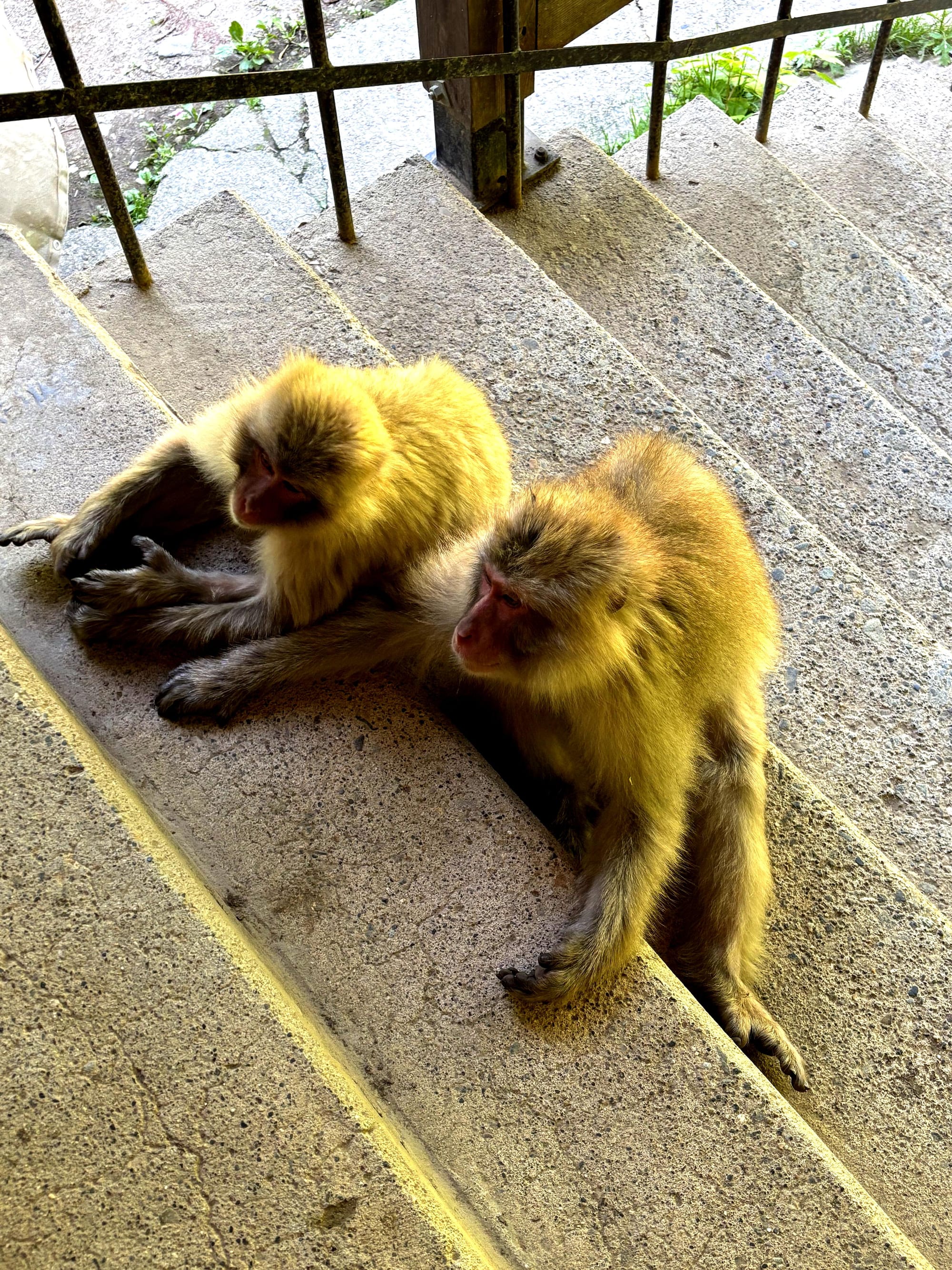
📖 A Lexicon of Unvarnished Contact
- A patriarch sitting stone-still, unmoved by human gazes.
- A bridge coated in fur, foot traffic, and flies.
- The shriek of dominance, punctuated by silence.
- The smell of sweat and time, unfiltered.
- A hike that led not to beauty, but to biology.
💭 A Thought for the Way Back
Winter transforms these monkeys into images.
Summer returns them to bodies.
Would I recommend a summer visit? No, not exactly. The hike is long, the view ordinary, and the smell unforgettable for the wrong reasons.
But perhaps that is the point.
If the monkey is indeed the “most perfect animal,” it is not because it teaches us nobility, but because it strips it away. What remains is closer to truth than comfort. It is what’s left when the snow melts, when the camera pans wide, when the metaphor ends.
The monkey does not try to be human.
Only humans do that.