Kenroku-en and the Ethics of Cultivation
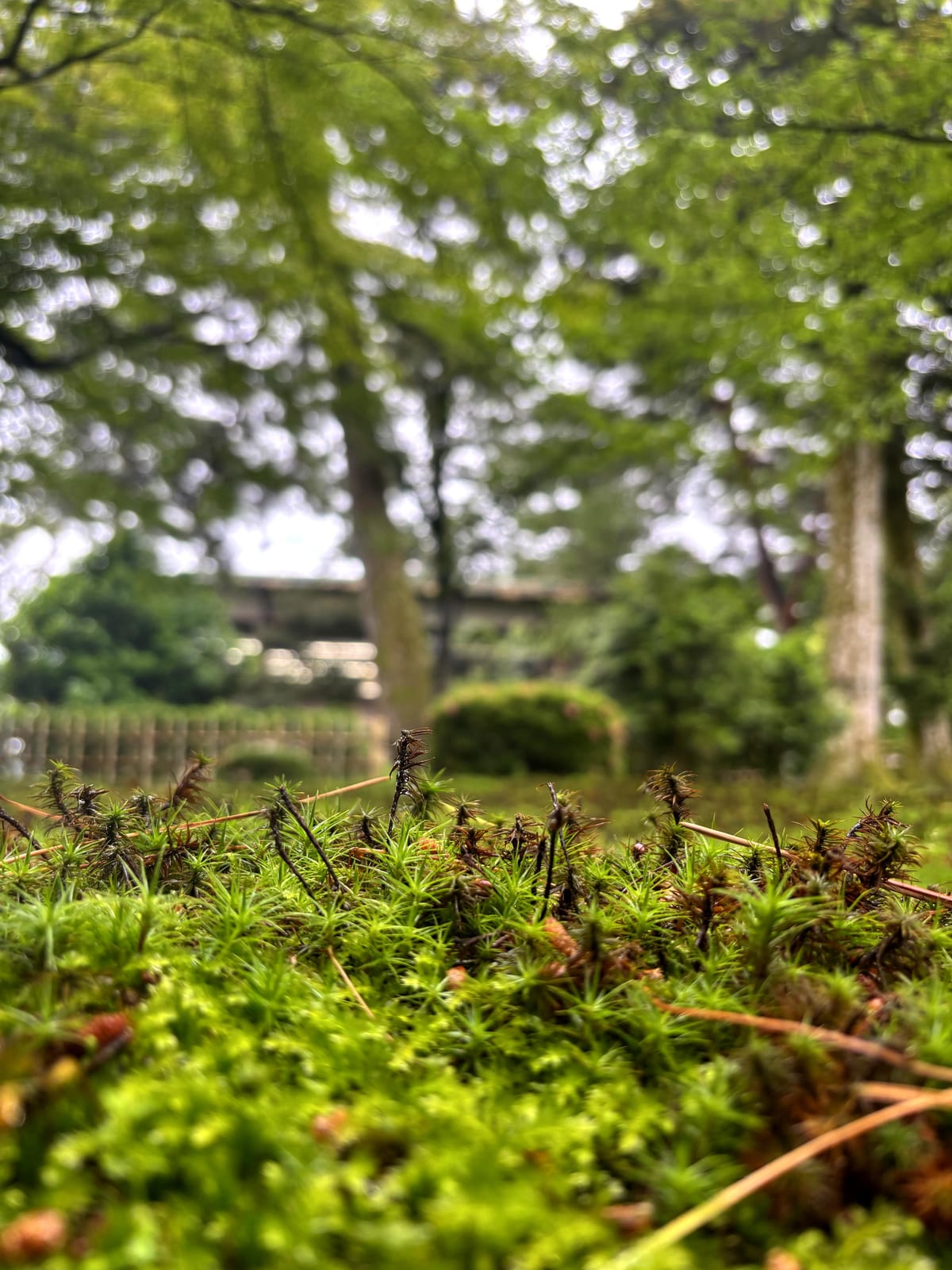
“The true character of a person is revealed by their involuntary actions…Ethics is not about reason and will repressing our nature, but about changing our disposition so that we act morally out of sentiment, instinctively.”— Schiller ‘On the Aesthetic Education of Man, in a Series of Letters.’

🌱 Where Beauty Doesn’t Try
Kenroku-en does not display itself. It discloses.Paths curve as if they were grown, not designed.Stone lanterns are softened by moss: not placed, but accepted.
Pines bend gently into the space around them. Nothing insists. And yet: nothing is careless. This is not beauty as performance. It is beauty as character: developed, not shown off.
🛠️ Schiller’s Ethics Begin with the Body
Schiller argued that ethical life does not begin with abstract principles. It begins with how we move. How we act without thinking. How we speak, pause, eat, look, arrange space, offer or withhold presence. In this way, the garden teaches: not by sermon, but by form.It doesn’t define virtue. It shapes your readiness for it.
I remember standing under the eaves of a small teahouse, the scent of wet cedar rising. A gardener, half-hidden behind a pine, stooped slowly to adjust a stone.
He didn’t look up. But the gesture, steady, precise, seemed to say everything: rightness isn’t willed. It’s felt.
🎍 Cultivation, Not Control
The bamboo fences don’t block. They guide. The trees are not pruned into submission: they are supported. Some lean under their own weight, braced not to be corrected, but honoured. This is what moral life looks like when it’s not about conquest.Not Kantian duty as suppression, but Schiller’s Bildung: formation, refinement, the slow tuning of the self toward grace. And that kind of tuning doesn’t happen in the head. It happens in the hands. In the habits. In the way you place your foot on a damp stone without breaking the silence it carries.
👣 The Practical Shape of Goodness
A garden like Kenroku-en doesn’t teach you to be good by telling you what to do.It changes how you notice.
• You slow your breath.
• You look longer.
• You speak more softly.
• You step more carefully.
These aren’t moral instructions. They’re aesthetic choices and yet deeply ethical. Because they shape the kind of person you become. Goodness, here, is not something to obey. It is something to absorb until it becomes your way of walking.




🪷 A Quiet Lexicon
- A moss path winding like a thought that doesn’t need to resolve.
- A teahouse raised just enough to float, like it’s thinking.
- A pine tree propped with quiet reverence — not corrected, but accompanied.
- Rain touching the pond like punctuation, then vanishing.
These are not symbols. They are gestures in a grammar of gentleness.
💭 A Thought for the Way Back
We often think of ethics as the ability to make hard decisions. But what if it begins earlier: in how we arrange a space?
In how we wait?
In how we tend?
This garden doesn’t instruct. It invites. It doesn’t make us better. It makes us ready.
Schiller was right: the good is not a command. It is a habit that is learned in quiet places, until we no longer have to try.
And so I left the garden not more certain, but more aware. Not full, but formed. A little quieter. A little more willing to bend with the wind.
Like a pine, shaped by season.
Like a gardener, reshaped by care.