From Timber to Iron: Norway Between Church and Cage
“The Puritan wanted to work in a calling; we are forced to do so… What was once a light cloak has become an iron cage.”
— Max Weber, The Protestant Ethic and the Spirit of Capitalism
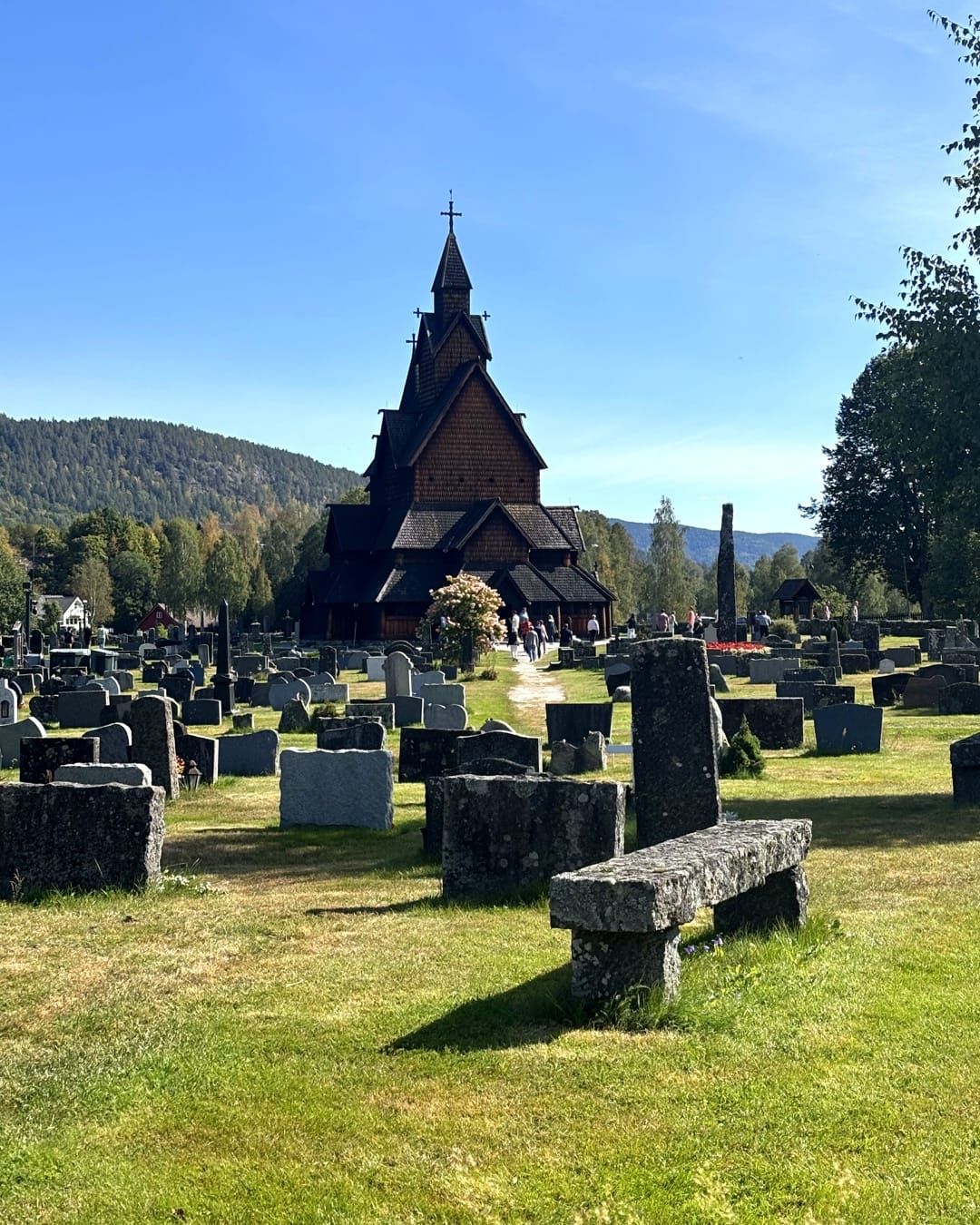
🌲 Heddal: The Whisper of Enchantment
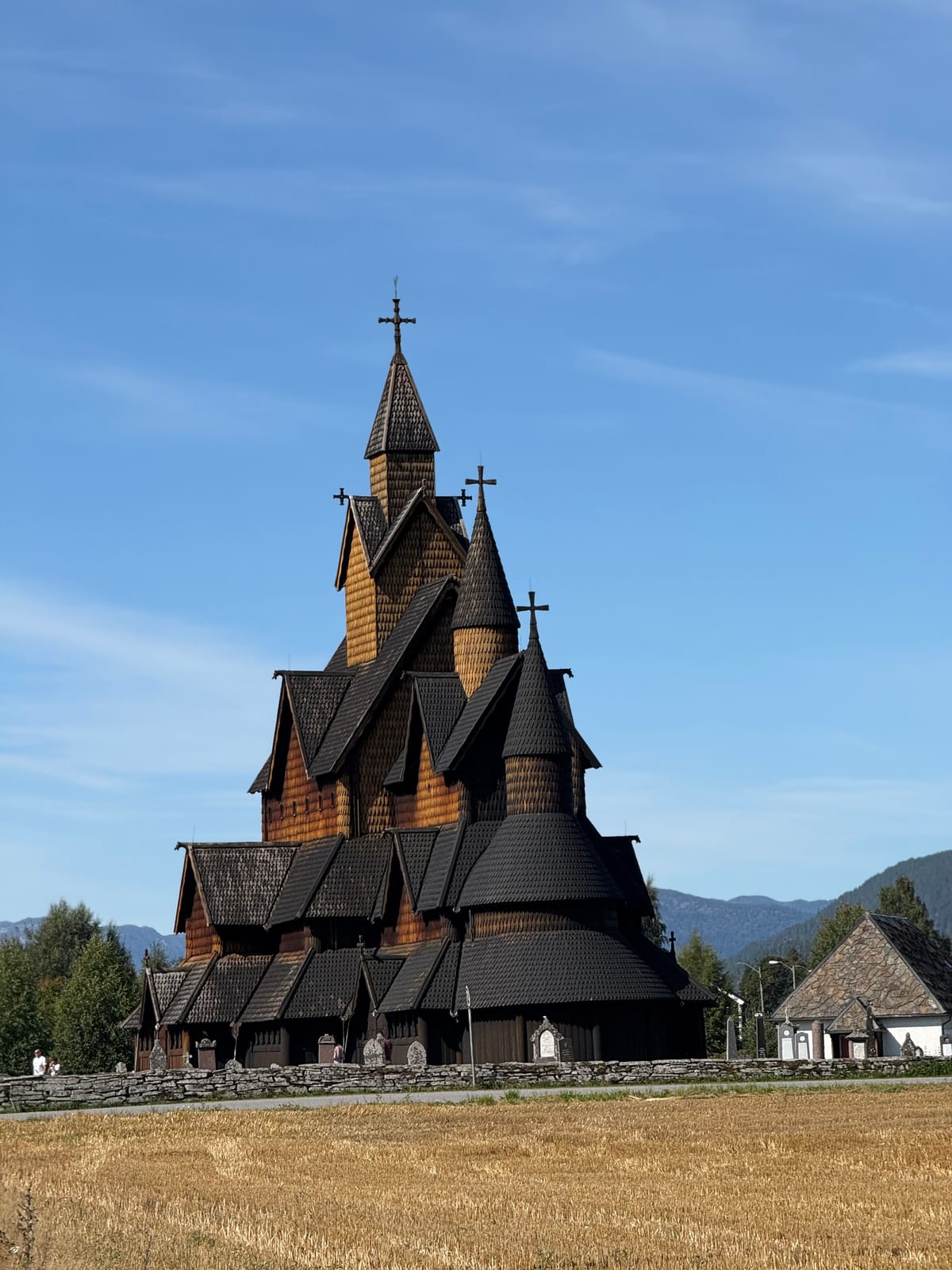
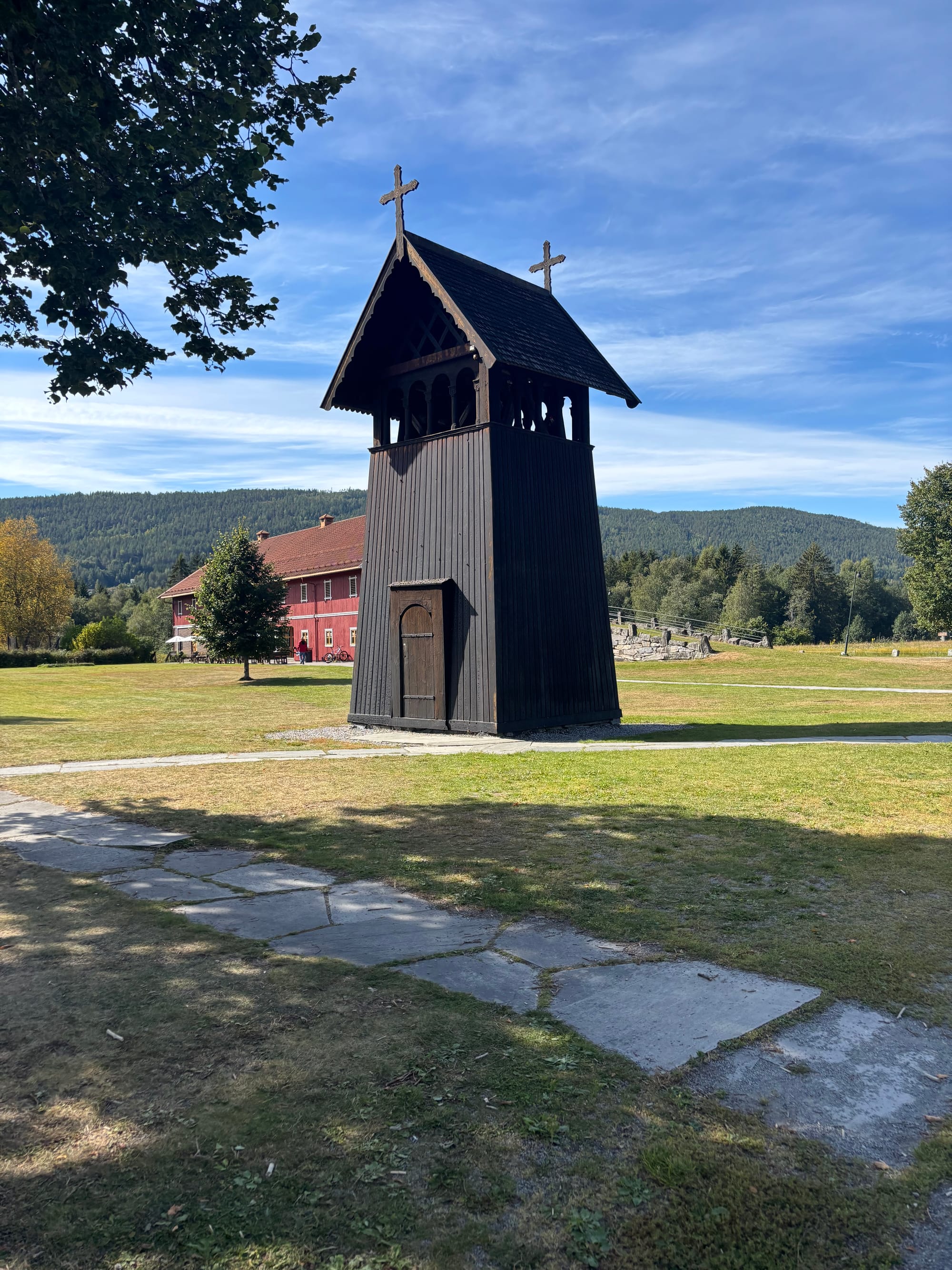
The stave church at Heddal rises like a ship turned inland, its steep roofs layered as if sails were reefed against centuries of wind. The tar-dark timber exhales a faint resinous scent in the sun, and the carvings of dragons and vines writhe across its portals, half-Christian, half-pagan, as though faith and myth had struck an uneasy truce.
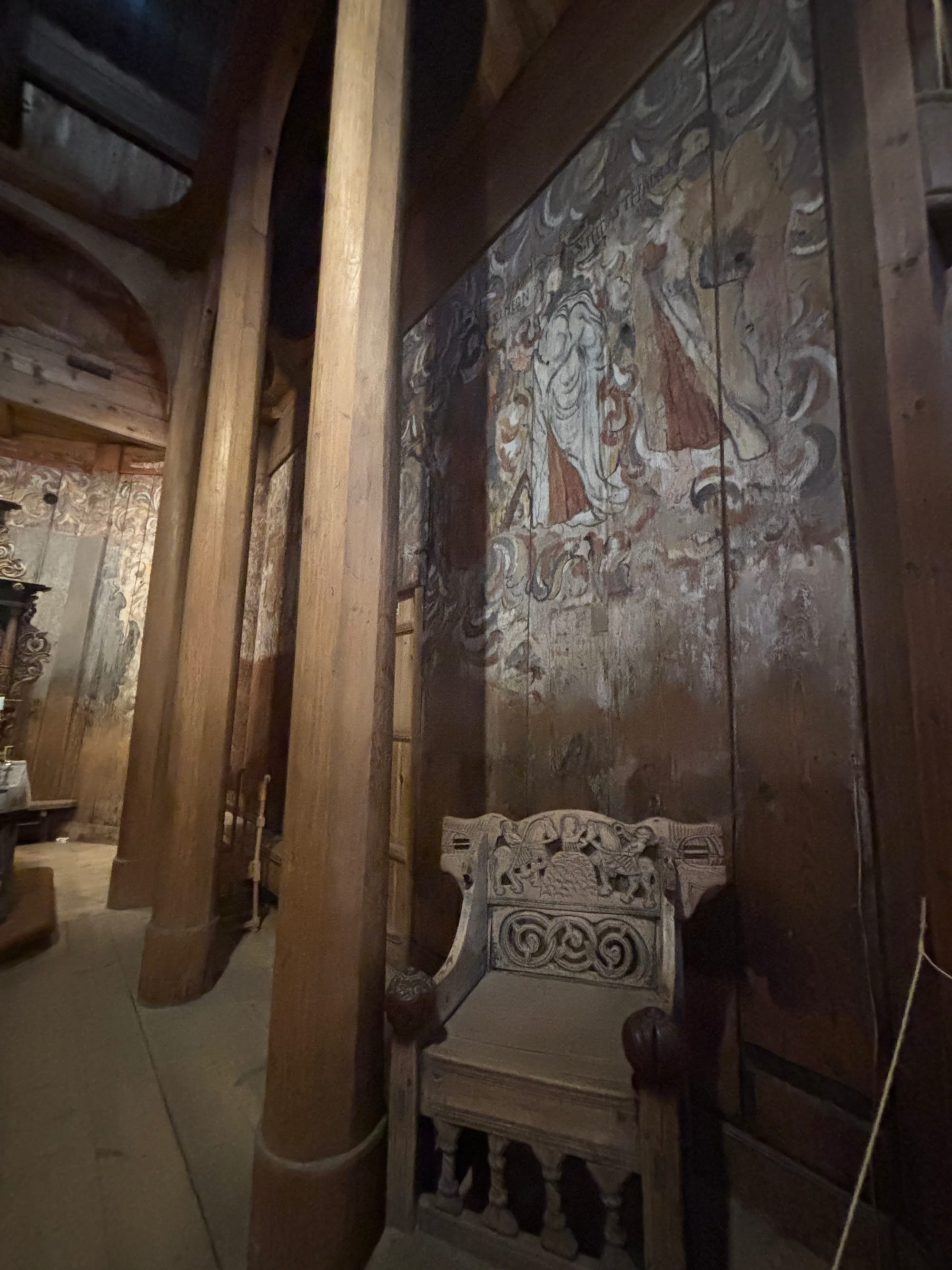
Step inside, and the wood creaks beneath your feet like an old hull at sea. The light is dim, sifted through narrow windows, catching on painted saints whose colours are faded but not gone. Here belief is not explained; it is embodied. The church does not argue the case for God. It breathes Him.
This was Weber’s world before disenchantment: a life where meaning clung to materials themselves: wood, smoke, hymn, rune, and where to believe was not to assent but to dwell.
⚡ Notodden: The Roar of Rationalisation
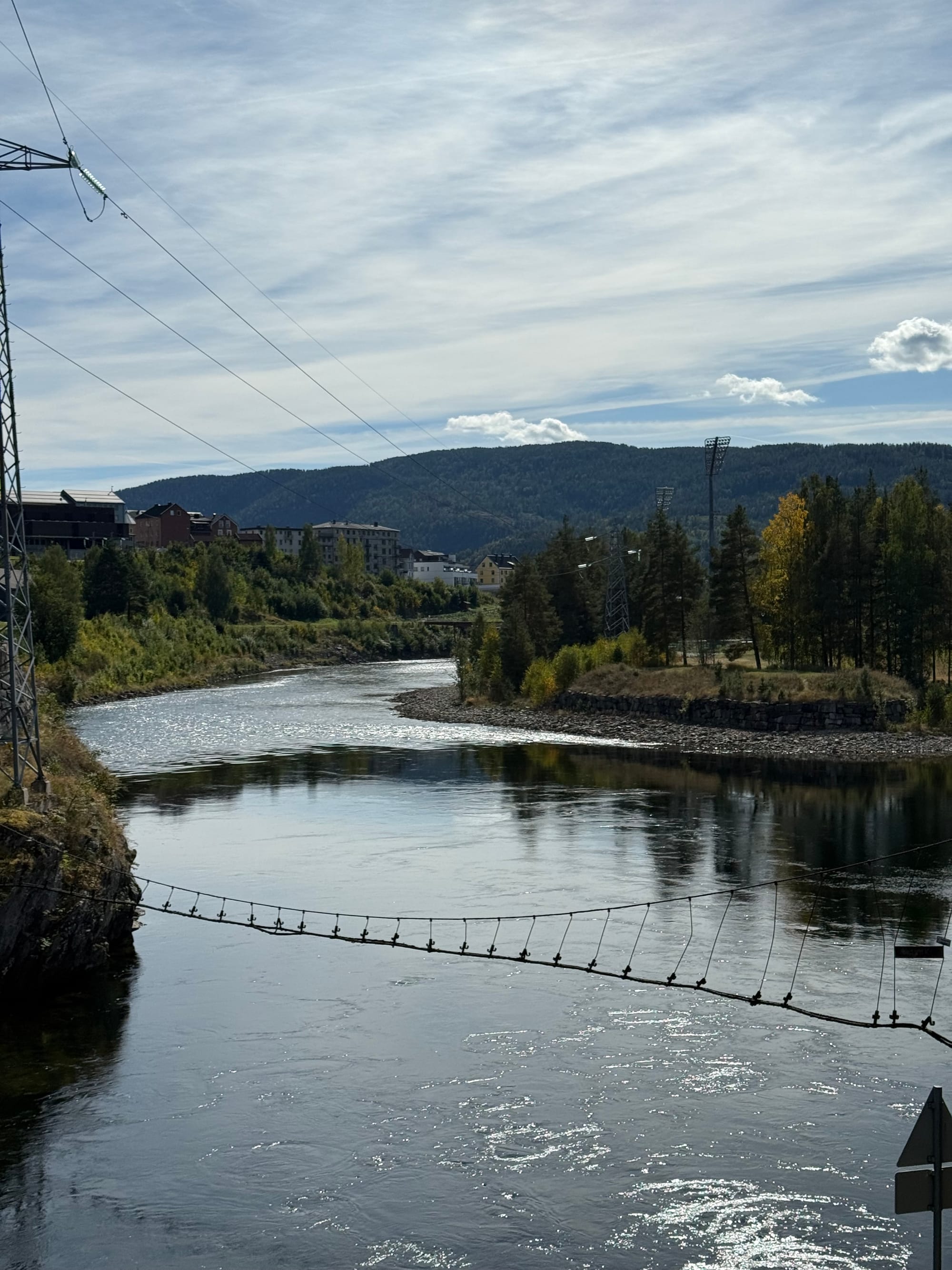
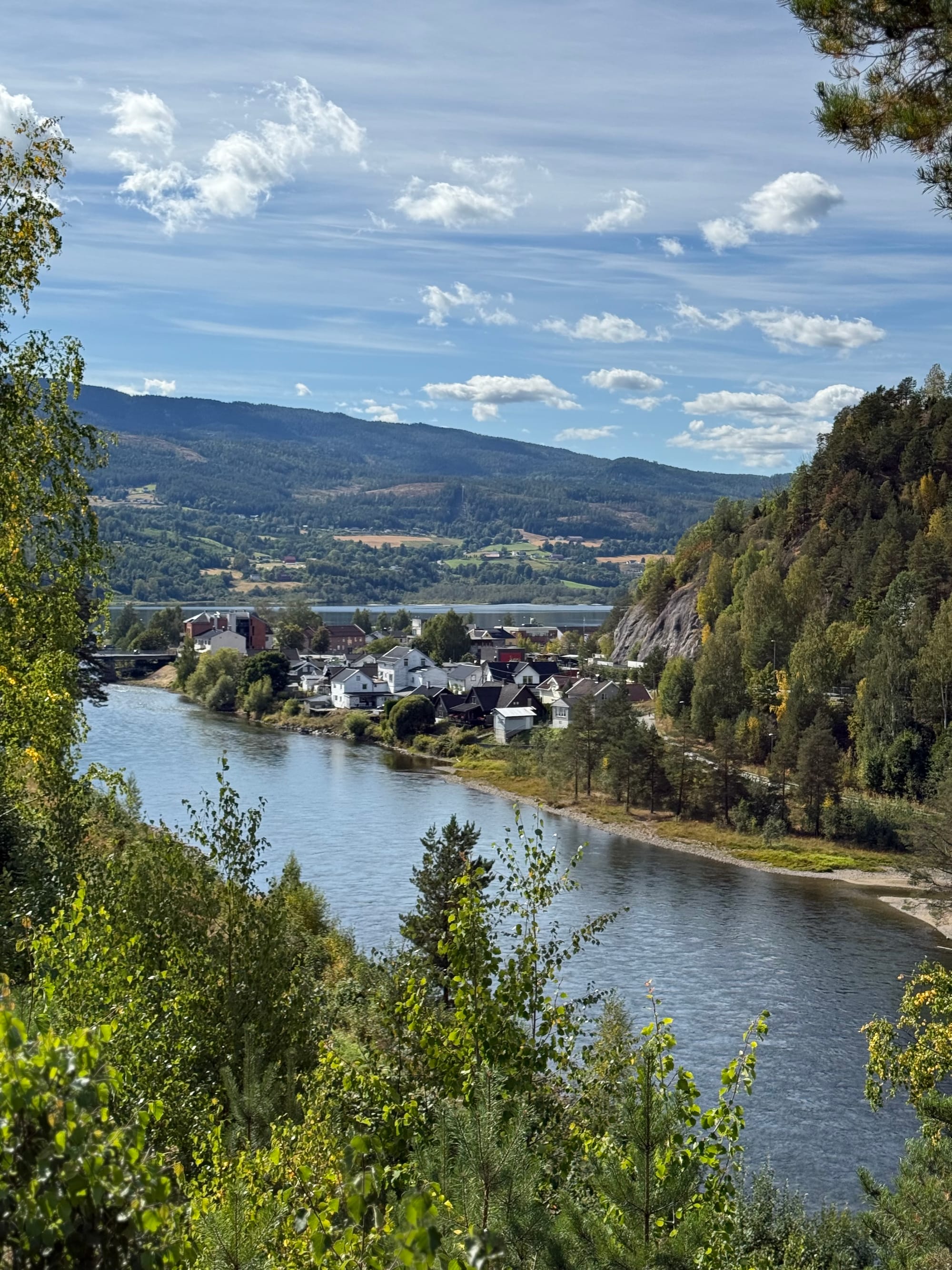
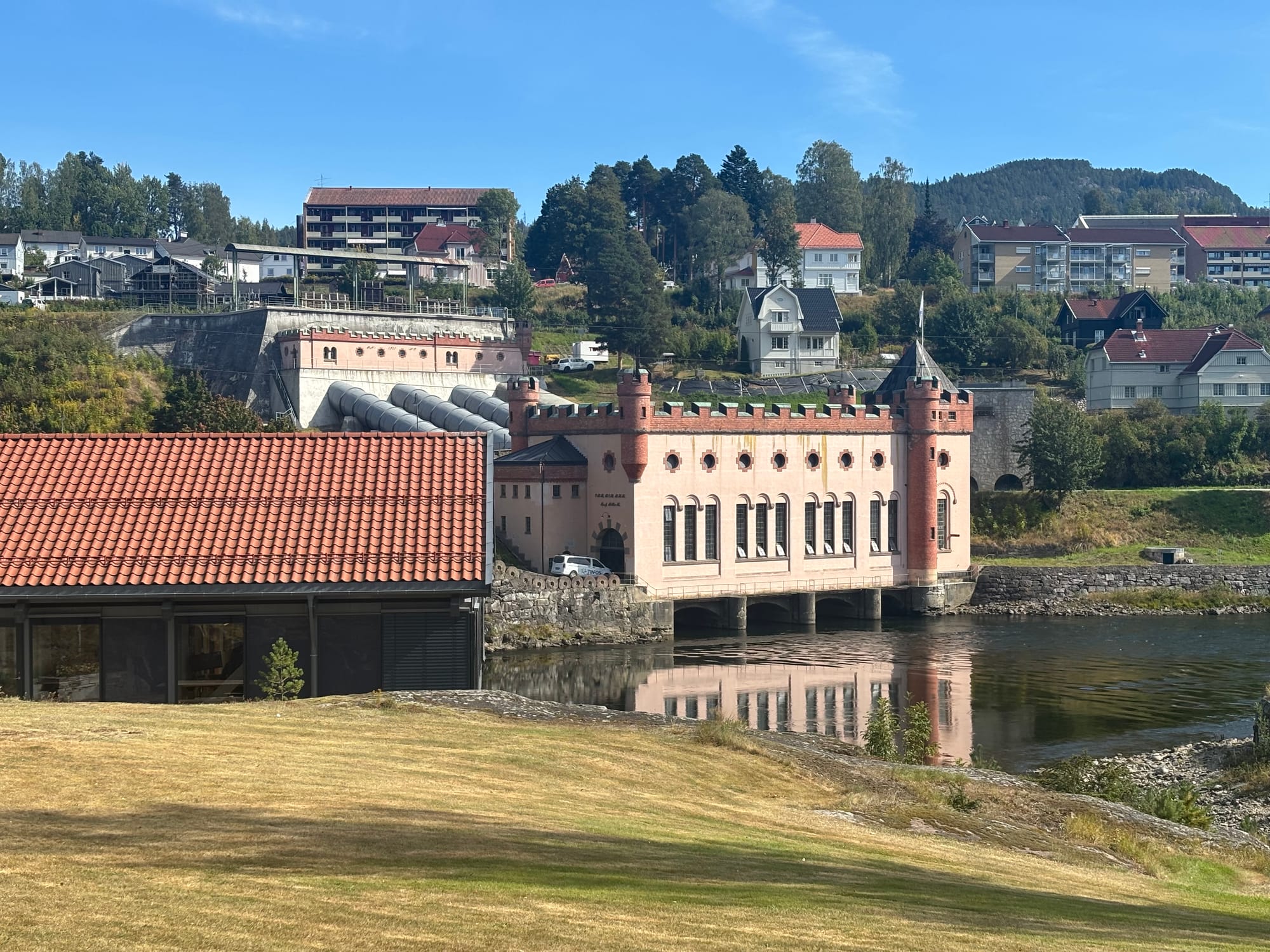
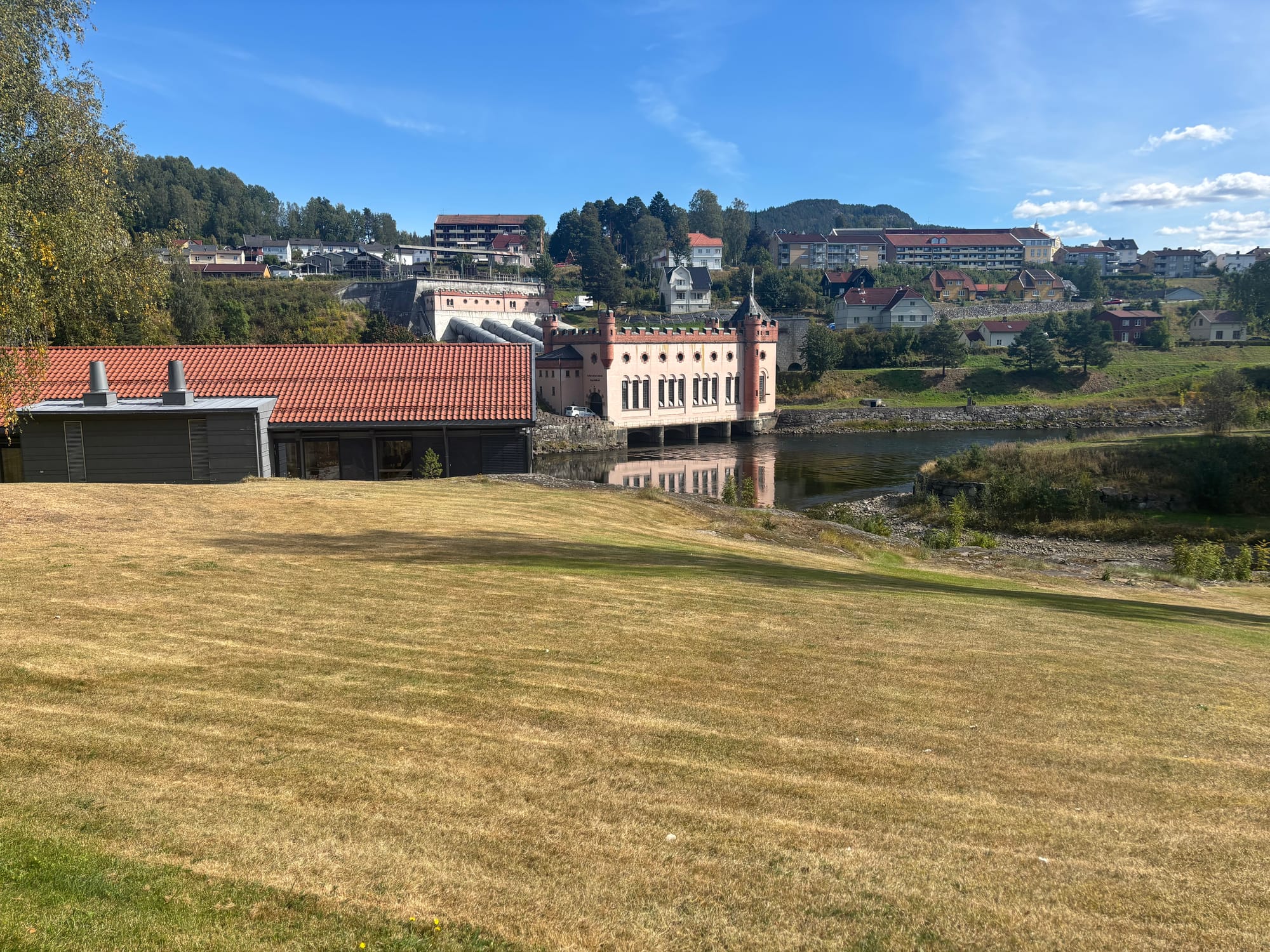
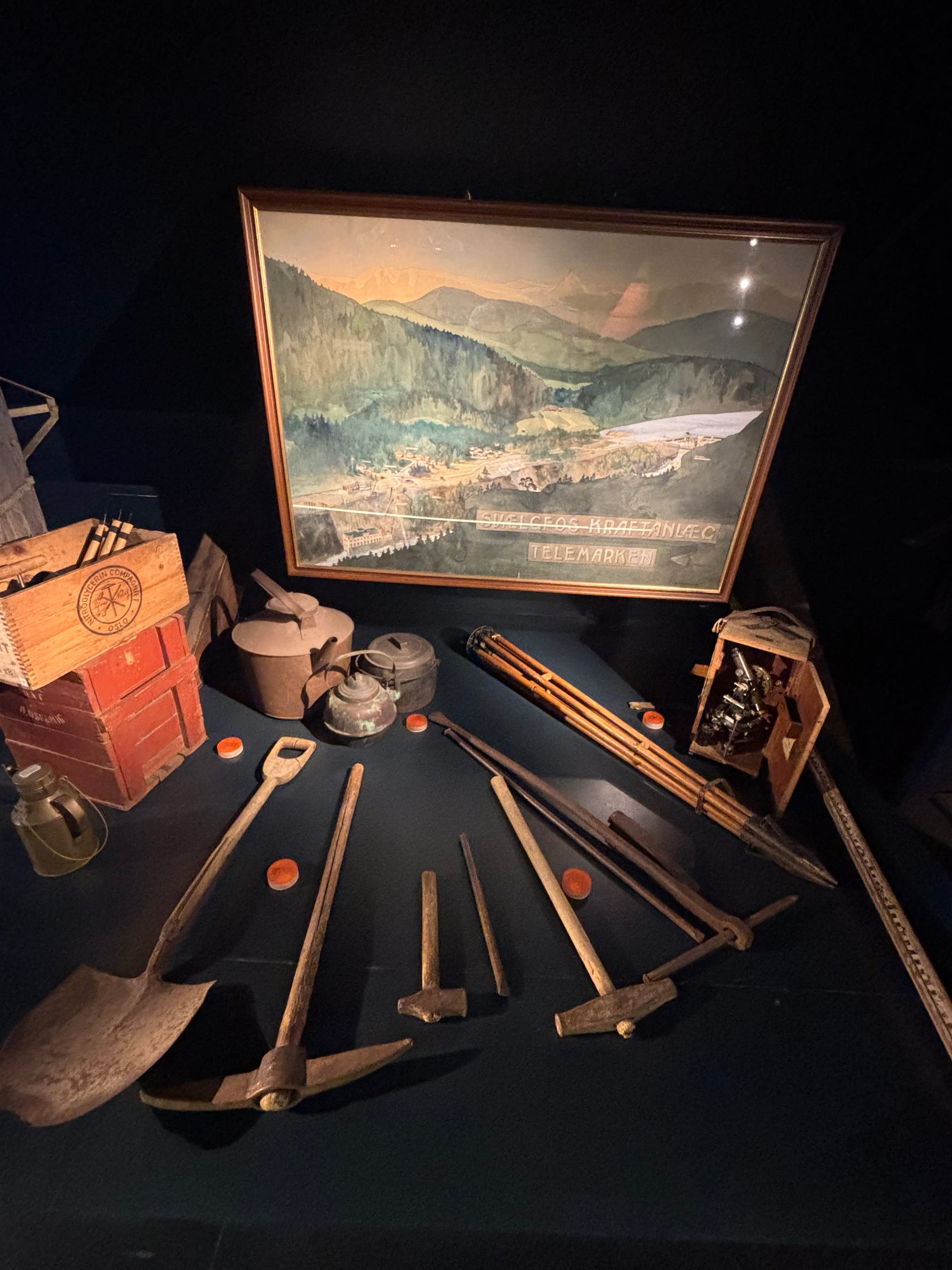
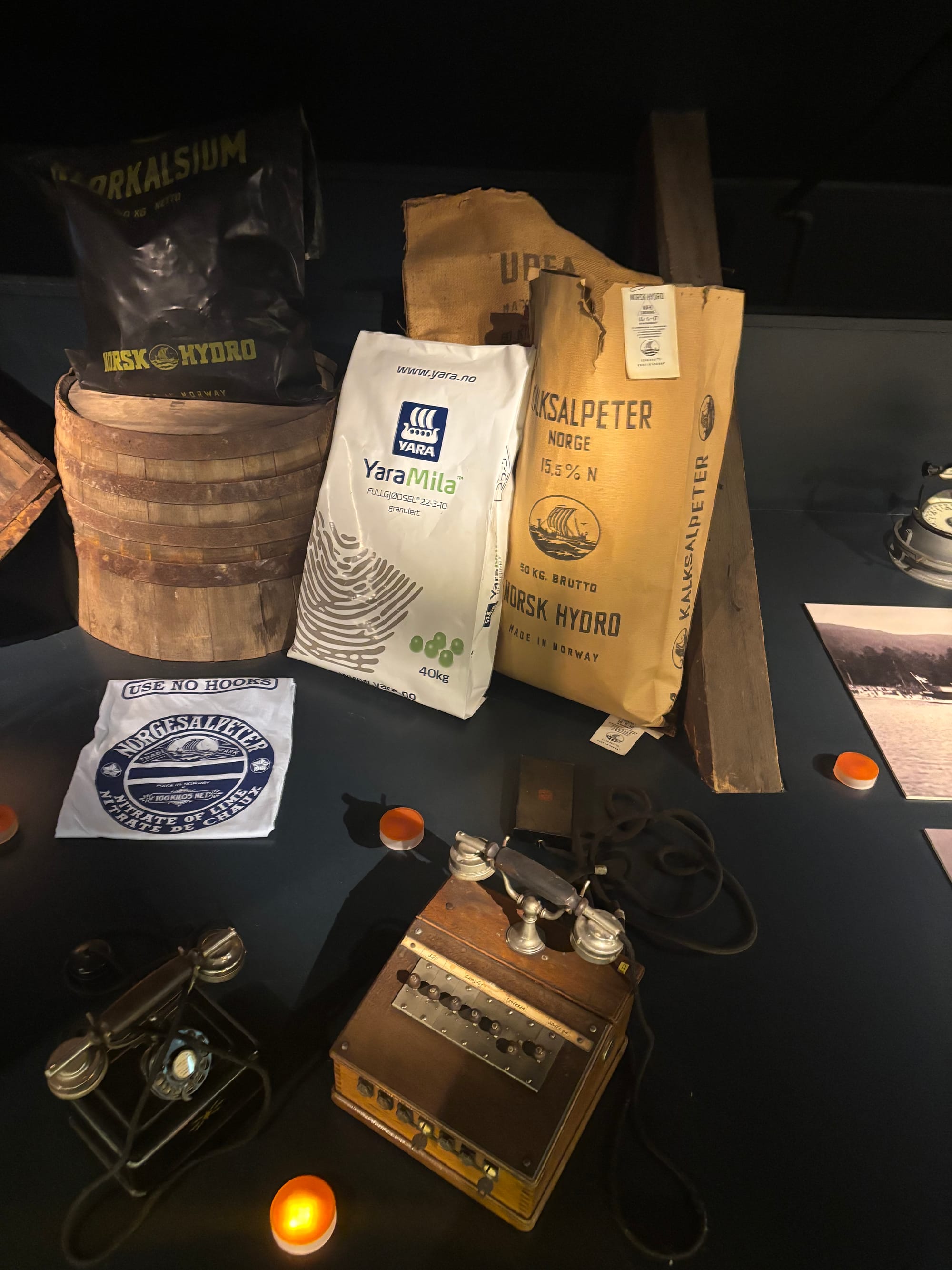
Drive east and the valley tightens around the Tinnelva river. At Notodden, its waters no longer flow freely but are caught in turbines, their roar shuddering through pipes as thick as trees. The brick power station, with its crenellated towers, could almost be mistaken for a castle, except that its banners are equations and its priests wear overalls.
Here the air is sharp with the tang of oil and iron. The geometry of the factories is unyielding: windows squared in relentless grids, steel beams exposed without ornament. Even the workers’ housing marches in rows, ordered like accounts in a ledger.
This is rationalisation made stone and steam: power no longer a gift of the divine, but a calculation. Faith, once whispered in wood, now flows as kilowatts through copper veins. Weber called this the “iron cage”; the moment when labour ceases to be a vocation and becomes necessity, when the light cloak of ascetic discipline hardens into bars that cannot be slipped.
🔄 Between Whisper and Roar
And yet, the binary is not complete. Rationalisation does not banish myth; it produces new ones. Notodden is not only a factory-town: it is also a UNESCO site, curated as heritage, narrated to visitors with a reverence that borders on liturgy. The turbines roar like hymns of industry. The engineers’ notebooks are preserved like relics. Enchantment has not vanished. It has shifted its altar.
The paradox is cruel: the stave church feels fragile, a relic already fading into museum silence, while the hydro plant still hums with power, half alive, half memorial. One is sacred by tradition, the other sacred by function.
💭 Closing Thought
To stand at Heddal is to sense a world where faith grew with the trees.
To stand at Notodden is to hear a world where power roared with the falls.
Weber warned that the cage was not chosen but built around us, one beam at a time. Telemark shows both ends of that arc: the whisper of wood darkened by incense, the roar of water darkened by calculation.
The turbines still roar, their sound swelling through the valley. For a moment it seems like a hymn, rising from stone and steel but it is a hymn sung from inside the cage, its bars vibrating with the same rhythm as the song.