From Logos to Wa in Kōrakuen Garde
“Die Sprache ist das Haus des Seins.”Language is the house of Being.
— Martin Heidegger
I once lived in that house: all clarity and order, its ceilings held aloft by clauses, its beams shaped in syntax. In my years of priesthood, I moved comfortably within the architecture of Western language. The Gospels open not with an event, but with grammar: In the beginning was the Word: ho logos. A word, yes, but also reason, order, principle. To speak was to shape.
In Latin and Greek, even though word order is flexible, thought itself is guided by inflection, case, and tense. These languages don’t merely allow for meaning; they impose it. They carry an implicit demand: to name, to define, to declare. English follows suit, insisting on subjects and verbs, on action and direction. Language here is a tool, honed to articulate thought.
But as Heidegger insists, and as I have begun to understand, language is not simply the instrument of thought. It is what allows us to think at all. We do not merely use words to shape the world; the shape of the world comes to us through the grammar we inherit.
And then I came to Japan.
🌾 A Language of Ellipses
In Japanese, language does not raise scaffolds. It drapes. Sentences may trail off. Subjects vanish. Tense softens. Shizuka da ne, “It’s quiet, isn’t it?”, gives you neither agent nor object. Meaning emerges not from structure but from atmosphere.
There is a grammar of suggestion. A poetics of omission. You listen not only to what is said, but to the silence that surrounds it. The unsaid becomes part of the sentence. Language here doesn’t seek to master the world; it invites you to dwell within it.
Where Western logic builds toward clarity, Japanese aesthetics favor nuance. The concept of yohaku, the beauty of empty space, governs not only paintings and poetry but interaction itself.
Where I once loved sentences that marched, I now walk sentences that bow.
🪷 Gardens of Grammar
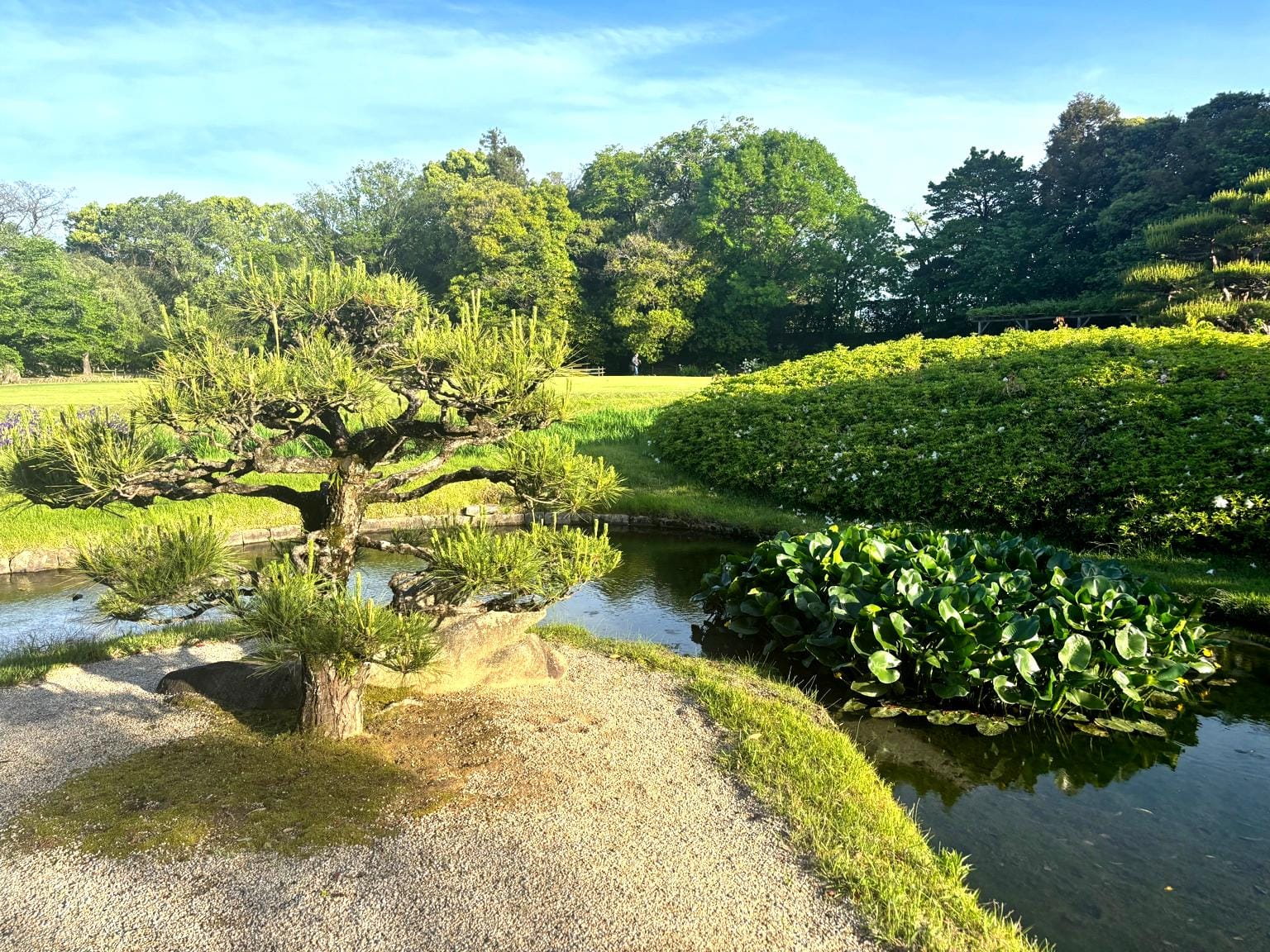
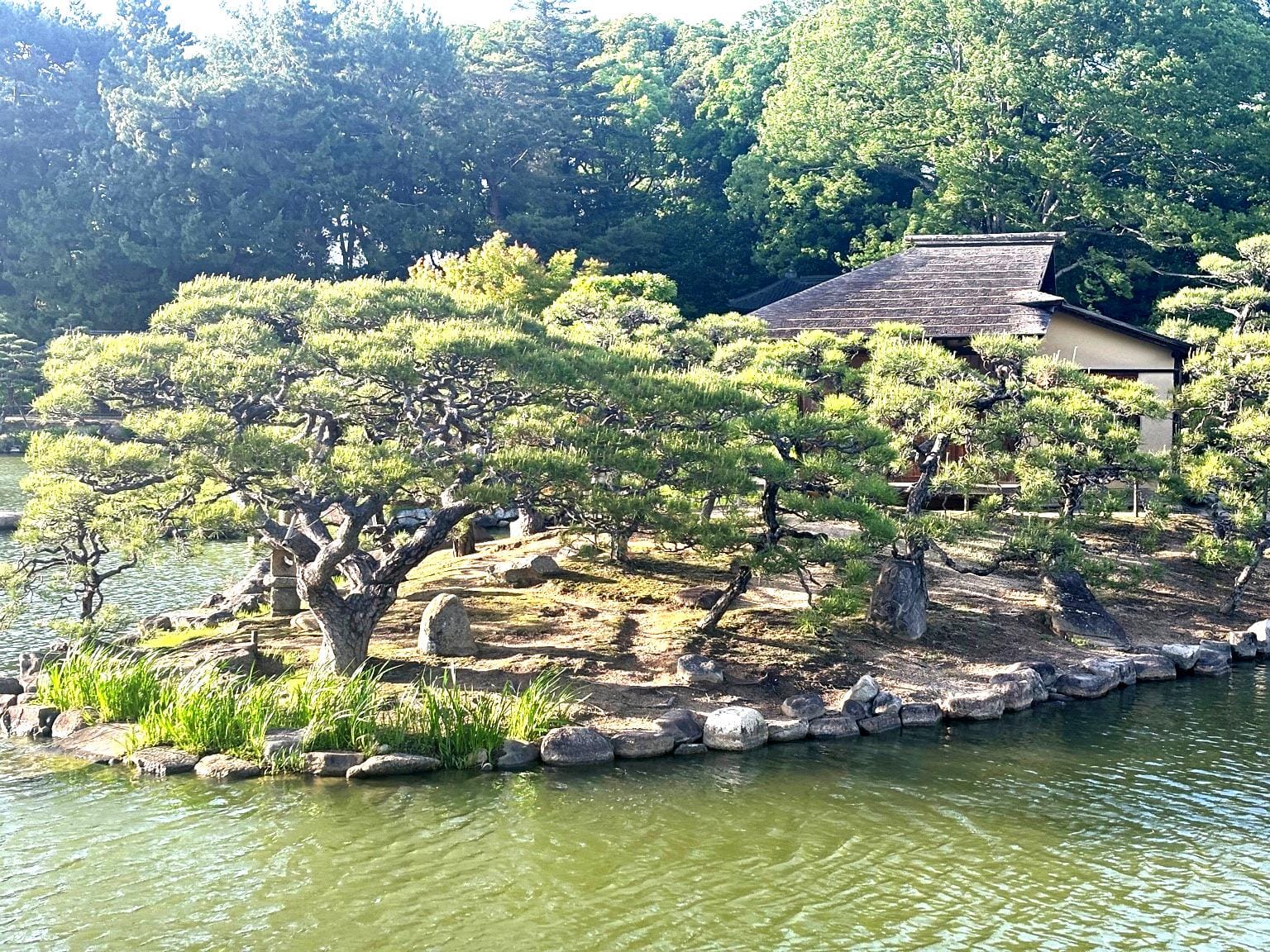
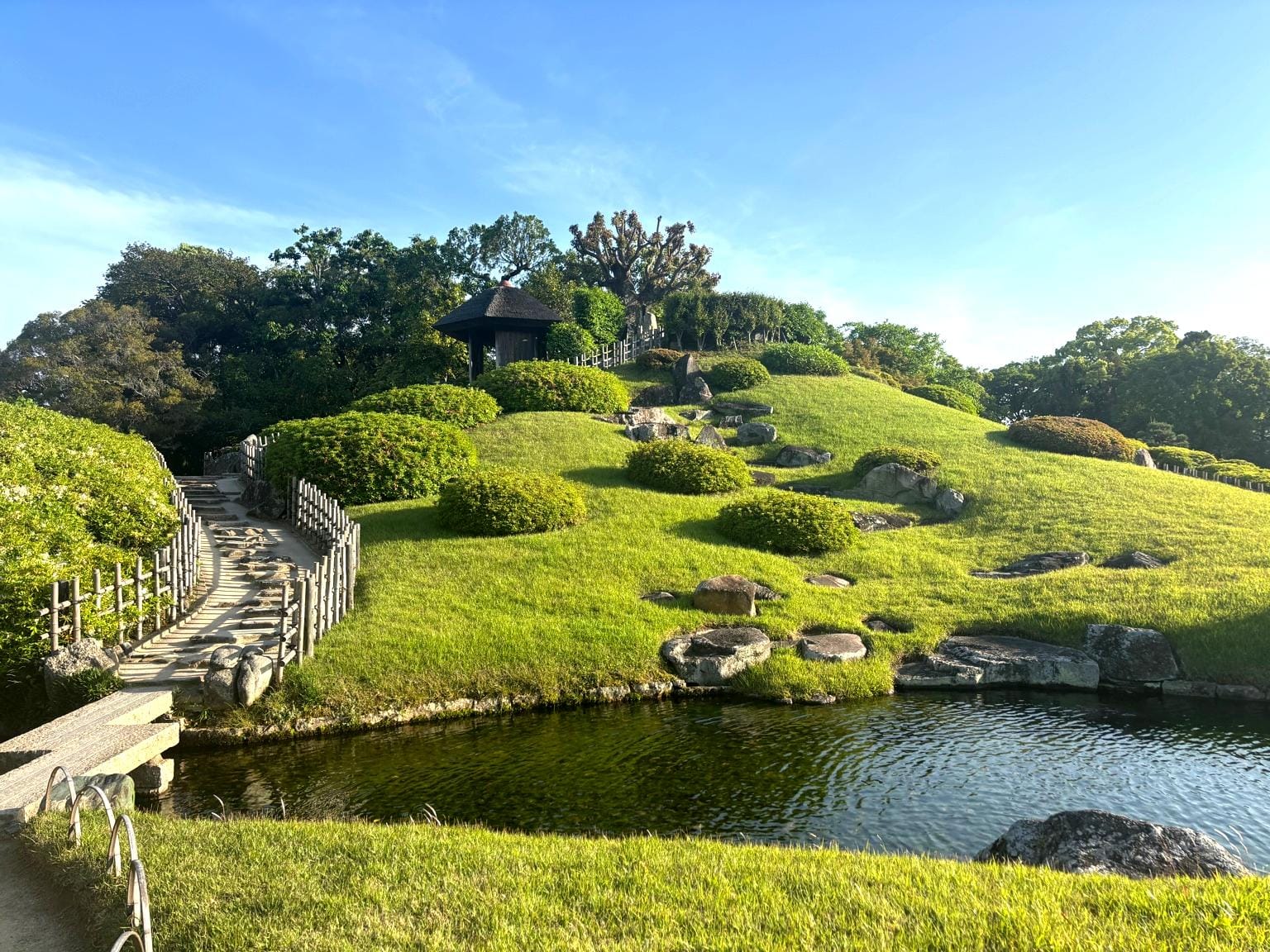
I felt this most fully in a garden: raked gravel, still water, stones placed as if in dialogue with absence. No symmetry, but no chaos. It was a place not of argument, but of accord.
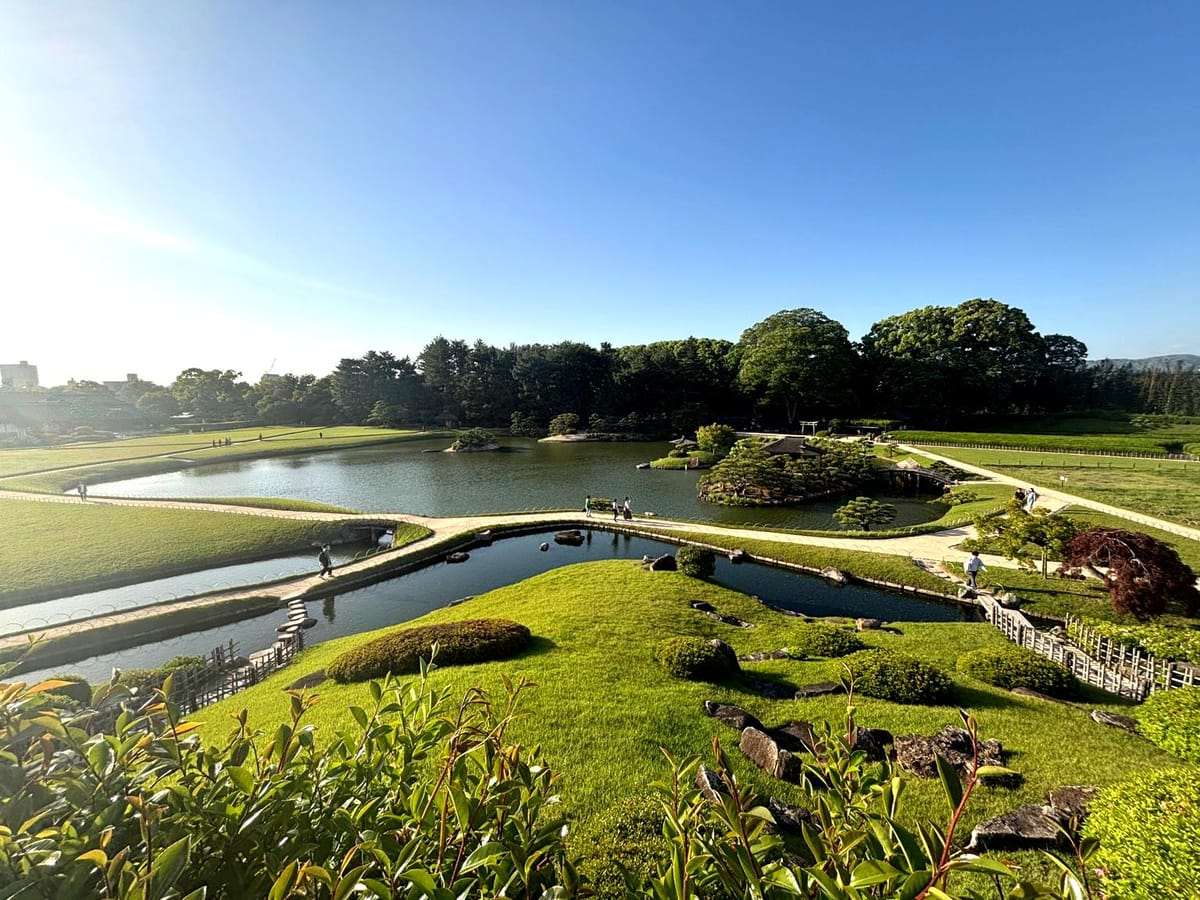
In Western gardens, nature is shaped to express intention: hedges cut, roses plotted, borders enforced. In Korakuen garden, unique in Japan for its vast lawns, nature is invited into balance. It is not ordered; it is harmonised.
Language, too, is a kind of garden. In English or Greek, we name the trees. In Japanese, we are invited to notice how the breeze moves through the branches.
🧠 The Shape of Thought
The Sapir-Whorf hypothesis holds that language shapes perception. That grammar is not neutral. That thought itself bends along the grooves of language.
In English, one might say: “I heard the frog.” In Japanese: kaeru no koe ga kikoeru: “The frog’s voice is audible.” There is no subject performing an action. Only a presence that is received.
Western languages locate the self at the center: I believe. I think. I know.
Japanese often disperses the self into relation. You don’t act upon the world: you witness it.
Logos builds a world through assertion. Wa, the Japanese principle of harmony, allows the world to reveal itself on its own terms.
🧘 Dwelling, Not Declaring
I once believed belonging meant fluency: to master a language, to use it well, to say what you mean and mean what you say. But Japan has taught me a different kind of fluency one based not on articulation, but on attunement.
To stand in a garden and not name the trees.
To speak, but not insist.
To write, but not resolve.
Christian theology begins not in silence but in proclamation: the kerygma. In the beginning was the Word. It is a worldview built on the conviction that truth must be spoken, preached, shared.
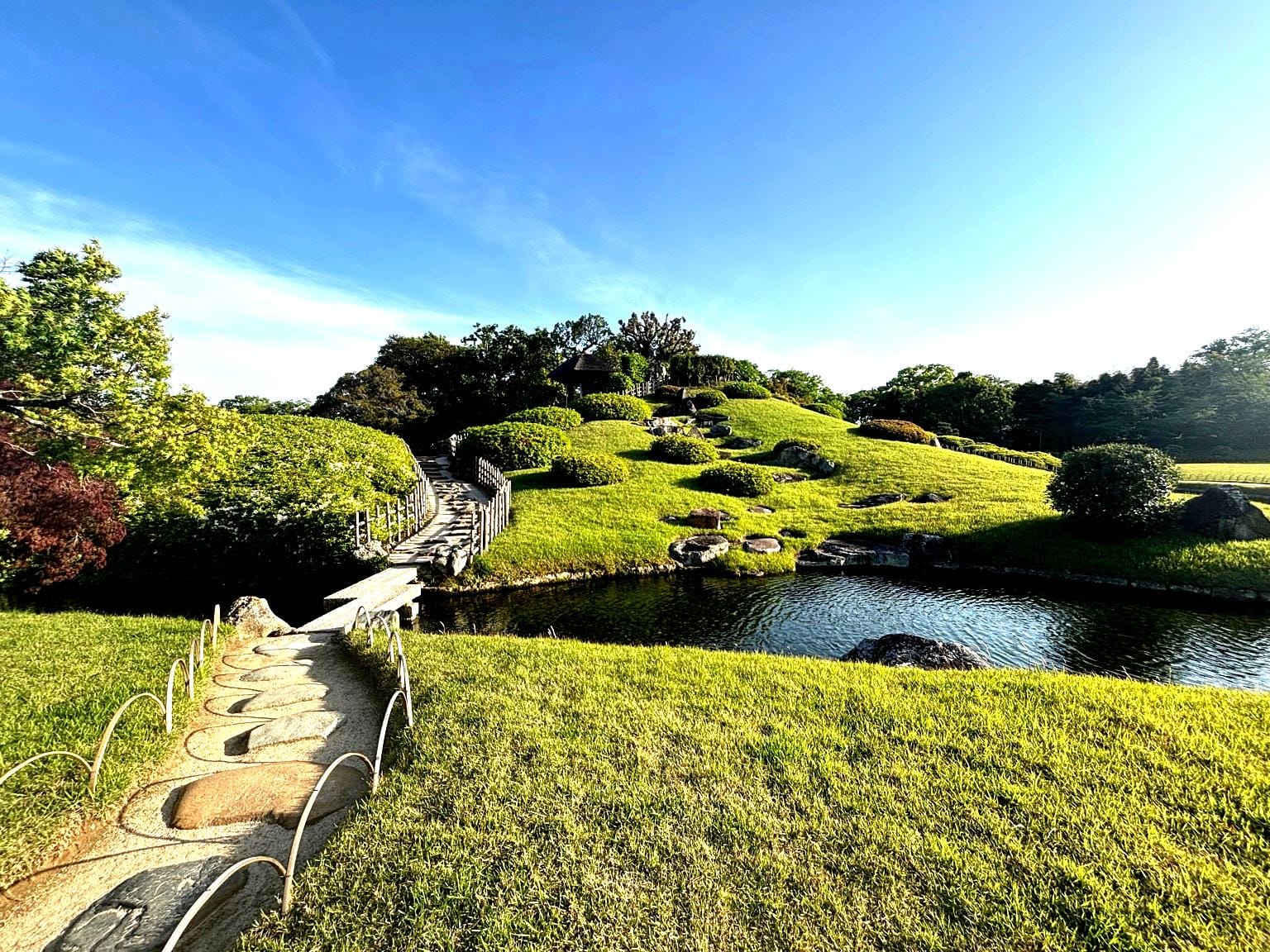
But standing now in a Japanese garden, I sense another truth. Not contradictory but quieter. One that does not announce itself, but emerges in stillness. In resonance.
Heidegger reminds us: language is not the tool of thought. It is the house in which thought lives. Logos gives us structure. Wa reminds us to listen.
I do not abandon logos: it built the rooms I first learned to think in.
But here, among gravel paths and fading moss, I am learning the wisdom of wa.
To proclaim gently.
To dwell more slowly.
And to remember that sometimes, the truest thoughts are not built.
They are received like shade in a garden.