🐸 Echoes in a Foreign Tongue
Βρεκεκεκεξ κοαξ κοαξ
“Brekekekex koax koax” — Aristophanes, Frogs
Even after ten months in Japan, I am still a foreigner. Not in the bureaucratic sense: I can navigate the train system, order a teishoku without faltering, and mumble polite acknowledgments at the right pitch and frequency. But foreignness persists elsewhere in the inflection of conversations I can’t follow, in the momentary stumbles of thought, in the way the day feels just slightly tilted.
And sometimes, in frogs.
🌀 Where Sound Becomes Culture
Aristophanes’ Frogs opens in absurdity. The chorus, frogs of the underworld, croak a refrain so strange it has echoed through the centuries:
Βρεκεκεκεξ κοαξ κοαξ.
It is mockery. It is music. It is metaphysics in disguise.
One of the few phonetic fragments we have of ancient Greek also comes from a sheep: βῆ (bē). From this single bleat, scholars infer that eta (η) was once a long “e”. We reconstruct whole pronunciations from the cries of animals in long-dead plays.
But even this is guesswork. The French frog says coa coa, the Japanese frog kero kero, and the English one ribbit. The sounds are not objective: they are domesticated by culture. A chorus of creatures, all speaking through the mouths of men.
🐸 A Street Lined with Otherness
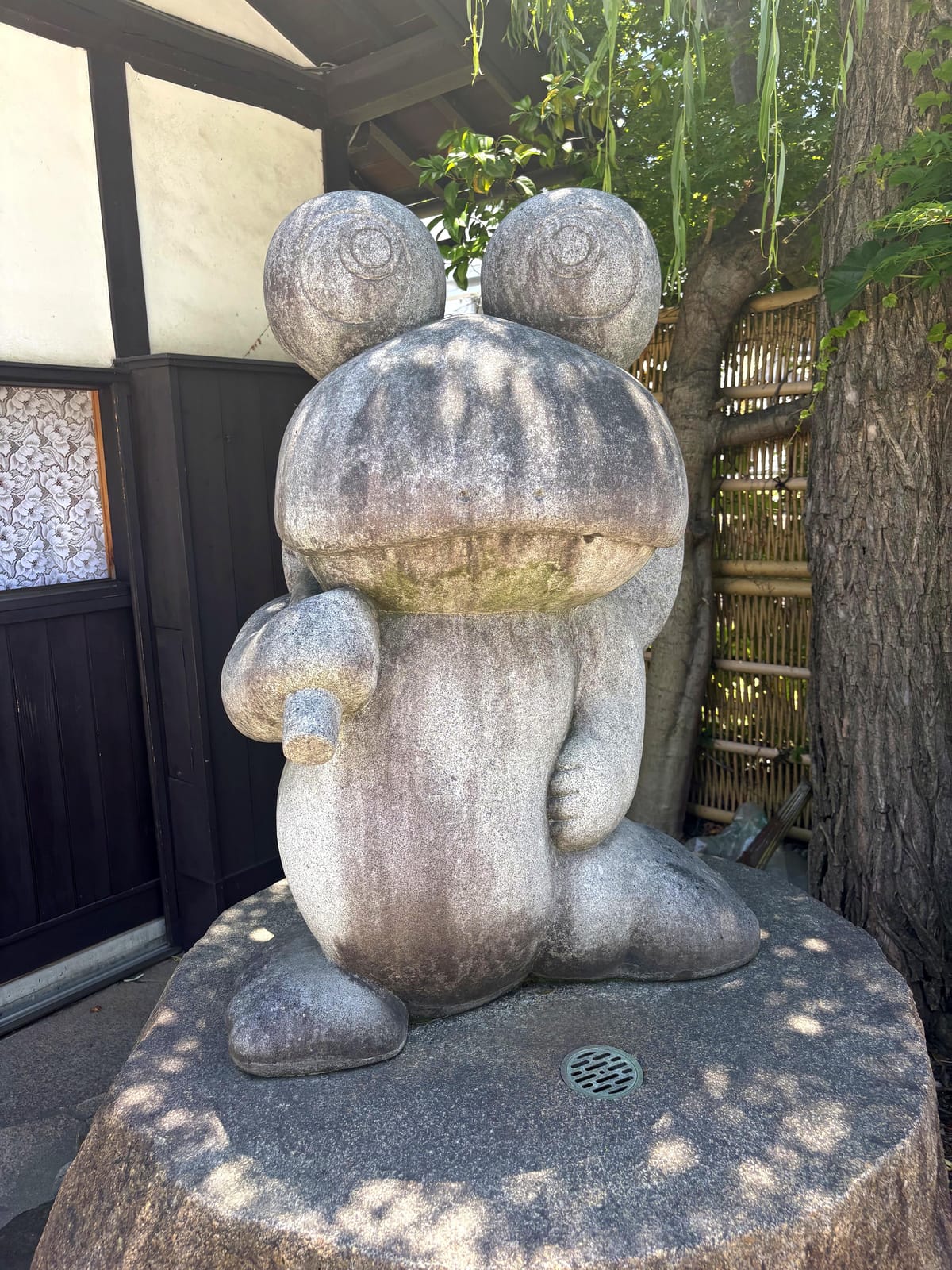
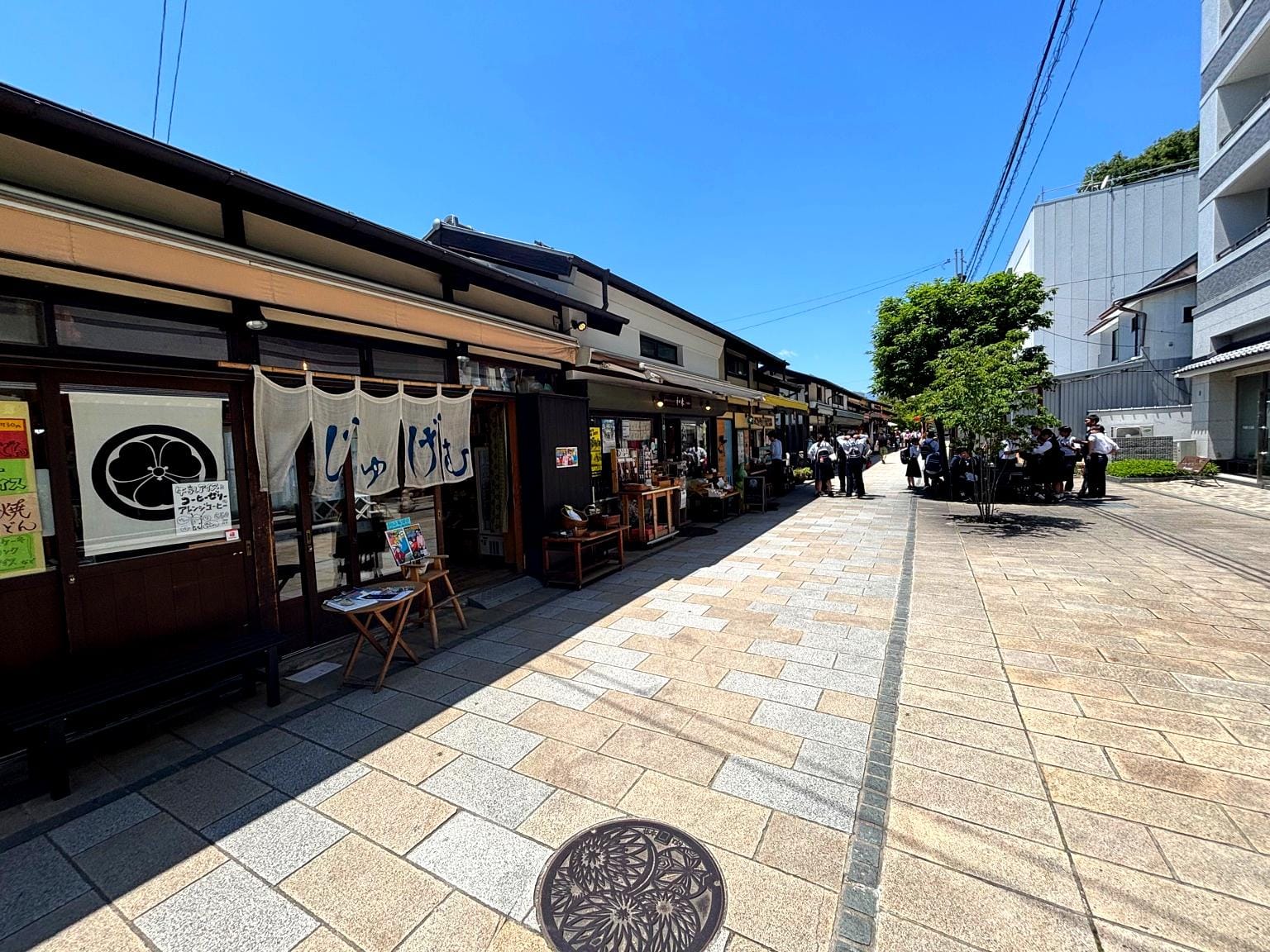
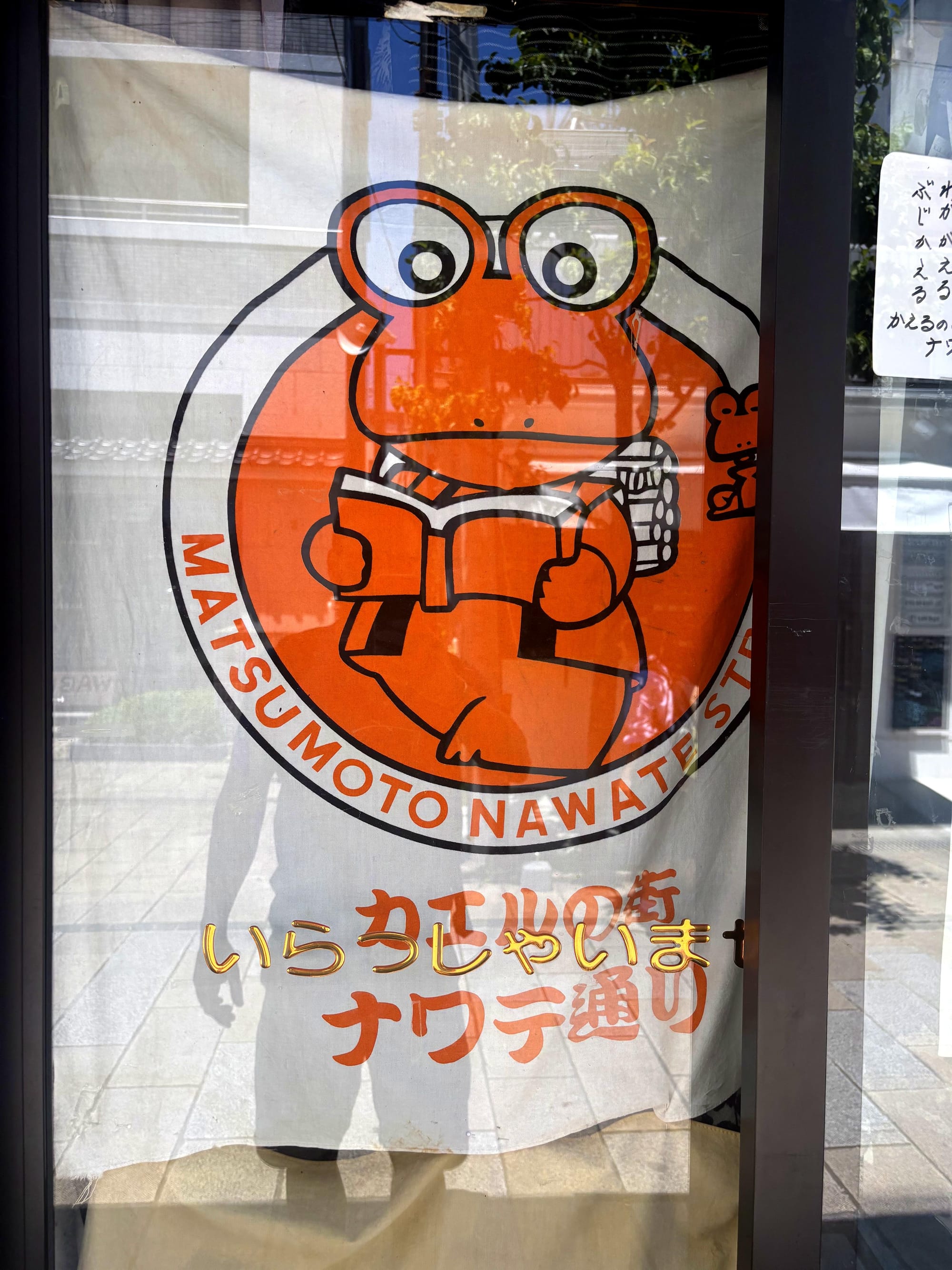
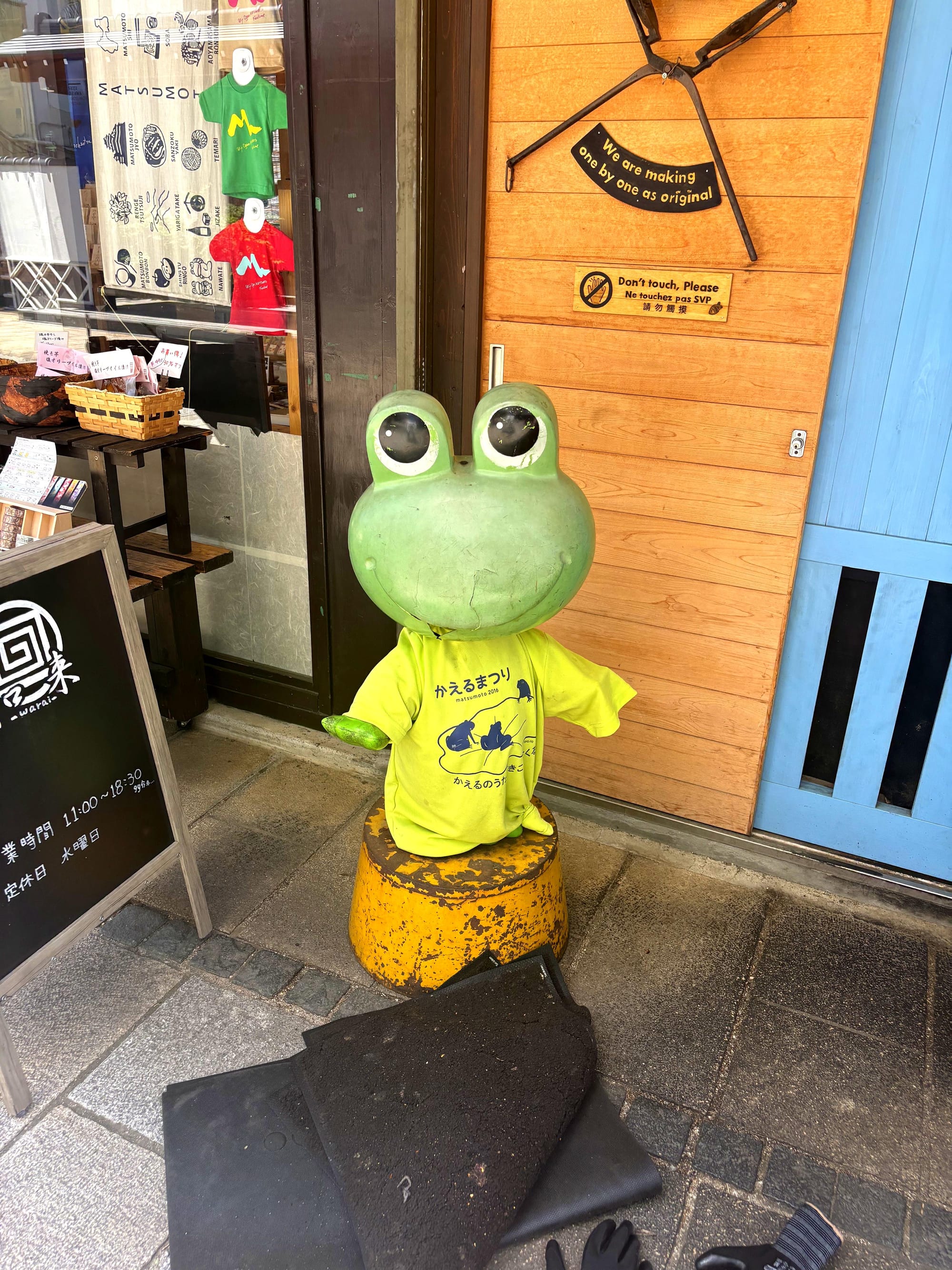
In Matsumoto, on Nawate Street, I found frogs again.
Lined up like shopkeepers or tiny deities, they wear bandanas and hold signs, read books and strike poses. They are whimsical, endearingbut also disquieting. These are not my frogs. They belong to a different syntax of playfulness, a different logic of myth.
And it made me wonder: who am I in this tableau? A foreigner looking at frogs pretending to be people, in a country where I am the one mimicking meaning. I smile at them. They do not smile back. But they seem to understand.
🌒 Between Ribbit and Kero
I once thought that learning a place meant mastering it. That pronunciation, etiquette, and rhythm were the path to belonging. But perhaps true understanding lies not in fluency, but in alertness.
To dwell in the space between ribbit and kero is to remain attentive. Not fluent, but receptive. To hear one’s own foreignness not as lack, but as possibility.
Aristophanes’ frogs don’t speak in Greek. They are Greek. Their croaking is not translation; it is transformation.
And maybe that’s what I’ve become: not native, not tourist. Somewhere amphibious.
📚 What to Read on Nawate Street
- Play: Βάτραχοι (Frogs) by Aristophanes — for language that leaps between worlds
- Essay: After Babel by George Steiner — for the impossibility and necessity of translation
📍 If You Go: Nawate Street, Matsumoto
- Near the castle, a canal-side path crowded with frog statues and antique shops.
- Visit in early evening when the light softens and the street grows quiet enough to imagine voices rising from the canal.
💭 One Last Note
Foreignness is not failure. It is invitation.
To be lost in translation is still to be in something.
And on a small street in Matsumoto, I heard frogs echo across centuries: not to be understood, but to be accompanied.
κοαξ.