🏰 Castles of Memory: Ricoeur in Bellinzona
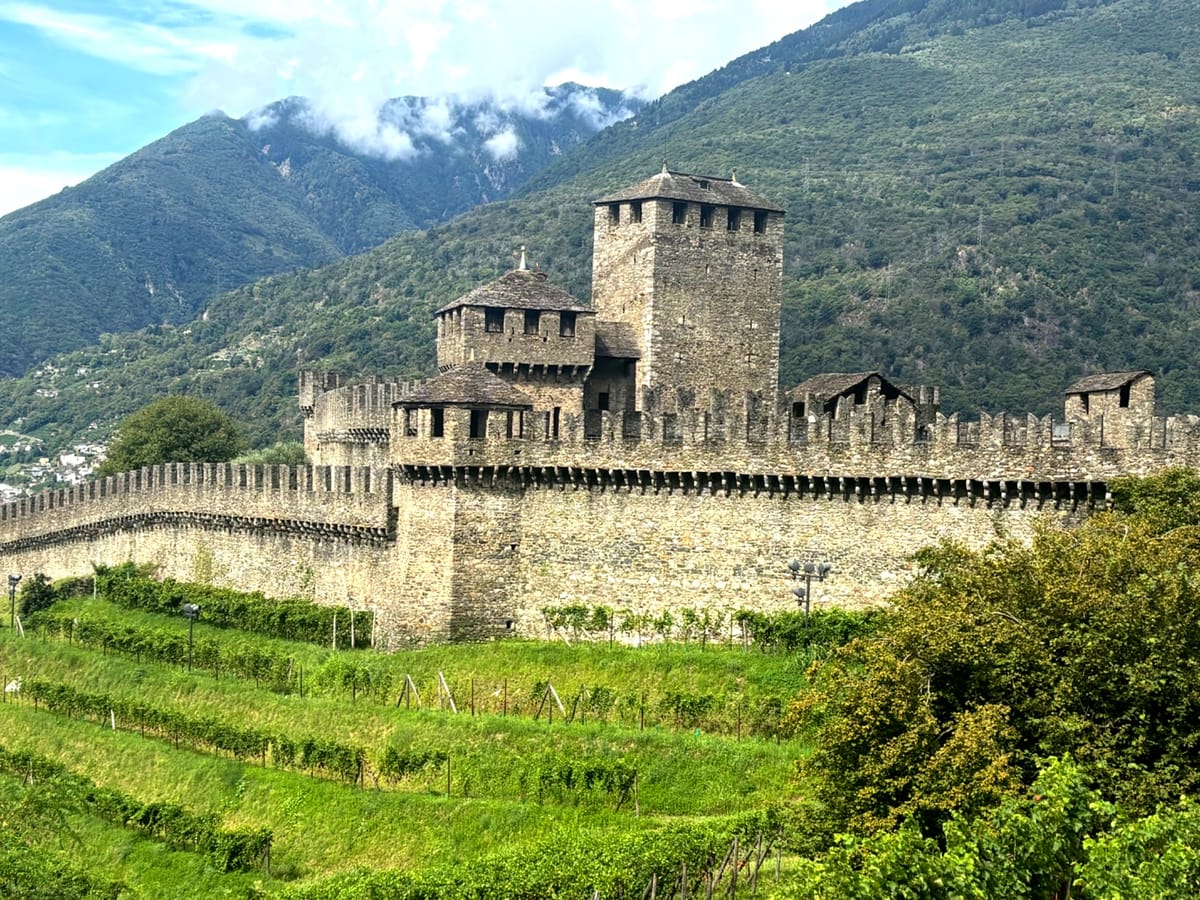
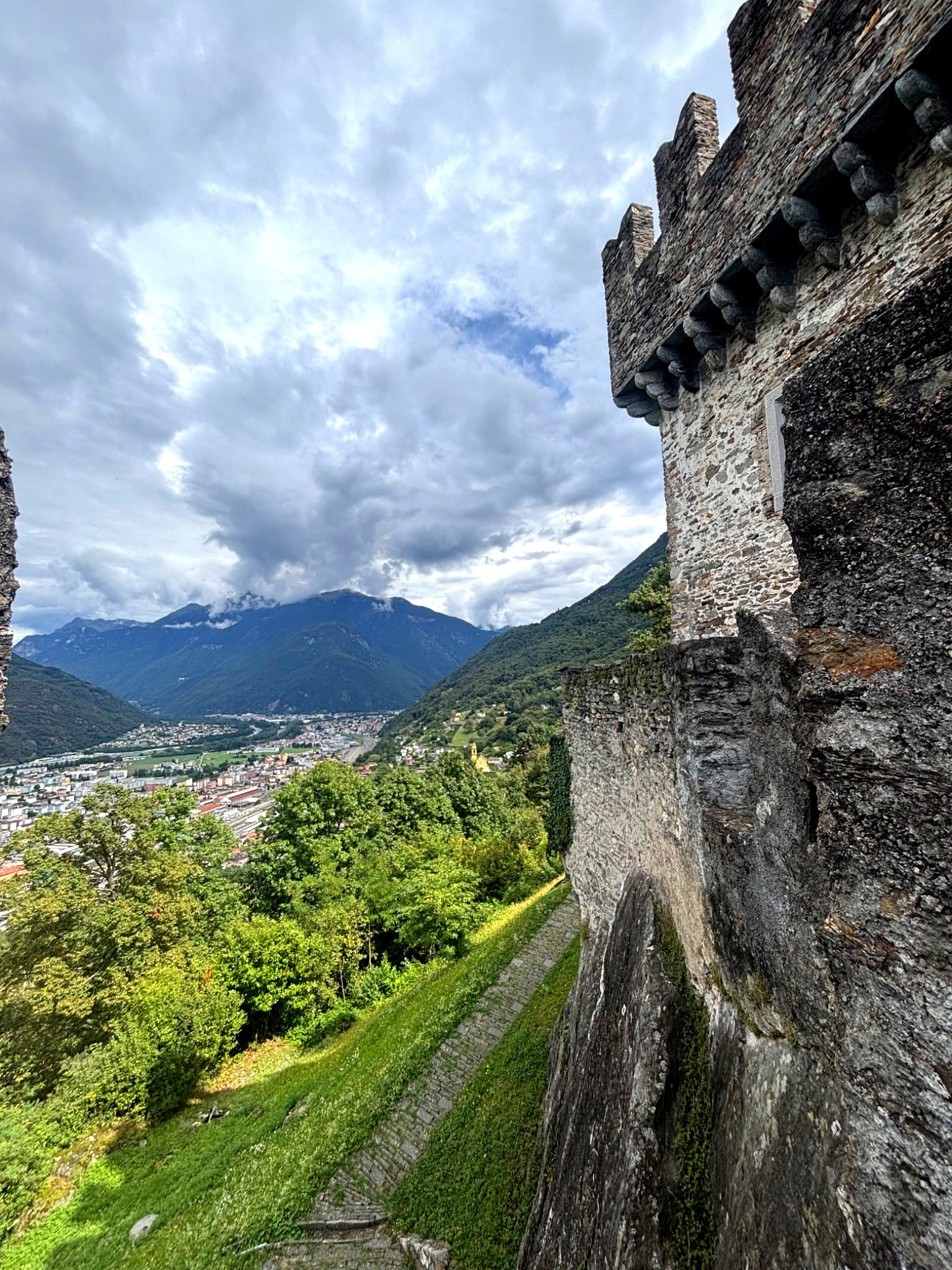
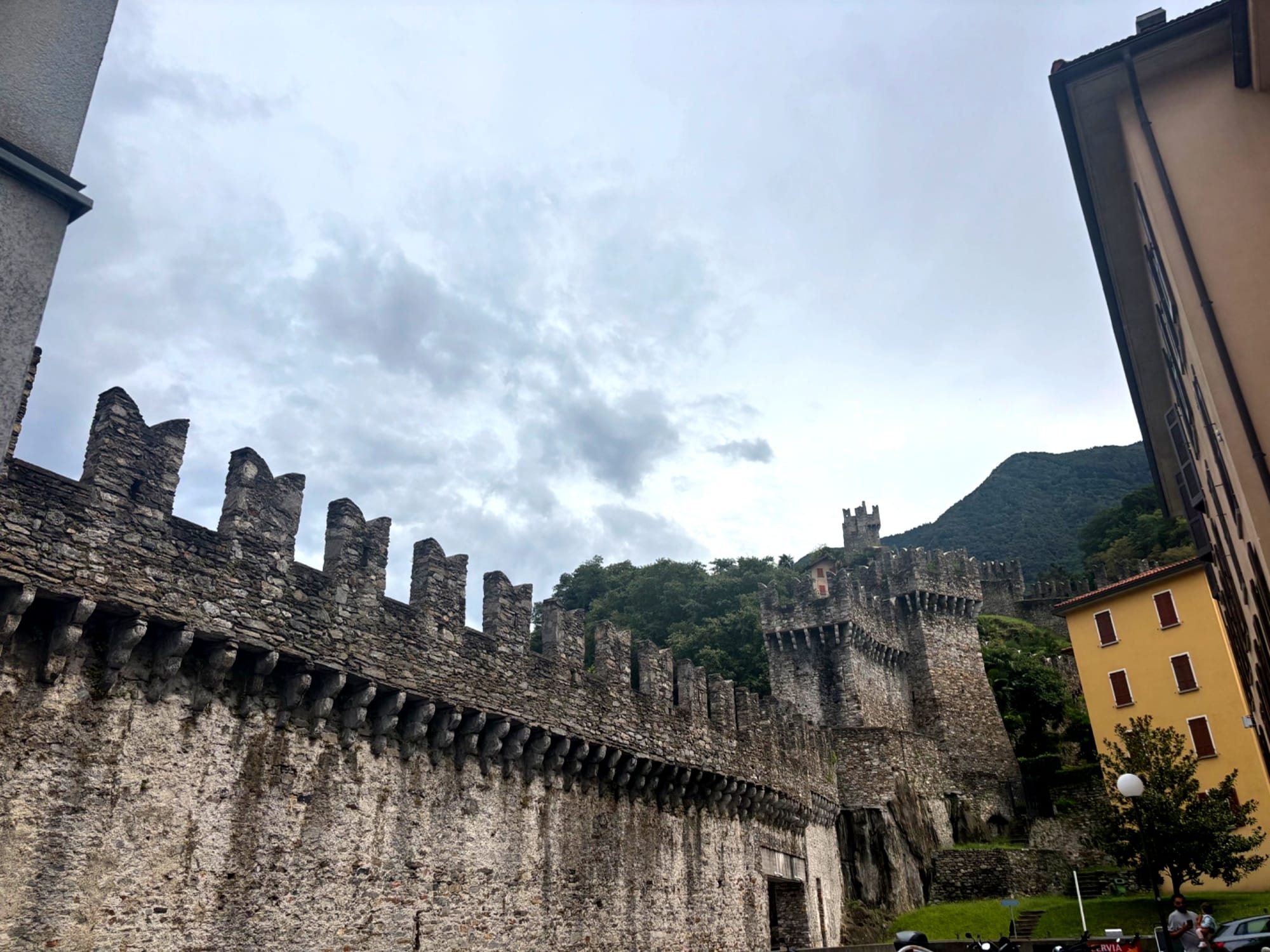
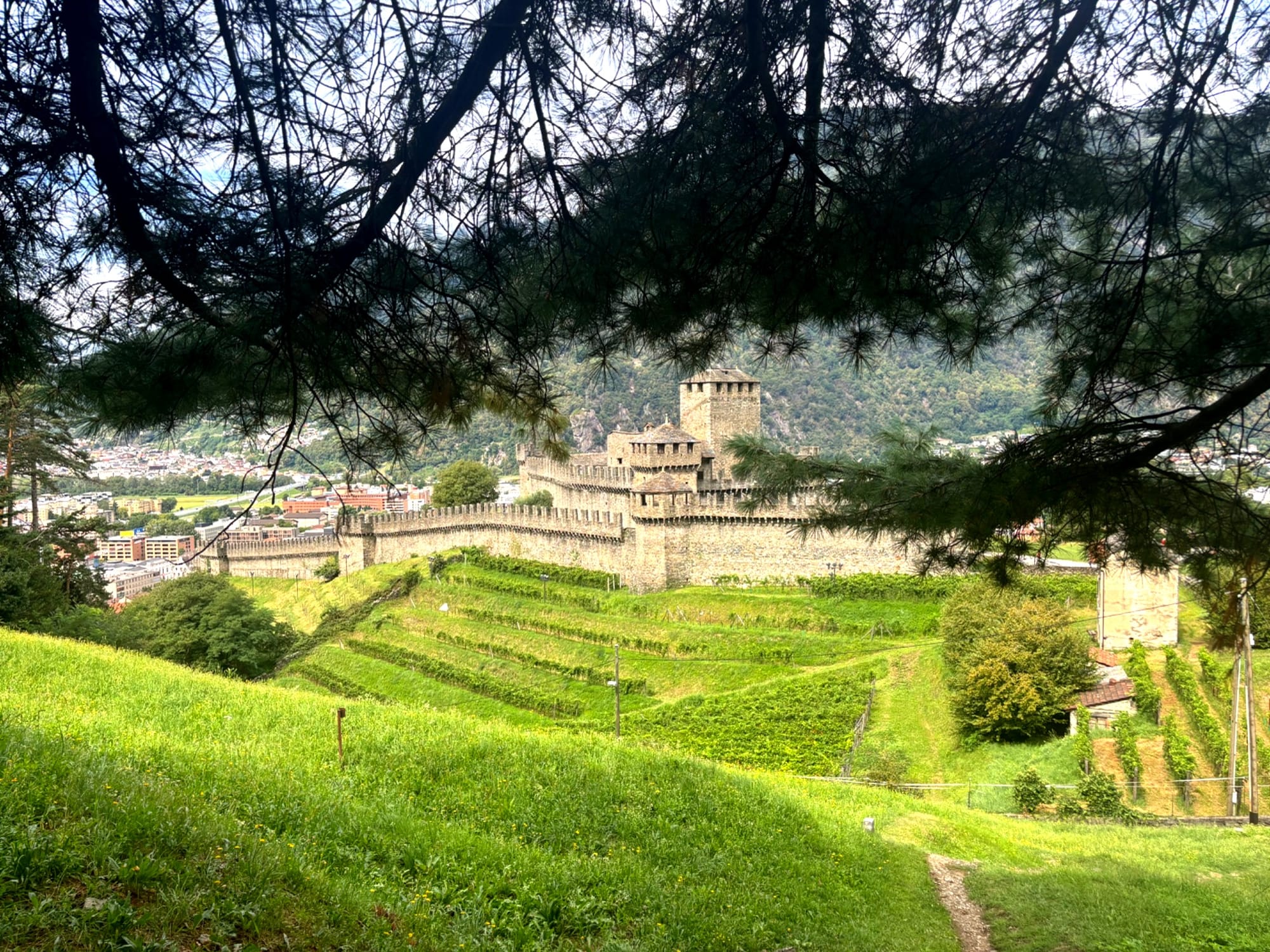
Bellinzona is a city written in stone. The three castles: Castelgrande, Montebello, and Sasso Corbaro stand like sentinels above the valley, their profiles marking the convergence of Alpine passes and Italian plains. They are not merely picturesque ruins. They are commands carved into rock. A wall dictates movement, a tower dictates vision, a gate dictates permission. To pass through this valley was once to submit to fortification, to live under the gaze of stone.
Paul Ricoeur reminds us that memory works in the same way. In La mémoire, l’histoire, l’oubli he argues that memory is not neutral recall but a structuring act, one that includes and excludes, preserves and silences. To remember is already to interpret. Walking along the ramparts of Castelgrande, I realised that the wall beneath my feet was more than an architectural artefact; it was a metaphor for how we choose to guard some memories while letting others collapse. Memory, like masonry, is never simply there. It is raised, maintained, and defended.
⚖️ Neutrality and Forgetting
But the irony is that these fortifications now defend nothing. Their battlements have been recast as heritage, folded into Switzerland’s narrative of neutrality. The walls no longer hold armies at bay; they hold tourists, UNESCO plaques, and curated signage. Neutrality has replaced vigilance, and the violent past is aestheticised into a story of peace. Ricoeur warns us of this danger: the abuse of memory in which the past is not erased but pacified, reshaped into myth. Neutrality becomes less a virtue than a selective amnesia; a way of claiming innocence while quietly enclosing what is inconvenient to recall.
📖 Forgetting in Reserve
Yet forgetting is never one thing. Ricoeur distinguishes between erasure and l’oubli de réserve: a forgetting held in reserve, dormant but recoverable. Bellinzona’s castles exemplify this ambiguity. Their stones no longer bristle with soldiers, but they still carry the resonance of fear and calculation. Their silence is not empty; it is a suspended testimony. Heritage softens their edges, but does not wholly disarm them. A ruin always whispers more than it shows, carrying within itself a memory waiting to be reawakened.

🚶 Embodied Memory
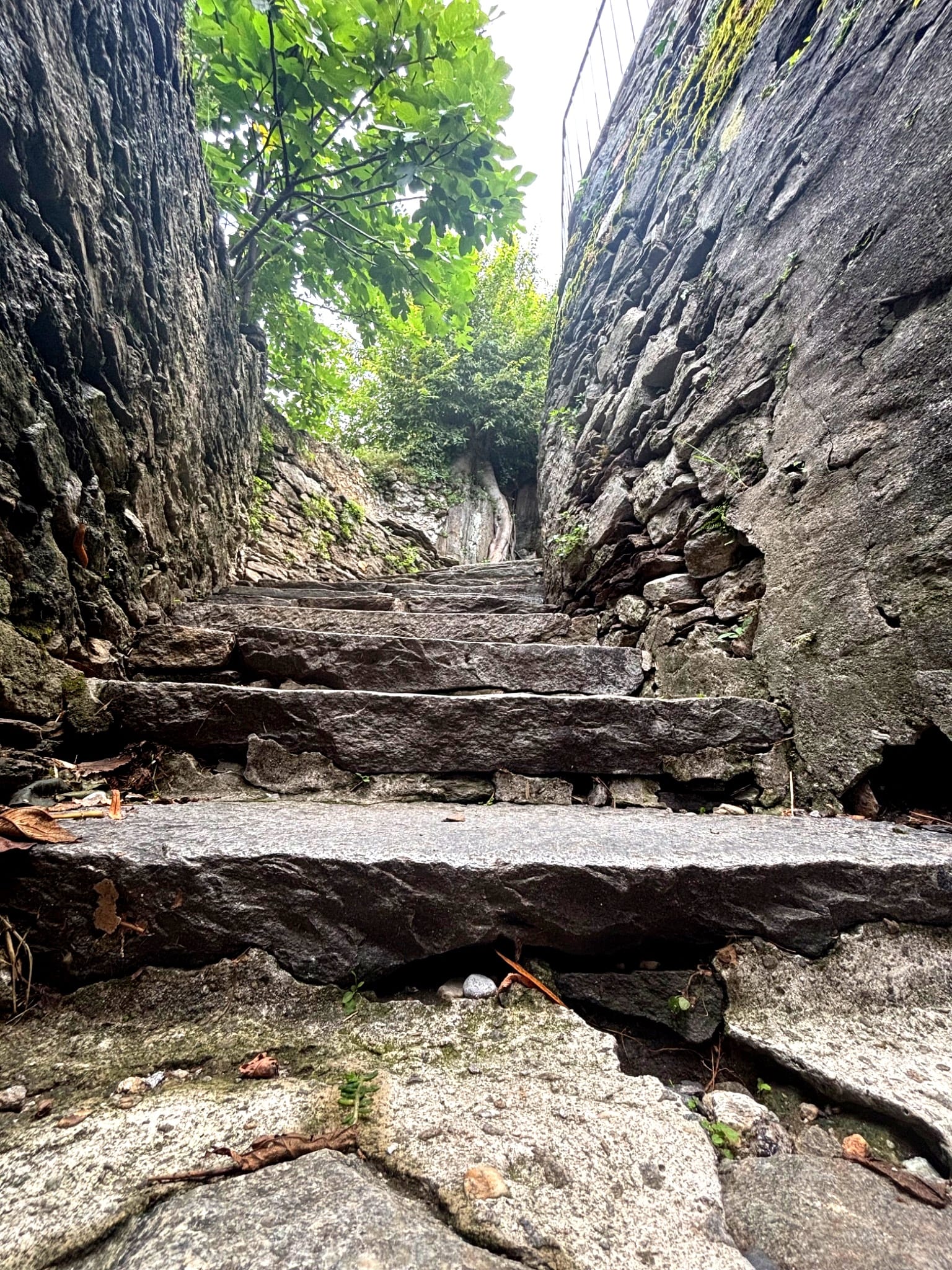
I felt this most on the path up to Sasso Corbaro. The climb was steep, the stones uneven, my breath heavy. At the summit, the view unfolded: mountains layered like a theatre backdrop, the neat geometry of the town below, the trains slipping in and out with clockwork regularity. From here, Bellinzona seemed serene, almost timeless. And yet the body remembered otherwise: my tired legs, the oppressive heat, the prickling awareness that these towers once loomed as threats. Ricoeur insists that memory is not only collective but embodied: carried in gestures, sensations, fragments of lived experience. Standing at that height, my own body became an archive of effort and unease, reminding me that memory is always personal as well as monumental

🌄 Testimony, Archive, and Abuse
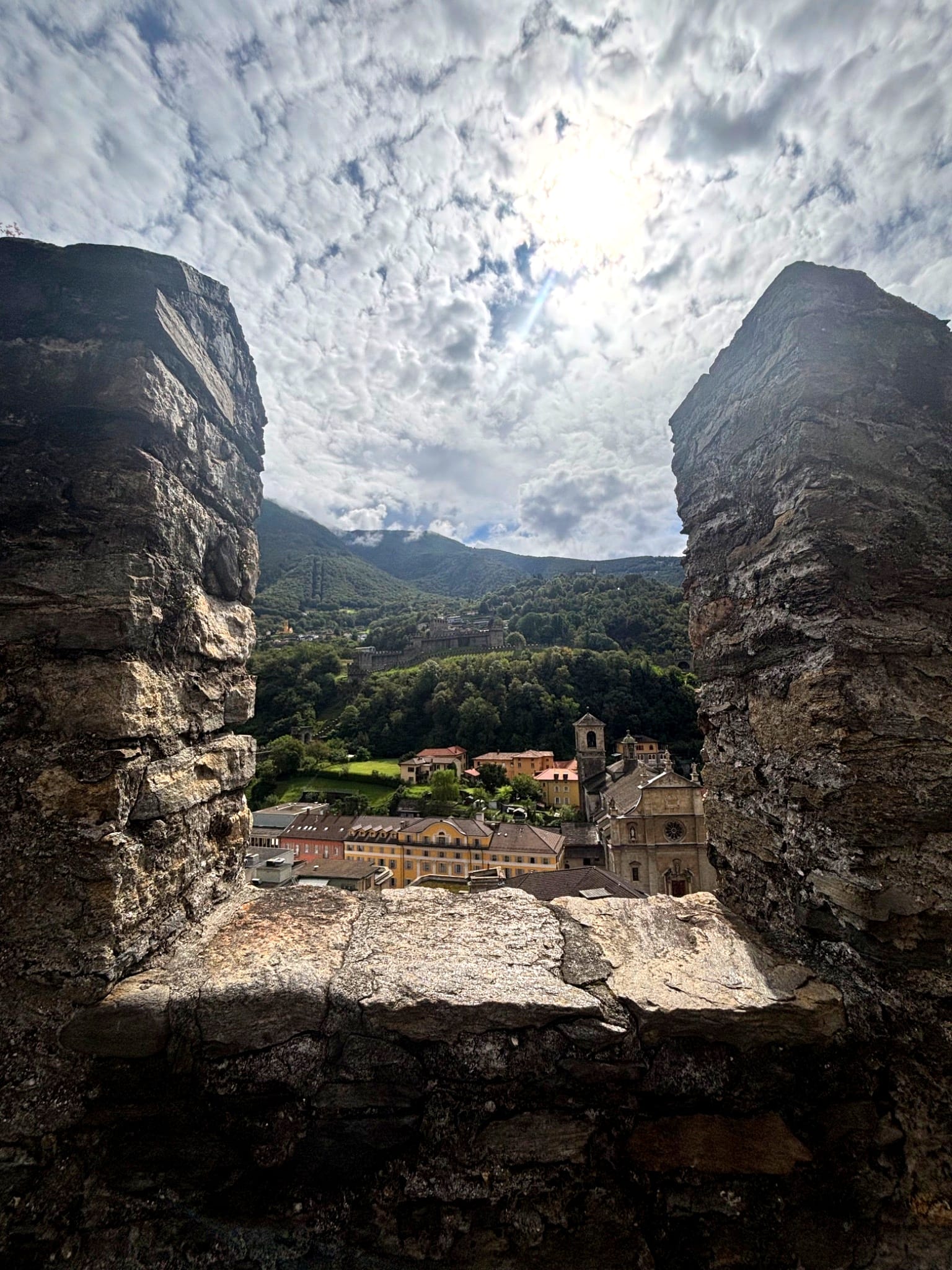
Ricoeur also places memory in tension with history and forgetting. Testimony is fragile, subject to error and manipulation; archives appear stable but are never neutral. Bellinzona’s castles are archives in stone, but they too are curated, framed, and domesticated. They preserve one narrative: vigilance, fortification, exclusion while suppressing others. Which stories remain untold? The peasants conscripted to build, the travellers turned away, the quiet violence of being watched and taxed. Neutrality, presented as Switzerland’s identity, rests on a similar act of selection. It is a narrative of innocence, but one built on forgotten walls.
🪨 The Accusation of Stone
Perhaps neutrality itself is the greatest fortress of all: not the absence of violence, but its reinterpretation into myth. Ricoeur would urge us to see this as an ethical problem. Memory can serve truth, but it can also be manipulated into legitimacy. To romanticise these castles as symbols of peace is to risk turning ruins into reassurance, heritage into alibi.
Bellinzona therefore poses a question, not a resolution. What is the cost of neutrality? Which memories must be pacified, which exclusions concealed, in order for a nation to appear innocent? The stones endure, but what they remember depends on how we choose to listen. Ricoeur would insist that the task is not to smooth the past into serenity but to keep it unsettled: to recognise that even ruins can deceive, that forgetting may masquerade as peace, and that silence itself may be complicit.
The castles of Bellinzona do not simply whisper. They accuse.