A Debt Painted in Fresco: The Scrovegni Chapel

🕍 A Painted Cosmos
From the street, the Scrovegni Chapel is unremarkable: a plain brick box beside the ruins of Padua’s Roman arena. But stepping inside is to cross a threshold into another order of time. The air cools, silence thickens, and the walls blaze with colour.
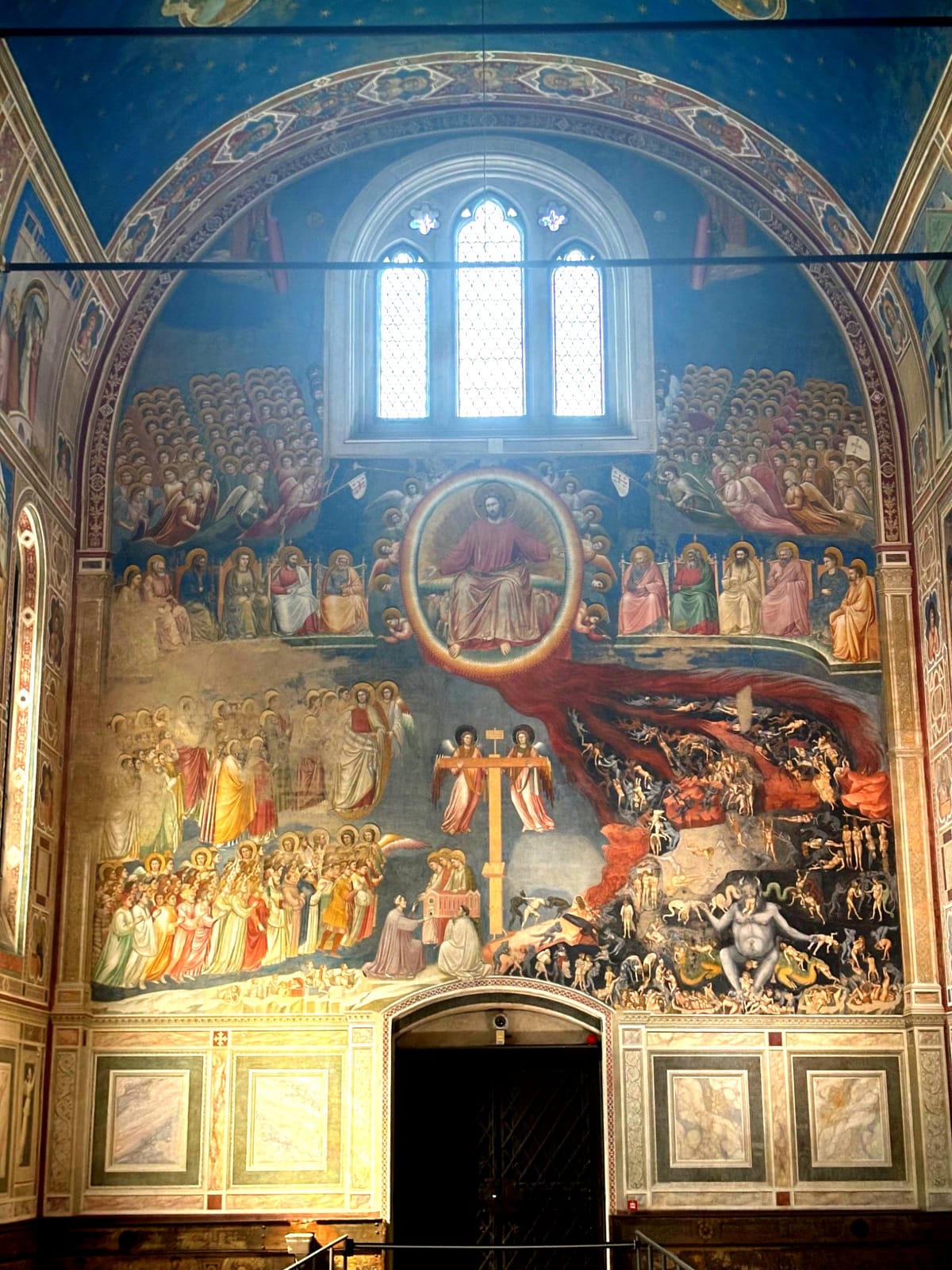
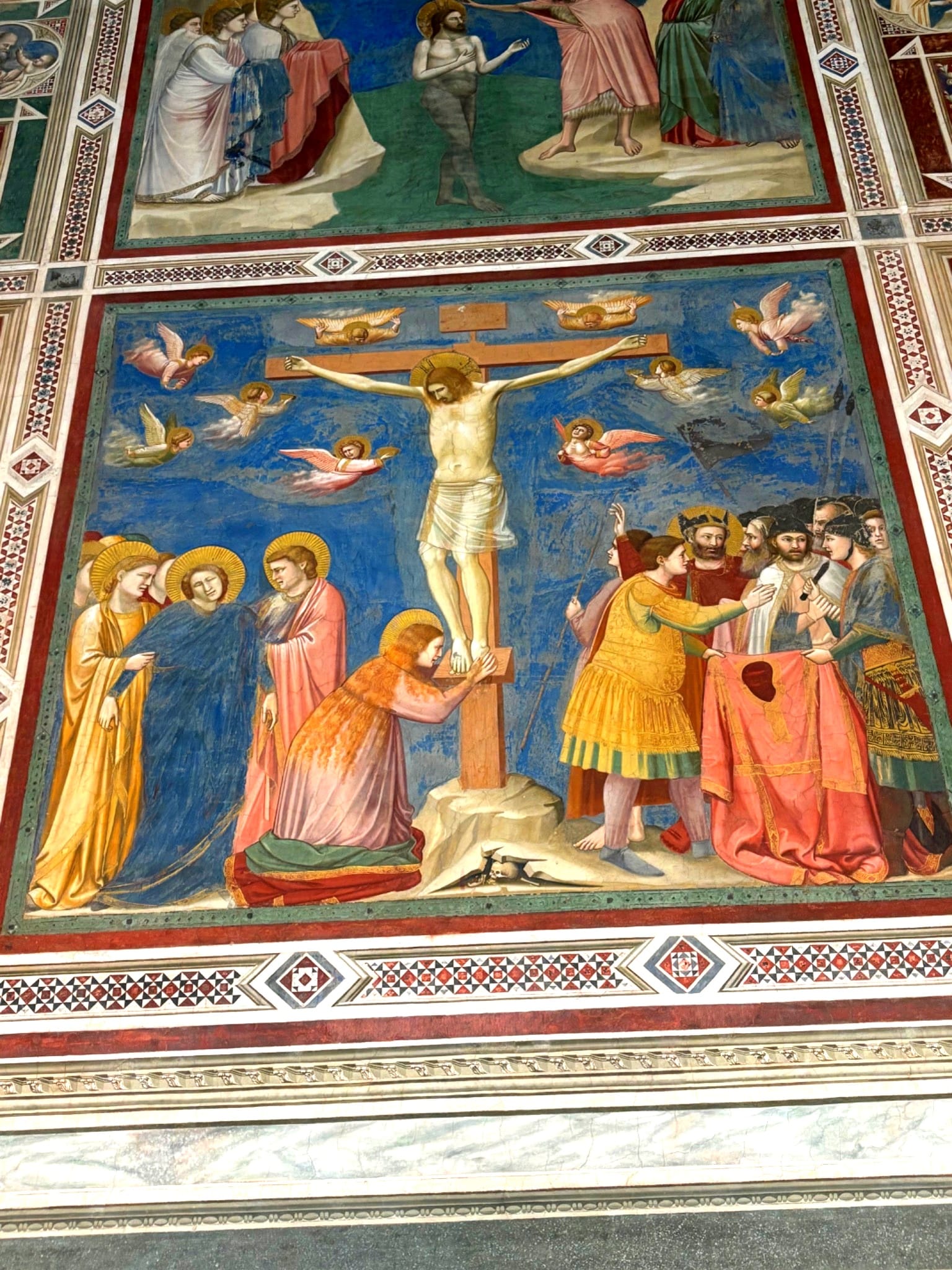
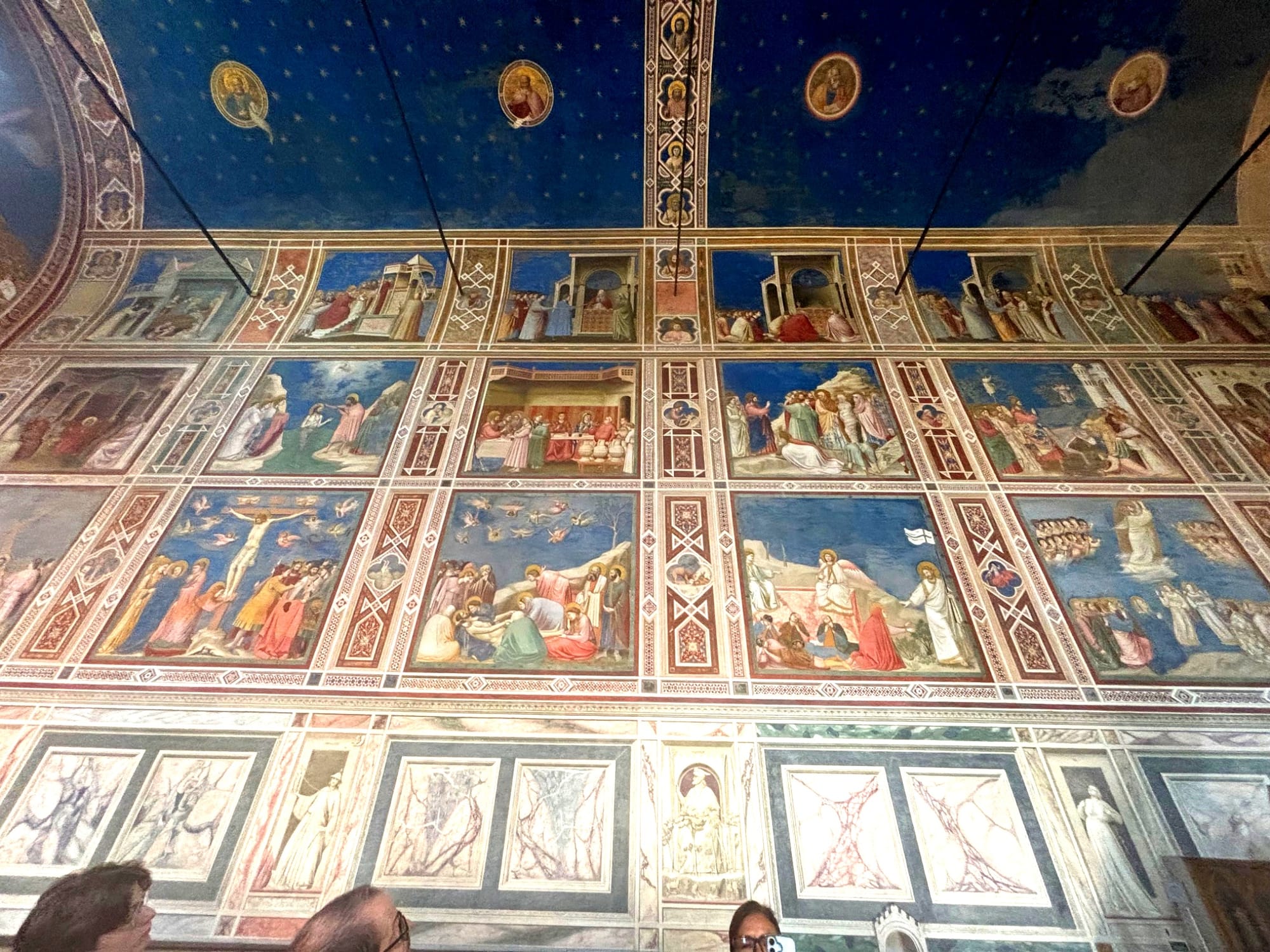
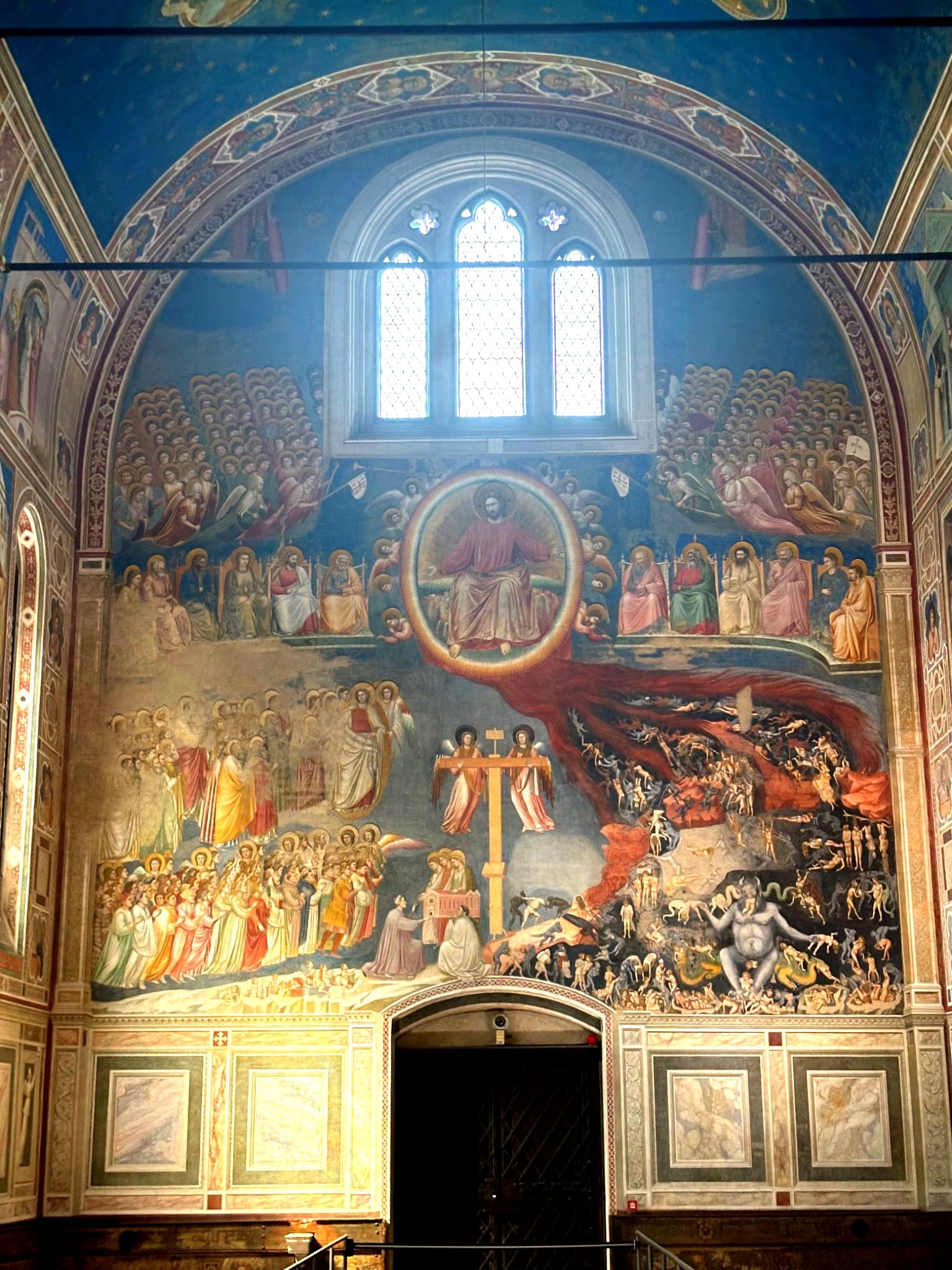
Giotto has transformed the nave into a theatre of salvation. Joachim’s humiliation, the Virgin’s childhood, the Passion and Resurrection of Christ unfold in luminous panels. Beneath them run a severe procession of Virtues and Vices in stone-grey grisaille, while the west wall culminates in the Last Judgment: Christ enthroned, angels summoning the dead, heaven and hell split open before the gaze.
The building is small, yet it expands into immensity. A modest oratory becomes a cosmos in plaster and pigment.
💰 Wealth and the Weight of Sin
Enrico Scrovegni commissioned the chapel in 1303, not only from piety but from guilt. His father Reginaldo was infamous for usury, placed by Dante in the burning sands of the Inferno. Enrico sought to redeem the family name: to transmute ill-gotten fortune into beauty, and beauty into grace.
Yet Augustine unsettles this gesture. Sin, he insists, is not a financial debt to be balanced but a disorder of love: ordo amoris turned from its true object. To practise usury is not merely to break law but to pervert desire, to love gain more than neighbour, profit more than justice. No fresco, however splendid, can repair this dislocation. Only grace can.
Thus the chapel is never neutral. It hangs between confession and display, humility and pride. Its very splendour confesses guilt, even as it risks becoming monument to the one who built it.
🎨 Incarnation in Plaster and Colour
Giotto’s medium itself preaches. Fresco fuses pigment with wet plaster, colour becoming wall, paint sinking into stone. Once dry, image and architecture are inseparable.
This fusion is incarnational. Just as the Word became flesh, eternity sinking into time, divinity clothed in matter, so too does colour become substance, form become stone. The very wall is transfigured, just as creation was by Christ’s birth.
Augustine’s theology of signs helps here. In De doctrina Christiana he distinguishes between signa (signs) and res (things). Sacraments are signs that both point beyond themselves and contain what they signify. They are material realities made transparent to grace. Giotto’s frescoes share this logic: not decoration added to stone, but matter itself made image, wall transfigured into presence.
In this way, the medium embodies the mystery it depicts. The doctrine of the Incarnation is not only painted on the wall; it is enacted in the very act of painting.
👥 Gestures of Desire
Giotto’s figures live within this incarnational medium. No longer flat hieratic emblems, they occupy space with volume and weight. Joachim clasps Anna in an embrace that trembles with relief. Mary bends toward Gabriel, hesitation and consent poised together. At the Lamentation mourners hunch forward, faces buried, hands clutching the air. Even the barren rock tilts downward toward Christ’s body, as if creation itself bent under grief.
For Augustine, the body discloses the soul: gestures are signa of love rightly ordered or bent awry. Giotto paints precisely this. Despair curls inward, envy tightens, hope stretches, charity opens its arms. Doctrine here is not abstract but embodied, enacted in movement and form.
Where the grisaille sequence defines, the frescoes above incarnate. What scholastic taxonomy arranges in opposites, Giotto’s bodies perform in grief, mercy, and desire.


⚖️ Virtues and Vices: The Ontology of the Soul
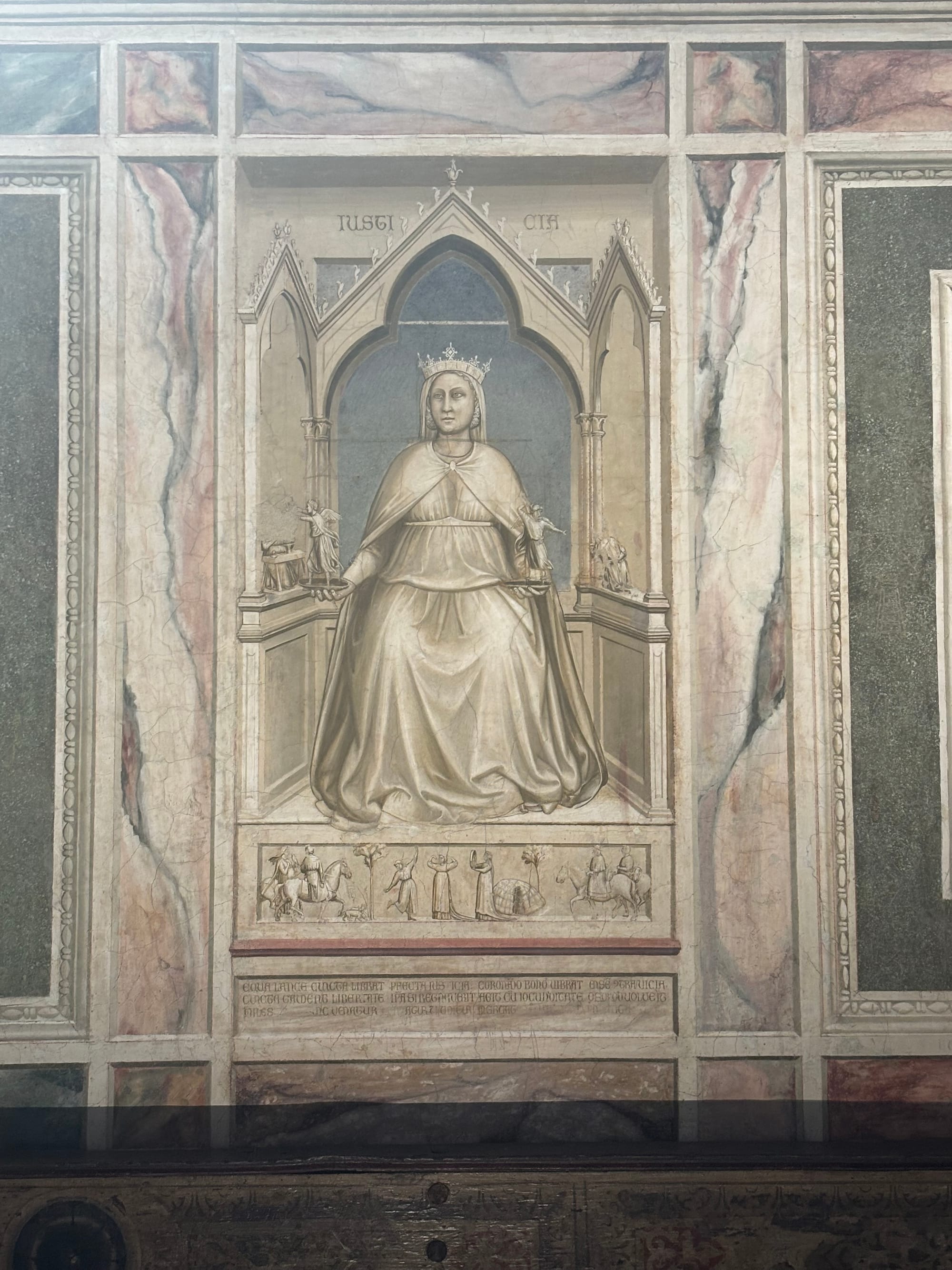
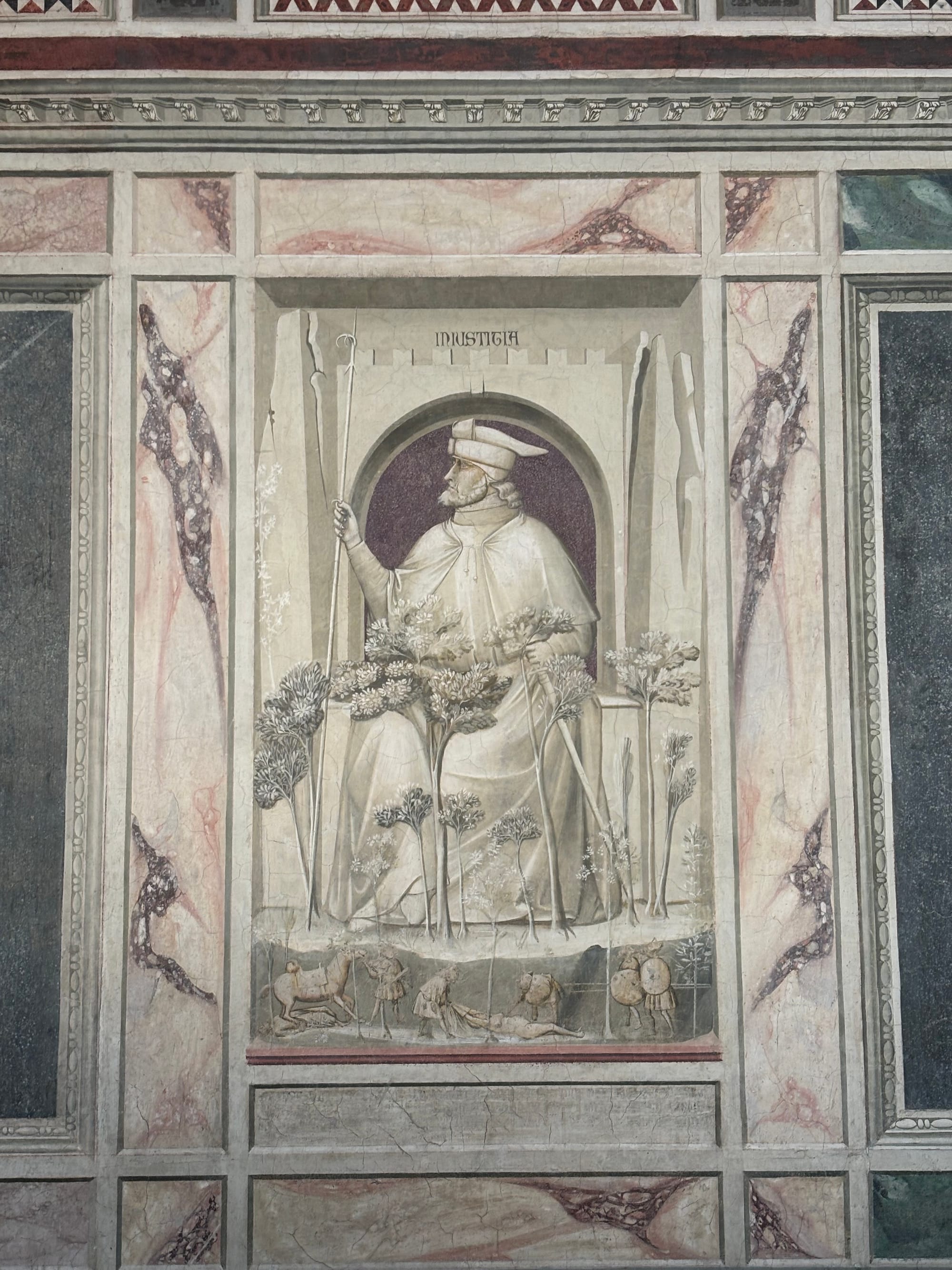
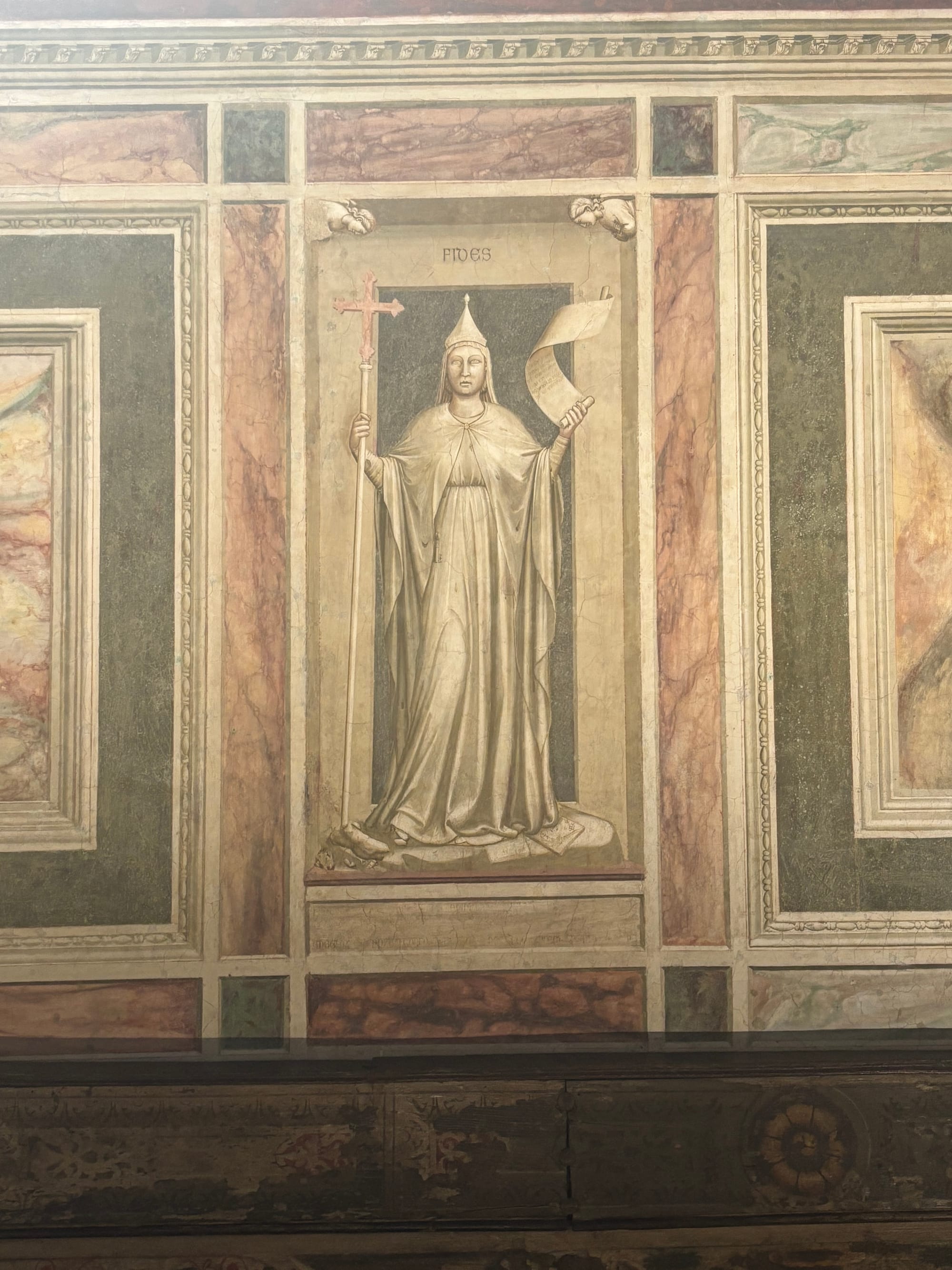
At eye level, beneath the narrative cycle, the Virtues and Vices stand in grisaille, painted as if sculpted from stone. Hope confronts Despair, Charity faces Envy, Fortitude steadies itself against Inconstancy.
They are not ornamental margins but ontological ground. Just as the stone walls bear the painted drama, so these figures are the foundation of the soul’s drama. Augustine taught that virtue and vice are not surface acts but orientations of being, love ordered or disordered at its root. Envy is charity distorted, despair is hope collapsed, folly is prudence gone astray.
The grisaille figures externalise this invisible architecture. They are not passing qualities but foundations of existence, conditions upon which every human gesture stands. Painted like carved reliefs, they resemble the load-bearing stones of the moral life.
To walk between them is to be flanked by the very structure of one’s soul, to sense the weight of ethics not as rule but as ontology. They are the ground on which salvation history above must rest, the foundation without which grace cannot build.
👁 Judgment and Restlessness
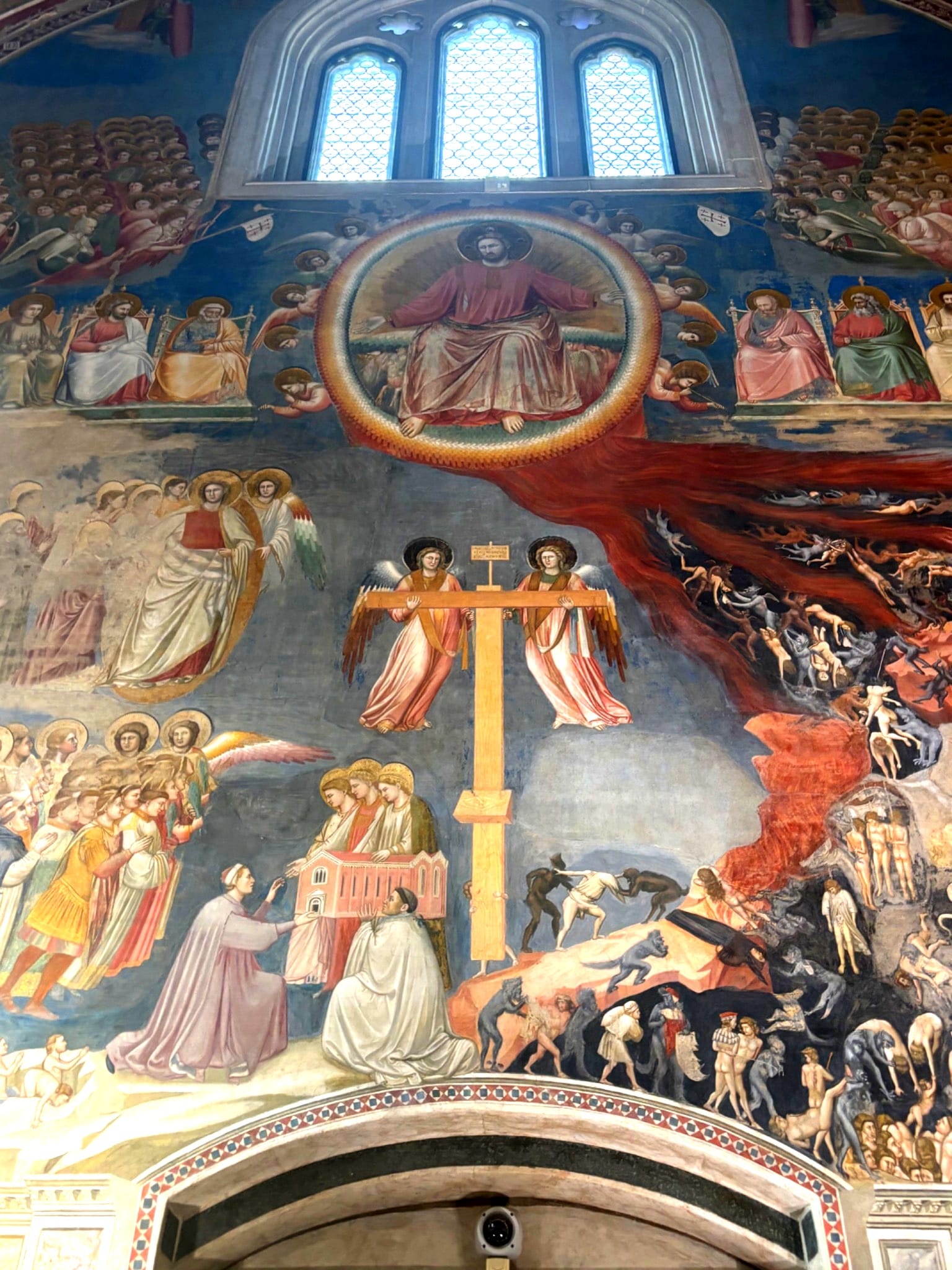
The Last Judgment dominates the entrance wall. Christ reigns in majesty, light pouring from him, angels sounding, the saved ascending, the damned dragged into flame. And among the saved kneels Enrico Scrovegni, offering the Virgin a model of his chapel.
It is audacious to paint oneself into judgment, to script one’s plea into eternity. Yet it is also desperate, a confession by gesture: I have sinned, but here is my offering, accept it.
Here Augustine’s words burn: inquietum est cor nostrum, donec requiescat in Te — “our heart is restless until it rests in You.” Enrico’s figure is restlessness given form: the attempt to still anxiety by beauty, to appease guilt with pigment. But rest does not come by fresco; it comes by grace. His painted supplication remains caught between humility and pride, never fully one or the other.
⏳ Time Turned to Space
To move along the chapel is to enact Augustine’s distensio animi: the stretching of the soul across memory, presence, and expectation. Each step carries the pilgrim through salvation history: from Joachim’s rejection, to the Annunciation, to the Passion and Resurrection, to the Judgment. Time unfolds as space; the body’s walk becomes the soul’s extension.
Yet the stretching remains incomplete. Fresco can reveal time’s arc, but it cannot reconcile it. It discloses the need for redemption, but it cannot confer it. The plaster bears longing but not fulfilment, history but not its consummation.
🌌 The Frescoed Cry
The Scrovegni Chapel is scholastic in its structure, Augustinian in its affect. Its oppositions are schematic, but its gestures are restless. Its splendour confesses guilt, even as it risks enshrining vanity.
Its medium itself preaches: pigment fused with plaster as the Word became flesh. Incarnation is not only painted, but performed in matter. Yet the performance remains human, partial, compromised. Colour becomes wall, but wall cannot become salvation.
The grisaille figures anchor the chapel’s cosmos, foundations of being painted into stone, the architecture of the soul made visible. Above them unfolds history, but it is they who bear its weight. The chapel teaches that salvation must descend into the depths of ontology, into the very loves that shape existence.
To sit beneath that starry blue vault is to feel both grandeur and poverty: that even our most radiant gestures are ambiguous, our most beautiful confessions shadowed by pride. The frescoes do not resolve this paradox. They preserve it. They remain restlessness hardened into plaster, desire fixed in colour, a confession suspended without absolution.
And in the corner of the Last Judgment, Enrico kneels still, chapel in his hands: not justified, not condemned, painted forever in the act of begging.